Trends in guideline implementation: a scoping systematic review

This review ‘identified that, despite the availability of evidence, taxonomies, theories, models and instruments by which to plan implementation, guidelines are most often implemented using educational strategies and print material. Most of the studies reviewed here achieved positive impact, which perhaps conflicts with the results of systematic reviews demonstrating that educational meetings and print material have a small impact on professional behaviour. Therefore, ongoing research might focus on ways to optimize the design of educational strategies and print material’.

The authors identified 32 eligible studies. All but one were done in high-income countries and most (21) focused on diabetes with other studies on arthritis (4), colorectal cancer (3) and heart failure (4). What is missing is research on guideline implementation in low-resource settings.

CITATION: Trends in guideline implementation: a scoping systematic review

Implementation Science Sample

doi:10.1186/s13012-015-0247-8

Anna R Gagliardi, Samia Alhabib, and the members of the Guidelines International Network Implementation Working Group

http://www.implementationscience.com/content/pdf/s13012-015-0247-8.pdf

OR http://www.implementationscience.com/content/10/1/54

Corresponding author: anna.gagliardi@uhnresearch.ca

ABSTRACT

Background: There is currently no reliable way to choose strategies that are appropriate for implementing guidelines facing different barriers. This study examined trends in guideline implementation by topic over a 10-year period to explore whether and how strategies may be suitable for addressing differing barriers.

Methods: A scoping systematic review was performed. MEDLINE and EMBASE were searched from 2004 to 2013 for studies that evaluated the implementation of guidelines on arthritis, diabetes, colorectal cancer and heart failure. Data on study characteristics, reason for implementation (new guideline or quality improvement), implementation strategy used, rationale for selecting that strategy and reported impact were extracted and summarized. Interventions were mapped against a published taxonomy of guideline implementation strategies.

Results: The search resulted in 1,709 articles; 156 were retrieved and 127 were excluded largely because they did not evaluate guideline implementation, leaving 32 eligible for review (4 arthritis, 3 colorectal cancer, 21 diabetes, 4 heart failure). Six of 7 randomized trials and 8 of 25 observational studies had a low risk of bias. Most studies promoted guideline use for quality improvement (78.0%). Few studies rationalized strategy choice (18.8%). Most employed multiple approaches and strategies, most often educational meetings and print material for professionals or patients. Few studies employed organizational, financial or regulatory approaches. Strategies employed that were unique to the published taxonomy included professional (print material, tailoring guidelines, self-audit training or material) and patient strategies (education, counselling, group interaction, print material, reminders). Most studies achieved positive impact (87.5%). This did not appear to be associated with guideline topic, use of theory or barrier assessment, or number or type of implementation approaches and strategies.

Conclusions: While few studies were eligible, limiting insight on how to choose implementation strategies that address guideline-specific barriers, this review identified other important findings. Education for professionals or patients and print material were the most commonly employed strategies for translating guidelines to practice. Mapping of strategies onto the published taxonomy identified gaps in guideline implementation that represent opportunities for future research and expanded the taxonomy.

__________

To send a message to the HIFA forum, simply send an email to: HIFA2015@dgroups.org
J Med Internet Res: Twitter-based journal clubs for discussion of health research

Many of us are familiar with journal clubs, where learning takes place among health professionals through discussion of the latest health research papers. Below is the citation and abstract of an interesting paper that looks at the ‘Globalization of Continuing Professional Development by Journal Clubs via Microblogging [Twitter]’. Has anyone on HIFA tried the ‘Twitter journal club’ model? Let us know your experience with this and/or with conventional face-to-face journal clubs.

HIFA itself is a kind of virtual journal club and I would be interested in your thoughts on whether/how we can develop this further. Also, remember that HIFA also has an active Twitter account, which you can join here: @hifa_org  (with thanks to HIFA Twitter coordinator Julie Storr, HIFA Steering Group, WHO Department of Service Delivery and Safety).

CITATION: Roberts MJ, Perera M, Lawrentschuk N, Romanic D, Papa N, Bolton D.

Globalization of Continuing Professional Development by Journal Clubs via Microblogging: A Systematic Review

J Med Internet Res 2015;17(4):e103

DOI: 10.2196/jmir.4194

Corresponding author: Roberts MJ. Email: m.roberts2 [at] uq.edu.au

ABSTRACT

Background: Journal clubs are an essential tool in promoting clinical evidence-based medical education to all medical and allied health professionals. Twitter represents a public, microblogging forum that can facilitate traditional journal club requirements, while also reaching a global audience, and participation for discussion with study authors and colleagues.

Objective: The aim of the current study was to evaluate the current state of social media–facilitated journal clubs, specifically Twitter, as an example of continuing professional development.

Methods: A systematic review of literature databases (Medline, Embase, CINAHL, Web of Science, ERIC via ProQuest) was performed according to Preferred Reporting Items for Systematic Reviews and Meta-Analyses (PRISMA) guidelines. A systematic search of Twitter, the followers of identified journal clubs, and Symplur was also performed. Demographic and monthly tweet data were extracted from Twitter and Symplur. All manuscripts related to Twitter-based journal clubs were included. Statistical analyses were performed in MS Excel and STATA.

Results: From a total of 469 citations, 11 manuscripts were included and referred to five Twitter-based journal clubs (#ALiEMJC, #BlueJC, #ebnjc, #urojc, #meded). A Twitter-based journal club search yielded 34 potential hashtags/accounts, of which 24 were included in the final analysis. The median duration of activity was 11.75 (interquartile range [IQR] 19.9, SD 10.9) months, with 7 now inactive. The median number of followers and participants was 374 (IQR 574) and 157 (IQR 272), respectively. An overall increasing establishment of active Twitter-based journal clubs was observed, resulting in an exponential increase in total cumulative tweets (R2=.98), and tweets per month (R2=.72). Cumulative tweets for specific journal clubs increased linearly, with @ADC_JC, @EBNursingBMJ, @igsjc, @iurojc, and @NephJC, and showing greatest rate of change, as well as total impressions per month since establishment. An average of two tweets per month was estimated for the majority of participants, while the “Top 10” tweeters for @iurojc showed a significantly lower contribution to overall tweets for each month (P<.005). A linearly increasing impression:tweet ratio was observed for the top five journal clubs.

Conclusions: Twitter-based journal clubs are free, time-efficient, and publicly accessible means to facilitate international discussions regarding clinically important evidence-based research.

Let’s build a future where people are no longer dying for lack of healthcare knowledge – Join HIFA: www.hifa2015.org  

WHO HIV and Infant Feeding Survey

In 2015, WHO will be updating the 2010 Guidelines on HIV and Infant Feeding. WHO and UNICEF would like to learn more about the progress and challenges of how to best support mothers living with HIV and their infant feeding practices.

We invite you to participate in this brief online survey to tell us about your experiences and your suggestions for improvement of the guidelines. It will cover six key areas of interest:

* policy,

* program implementation,

* capacity building,

* monitoring and evaluation,

* challenges in implementing current national guidelines, and

* suggestions for improving the WHO recommendations.

English Version:

* https://www.surveymonkey.com/s/HIV_IF_english

French Version:

* https://www.surveymonkey.com/s/VIH_AI_francais  

We encourage representatives from ministries of health, programme managers, frontline health workers, implementing partners, non-governmental organizations, community-based organizations, advocacy groups, and networks of people living with HIV to respond to this survey. As some individuals may have experience working in various countries, please fill out this survey based on the country where you currently work or reside or are most familiar with based on your experience. We also encourage you to share the survey with colleagues who are well-positioned to respond to these questions.

Best,

Jessica

Jessica Rodrigues, MS

IATT Secretariat

HIV/AIDS Specialist, Knowledge Management

UNICEF House, 3 United Nations Plaza, Office #1034, New York, NY 10017

Telephone: 917.265.4533 |Cell: 718.755.3511 | Email: jerodrigues@unicef.org

Website: http://www.emtct-iatt.org/

Community of Practice: http://www.knowledge-gateway.org/emtct/

What is happening at CCP?

Chiawelo Community Practice (CCP) functions as part of the public service in the Chiawelo Community Health Centre (CHC). A family physician and a clinical associate work in CCP as employees of Gauteng Health with 21 CHWs deployed into the community of Ward 11 (Soweto part), screening, educating and supporting health and intersectoral action, with the support of an enrolled nurse. The clinical associate, PHC nurse, enrolled nurse and and family physician, with Family Medicine registrar/students, are seeing all patients from this community in strong teamwork with CHWs. Local stakeholders are also engaged strongly, supporting a growing health promotion programme. CCP has been branded as a Wits initiative…..more

Chiawelo Community Practice

The Chiawelo Community Practice (CCP) is modeled on moving from a curative to a preventive/promotive focus in health services with:

  • Community health workers, as active parts of the team, building a profile of the community and strengthening daily interaction with the community.
  • Practice re-organization with teamwork around person, family and community, especially with strong problem-oriented record systems and innovative communication.
  • Strong structured collaboration with stakeholders in the health system, other government sectors/institutions and with the community.
  • Health promotion that accounts for the complexity of changing behaviour

See progress here and video

Integrated Management of Childhood Illness (IMCI)

IMCI is a strategy for delivering key interventions that prevent and treat the most common causes of mortality in children under five years old, including neonatal infections, pneumonia, diarrhoea, measles, malaria and undernutrition. IMCI includes the following components:

  1. Improvements in the case management skills of health workers IMCI standard case management guidelines provide a systematic approach to assessing, classifying and treating sick children from birth up to five years old including giving appropriate counselling.
  2. Improvements in the health system required to deliver child health interventions effectively System improvements that are needed in order to provide appropriate case management to newborns and children include adequate numbers of trained staff, an adequate supply of medicines and other supplies, regular supervision of first-level health workers, high-quality referral care and mechanisms for ensuring that those children who need referral are referred properly.
  3. Improvements in family and community practices A number of key family and community practices are important to prevent and treat the causes of child deaths.1 These include exclusive breastfeeding and complementary feeding, use of insecticide-treated bednets, seeking vaccines and vitamin A at the right times, recognition of when to seek care for a sick neonate or child and appropriate management of sick children in the home.

See these useful resources….1 2 3 4 5

A New Tool to Promote Gender Equality in the Health Workforce

New Health Workforce Productivity Toolkit

http://www.capacityplus.org/productivity-analysis-improvement-toolkit/

CapacityPlus announces the Health Workforce Productivity Analysis and Improvement Toolkit, a process to measure the productivity of facility-based health workers, understand causes of productivity problems, and identify interventions to address them.

Many countries are striving to meet the demand for family planning, end preventable child and maternal deaths, and achieve an AIDS-free generation.The health workforce is critical for ensuring access to high-quality services and improve health outcomes. While increasing the number of health workers where there are shortages is essential, it is equally important to improve the productivity of the existing workforce and make service delivery more efficient.

National stakeholders-including facility managers and health management teams at the district and regional level-can enter and save facility-level data on service delivery outputs and human resources costs. They can then calculate total health workforce productivity and compare rates across facilities. This process differentiates higher-productivity facilities from lower-productivity ones, which through a qualitative assessment can help managers consider which factors are affecting health workforce productivity in the facilities.

Help CapacityPlus spread the word about strengthening the health workforce. Follow us on Twitter (https://twitter.com/capacityplus) and like us on Facebook (https://www.facebook.com/capacityplus).   

Carol Bales | Communications Officer

IntraHealth International, Inc. | Because Health Workers Save Lives.

6340 Quadrangle Drive, Suite 200 | Chapel Hill, NC 27517

t. +1 (919) 313-9174 | m.+1 (919) 360-4031

cbales@capacityplus.org

twitter | facebook

Monitoring SSA Physician Migration Post-WHO Code: Settlement Patterns in the USA

I wrote this recently released paper in anticipation to the forthcoming 68th World Health Assembly’s discussion of the relevance and effectiveness of WHO Code of Practice on the International Recruitment of Health Personnel. I hope some of you will find it informative. Please read and share among members of your various networks.

Monitoring Sub-Saharan African Physician Migration and Recruitment Post-Adoption of the WHO Code of Practice: Temporal and Geographic Patterns in the United States

http://journals.plos.org/plosone/article?id=10.1371/journal.pone.0124734

DOI: 10.1371/journal.pone.0124734

ABSTRACT

Data monitoring is a key recommendation of the WHO Global Code of Practice on the International Recruitment of Health Personnel, a global framework adopted in May 2010 to address health workforce retention in resource-limited countries and the ethics of international migration. Using data on African-born and African-educated physicians in the 2013 American Medical Association Physician Masterfile (AMA Masterfile), we monitored Sub-Saharan African (SSA) physician recruitment into the physician workforce of the United States (US) post-adoption of the WHO Code of Practice. From the observed data, we projected to 2015 with linear regression, and we mapped migrant physicians’ locations using GPS Visualizer and ArcGIS. The 2013 AMA Masterfile identified 11,787 active SSA-origin physicians, representing barely 1.3% (11,787/940,456) of the 2013 US physician workforce, but exceeding the total number of physicians reported by WHO in 34 SSA countries (N = 11,519). We estimated that 15.7% (1,849/11,787) entered the US physician workforce after the Code of Practice was adopted. Compared to pre-Code estimates from 2002 (N = 7,830) and 2010 (N = 9,938), the annual admission rate of SSA émigrés into the US physician workforce is increasing. This increase is due in large part to the growing number of SSA-born physicians attending medical schools outside SSA, representing a trend towards younger migrants. Projection estimates suggest that there will be 12,846 SSA migrant physicians in the US physician workforce in 2015, and over 2,900 of them will be post-Code recruits. Most SSA migrant physicians are locating to large urban US areas where physician densities are already the highest. The Code of Practice has not slowed the SSA-to-US physician migration. To stem the physician “brain drain”, it is essential to incentivize professional practice in SSA and diminish the appeal of US migration with bolder interventions targeting primarily early-career (age = 35) SSA physicians.

Homo sum, humani nihil a me alienum puto (I am a human being, nothing human is alien to me). — Terence

I sit on a man’s back, choking him and making him carry me, and yet assure myself and others that I am very sorry for him and wish to ease his lot by all possible means — except by getting off his back. — Leo Tolstoy.

A tiger does not shout its tigritude: it pounces. A tiger in the jungle does not say: I am a tiger. Only on passing the tiger’s hunting ground and finding the skeleton of a gazelle do we feel the place abound with tigritude. — Wole Soyinka

The great historical tragedy of Africa has been not so much that it was too late in making contact with the rest of the world, as the manner in which that contact was brought about. — Aime Cesaire.

La corruption explique en partie la faim. Sans la complicité active du président Paul Biya, Bolloré et Vilgrain n’auraient jamais pu s’approprier des centaines de milliers d’hectares de terres fertiles, au Cameroun, dont les paysans ont été expulsés et où les cultures vivrières ont été remplacées par de la canne à sucre destinée à la production de biocarburants. — Jean Ziegler

HIFA profile: Akhenaten BS Tankwanchi is an Independent Research Consultant in the United States. Professional interests: health disparities, telehealth, mental health, global health, health equity, minority health, human development, community psychology, program evaluation, noncommunicable diseases, sub-Saharan Africa.  akhenaton.tankwanchi AT gmail.com

__________

To send a message to the HIFA forum, simply send an email to: HIFA2015@dgroups.org

BMJ Open: Trading quality for relevance: non-health decision-makers’ use of evidence on the social determinants of health

CITATION: BMJ Open 2015;5:e007053 doi:10.1136/bmjopen-2014-007053

Trading quality for relevance: non-health decision-makers’ use of evidence on the social determinants of health

BMJ Open 2015;5:e007053 doi:10.1136/bmjopen-2014-007053

http://m.bmjopen.bmj.com/content/5/4/e007053.full

ABSTRACT

Objectives: Local government services and policies affect health determinants across many sectors such as planning, transportation, housing and leisure. Researchers and policymakers have argued that decisions affecting wider determinants of health, well-being and inequalities should be informed by evidence. This study explores how information and evidence are defined, assessed and utilised by local professionals situated beyond the health sector, but whose decisions potentially affect health: in this case, practitioners working in design, planning and maintenance of the built environment.

Design: A qualitative study using three focus groups. A thematic analysis was undertaken.

Setting: The focus groups were held in UK localities and involved local practitioners working in two UK regions, as well as in Brazil, USA and Canada.

Participants UK and international practitioners working in the design and management of the built environment at a local government level.

Results: Participants described a range of data and information that constitutes evidence, of which academic research is only one part. Built environment decision-makers value empirical evidence, but also emphasise the legitimacy and relevance of less empirical ways of thinking through narratives that associate their work to art and philosophy. Participants prioritised evidence on the acceptability, deliverability and sustainability of interventions over evidence of longer term outcomes (including many health outcomes). Participants generally privileged local information, including personal experiences and local data, but were less willing to accept evidence from contexts perceived to be different from their own.

Conclusions: Local-level built environment practitioners utilise evidence to make decisions, but their view of ‘best evidence’ appears to prioritise local relevance over academic rigour. Academics can facilitate evidence-informed local decisions affecting social determinants of health by working with relevant practitioners to improve the quality of local data and evaluations, and by advancing approaches to improve the external validity of academic research.

Key messages

  • Built environment practitioners in local authorities apply the word ‘evidence’ to a variety of knowledge sources including case studies.
  • Practitioners seek evidence of viability, a conflation of terms relating to the feasibility of intervention delivery and sustainability.
  • Emphasis is placed on immediate outputs and intermediate outcomes; evidence of long-term outcomes, including health outcomes, may be seen as unattainable.
  • Local knowledge is vital to local practice. Academic evidence is frequently irrelevant to practitioners’ local contexts
  • Academics could support work on the social determinants of health in local authorities more effectively by co-producing research with local practitioners, by developing geographical data at local authority level, and by improving local evaluation and research capacity through training.

Let’s build a future where people are no longer dying for lack of healthcare knowledge – Join HIFA: www.hifa2015.org  

BMC Public Health: Barriers to modern contraceptive methods uptake among young women in Kenya: a qualitative study

‘The main barriers to modern contraceptive uptake among young women are myths and misconceptions’, says a new paper in the open-access journal BMC Public Health.

Below is the citation and abstract. The full text is available here:

http://www.biomedcentral.com/content/pdf/s12889-015-1483-1.pdf

CITATION: Ochako et al. Barriers to modern contraceptive methods uptake among young women in Kenya: a qualitative study. BMC Public Health (2015) 15:118. DOI 10.1186/s12889-015-1483-1

ABSTRACT

Background: Young women in Kenya experience a higher risk of mistimed and unwanted pregnancy compared to older women. However, contraceptive use among youth remains low. Known barriers to uptake include side effects, access to commodities and partner approval.

Methods: To inform a youth focussed behaviour change communication campaign, Population Services Kenya developed a qualitative study to better understand these barriers among young women. The study was carried out in Nyanza, Coast, and Central regions. Within these regions, urban or peri-urban districts were purposively selected based on having contraceptive prevalence rate close to the regional average and having a population with low socioeconomic profiles. In depth interviews were conducted with a sample of sexually active women aged 15–24, both users and non-users, that were drawn from randomly selected households.

Results: All the respondents in the study were familiar with modern methods of contraception and most could describe their general mechanisms of action. Condoms were not considered as contraception by many users. Contraception was also associated with promiscuity and straying. Fear of side effects and adverse reactions were a major barrier to use. The biggest fear was that a particular method would cause infertility. Many fears were based on myths and misconceptions. Young women learn about both true side effects and myths from their social networks.

Conclusion: Findings from this research confirm that awareness and knowledge of contraception do not necessarily translate to use. The main barriers to modern contraceptive uptake among young women are

myths and misconceptions. The findings stress the influence of social network approval on the use of family planning, beyond the individual’s beliefs. In such settings, family planning programming should engage with the wider community through mass and peer campaign strategies. As an outcome from this study, Population Services Kenya developed a mass media campaign to address key myths and misconceptions among youth.

SELECTED QUOTES from full text:

“The woman inserts it (pill in the vagina) so that she doesn’t get pregnant” [Non-user, Kisumu]

“If they put that (implants) on you when you remove it (implants) you cannot give birth again” [User, Kisumu]”

“Pills are very bad and I don’t like anything to do with them… if you take the pill for so long, you may give birth to a paralyzed child…” [User, Mombasa]

“All these family planning methods interfere with our feelings (libido) be it a coil, be it a tablet, (pills) be it what, I heard that it (modern family planning) reduces feelings” [User, Mombasa)

“Sometimes they complain because of the way they (pills) make you feel tired, bring mood swings and sometimes you have a low libido. This will make him complain because he will start accusing you that you are being unfaithful to him” [User, Mombasa]

“And so they (men) say that only promiscuous women use the pills and that is why they are against those pills” [Non-user, Mombasa]

Best wishes, Neil

Let’s build a future where people are no longer dying for lack of healthcare knowledge – Join HIFA: www.hifa2015.org  

Publication: What Does Big Data Mean for Wearable Sensor Systems?

What Does Big Data Mean for Wearable Sensor Systems?

S. J. Redmond,corresponding author, N. H. Lovell,G. Z. Yang, A. Horsch, P. Lukowicz, L. Murrugarra, and M. Marschollek

Reference Pubmed:

http://www.ncbi.nlm.nih.gov/pmc/articles/PMC4287062/

Cordiales saludos,

Lady V. Murrugarra Velarde

Coordinador

Oficina de Telesalud/Telemedicina

Instituto de Medicina Tropical Alexander von Humboldt;

Universidad Peruana Cayetano Heredia

Central: (51-1) 6139797 anexo 4040, 4823910, 4823903 anexo 15

Celular: RPC: (51)993470712 RPM: (51)962660798

Av. Honorio Delgado Nº340, San Martin de Porras

skype: ladymurrugarra , @ladymurrugarra

http://murrugarralady.wix.com/ladymurrugarra

Save the date – High Impact Practices in Family Planning Webinar May 6th 9:00 to 10:30 AM EST

Please join WHO/IBP, UNFPA, USAID and the IBP HIPs Task Team for a Series of Webinars around Maximizing FP Investments through Evidence Based Programming. We will be hosting the first of the webinar series on High Impact Practices on May 6th, 2015 from 9:00 to 10:30 EST.  

Webinar 1:  How do we synthesize and translate more than 50 years of experience and learning from family planning programming?  Using High Impact Practices

High Impact Practices (https://www.fphighimpactpractices.org/) (HIPs) are effective service delivery or systems interventions that when scaled up and institutionalized, can strengthen a comprehensive family planning strategy. The HIPs briefs are concise summaries of these evidence-based practices to help focus FP resources and efforts.  In this webinar we will discuss the origin of the HIPs, the development of the HIP briefs, and their application to inform program decision making.

When: Wednesday, May 6th, 9:00am – 10:30am EST with time for discussion

Presenters:

·       Gifty Addico, UNFPA

·       Shawn Malarcher, USAID

·       Suzanne Reier, WHO-IBP

·       Alisa Wong, FP2020

Registration: Please click here (https://attendee.gotowebinar.com/register/3480951924858858497?) to register. After registering, you will receive a confirmation email containing information about joining the webinar.

Website: https://www.fphighimpactpractices.org/

Twitter: #hips4fp

HIFA profile: Rebecca Shore is a Communications Specialist with Knowledge for Health (K4Health), Johns Hopkins Bloomberg School of Public Health, Center for Communication Programs, Baltimore, Maryland, USA. www.jhuccp.org, www.k4health.org Rebecca.Shore AT jhu.edu

__________

To send a message to the HIFA forum, simply send an email to: HIFA2015@dgroups.org

Call for ‘new world order’ so emerging markets can shine

The overarching theme at the 2015 Asian-African Conference in Indonesia this week was the need for “a new economic world order”. The World Bank and the International Monetary Fund (IMF) were roundly criticised for failing to deliver solutions for the global economy to alleviate poverty, distribute wealth and close the inequality gap…..more

‘Today we are all African’

Thousands of South Africans turned out for the march against xenophobia in Johannesburg on Thursday….1 2

For Africa to thrive, total investment in its people is critical

THE negative connotations usually generated by the word migration never cease to amaze me. In the past week, Africans have suffered in tragedies at opposite ends of the continent; in the streets of SA and in the seas of the Mediterranean…..more

Do health awareness days do anything valuable?

The magazine article that Jamie Guth mentions refers to a recent article in the American Journal of Public Health by Purtle and Roman. http://ajph.aphapublications.org/doi/abs/10.2105/AJPH.2015.302621

For those unable to access it, the abstract is as follows:

Health awareness initiatives are a ubiquitous intervention strategy. Nearly 200 health awareness days, weeks, and months are on the US National Health Observances calendar, and more than 145 awareness day bills have been introduced in Congress since 2005.

We contend that health awareness days are not held to appropriate scrutiny given the scale at which they have been embraced and are misaligned with research on the social determinants of health and the tenets of ecological models of health promotion. We examined health awareness days from a critical public health perspective and offer empirically supported recommendations to advance the intervention strategy.

If left unchecked, health awareness days may do little more than reinforce ideologies of individual responsibility and the false notion that adverse health outcomes are simply the product of misinformed behaviors. (Am J Public Health. Published online ahead of print April 16, 2015: e1–e5. doi:10.2105/AJPH.2015.302621)

Julie

HIFA profile: Julie N Reza is a writer, editor and consultant specialising in global healthcare and related fields (www.globalbiomedia.com).

No clear answer to the violence…

Breaking clear of a dense crowd gathered at the intersection of Yusuf Dadoo and Monty Naicker streets in central Durban, the athletic figure of Abad Salif took a crescent-shaped path. From the taxi rank, he ran into Yusuf Dadoo Street, dodging the haphazard rush-hour traffic and heading for a pavement. He crossed Dr Pixley kaSeme Street and bolted towards Albert Park, an inner city neighbourhood with large numbers of foreigners. A man prevaricated for a second, flipped opened his knife and half-heartedly gave chase, to cheers and whistles. For a moment, the crowd’s attention was diverted from a group of looters prying open an electronics cornershop with crowbars and even their bare hands……1 2 3

Gathered for health education

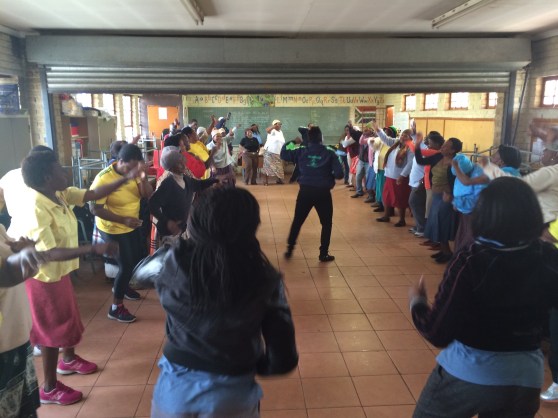
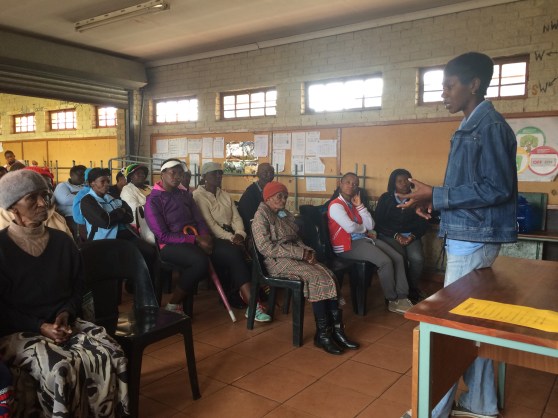
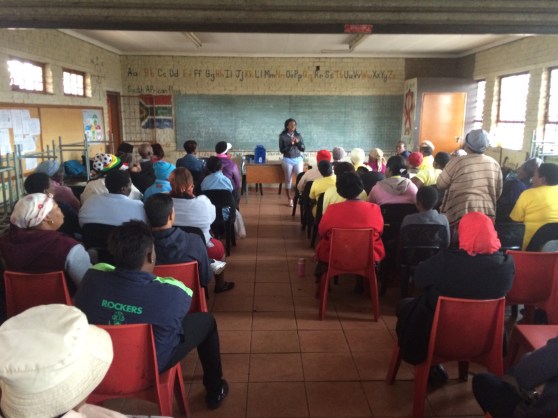
Members of the community listen to a CHWs talk on HIV after an introduction to CCP and learning how to do a Mexican wave👍