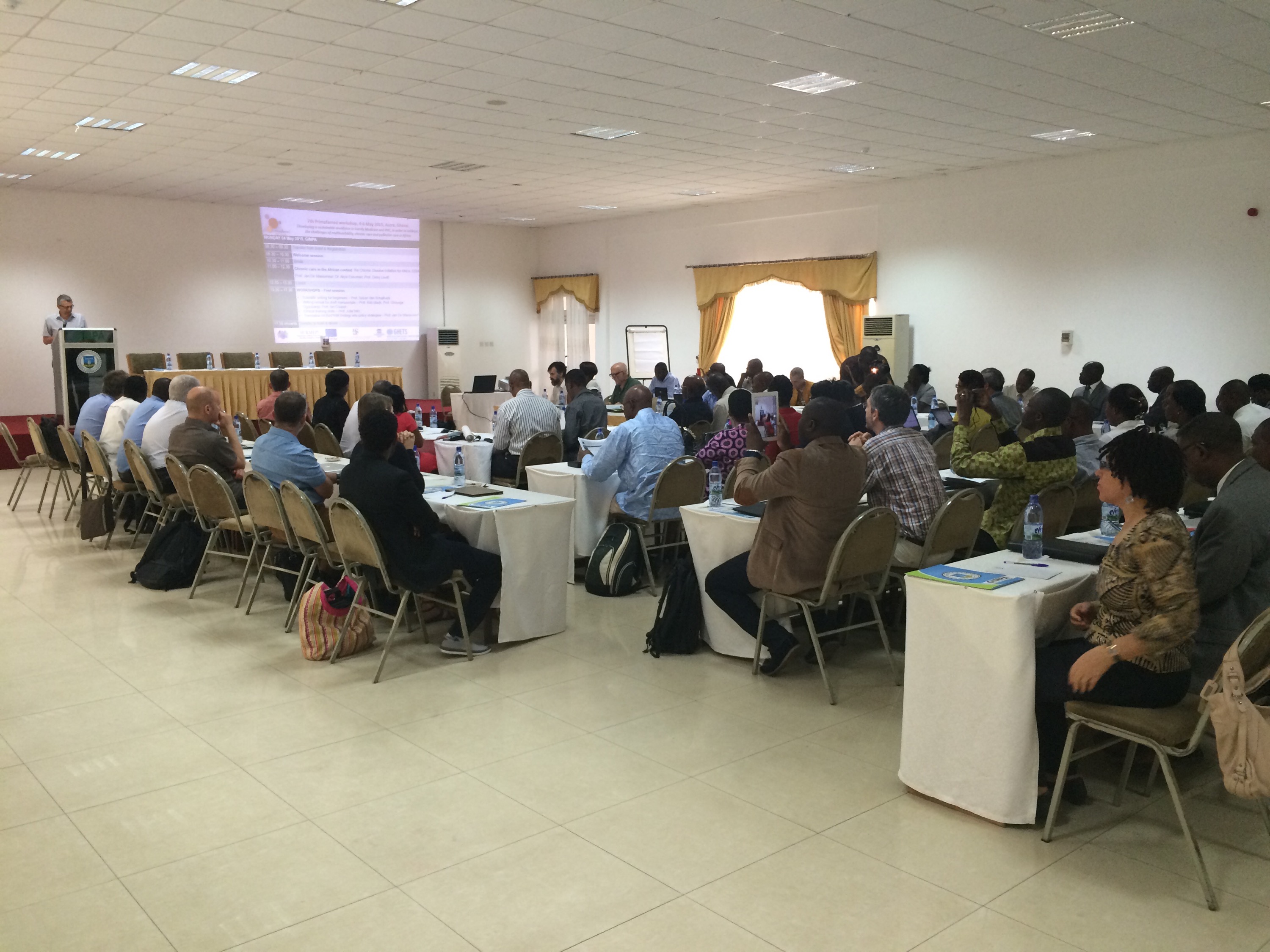
 The Primafamed Conference starts in Accra, Ghana today with a welcome by Professor Jan de Maeseneer and Dr Akye Essuman. Akye related how Family Medicine started years ago and how these conference is a defining moment for Family Medicine in Ghana. He introduced his large cohort of Faculty and postgraduate residents. Impressive !!
Author Archives: Shabir Moosa
Antidote to poor health services?
 Horror stories about public health facilities have become common, but a new entity, the Office of Health Standards Compliance, has been set up to monitor standards and it has the legal muscle to force failing institutions to improve…..more
Gauteng announces new doctors, nurses for Natalspruit Hospital
 Gauteng MEC for Health Qedani Mahlangu appoints 27 new health workers for the Natalspruit Hospital east of Johannesburg following OurHealth coverage of a man who died after waiting 12 hours for a bed. Mahlangu’s announcement follows OurHealth’s report that Katlehong resident Bheki Mabuya recently died after waiting 12 hours for the bed at the hospital. Mabuya had been diagnosed with bacterial meningitis, or a swelling of the tissue surrounding the brain and spinal cord caused by an infection. The condition is serious and can lead to brain damage and hearing loss….more
‘Social cohesion’ is not the answer to violence against immigrants in SA
SOME well-meaning people hope we can end violence against immigrants by working to ensure that we are all the same. In reality, we can do it only if we respect the fact that we are different. A common response to the violence is to lament a lack of “social cohesion”. While those who suggest this mean well, their remedy would almost certainly make immigrants’ lives here even more difficult…..more
Schools to manage own funds
 As of next month all schools in Gauteng will manage their own funds that amount to millions of rand. Panyaza Lesufi, MEC of education in Gauteng announced that all the province’s schools will become Section 21 schools from May 1……more
World Health Assembly to commit to strengthening basic surgical and anaesthetic services in primary health care and district hospitals
The 2015 World Health Assembly (from 18 May) will commit to strengthening member states’ capacity to deliver basic surgical and anaesthetic services in primary health care and at the district hospital level. The Assembly will have before it a report from the WHO Secretariat A68/31 [http://apps.who.int/gb/ebwha/pdf_files/WHA68/A68_31-en.pdf] and a draft resolution (EB136.R7) [http://apps.who.int/gb/ebwha/pdf_files/EB136/B136_R7-en.pdf] forwarded from the meeting in January of WHO’s Executive Board (EB).
Background
The Secretariat report, A68/31, reviews the global burden of surgical conditions, the importance and cost effectiveness of surgery and reviews some significant gaps in surgical and anaesthetic services globally. The report surveys a number of areas for action at the country level and current action at the Secretariat level.
Highlighted in the section on country level action were: awareness raising, access to and quality and safety of emergency and essential surgical services, strengthening the surgical workforce, better data on surgery for policy making, monitoring and evaluation, and global collaboration and partnerships.
Actions by the Secretariat which are highlighted include: the Integrated Management for Emergency and Essential Surgical Care (IMEESC) toolkit; the WHO-CHOICE project on cost-effectiveness of interventions; and the WHO Global Initiative for Emergency and Essential Surgical Care [http://who.int/surgery/globalinitiative/en/]. The Secretariat will work with MS to ensure that “surgical services at district and subdistrict levels of care are assessed and monitored”.
There was an extended discussion on this issue at the Executive Board meetings in May 2014 (EB135) and January 2015 (EB136) where there was widespread support for progressing this issue. The case for strengthening essential and emergency surgical and anaesthetic services was not contentious although many of the challenges were canvassed. See reports of discussion at EB135 [https://docs.google.com/document/d/1lKv0CXH5uh0HnzuS_lXvyaH0U3r-ntgC6yMSGS-21RI/edit#heading=h.nqpfzl541kt8] and EB136 [https://docs.google.com/document/d/1uva8FMfstqwhEyKJ-GMNU54bBFYqEgonOkZhm7KtHBY/edit#heading=h.cjdo4t746yqz].
Developing a PHM commentary
PHM’s WHO Watch collective (more here [http://www.ghwatch.org/who-watch]) is keen to hear comments from activists in PHM’s country circles, regional networks and affiliates and other interested civil society and professional organisations on the priorities for strengthening surgical and anaesthetic services and the particular challenges to be overcome in different countries and localities. Does the report in A68/31 correspond to your local realities? Does the proposed resolution, EB136.R7, address all of the key issues for you? What are the issues which need to be flagged at the WHA? Is there scope for building a broader people’s health movement through action around access to effective, safe and affordable surgical services?
A draft PHM commentary on this item can be found here [https://docs.google.com/document/d/1sZ3-mfKl4FrCcNoUVDOqv3OBJS4Hoo7e37_HderR1O8/edit]. Comments and suggestions will be most welcome. Please write to PHM Global Secretariat (globalsecretariat[AT]phmovement.org) with ‘WHO Watch / Surgery’ in the subject line.
xxxxx
PHM Comment
This is an important area and it is good that WHO is moving to adopt a formal integrated strategy and plan of action.
The issues canvassed in the Secretariat paper (EB136/27) are important. The following issues are of particular importance to PHM: models of service organisation and service delivery, surgical and anaesthetic task distribution within the health workforce, efficacy and effectiveness: evidence, clinical guidelines, clinical audit, safety and quality, clinical governance and clinical accountability, professional accountability and public policy control over training, regulatory frameworks and financing, the role of informed public and community involvement in policy, planning, management and institutional accountability.
It will be important to explore and evaluate the options with respect to service organisation and service delivery in different settings as part of planning this initiative. This will involve surveying existing models and developing criteria for assessing options.
Ensuring a high return on investment with respect to any expansion of surgical services will depend on: focusing surgery for conditions where surgical treatment has demonstrated efficacy; ensuring high quality and safety with respect to environments and practice; sustainable financing and payment arrangements; and appropriate workforce policies.
There are many lessons from the experience of surgery in rich countries including what to avoid: unreasonable reimbursement, exploitation of professional monopoly power, inappropriate and unsafe practices. Likewise there are valuable models from resource poor settings (eg the Aravind Eye Care System).
One of the key issues for L&MICs is ensuring appropriate workforce profiles. Surgery in rich countries is highly specialised, relatively autonomous both in clinical decision making and entry control (associated with long training programs), and generously remunerated. However, many surgical (and anaesthetic) procedures can be performed by personnel with more limited training and less generous remuneration. The use of such practitioners in a supportive organisational context can ensure greater cost-effectiveness, reach and access. Carefully designed training programs for these practitioners, including rich continuing in-service training, is critical.
Developing models of service delivery will involve identifying in broad terms the types of surgery which might be carried out in local (often quite isolated) hospitals, those which might be restricted to the referral centres, and the more complex but less urgent surgery which can be scheduled for visiting teams. In many L&MICs properly equipped mobile surgical teams play a critical role in facilitating access. Mobile teams can also play an important role in providing in-service training. Surgery should be integrated within existing PHC programs; it should not be constructed as a new vertical program. Provision should be made for adequate supplies, maintenance and technical support to ensure that surgical facilities in isolated areas and for mobile teams are safe for both patients and staff. It may be necessary to include security for mobile teams in some settings.
PHM urges a return to the district health system model. The roles assigned to the district hospital are critical. These include both the provision of first level hospital services, including basic surgery and anaesthetics, but also a range of functions that would strengthen and support primary health care and other district-level services.
Organisational policies and information systems to ensure that surgical services provided are efficacious and effective are critical. This will require systems for reviewing and synthesising evidence and the availability and observance of clinical guidelines. Safety and quality are critical. This will require clinical governance arrangements which ensure professional accountability – to peers, to management, to communities and to families and patients. Excessive professional autonomy of the surgical and anaesthetic professions is to be avoided. This requires that arrangements are in place for effective public policy control over training, regulatory frameworks and financing (including remuneration).
The process of expanding access to surgery in low resource settings will be fraught with risks and challenges. One of the prerequisites for success will be to ensure that policy making, service planning and operational management are all embedded within an environment of public and community accountability.
There will be no ‘one size fits all’ model for expanding surgical services. While general principles and strategies can be elaborated, institutional arrangements and operational details will need to respond to local and national context. Adapting general principles to local context will require developing local capacity for operations research before, during and after the roll out.
The development of any future strategy and action plan for WHO will need to break away from the prevailing culture of prolonged training, high specialisation, high clinical autonomy, private practice and high remuneration. We urge that whatever expert committees are assembled for this exercise they include people with experience in delivering surgery in low resource settings and that the process includes careful documentation and analysis of existing models of service delivery.
—
Let’s build a future where people are no longer dying for lack of healthcare knowledge – Join HIFA: www.hifa2015.org
Leveraging the Power of Knowledge Management to Transform Global Health and Development
Below is the citation and abstract of a new paper in the open-access journal Global Health: Science and Practice.
CITATION: Leveraging the Power of Knowledge Management to Transform Global Health and Development
Tara M Sullivan, Rupali J Limaye, Vanessa Mitchell, Margaret D’Adamo, Zachary Baquet#
First published online April 27, 2015, doi: 10.9745/GHSP-D-14-00228
Glob Health Sci Pract April 27, 2015
http://www.ghspjournal.org/content/early/2015/04/22/GHSP-D-14-00228.full.pdf
ABSTRACT: Good knowledge is essential to prevent disease and improve health. Knowledge management (KM) provides a systematic process and tools to promote access to and use of knowledge among health and development practitioners to improve health and development outcomes. KM tools range from publications and resources (briefs, articles, job aids) and products and services (websites, eLearning courses, mobile applications), to training and events (workshops, webinars, meetings) and approaches and techniques (peer assists, coaching, after-action reviews, knowledge cafés).
SELECTED EXTRACTS from full text (selected by Neil PW)
‘By its very nature, global health and development work involves a multitude of actors working toward common goals that transcend geographic, sectoral, organizational, and financial boundaries. These efforts require immediate access to the latest research and know-how and demand optimal use of limited resources to achieve maximum impact. Knowledge management (KM) can improve coordination, enhance learning and knowledge application, and improve capacity, thus heightening service quality, strengthening health systems, and, ultimately, improving health and development outcomes.’
‘KM approaches and techniques such as peer assists (bringing together a group of peers to elicit feedback on a problem, project, or activity and draw lessons from the participants’ knowledge and experience), coaching, mentorship, storytelling, and online orface-to-face forums such as communities of practice, are KM tools that can assist in enhancing coordination, learning, and adaptation.’
‘Because knowledge management has been informed by and used within disciplines outside public health, there is a crucial need to consider how to apply KM tools and processes from other fields to global health. Public health practitioners must recognize that one of the primary intangible assets we possess is knowledge and that we all require knowledge to solve the world’s pressing global health problems. The management of that knowledge is paramount but has yet to be viewed as such.’
Best wishes
Neil
Let’s build a future where people are no longer dying for lack of healthcare knowledge – Join HIFA: www.hifa2015.org
Health Policy Planning: Strengthening capacity to apply health research evidence in policy making: experience from four countries
Below is the citation and key messages of a paper on health policymaking, drawing from experience in Bangladesh, Gambia, India and Nigeria.
CITATION: Strengthening capacity to apply health research evidence in policy making: experience from four countries
Sarah Hawkes, Bhupinder K. Aulakh, Nidhee Jadeja, Michelle Jimenez, Kent Buse, Iqbal Anwar, Sandhya Barge, M. Oladoyin Odubanjo, Abhay Shukla, Abdul Ghaffar and Jimmy Whitworth
Health Policy Plan. (2015)
doi: 10.1093/heapol/czv032
First published online: April 21, 2015
KEY MESSAGES
- There is widespread acknowledgement of the need to strengthen capacity to increase the use of evidence in policy cycles and that capacity needs to be developed on both the supply and demand sides of evidence production. However, little experience of capacity strengthening in health sectors in low- and middle-income countries has been published to date.
- Strengthening the capacity of individuals and organizations is necessary but probably insufficient to ensure the sustainability of evidence-informed policy making. Institutional capacity needs to be strengthened too. This requires resources, legitimacy and regulatory support from policy makers.
- Evidence of what works to develop capacity to use evidence is needed — but rarely measured. We propose a new conceptual framework to evaluate the impact of capacity strengthening activities across a variety of levels and activities.
- For sustainable change, the politics of evidence-informed policy making needs to be understood and addressed—particularly the incentives facing policy makers to support the use of evidence in policy cycles.
—
Let’s build a future where people are no longer dying for lack of healthcare knowledge – Join HIFA: www.hifa2015.org
Webinar: How to Get Published – A Conversation with Journal Editors: May 11 at 11 am EDT
Join USAID On May 11
Webinar: How to Get Published ? A Conversation with Journal Editors
The Health Communication Capacity Collaborative (HC3) will hold a webinar May 11 to help university faculty and students in Africa and Asia learn more about how to publish research manuscripts. The third webinar in HC3’s University Initiative series, How to Get Published?A Conversation with Jouurnal Editors will be a roundtable discussion among editors of communication journals.
May 11, 2015 11AM – 12 PM EDT
REGISTER NOW
During a university needs assessment in 2013, HC3 identified some of the greatest challenges universities in sub-Saharan Africa and Asia face, including limited access to current literature and limited opportunities for scholarly publication. The webinar will provide advice on how to improve the ability of faculty and students in Africa and Asia to generate publishable research manuscripts. Participating editors will be asked to describe the mission of their journal and the types of manuscripts of interest to their readers, the nature of the review process, and guidelines or suggestions for authors that might encourage or facilitate more quality manuscript submissions. Doug Storey, PhD, director for Communication Science and Research at the Johns Hopkins Center for Communication Programs, will moderate.
Presenters include:
- Scott Ratzan, MD, editor-in-chief of the peer-reviewed Journal of Health Communication: International Perspectives
- Natalie Culbertson, managing editor, Global Health: Science and Practice (GHSP) Journal
- S. Shyam Sundar, PhD, editor-in-chief of the Journal of Computer-Mediated Communication
- Winston Mano, PhD, director of the Africa Media Centre and course leader of the MA in Media and Development at the University of Westminster
- Silvio Waisbord, PhD, professor and director of Graduate Studies in the School of Media and Public Affairs at George Washington University and editor-in-chief of the Journal of Communication
We hope that you will be able to join us!
For more information, contact Moremi Oladeinde. moladeinde@jhu.edu
__________
To send a message to the HIFA forum, simply send an email to: HIFA2015@dgroups.org
A review of e-Health interventions for maternal and child health in Sub-Sahara Africa
Below is the citation and abstract of a new paper in Maternal and Child Health Journal. Unfortunately the full text is restricted access and so I cannot read it, and the abstract does not really tell us anything. I have invited the lead author to join us to tell us more.
CITATION: Obasola OI, Mabawonku I, Lagunju I. A review of e-Health interventions for maternal and child health in Sub-Sahara Africa. Maternal and Child Health Journal. 2015. http://www.ncbi.nlm.nih.gov/pubmed/25652059
Corresponding author: Obasola OI, E. Latunde Odeku Medical Library, College of Medicine, University of Ibadan, Ibadan, Oyo State, Nigeria, Email address: olaseun@yahoo.com
ABSTRACT
To review e-health interventions for maternal and child health (MCH) and to explore their influence on MCH practices in sub-Sahara Africa (SSA). Keyword searches were used to retrieve articles from four databases and the websites of organisations involved in e-health projects for MCH in SSA. A total of 18relevant articles were retrieved using inclusion and exclusion criteria. The researchers reveal the prevalence of the application of mobile phones for MCH care and the influence of the use of information and communication technology (ICT) for delivering MCH information and services to target populations. There is a need to move the application of ICT for MCH care from pilot initiatives to interventions involving all stakeholders on a sub-regional scale. These interventions should also adopt an integrated approach that takes care of the information needs at every stage along the continuum of care. It is anticipated that the study would be useful in the evolution and implementation of future ICT-based programmes for MCH in the region.
—
Let’s build a future where people are no longer dying for lack of healthcare knowledge – Join HIFA: www.hifa2015.org
Too many dying in Sierra Leone as result of Ebola response not virus itself – report
Too many dying in Sierra Leone as result of Ebola response not virus itself – report
http://www.theguardian.com/world/2015/apr/28/too-many-dying-sierra-leone-response-ebola-report
Too many people are dying in Sierra Leone not from Ebola but as a result of the response to it, according to a report on the collapse of healthcare in the west African country.
Ebola has killed at least 3,900 people in Sierra Leone so far, but the epidemic has critically damaged the ability of the country’s limited healthcare system to cope with anything else, including soaring HIV and tuberculosis rates.
More people are believed to have died from malaria than from Ebola, while deaths of mothers and babies in childbirth are thought to have risen significantly.
Health and medical staff have been drawn away from their clinics into the Ebola response effort and the population has lost confidence in their health centres and hospitals. Attendance at clinics has plummeted by more than 70%….
Since Ebola there is a lack of trust between both doctors and patients; doctors are wary of who and what they are treating and patients are fearful of who’s treating them and what might happen if they are suspected of having Ebola…
“Everyone is rightly focusing hard on getting Ebola cases down to zero but a very real public health emergency happening around them is being ignored”
__________
To send a message to the HIFA forum, simply send an email to: HIFA2015@dgroups.org
modelling tool for policy analysis to support the design of efficient and effective policy responses for complex public health problems
CITATION: A modelling tool for policy analysis to support the design of efficient and effective policy responses for complex public health problems
Jo-An Atkinson, Andrew Page, Robert Wells, Andrew Milat, Andrew Wilson
Implementation Science 2015, 10:26
doi:10.1186/s13012-015-0221-5
published online: 3 March 2015
ABSTRACT / Resumen:
Background: In the design of public health policy, a broader understanding of risk factors for disease across the life course, and an increasing awareness of the social determinants of health, has led to the development of more comprehensive, cross-sectoral strategies to tackle complex problems. However, comprehensive strategies may not represent the most efficient or effective approach to reducing disease burden at the population level. Rather, they may act to spread finite resources less intensively over a greater number of programs and initiatives, diluting the potential impact of the investment. While analytic tools are available that use research evidence to help identify and prioritise disease risk factors for public health action, they are inadequate to support more targeted and effective policy responses for complex public health problems.
Discussion: This paper discusses the limitations of analytic tools that are commonly used to support evidence-informed policy decisions for complex problems. It proposes an alternative policy analysis tool which can integrate diverse evidence sources and provide a platform for virtual testing of policy alternatives in order to design solutions that are efficient, effective, and equitable. The case of suicide prevention in Australia is presented to demonstrate the limitations of current tools to adequately inform prevention policy and discusses the utility of the new policy analysis tool.
Summary: In contrast to popular belief, a systems approach takes a step beyond comprehensive thinking and seeks to identify where best to target public health action and resources for optimal impact. It is concerned primarily with what can be reasonably left out of strategies for prevention and can be used to explore where disinvestment may occur without adversely affecting population health (or equity). Simulation modelling used for policy analysis offers promise in being able to better operationalise research evidence to support decision making for complex problems, improve targeting of public health policy, and offers a foundation for strengthening relationships between policy makers, stakeholders, and researchers.
Full text: http://www.implementationscience.com/content/10/1/26
__________
To send a message to the HIFA forum, simply send an email to: HIFA2015@dgroups.org
BMJ: Health literacy: towards system level solutions
Below are the citation and extracts from a recent BMJ editorial. Health literacy is central to HIFA and I look forward to ideas from members on how we can contribute to this growing field. As a first step, I invite HIFA members in different countries to share how they ‘make health information and support available and accessible to people with different health literacy strengths and limitations’. As we have seen with the Ebola crtisis, the role of social science and, in particular, anthropology, is critical to how people obtain and interpret the healthcare information they need to protect their own health and the health of those for whom they are responsible.
CITATION: Health literacy: towards system level solutions
BMJ 2015; 350 doi: http://dx.doi.org/10.1136/bmj.h1026 (Published 24 February 2015)
Cite this as: BMJ 2015;350:h1026
‘In a new resource aimed at low and middle income countries, the World Health Organization has redefined health literacy as “the personal characteristics and social resources needed for individuals and communities to access, understand, appraise and use information and services to make decisions about health.”’
[World Health Organization. Health literacy toolkit for low- and middle-income countries. A series of information sheets to empower communities and strengthen health systems. 2015. www.searo.who.int/entity/healthpromotion/documents/hl_tookit/en/ ]
‘Health literacy was traditionally conceptualised as an individual deficiency in verbal ability, numeracy, or both. It was measured as the equivalent school grade in classroom-style assessments of performance14 or as ability to read and interpret passages of health related text such as instructions on how to take medication… Two recent systematic reviews have added multiple dimensions to the construct of health literacy, including communication skills, motivation, confidence, trust, and the ability to access care…’
‘WHO is exhorting countries to assess and develop their own health literacy responsiveness — defined as “the way in which services, environments and products make health information and support available and accessible to people with different health literacy strengths and limitations.”’
—
Best wishes, Neil
Let’s build a future where people are no longer dying for lack of healthcare knowledge – Join HIFA: www.hifa2015.org
Examples of the MCH handbook are now available
Now, some examples of the MCH handbook are uploaded.
You can fined both local and English language versions of MCH handbooks from four countries:
Bangladesh, Thailand, Palestine and Kenya.
Some of them are simple and some are sophisticated.
Please check the following URL: http://www.hands.or.jp/activity/mch/hb/e-mchdata.html
Are you interested in the handbook?
Please join the international conference. http://www.jeso.or.jp/council/download/141117/MCHHBProfile.pdf
HIFA profile: Satoko Yanagisawa works at the School of Nursing & Health, Aichi Prefrctural University, Kamishidami, Togoku, Moriyama-ku, Nagoya, Japan. sayanagi AT nrs.aichi-pu.ac.jp
Foul wind, spirits and witchcraft: illness conceptions and health-seeking behaviour for malaria in the Gambia
‘The strength of this study lies in its in-depth understanding of how malaria symptoms can be interpreted as different disease categories and thus attributed to different causes, leading to different health-seeking itineraries, even when an individual knows that ‘malaria’ is transmitted through mosquitoes and what the biomedically prescribed treatment regime is.’
CITATION: Foul wind, spirits and witchcraft: illness conceptions and health-seeking behaviour for malaria in the Gambia
Sarah O’Neill et al. Malaria Journal 2015, 14:167 doi:10.1186/s12936-015-0687-2
Corresponding author: Sarah O’Neill soneill@itg.be
http://www.malariajournal.com/content/14/1/167
ABSTRACT
Background: As the disease burden in the Gambia has reduced considerably over the last decade, heterogeneity in malaria transmission has become more marked, with infected but asymptomatic individuals maintaining the reservoir. The identification, timely diagnosis and treatment of malaria-infected individuals are crucial to further reduce or eliminate the human parasite reservoir. This ethnographic study focused on the relationship between local beliefs of the cause of malaria and treatment itineraries of suspected cases.
Methods: An ethnographic qualitative study was conducted in twelve rural communities in the Upper River Region and the Central River Region in the Gambia. The data collection methods included in-depth interviews, participant observation, informal conversations, and focus group discussions.
Results: While at first glance, the majority of people seek biomedical treatment for ‘malaria’, there are several constraints to seeking treatment at health centres. Certain folk illnesses, such as Jontinoojeand Kajeje, translated and interpreted as ‘malaria’ by healthcare professionals, are often not considered to be malaria by local populations but rather as self-limiting febrile illnesses ? consequently not leading to seeking care in the biomedical sectoor. Furthermore, respondents reported delaying treatment at a health centre while seeking financial resources, and consequently relying on herbal treatments. In addition, when malaria cases present symptoms, such as convulsions, hallucinations and/or loss of consciousness, the illness is often interpreted as having a supernatural aetiology, leading to diagnosis and treatment by traditional healers.
Conclusion: Although malaria diagnostics and treatment-seeking in the biomedical sector has been reported to be relatively high in the Gambia compared to other sub-Saharan African countries, local symptom interpretation and illness conceptions can delay or stop people from seeking timely biomedical treatment, which may contribute to maintaining a parasite reservoir of undiagnosed and untreated malaria patients.
—
Let’s build a future where people are no longer dying for lack of healthcare knowledge – Join HIFA: www.hifa2015.org
Special Issue: “Telemedicine, Telehealth and Health Information Technology in Low Resource Countries”
Hello all,
Science Journal of Public Health (SJPH) , a peer-reviewed open access journal published bimonthly in English-language, provides a international forum for the presentation of research findings and scholarly exchange in the area of health and related fields. The journal has a special focus on the social determinants of health, the environmental, behavioral, epidemiology, health services research, nursing, social work, medicine, and occupational correlates of health and disease, and the impact of health policies, practices and interventions on the community. Although preference is given to manuscripts presenting the findings of original research, review and methodological pieces will also be considered. http://www.sciencepublishinggroup.com/j/sjph
has a special issue on
“Telemedicine, Telehealth and Health Information Technology in Low Resource Countries”. I am the lead Guest Editor. You can visit and submit papers at
http://www.sciencepublishinggroup.com/specialissue/251012
Thank you
Ebenezer Afarikumah,
“Be more concerned with your character than your reputation, because your character is what you really are, while your reputation is merely what others think you are” John Wooden.
HIFA profile: Eben Afari-Kumah is a PhD candidate at the Accra Institute of Technology, Ghana. He is also a Research Scientist with the Council for Scientific and Industrial Research, Ghana, and an adjunct Lecturer at the University of Ghana (School of Public Health and Business School). His Master’s Dissertation was on “Developing patient data mining system for the University of Ghana Hospital. Eben is currently researching into the adoption, use and sustainabilty of Telemedicine in Ghana. He is a HIFA2015 Country Representative. eben.afari AT gmail.com
Health literacy in Europe: comparative results of the European health literacy survey (HLS-EU)
Health literacy in Europe: comparative results of the European health literacy survey (HLS-EU)
Kristine Sørensen , Jürgen M. Pelikan , Florian Röthlin , Kristin Ganahl , Zofia Slonska , Gerardine Doyle , James Fullam , Barbara Kondilis , Demosthenes Agrafiotis , Ellen Uiters , Maria Falcon , Monika Mensing , Kancho Tchamov , Stephan van den Broucke , Helmut Brand
The European Journal of Public Health, 2015
First Published online: April 2015
Abstract / Resumen:
Background: Health literacy concerns the capacities of people to meet the complex demands of health in modern society. In spite of the growing attention for the concept among European health policymakers, researchers and practitioners, information about the status of health literacy in Europe remains scarce. This article presents selected findings from the first European comparative survey on health literacy in populations.
Methods: The European health literacy survey (HLS-EU) was conducted in eight countries: Austria, Bulgaria, Germany, Greece, Ireland, the Netherlands, Poland and Spain (n = 1000 per country, n = 8000 total sample). Data collection was based on Eurobarometer standards and the implementation of the HLS-EU-Q (questionnaire) in computer-assisted or paper-assisted personal interviews.
Results: The HLS-EU-Q constructed four levels of health literacy: insufficient, problematic, sufficient and excellent. At least 1 in 10 (12%) respondents showed insufficient health literacy and almost 1 in 2 (47%) had limited (insufficient or problematic) health literacy. However, the distribution of levels differed substantially across countries (29–62%). Subgroups within the population, defined by financial deprivation, low social status, low education or old age, had higher proportions of people with limited health literacy, suggesting the presence of a social gradient which was also confirmed by raw bivariate correlations and a multivariate linear regression model.
Discussion: Limited health literacy represents an important challenge for health policies and practices across Europe, but to a different degree for different countries. The social gradient in health literacy must be taken into account when developing public health strategies to improve health equity in Europe.
How to obtain this article / Como obtener el artículo: click here. (free access)
http://eurpub.oxfordjournals.org/content/early/2015/04/04/eurpub.ckv043
__________
To send a message to the HIFA forum, simply send an email to: HIFA2015@dgroups.org
THET guide: Technology for effective partnership collaboration
Technology for effective partnership collaboration
Tropical Health & Education Trust (THET) has developed a guide that identifies online and electronic tools that can help partnerships collaborate more effectively.
The guide can improve your partnership’s effectiveness in:
- communicating with your team
- communicating and working whilst travelling
- communicating with your stakeholder
- collaborating and working as a team
- and managing information
Visit the THET website to download the guide.
http://www.thet.org/resource-library/technology-for-effective-partnership-collaboration
Chipo Msengezi, ITOCA
—
Best wishes, Neil
Let’s build a future where people are no longer dying for lack of healthcare knowledge – Join HIFA: www.hifa2015.org
WHO Guidelines for the treatment of malaria. Third edition, April 2015
For online version with hyperlinks to further information and publications, see:
http://www.who.int/malaria/publications/atoz/9789241549127/en/
As a personal comment, WHO is well recognised for its rigorous approach to guideline development (the process has been greatly improved in the past 10 years), but little is known about the effectiveness of guideline implementation. I am reminded of the systematic review I circulated on HIFA about an hour ago – almost all the studies identified were in high-income countries. Much more needs to be done to understand and strengthen the assimilation and adaptation of guidelines at national level in low- and middle-income countries.
OVERVIEW
Malaria case management, which consists of prompt diagnosis and effective treatment, remains a vital component of malaria control and elimination strategies. This third edition of the WHO Guidelines for the treatment of malaria contains updated recommendations based on new evidence as well as a recommendation on the use of drugs to prevent malaria in high-risk groups.
The core principles underpinning this edition include: early diagnosis and prompt, effective treatment; rational use of antimalarial treatment to ensure that only confirmed malaria cases receive antimalarials; the use of combination therapy in preventing or delaying development of resistance; and appropriate weight-based dosing of antimalarials to ensure prolonged useful therapeutic life and an equal chance of being cured for all patients…
—
Let’s build a future where people are no longer dying for lack of healthcare knowledge – Join HIFA: www.hifa2015.org
Usage of an online tool to help policymakers better engage with research: Web CIPHER
How can health policymakers be more empowered to deliver evidence-informed policy? Australian researchers are trying a new multifaceted approach called Web CIPHER, ‘an online tool with dynamic interactive elements such as hot topics, research summaries, blogs from trusted figures in health policy and research, a community bulletin board, multimedia section and research portal’. The study below aims to examine policymakers’ use of the site, and determines which sections are key drivers of use. You can read more about and join Web CIPHER here: https://www.saxinstitute.org.au/our-work/cipher/
CITATION: Usage of an online tool to help policymakers better engage with research: Web CIPHER
Steve R Makkar, Frances Gilham, Anna Williamson and Kellie Bisset
Implementation Science 2015, 10:56 doi:10.1186/s13012-015-0241-1
Published: 23 April 2015
Corresponding author: Steve R Makkar steve.makkar@saxinstitute.org.au
ABSTRACT (provisional)
Background: There is a need to develop innovations that help policymakers better engage with research in order to increase its use in policymaking. As part of the Centre for Informing Policy in Health with Evidence from Research (CIPHER), we established Web CIPHER, an online tool with dynamic interactive elements such as hot topics, research summaries, blogs from trusted figures in health policy and research, a community bulletin board, multimedia section and research portal. The aim of this study was to examine policymakers’ use of the website, and determine which sections were key drivers of use.
Methods: Google Analytics (GA) was used to gather usage data during a 16-month period. Analysis was restricted to Web CIPHER members from policy agencies. We examined descriptive statistics including mean viewing times, number of page visits and bounce rates for each section and performed analyses of variance to compare usage between sections. Repeated measures analyses were undertaken to examine whether a weekly reminder email improved usage of Web CIPHER, particularly for research-related content.
Results: During the measurement period, 223 policymakers from more than 32 organisations joined Web CIPHER. Users viewed eight posts on average per visit and stayed on the site for approximately 4 min. The bounce rate was less than 6%. The Blogs and Community sections received more unique views than all other sections. Blogs relating to improving policymakers’ skills in applying research to policy were particularly popular. The email reminder had a positive effect on improving usage, particularly for research-related posts.
Conclusions: The data indicated a relatively small number of users. However, this sample may not be representative of policymakers since membership to the site and usage was completely voluntarily. Nonetheless, those who used the site appeared to engage well with it. The findings suggest that providing blog-type content written by trusted experts in health policy and research as well as regular email reminders may provide an effective means of disseminating the latest research to policymakers through an online web portal.
The complete article is available as a provisional PDF. The fully formatted PDF and HTML versions are in production.
http://www.implementationscience.com/content/pdf/s13012-015-0241-1.pdf
—
Let’s build a future where people are no longer dying for lack of healthcare knowledge – Join HIFA: www.hifa2015.org
 AfroPHC