“Building effective PHC teams for UHC in Africa” Launch

As a beacon for frontline health workers devoted to Primary Health Care (PHC) service delivery and the realization of Universal Health Coverage (UHC) in Africa, we are excited to announce the launch of the AfroPHC Policy Framework titled “Building the PHC Team for UHC in Africa.”

Event Details:

Why Attend?

  1. Deep Dive into the AfroPHC Policy Framework: Gain insights into our comprehensive guideline crafted to build a resilient PHC team pivotal for driving UHC in Africa.
  2. Engage in Rich Discussions: Partake in an interactive webinar, group deliberations, and a Q&A session to exchange experiences, perspectives, and best practices.
  3. Drive Recommendations: Be part of a collective voice shaping the future of PHC teams, financing models, and effective PHC policy implementations.
  4. Collaborate: Join stakeholders, policymakers, healthcare professionals, and communities in a unified mission to bolster PHC for UHC in Africa.

Event Structure:

  • Welcome (10 mins): Introduction to the AfroPHC Policy Framework.
  • Keynote (10 mins): Emphasizing the role of a robust PHC workforce for UHC.
  • Thematic Presentations (80 mins): Covering topics like multidisciplinary teams, community health workers, PHC financing models, and  PHC Implementation Country successes and lessons.
  • Q&A Session (20 mins): Address audience queries.
  • Group Discussions (45 mins): Theme-based dialogues to drive actionable insights.
  • Plenary (60 mins): A summary of group findings and a moderated cross-theme exploration.

RSVPregister in advance for the webinar. Post registration, you will receive a confirmation email with further joining details. Please share this within your networks nad with your members.

In a world where patients and health workers often get lost in bureaucracy, our vision stands clear: an empowered, people-centric PHC team aptly equipped for Africa’s unique needs. We count on your invaluable participation to bring this vision closer to reality.

Meet Our Speakers
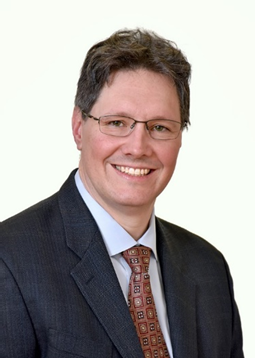
Dr. Jeff Markuns is a practicing family doctor and faculty member at Boston University, and currently the President for the North America Region of the World Organization of Family Doctors (WONCA). Most recently, Jeff was the Executive Director of the Primary Health Care Performance Initiative (PHCPI), a partnership between the Bill & Melinda Gates Foundation, the World Bank Group, UNICEF, the Global Fund and the World Health Organization with Ariadne Labs and Results for Development (R4D) as technical partners, all focused on better primary health care measurement for improvement in low and middle income countries. Jeff has particular expertise in education as the current and founding Director of the Masters program in Health Professions Education at Boston University. Jeff’s earlier clinical work has included both outpatient and inpatient services, including 20 years of labor and delivery, his teaching experience included his work as an Assistant Program Director for BU’s residency in Family Medicine, and his operational experience included leading one of BU’s primary Family Medicine clinical units in an affiliated community health center. As the Executive Director of the Global Health Collaborative in the Department of Family Medicine, Jeff’s deep experience with frontline primary health care and the human resource capacity-building necessary to support its success has led to successful long-term vertically and horizontally-integrated development efforts to promote primary health care system strengthening and workforce development, supporting programs throughout southeast Asia and in Lesotho in southern Africa.
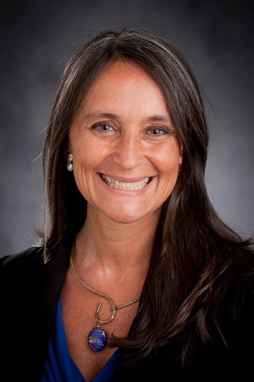
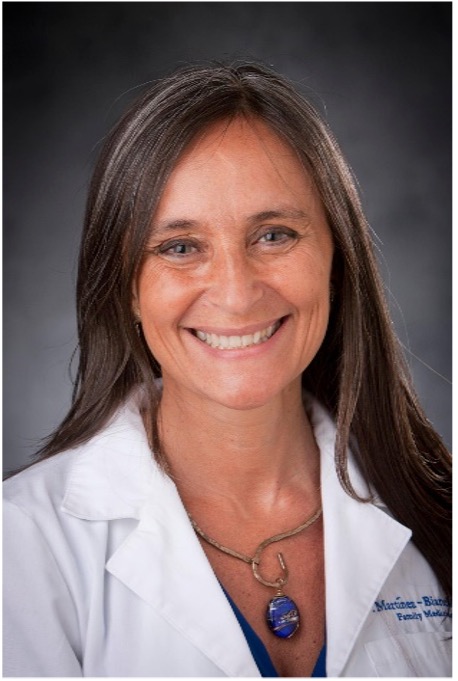
Dr. Viviana Martinez-Bianchi is a family doctor, a fellow of the American Academy of Family Physicians, an Associate Professor, and the Director for Health Equity at Duke University’s Department of Family Medicine and Community Health, in North Carolina, USA.  She served as Executive Member-at-Large of the World Organization of Family Doctors (WONCA) and WONCA liaison to the World Health Organization from 2016-2021, she is a member of the WONCA Rural Council, and has chaired WONCA’s Organizational Equity committee. She has been a member of the AfroPHC Advisory since its inception.  She serves in multiple organizations, boards, taskforces and advisories addressing care for marginalized populations. 


Dr. Faraz Khalid is currently a Research and Innovation Officer at Special Program for Primary Health Care at WHO Headquarters, and before this role, he was responsible for coordination for Universal Health Coverage reforms at the WHO’s Eastern Mediterranean Regional Office.

He has taken on multiple roles in the low- and middle-income countries health systems in the last seventeen years. He started his career as a medical doctor, transitioned to a program manager of an award winning innovative mhealth enabled social health protection program in Pakistan, has worked as health systems and financing consultant with World Health Organization, UNICEF, Asian Development Bank, and USAID.

Following his medical training, he completed his PhD in Global Health Policy and Management from Tulane School of Public Health and Tropical Medicine, USA and did Master’s in public health from London School of Hygiene and Tropical Medicine.
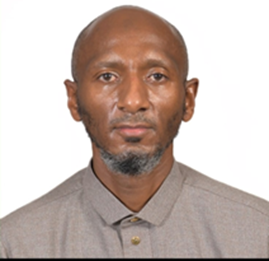
Dr. Salim Ali Hussein is a Public Health Practitioner in the Ministry of Health,  heading Primary Health Care, in the Ministry of Health, Kenya since July 2019. Passionate in Health System strengthening.

Previously held positions; head of Department of Health Promotion, Division of Community Health and has been a District Medical Officer In Charge of Marsabit District and Makindu Sub District. He holds an MSc Public Health System Management and Application from Kenyatta University and MB ChB from University of Nairobi. I have been trained on Social Innovation and system Change at University of Cape Town, leading high performing healthcare organizations (LeHHO) at Strathmore University, Strategic Leadership Development Programme at Kenya School of Government, in Information, Education & Communication in Health at Okinawa International Centre, Japan, and in Executive Hospital Management at  United State International University, Nairobi.
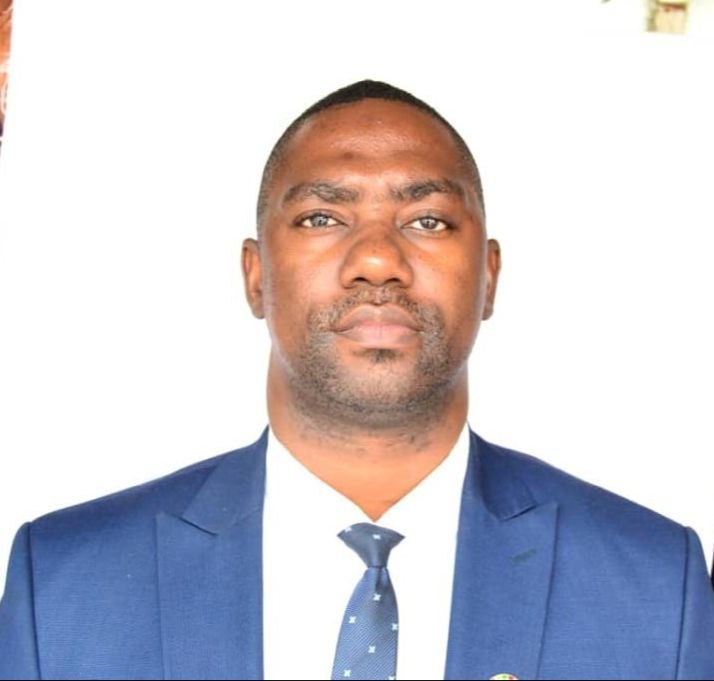
Dr Kalangwa Kalangwa is a Zambian medical doctor working for the Ministry of Health Headquarters as Assistant Director Health Promotion and Community Health in the department of Public Health and Research. He is also the spokesperson for the Ministry of Health. He has a special interest in solving health challenges using a public health approach. He has over 8 years experience in clinical medicine and public health. He holds a bachelor of science in Human Biology, a bachelor of Science in Medicine and Surgery and a masters degree in Epidemiology and Biostatistics, all obtained from the University of Zambia. He is currently perusing an MBA in Healthcare Management at UNICAF

The Virtual Workshops

The policy was constructed by over 500 members from over 20 African countries through virtual workshops since 2020. The workshops occurred on every third Tuesday of every month, 1-4 pm Central African Time, and the aim was to help build a shared perspective amongst PHC team members across Africa. All workshops were in the format of a moderated discussion with panellists and then group discussion and feedback. These workshops were accredited for continuing medical education (CME)/continuing professional development (CPD) across many African countries. They also had English/French/Portuguese translators available. 

Final Policy Framework Workshop in Johannesburg, South Africa

In October 2022, AfroPHC was able to host an in-person meeting in Johannesburg, South Africa. The purpose of this meeting was to finalise the policy paper, and the call to action for PHC across the African continent. About 35 members of the AfroPHC Executive and Advisory Board convened, together with other key stakeholders and experts, as the first in-person meeting of AfroPHC.

The Executive Summary

As the largest grassroots African institution specifically dedicated to advocating for frontline health workers who are committed to PHC service delivery and universal health coverage (UHC), we call on all stakeholders across Africa to build and empower effective PHC teams to achieve high quality PHC and UHC in Africa.

Our experience of primary health care (PHC) is of patients who are treated as numbers in a queue, with poor comprehensiveness, continuity, and coordination. Health workers are also treated like numbers in a bureaucracy that fragments and undermines training and service for integrated care around patient and population needs.

Our vision for PHC and UHC is a PHC team with skills mix appropriate to Africa, including family doctors, family nurse practitioners, clinical officers, community health workers and others that are empowered to take care of an empaneled population in high-quality people centred PHC.

Africa, please heed to the call of your health professionals.

Currently, the PHC system in Africa faces many new challenges AND opportunities. To date, human resources for health in PHC are grossly insufficient in number, often inefficiently and inequitably distributed, lacking adequate training for delivering fully responsive and comprehensive frontline care, and are treated inequitably within the health system. Projections for the African health workforce suggest this will worsen over the next five years. There has been a lack of solidarity among key role players in healthcare to create adequate PHC funding in Africa. Resources do not appropriately or adequately reach the frontline PHC service platform due to outdated service delivery and payment models. However, there are opportunities that leaders can capitalize on: global PHC milestones, increasing political will for investment in PHC, and proven mechanisms for achieving a stronger workforce such as the professionalization and scaling up of community health workers, clinical role-sharing, and the integration of family doctors, advanced practice nurse practitioners and allied health professionals into PHC.

We call on African leaders and global stakeholders to develop and implement a regional forward-looking plan to:

1)Build robust PHC SYSTEMS.

This must be based on a high quality bio-psycho-social-spiritual approach for PHC that is comprehensive, coordinated and integrated person- family- and community-centred. It must integrate PHC priorities and Health in All Policies. It must be based on empanelling of defined populations to a specific PHC team using community oriented primary care. It must be supported by interoperable e-Health and a strong District Health System to coordinate public and private providers.

2)Educate, recruit and maintain a sufficient frontline PHC WORKFORCE.

This must include a complete workforce of locally trained family doctors, nurses, advanced practitioners, pharmacists, professionalized community health workers and others sufficient to deliver high quality PHC. This workforce must involve role-sharing with supportive supervision; distributed leadership; clinical governance by accountable clinicians; and an integrated human resources development and management plan suitable to PHC.

3)Support PHC with FINANCES.

There must be political and sustained funding action that considers PHC as an investment; a fight for global solidarity action on PHC funding pools; and better management of PHC across Africa with strategic purchasing and payment reforms using blended capitation.

This can all come together easily in a simple nationally-defined PHC contract using risk-adjusted blended capitation payment to decentralised PHC teams empanelled to enrolled populations, coordinated by the district health services to provide services to the full population, and easily administered at national or sub-national level for empowered public and private providers.

As the African Forum for Primary Health Care, we call on Africa to commit to making this plan a reality and building effective PHC teams for UHC in Africa. We commit to mobilising PHC workers across Africa to create PHC teams around empanelled populations as sentinel sites across Africa to share best practice and to show evidence of how effective we can be at both practice and population level if we are empowered to deliver quality PHC as a team.

The AfroPHC Call to Africa: Join AfroPHC and build effective primary health care teams for universal health coverage in Africa

In opening we call on Africa

  • To pay heed to the call of its health professionals for PHC and UHC in Africa.
  • To seize opportunities to overcome African challenges for PHC and UHC in Africa.
  • To embrace the World Health Report of 2008 and Astana Declaration of 2018 by prioritizing integrated, resilient, person-centred and high quality PHC within UHC, re-organising UHC around PHC service delivery, integrating public health with primary care, and bringing private PHC providers into a regulated PHC system for UHC in Africa.

In terms of PHC Systems we call on Africa

  • To embrace the disciplines of family medicine and generalist PHC, with its bio-psycho-social-spiritual approach to care, to achieve PHC and UHC in Africa by 2023 that is personalised, comprehensive, continuous, and coordinated, in line with global standards.
  • To embrace primary care, defined by WHO as an essential level of care, that needs to be responsive, person- family- and community-centred and covers the full spectrum of care within the paradigm of OneHealth for PHC and UHC in Africa by 2023.
  • To integrate priority programmes (communicable diseases, non-communicable diseases, mother-woman-child health, violence-trauma, mental health etc.) into PHC in a diagonal manner that both supports these vertical priorities as well as supporting horizontal integration by PHC teams around patient and population for UHC in Africa by 2033.
  • To strengthen rehabilitation and palliation in PHC by 2033 with decentralised and well-funded community rehabilitation and palliation services, where teams with an appropriate mix of skills and professional supervision are linked to multiple community practices for accountable care.
  • To integrate oral health into PHC by 2033 with team-based service delivery models that includes appropriate role- and task-sharing with a range of oral health care practitioners and dentist support and supervision and that are linked to multiple community practices for accountable care.
  • To strengthen access to medicines and investigations with greater embrace of pharmacy professionals and point-of care technology at PHC level to achieve PHC for UHC in Africa by 2033.
  • To strengthen coordination of PHC referrals to hospitals with the placement of postgraduate-trained family doctors in PHC teams by 2033 to achieve UHC in Africa.
  • To prioritise PHC as the foundation for UHC: making “Health in All Policies” an integrating and develop­mental public health approach to decentralised government, and strengthening PHC teams with local linkages to other sectors affecting social determinants of health by 2023 to deliver PHC and UHC in Africa.
  • To strengthen the district health service to coordinate decentralised and empowered providers by 2033 and to ensure they deliver on agreed-upon results as they implement PHC and UHC in Africa.
  • To embrace the strategy of empanelment of a defined population and linking them to a defined, fully staffed, and equipped PHC team and medical home by 2023 as a foundational step to achieving PHC and UHC in Africa.
  • To embrace community-oriented primary care in community practices of 30 000 by 2033 and aspire to community practices of 10 000 for achieving PHC and UHC in Africa by 2043.
  • To embrace the Blueprint for Rural Health and rural proof all health policies by 2023 to support rural and marginalised urban primary health care comprehensively, especially creating stepladder entry requirements for educational institutions and rural/marginalised urban student immersion for the full PHC team, to achieve PHC and UHC in Africa.
  • To recognise the unique challenges of women in PHC and to explore innovative and sustainable interventions to overcome these for PHC and UHC in Africa
  • To recognise the unique opportunities of youth in PHC and to explore innovative and sustainable interventions to address these for PHC and UHC in Africa.
  • To embrace the variety of eHealth solutions for PHC by ensuring that sustainable national e-health strategies are supported by accessible infrastructure, interoperability and user-friendly designs that enable the PHC team and patients/populations to enhance quality and support new models of care in PHC and UHC in Africa.
  • To engage communities and ensure social participation in advancing team-based PHC across Africa.
  • To embrace the culture of quality and patient safety with strong teamwork, and to measure and monitor performance to achieve quality PHC and UHC in Africa.
  • To develop and support practice and population research sites focussed on PHC across Africa and to expand the range of indicators that will assess the effectiveness of PHC teams empanelled to populations as a key service delivery reform

In terms of PHC Workforce we call on Africa

  • To build a larger, better trained PHC workforce (integrating public and private providers) with more opportunities (educational, financial, and clinical) and greater resources (starting with structurally defining PHC services) to enable PHC and UHC.
  • To acknowledge the burden on all cadres in PHC and to embrace trans professional collaboration with a mix of all health professionals using respectful, collaborative role sharing and supportive supervision for achieving PHC and UHC in Africa.
  • To embrace distributed leadership practices, and education for it, among all PHC workers and managers to achieve PHC and UHC in Africa.
  • To embrace the important role of medical, dental, nursing and other professions with post-graduate training for decentralised primary care settings to support clinical governance, coordinated care and efficient referrals to achieve PHC and UHC in Africa.
  • To standardise, professionalise and decently remunerate community healthcare workers that are strongly integrated with the PHC team, and furthermore to aspire to a target of one CHW per thousand persons by 2043 to achieve PHC and UHC in Africa.
  • To clarify and harmonise PHC workforce nomenclature for the different categories and disciplines in PHC, and to then embark on labour market analyses in PHC (including public and private) and specific PHC human resource for health (HRH) policies and strategic plans to scale up the PHC health workforce by 2033 to achieve PHC and UHC in Africa.
  • To implement a robust educational and credentialing systems for developing a competent workforce dedicated to delivering comprehensive PHC services necessary to achieve UHC in Africa.
  • To protect all PHC workers as a precious and vulnerable resource and to empower them to build quality and resilience as a team that works closely with communities to achieve PHC and UHC for Africa.

In terms of PHC Finances we call on Africa

  • To regard health as an investment and to leverage political goodwill for action on PHC/UHC by defining PHC in budget terms, ringfencing the financing of PHC and committing to at least 2% of their GDP on PHC for UHC in Africa.
  • To re-examine global social solidarity on PHC and strengthen contributions to PHC for UHC in Africa as a priority, starting with High-Income Countries increasing ‘donor aid’ to 2% of their health spend and ‘donor aid’ funds allocating 30% to an African Union funding pool for integrated PHC and UHC in Africa by 2033.
  • To work towards better funded single pools for UHC funding, prioritising strategic purchasing for PHC with standard and transparent contracting of both public and private providers in empowered decentralised units of PHC for UHC in Africa by 2043.
  • To embrace PHC teams paid by blended capitation models (including capitation, fee-for-service and performance payments) to achieve holistic and responsive PHC and UHC in Africa by 2043.
  • To embark on simple nationally-defined PHC contracting to community practices for accountable care from both public and private service providers.

In closing,

We call on Africa to empower and build an effective PHC team to achieve PHC and UHC in Africa. We, as the African Forum for Primary Health Care (AfroPHC), commit to educating and empowering providers and their communities at the frontline to support this goal in any way we can, including

building AfroPHC Chapters at country level as a forum

for PHC and UHC in Africa.
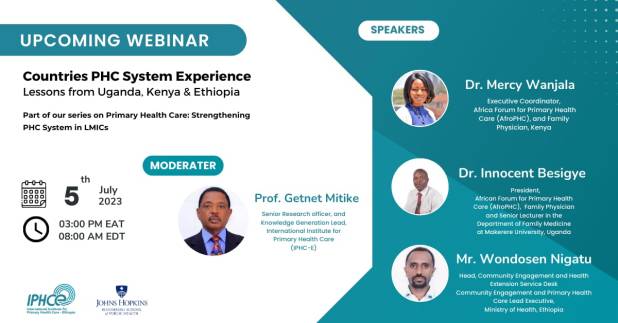
Webinar: Countries PHC System Experience: Lessons from Uganda, Kenya & Ethiopia [5 July 2023]

Join us as AfroPHC EC and President share country experiences in PHC, in collaboration with the Johns Hopkins Bloomberg School of Public Health, in a webinar on ‘Countries PHC System Experience: Lessons from Uganda, Kenya & Ethiopia’ as part of our series on Primary Health Care: Strengthening PHC Systems in LMICs. This session will feature speakers from Uganda, Kenya, and Ethiopia. Register here: https://lnkd.in/eBK9ie4m

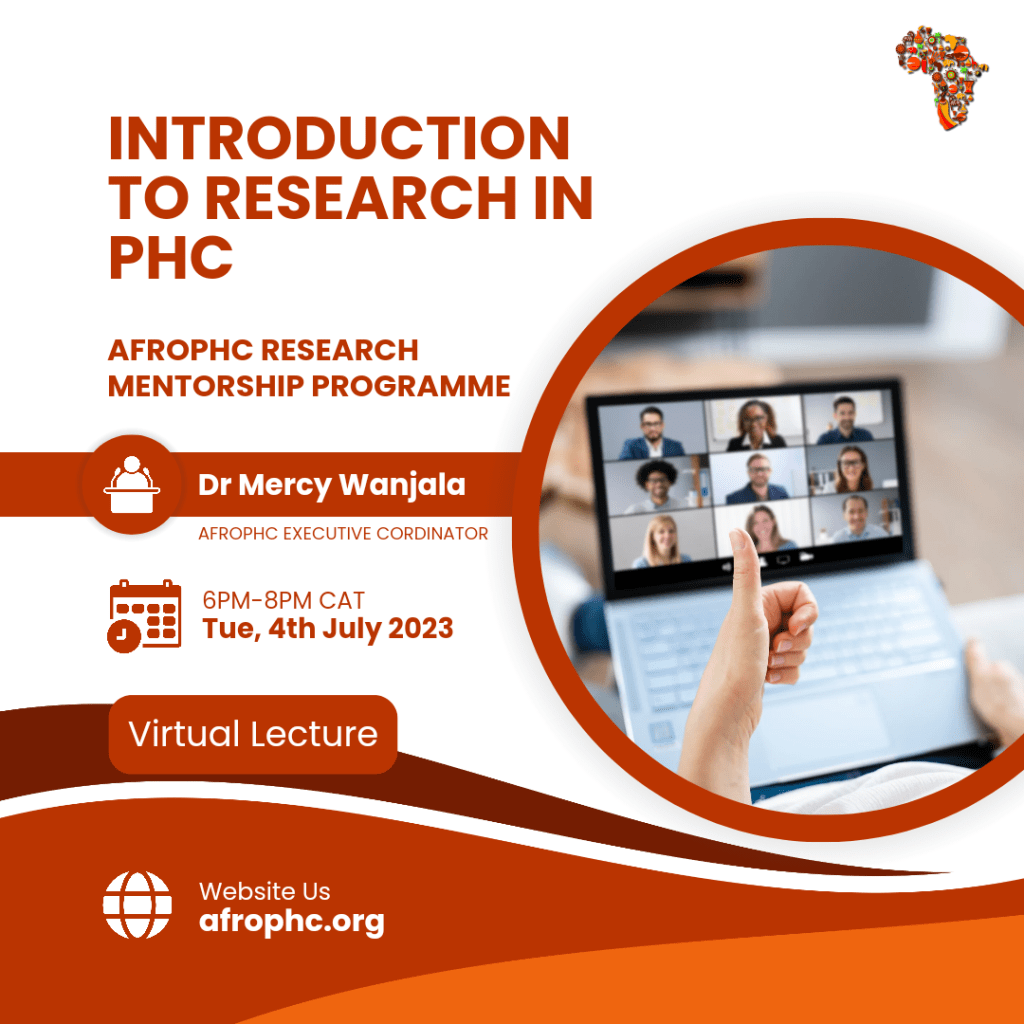
Webinar: Introduction to Research in PHC [4 July 2023]

Dear all,
I wish to invite you to the AfroPHC Research Mentorship Programme meeting coming up on Tuesday 4th July, 2023 at [4-6pm GMT, 5-7pm WAT, 6-8pm CAT/SAST and 7-9pm EAT.]
Lecture Title: Introduction to Research in PHC; Developing a Good Research Question.
Lecture Speaker: Dr Mercy Wanjala

Link will be sent to members via email. If you are not a member, join at http://www.afrophc.org/join-afrophc

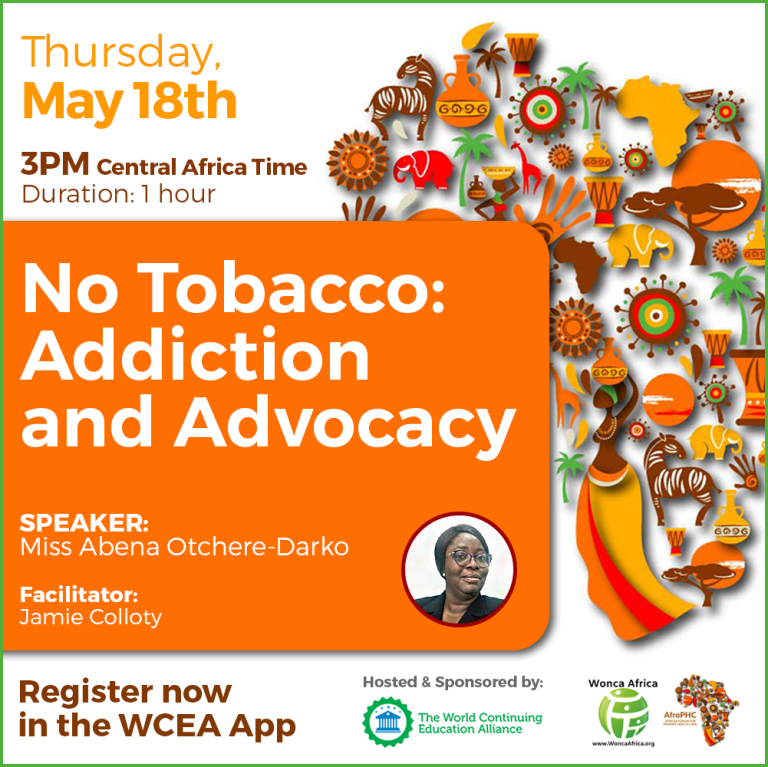
No Tobacco: Addiction and Advocacy | CPD 18 May

Tobacco kills up to half of its users. a plant with leaves that have high levels of the addictive chemical nicotine. After harvesting, tobacco leaves are cured, aged, and processed. In various ways. the resulting products may be smoked (in cigarettes, cigars, and pipes), applied to the gums (as dipping and chewing tobacco), or inhaled (as snuff).

Tobacco kills more than 8 million people each year. More than 7 million of those deaths are the result of direct tobacco use while around 1.2 million are the result of non-smokers being exposed to second-hand smoke. Keep the key to life in your hands, don’t give it to tobacco. Continued tobacco use corresponds to poorer addiction treatment outcomes, including a higher likelihood of relapse to substance use. The integration of tobacco-related services into addiction treatment can improve treatment outcomes, promote recovery, and reduce the well-established harms of ongoing tobacco use, including tobacco-related death and disease. Eliminate tobacco from your life before it kills you.

Webinar Title: No Tobacco: Addiction and Advocacy

Speaker: Miss Abena Otchere-Darko (BSC’ MGHIG’ CPMC’ MWAIMM’ PD. CIIA’ PD.CSM)

“I have taken inspiration from nature and feel one can achieve anything if one pursues it with diligence and perseverance and I have set my heart on attaining to do. This will equip me well in the art of assessing and cultivating human relationships, which is a necessity in any type of workplace and a discerning community as a whole, and having an opportunity to be part of this organization will be a value-added to my educational interests, involvement in a sorority and volunteer activities demonstrate attributes that make me a valuable employee in career practices. included in my list of talents leadership skills, reliability and work ethics in all roles and volunteer activities. Community involvement in volunteer programs such as community challenge and professional development programs in applied sciences and other resourced-based areas in education and early career practice, health, population surveys and census.”

OBJECTIVES:

  • Identify personal and socio-cultural beliefs, attitudes, values, and behaviours regarding tobacco and other drug use, as well as strategies for prevention through a visual display project on a specific drug-related topic or theme.
  • Identify and access community resources that deal with drug education (prevention, use, misuse, abuse, and public education) and incorporate this information into a visual display project.
  • Build teamwork skills that encourage collaborative work on a drug-related visual display, oral presentation, and written report.

Date: Thursday, 18th of May 2023

Time: 3 pm Central Africa Time (CAT)

Duration: 1 hour

CPD Points: 1

Register here: https://wcea.education/portfolio-item/no-tobacco-addiction-and-advocacy/

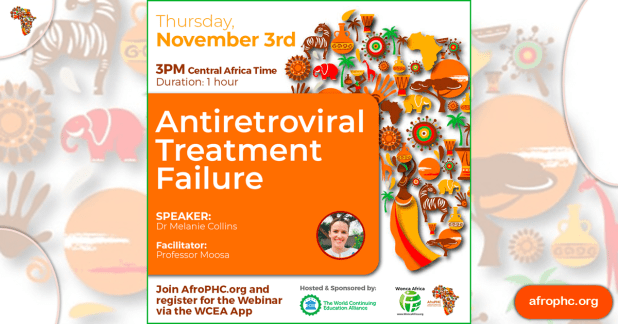
Antiretroviral Treatment Failure | CPD Webinar November 3

Join our next webinar, hosted & sponsored by the African Forum for Primary Health Care & WONCA Africa. The presentation is about the approach to ATF – Antiretroviral Treatment Failure. The webinar will be held in English.

Webinar Title: “Antiretroviral Treatment Failure”

Objectives:
1. Assessing Adherence
2. Facilitating Adherence
3. 2nd and 3rd Line Regimens
4. Resistance Testing

Speaker: Dr Melanie Collins – General practitioner at Good Life Clinic in Johannesburg, South Africa. Focused predominantly on HIV prevention, diagnosis, and management, as well as Mental Health.

Moderator: Prof Shabir Moosa

Date: Thursday, 3rd of November 2022 [Add to Calendar]

Time: 15:00 Central Africa Time (GMT+2 / CAT)

Duration: 1 hour

CPD Points: 1

Register here: https://wcea.education/portfolio-item/antiretroviral-treatment-failure/

Webinar October 27 | Capacity development and team building strategies for organizational growth: a practice-based approach in the context of PHC

Join our next webinar, hosted & sponsored by the African Forum for Primary Health Care & WONCA Africa.

Webinar Title: “Capacity development and team building strategies for organizational growth: a practice-based approach in the context of primary health care”

The Webinar will be held in English.

Please share the event with your Organization’s Members & reserve your spot in the WCEA App.

AfroPHC Seminars 24-25 Oct, Jhb, South Africa

The African Forum for Primary Health Care (AfroPHC) will be convening a Final Consultation Workshop on 25th and 26th October 2022 in Johannesburg to conclude the extensive consultation process for the AfroPHC Policy Framework being developed. About 35 members of the AfroPHC Executive and Advisory Board are expected to participate, together with other key stakeholders and experts, as the first in-person meeting of AfroPHC.

In order to enhance the workshop there will be two public seminars/webinars 8-10pm South African time on 24th and 25th of October at the auditorium of Wits School of Public Health.

24th October

  • Prof. Kara Hanson: Overview of Lancet Global Health Commission Report on PHC Financing
  • Dr. Oludare Bodunrin: Overview of African Strategic Purchasing for PHC in Africa

25th October

  • Prof Shabir Moosa: Overview of National Health Insurance and PHC efforts in South Africa, including Proof of Concept in Johannesburg

These will also be broadcast on Zoom. Check your local time here. Register in advance: https://us02web.zoom.us/webinar/register/WN_fwMYXUdOR8y3c1YaAtKkqg. There will be French translation available.

Prof Kara Hanson

She has spent the last 30 years researching the economics of health systems in low- and middle-income countries.  Her major contributions are in the areas of health financing and the private health sector.  She chaired the recent Lancet Global Health Commission on Financing Primary Health Care, and have authored key publications on how strategic purchasing can help to improve health system performance.  Her work on the private sector has contributed to understanding of the opportunities and limitations of using the private sector to extend access to critical public health interventions and, more recently, to the challenges of regulating healthcare markets.  She frequently advise national governments and international organisations on health system and financing issues.  She is President-Elect of the International Health Economics Association.


Dr. Oludare (‘Dare) Bodunrin

Over the last decade, Oludare Bodunrin has been working on strategic initiatives to deliver quality health care to underserved populations in Nigeria. Fondly called ‘Dare, he currently serves as the Acting Director and Technical lead at the SPARC, a strategic purchasing initiative hosted by Amref Health Africa to broker support to countries as they design and implement reforms geared towards efficient and equitable use of financial resources for health. Before joining SPARC, he served as a senior program officer at the Results for Development (R4D) in Nigeria during which he led the design and implementation of Social Health Insurance Schemes, facilitated joint learning about sub-national healthcare policy makers and managed key program functions as country representative of R4D Nigeria. ‘Dare’s professional interest and experience includes, health insurance design and implementation, supply chain for healthcare commodities, primary healthcare systems strengthening, private sector engagement and Not-for-Profit Management. He strongly advocates for self-sufficiency, mutually beneficial partnership and home-grown evidence-based solutions for sustainable development in Africa

Prof Shabir Moosa

Prof Shabir Moosa is a family physician with an MBA and PhD. He works in public service clinics of Soweto and at the University of Witwatersrand, Johannesburg, South Africa. He has extensive experience in rural general practice and the development of family medicine and primary care services in both rural and urban district health services in South Africa and Africa. Shabir is involved in development and research around family medicine, community-oriented primary health care (COPC) and health management for Universal Health Coverage (UHC) in Africa. He is Member at Large in the Executive Committee of WONCA (World Organisation of Family Doctors), and Executive Coordinator of AfroPHC, the African Forum for Primary Health Care (PHC), bringing African PHC team leaders together to advocate for PHC and UHC

AfroPHC Policy Workshop on Bridging the Gap: Health Equity in PHC in Africa

Join us at our next interactive AfroPHC Policy Workshop on “Bridging the Gap: Health Equity in PHC in Africa” 11am-2pm Ghana, 12pm-3pm Nigeria, 1-4 pm Central/Southern Africa and 2-5pm Kenya next Tuesday 18th October. Check your local time here. Link below

Join Zoom Meeting | Meeting ID: 850 2305 9229 | Passcode: 241734

Our panel, moderated by Ms. Rawia Kamal, is made up of the following expert: Morrish Humphrey Ojok, Kim Yu and Viviana Martinez-Bianchi.

After the panel discussion of 1 hour, we will break up into small groups with specific facilitators / language groups for 45 minutes to discuss the following question/s.

  1. In your experience, what are the factors that have contributed to health disparities and inequities in the access and delivery of primary health care from:
  2. A community perspective?
  3. A healthcare worker/ service delivery perspective?
  4. What are some of the solutions you would recommend addressing these gaps and promote health equity?

We will close the meeting with feedback and summarise key issues. We want to build discussions into the draft AfroPHC Policy Document “Building the PHC Team for UHC in Africa”. The panel and feedback will have French translations. See more details, including speaker’s bios below.

Morrish Humphrey Ojok Country Manager Amref Health Africa in South Sudan. Morrish Humphrey Ojok serves as the Country Manager of Amref Health Africa in South Sudan. Morrish is an experienced leader in the field of global public health, health in emergencies and sexual and reproductive health and international development. He has extensive experience in driving complex programme deployment, monitoring and evaluation, strategic planning, and management in multiple countries.  Morrish has over 17 years’ experience developing and delivering organizational strategies, with extensive experience of complex management and governance issues. He strongly believes that its through Primary Health Care that Universal Health Coverage can become a reality in Africa. He also believes that through partnership and collaboration with all stakeholders at all levels from community level, Government, private sector and with support from the broader international community and donors, innovative, culturally sensitive, and appropriate solutions to Africa’s health challenges can be found and fostered.  

Dr. Kim Yu: Board certified in family medicine, Dr. Kim Yu is National Director for Clinical and Community Partnerships for Aledade, based in Orange County, California. Dr. Yu speaks internationally and trains family physicians, residents and medical students on health equity, population health, value-based care, health IT, leadership, advocacy, disaster relief, social media, and physician wellness. Dr. Yu currently serves as President of the Orange County Chapter of the California Academy of Family Physicians; She also chairs WONCA’s Special Interest Group in Health Equity and is AAFP delegate to the AMA. She is past president of the Michigan Academy of Family Physicians.

Dr. Viviana Martinez- Bianchi: Dr. Viviana Martinez-Bianchi is an associate professor in Duke’s Department of Family Medicine and Community Health, and  named North Carolina’s 2021 Family Physician of the Year by the North Carolina Academy of Family Physicians (NCAFP). The honor is the most prestigious award from the NCAFP, the state’s largest specialty medical association, comprised of more than 4,300 members. Dr. Martinez-Bianchi, a family physician committed to health equity in her community and around the world, serves as Director of Health Equity for the Department of Family Medicine and Community Health at Duke University. She is a co-founder of the Latinx Advocacy Team & Interdisciplinary Network for COVID-19, better known as LATIN-19. The group was established in March of 2020 to address inequities in the COVID-19 pandemic response, the health system in general and communities in Central North Carolina. Prior to becoming Director of Health Equity, Dr. Martinez-Bianchi served as Program Director for the Duke Family Medicine Residency Program.

Webinar on Implementation Research for Primary Health Care

The International Institute for Primary Health Care-Ethiopia, in collaboration with Johns Hopkins Bloomberg School of Public Health is hosting a webinar on ‘Implementation research for PHC’ as the next installment in our series on Strengthening PHC Systems in LMICs. Professor Getnet Mitike of IPHC-E will moderate this session, with speakers joining us from The Johns Hopkins Bloomberg School of Public Health, USA and Pathfinder International…more

LSHTM PHC seminar series launch

”Primary Health Care – the heart of every health system”, a 10-part seminar series runs from October 2022 to July 2023 providing an overview of the key features and functions of PHC, the potential of PHC in all health systems and its role in achieving universal health coverage.

The first session will be:
Panel Discussion: Primary Health Care, the heart of every health system?
12.45 – 13.45, Wed 5 Oct 2022
Introduction: Liam Smeeth (LSHTM)
Panellists: Kara Hanson (LSHTM), Shannon Barkley (WHO), Alex Mold (LSHTM), Shabir Moosa (Wits University)
Chairs:
Luke Allen (LSHTM) & Luisa Pettigrew (LSHTM)

…more

AFROPHC: Live Webinar September 1| Sickle Cell Anaemia: Disease Complications and Therapeutic Interventions

Join our next webinar, hosted & sponsored by the African Forum for Primary Health Care & WONCA Africa.


“Sickle Cell Anaemia: Disease Complications and Therapeutic Interventions”


The Webinar will be held in English with live translation into French.


Please share the event with your Organization’s Members &

Reserve your spot in the WCEA App.

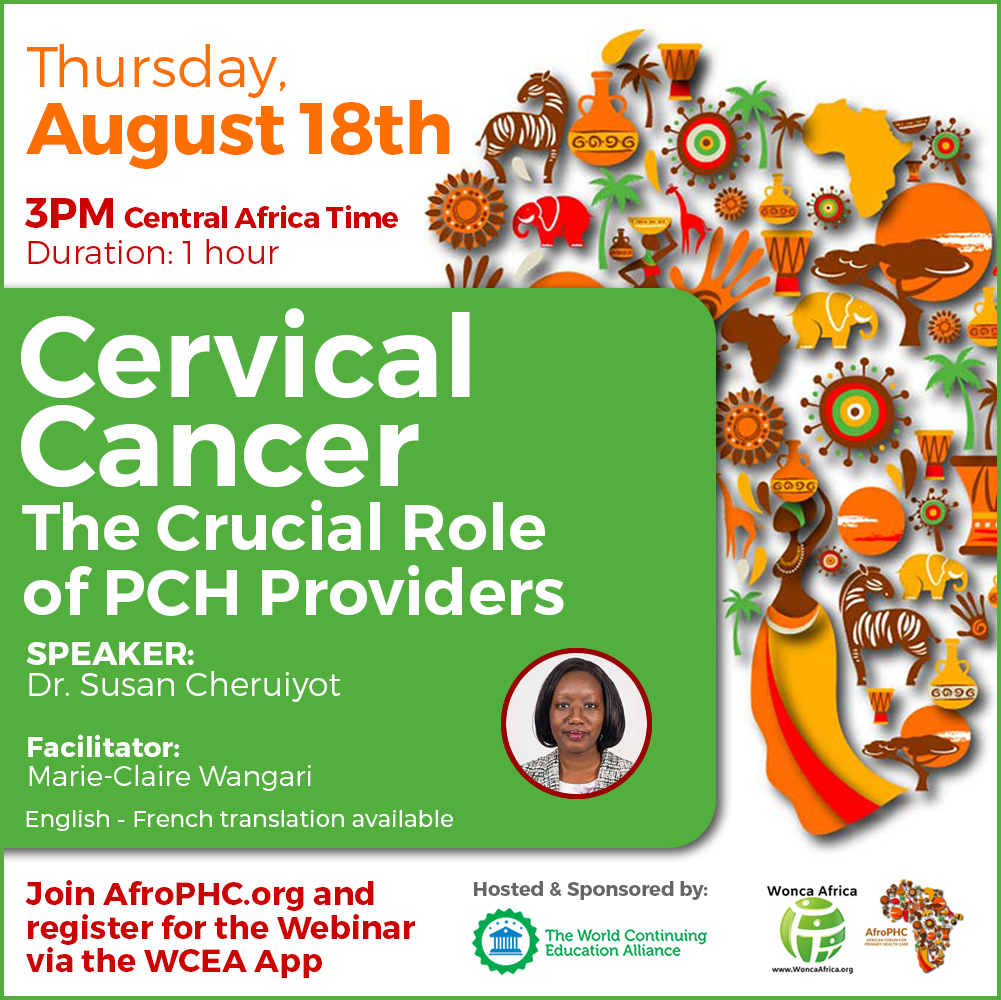
Webinar August 18 | Cervical cancer; The crucial role of primary health care providers

Join our next webinar, hosted & sponsored by the African Forum for Primary Health Care & WONCA Africa.

“Cervical cancer; The crucial role of primary health care providers”

The Webinar will be held in English with live translation into French.

Please share the event with your Organization’s Members & reserve your spot in the WCEA App.

Consultation invitation – WHO Foundation

Dear colleagues,

With apologies for cross-posting, sharing this invitation for a consultation on the WHO Foundation’s strategy document for those of you who might be interested. The attached invitation notes that the draft strategy will be shared with registered participants ahead of the virtual consultation.

If you are interested, please register by August 19 for one of the two sessions:

● Option #1// Tuesday, August 30: 17:00 Central European Time i.e. 08.00 Pacific Daylight Time (PDT) / 11.00 Eastern Time (ET) / 16.00 West Africa Time (WAT)/ 18.00 East Africa Time (EAT) / 20:30 India Standard Time (IST) / 23.00 Singapore Standard Time (SST)
Registration Link: https://us06web.zoom.us/meeting/register/tZMscO6oqjorHddt-gT4UCoV7_s_4pKdjyT7
● Option #2// Thursday, September 1: 09:00 Central European Time (CET) i.e. 00.00 Pacific Daylight Time (PDT) / 03.00 Eastern Time (ET) / 08.00 West Africa Time (WAT)/ 10.00 East Africa Time (EAT) / 12:30 India Standard Time (IST) / 15:00 Singapore Standard Time (SST)
Registration Link: https://us06web.zoom.us/meeting/register/tZ0rcu-qpj0uEtaN-zYQ80IlUAdL-Iq9Mb7d

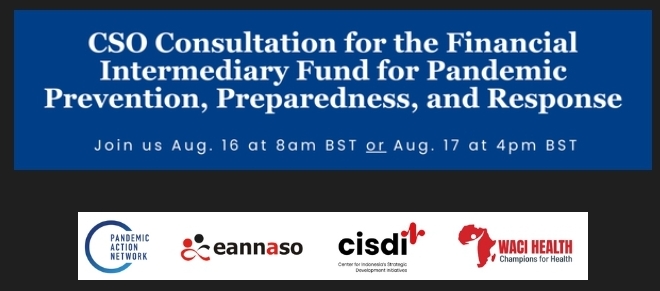
Invitation: CSO consultation on Pandemic FIF

Pandemic Action Network, the Center for Indonesia’s Strategic Development Initiatives (CISDI), the Eastern Africa National Networks of AIDS Service Organisations (EANNASO), and WACI Health invite you to an official Civil Society Organization (CSO) consultation for the design phase of the new Financial Intermediary Fund (FIF) for Pandemic Prevention, Preparedness, and Response (PPR).

Two dates and times have been set to engage partners from multiple geographies and in multiple languages (English, French, and Spanish interpretation will be provided for each session). The focus of these first two consultations will be the same, so please choose the date and time that works best for you

August 16
2pm-3:30pm WIB (Jakarta) / 10am-11:30am EAT (Nairobi) / 8am-9:30am BST (London)


August 17
4pm-5:30pm BST (London) / 11am-12:30pm ET (New York) / 10am-11:30am CDT (Mexico City)

Register here

AfroPHC Policy Workshop on Workers Health in African PHC

Join us at our next interactive AfroPHC Policy Workshop on “Workers Health in African PHC” 11am-2pm Ghana, 12pm-3pm Nigeria, 1-4 pm Central/Southern Africa and 2-5pm Kenya next Tuesday 16th August. Check your local time here.

Our panel, moderated by Dr Jamie Colloty, is made up of the following expert.
· Dr. Dorothy Ngajilo, Occupational Medicine Specialist, World Health Organization (WHO) Global Occupational and Workplace Health Programme
After the panel discussion of 1 hour, we will break up into small groups with specific facilitators / language groups for 45 minutes to discuss the following question/s.
What are some of the positive and negative experiences that have affected yourhealth and safety as a healthcare worker?
What do you understand by the term burnout and what are some of the factors thatlead to burnout among primary health care workers in Africa?
What policies and strategies would you recommend protecting the health and safetyof primary health care workers in Africa?
We will close the meeting with feedback and summarise key issues. We want to build discussions into the draft AfroPHC Policy Document “Building the PHC Team for UHC in Africa”. The panel and feedback will have French translations. See more details, including speaker’s bios here.

Join Zoom Meeting
https://us02web.zoom.us/j/85023059229?pwd=aWttVUh5ZTVFdHhRbElKSTBJVjVrZz09
Meeting ID: 850 2305 9229 | Passcode: 241734

AfroPHC Workshop 16 Aug “Workers Health in African PHC”

Join AfroPHC is its next interactive AfroPHC Policy Workshop on “Health and Wellness of Primary Health Care Workers in Africa” 11am-2 pm GMT on Tuesday 16th August. Check your local time here.

Aim: To explore the factors that influence the health and well-being of primary health care workers in Africa and effective strategies to improve workers ‘health.  

 Objectives: 

  • To explore the issues that affect the health and wellness of Primary Health Care workers in Africa
  • To discuss individual, team, and administrative strategies to protect the health and safety of primary health care workers in Africa

Our panel, moderated by Dr Jamie Colloty, is made of the following expert on Workers Health. See their bios below

  • Dr. Dorothy Ngajilo, Occupational Medicine Specialist, World Health Organization (WHO) Global Occupational and Workplace Health Programme.

After the panel discussion of 1 hour we will break up into small groups with specific facilitators / language groups for 45 minutes to discuss some question/s. 

  • What are some of the positive and negative experiences that have affected yourhealth and safety as a healthcare worker?
  • What do you understand by the term burnout and what are some of the factors thatlead to burnout among primary health care workers in Africa?
  • What policies and strategies would you recommend protecting the health and safetyof primary health care workers in Africa?

We will close the meeting with feedback and summarise key issues. We want to build discussions into the draft AfroPHC Policy Document “Building the PHC Team for UHC in Africa”. The panel and feedback will have French translations.

Please register your interest for the Policy Workshops on the AfroPHC policy workshops page. We will provide you the zoom meeting details a few days before the meeting.

Dr. Dorothy Ngajilo is an Occupational Medicine Specialist working with the World Health Organization (WHO) Global Occupational and Workplace Health Programme. She is responsible for supporting the development and implementation of occupational health and safety programmes for health workers in different countries, in collaboration with other internal technical programmes and outside partners. Prior to joining WHO, Dr. Ngajilo worked in the Ministry of Health of her native country, Tanzania, as an Occupational Medicine Physician. She is also a medical advisor to the Tanzanian Workers Compensation Fund (WCF) and the Occupational Health and Safety Authority (OSHA), providing technical support on all matters related to occupational health and safety.  Dr. Ngajilo is a medical doctor with Occupational Medicine specialty training from the University of Cape Town, South Africa. She is also a Fellow of the College of Public Health Medicine (Occupational Medicine) of South Africa. 

Webinar: Management of Epilepsy in Primary Health Care

Join our next webinar, hosted & sponsored by the African Forum for Primary Health Care & WONCA Africa.


“Management of Epilepsy in Primary Health Care”


The Webinar will be held in English.


Please share the event with your Organization’s Members &
reserve your spot in the WCEA App…more

WHO publication “Implication of the COVID-19 Pandemic for Patient Safety: A Rapid Review”, Tuesday, 09 August 2022

Dear Colleagues,

Greetings from the WHO Patient Safety Flagship in Geneva.

The COVID-19 pandemic has profoundly impacted nearly all countries’ health systems and diminished their capability to provide safe health care, specifically due to errors, harm and delays in diagnosis, treatment and care management. In preparation for the forthcoming fifth Global Ministerial Summits on Patient Safety, scheduled to be held on 23-24 February 2023 in Montreux, Switzerland as the host country, has been working with WHO to better understand the implications of the COVID-19 pandemic for patient safety.

As part of this ongoing initiative, WHO Patient Safety Flagship is planning to launch the publication “Implication of the COVID-19 Pandemic for Patient Safety: A Rapid Review”, in a virtual event on Tuesday, 09 August 2022, 14:00-15:30 (CEST).

The objectives of this event are to:

– provide an overview of implications of the COVID-19 pandemic for patients, health workers, and the general public

– highlight the importance of managing risks and addressing avoidable harm in a pandemic situation

– discuss implications of the pandemic for patient safety within the broader context of preparedness, response and recovery

– lay the foundation for follow-up work around generating more robust evidence and supporting countries in their efforts to build resilient and safer health care systems.

We hope that you join us for this event on Tuesday, 09 August 2022 at 14:00-15:30 CEST.

Please register at the link. https://echo.zoom.us/webinar/register/WN_yVOgkzyvSaCzPXW1r6CY5A, also included in the attached flyer [HIFA does not carry attachments].

Simultaneous interpretation will be available in English, French and Spanish.


Thanks and best regards,

Dr Neelam DHINGRA
Unit Head
WHO Patient Safety Flagship/

AfroPHC Workshop 21st June “Labs/POCT in African PHC”

Join AfroPHC is its next interactive AfroPHC Policy Workshop on “Labs/POCT in African PHC” 11am-2 pm GMT on Tuesday 21st June. Check your local time here.

Our panel, moderated by Dr Mercy Wanjala, is made of the following POCT experts. Dr Rajiv Erasmus and Dr Rogier Hopstaken.

After the panel discussion of 1 hour we will break up into small groups with specific facilitators / language groups for 45 minutes to discuss some question/s. 

We will close the meeting with feedback and summarise key issues. We want to build discussions into the draft AfroPHC Policy Document “Building the PHC Team for UHC in Africa”. The panel and feedback will have French translations.

Please register your interest for the Policy Workshops on the AfroPHC policy page. We will provide you the zoom meeting details a few days before the meeting.

See recording of workshop and presentations below

AfroPHC Webinar 6pm (GMT) Tues 17th March 2020

Dear colleagues

The African Forum for Primary Health Care (AfroPHC) is the voice of the PC/PHC team and its supporters, sharing and supporting each other in advocating for PHC. We want you to join us. We are having a series of webinars in a work up to the AfroPHC Conference 19-21 June 2020. Register for it!

Please register here for our second webinar on Tues 17th March 2020 at 6pm Ghana, 7pm Nigeria, 8pm SA, 9pm Kenya. 

The webinar will include luminaries from family medicine talking about family doctors, associate clinicians and African PHC. 

They will share a bit of background on organisations in the field, their efforts in the space of Primary Health Care in Africa as well as their views on the AfroPHC process.

Please forward this to your friends and colleagues.
rgds, AfroPHC Core Team