
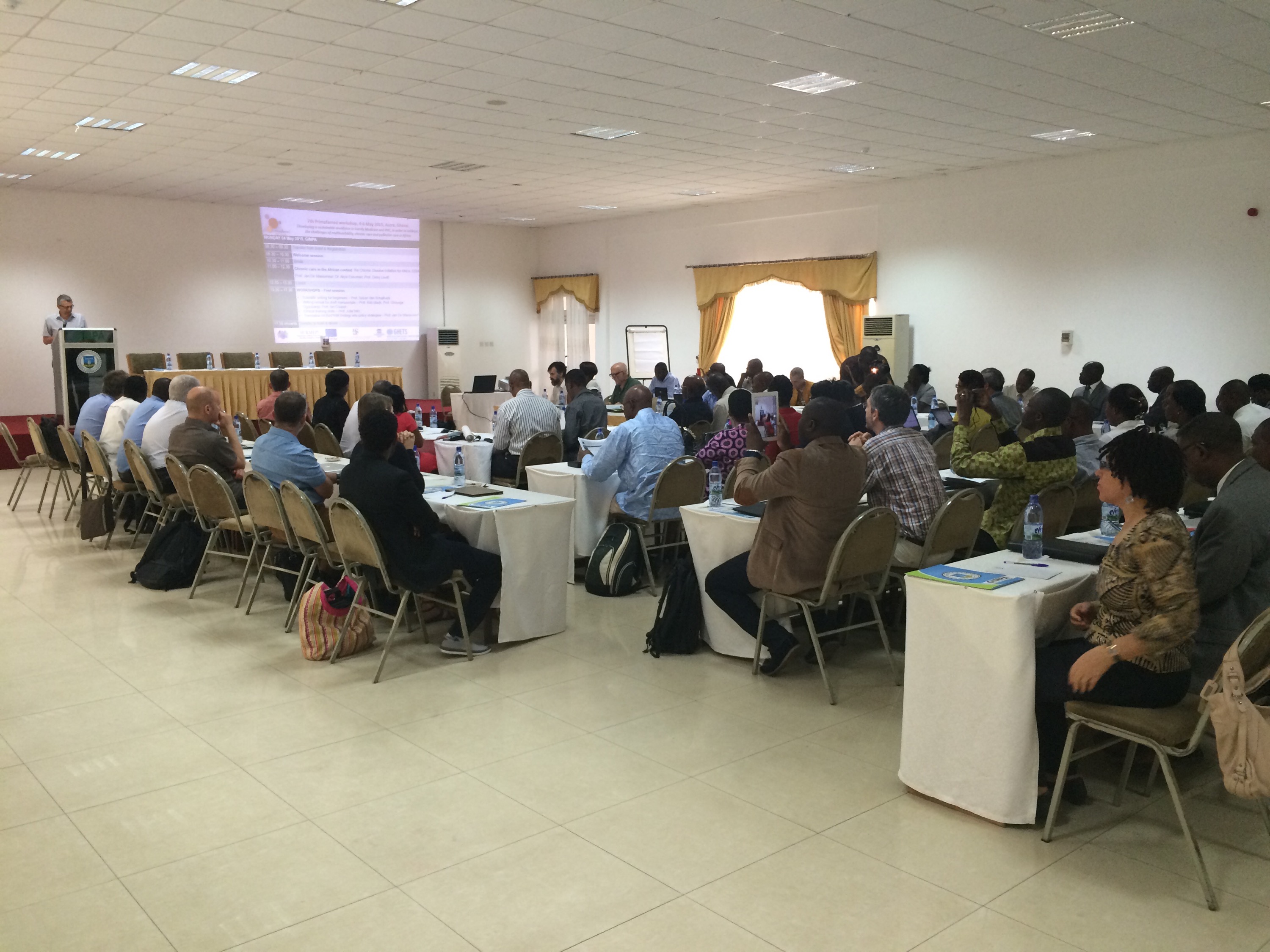
 The Primafamed Conference starts in Accra, Ghana today with a welcome by Professor Jan de Maeseneer and Dr Akye Essuman. Akye related how Family Medicine started years ago and how these conference is a defining moment for Family Medicine in Ghana. He introduced his large cohort of Faculty and postgraduate residents. Impressive !!
Category Archives: Uncategorized
Antidote to poor health services?
 Horror stories about public health facilities have become common, but a new entity, the Office of Health Standards Compliance, has been set up to monitor standards and it has the legal muscle to force failing institutions to improve…..more
‘Today we are all African’

For Africa to thrive, total investment in its people is critical
 THE negative connotations usually generated by the word migration never cease to amaze me. In the past week, Africans have suffered in tragedies at opposite ends of the continent; in the streets of SA and in the seas of the Mediterranean…..more
No clear answer to the violence…
 Breaking clear of a dense crowd gathered at the intersection of Yusuf Dadoo and Monty Naicker streets in central Durban, the athletic figure of Abad Salif took a crescent-shaped path. From the taxi rank, he ran into Yusuf Dadoo Street, dodging the haphazard rush-hour traffic and heading for a pavement. He crossed Dr Pixley kaSeme Street and bolted towards Albert Park, an inner city neighbourhood with large numbers of foreigners. A man prevaricated for a second, flipped opened his knife and half-heartedly gave chase, to cheers and whistles. For a moment, the crowd’s attention was diverted from a group of looters prying open an electronics cornershop with crowbars and even their bare hands……1 2 3
A scoping review of classification schemes of interventions to promote and integrate evidence into practice in healthcare
To add to the information in this systematic review [Cynthia Lokker, K Ann McKibbon, Heather Colquhoun and Susanne Hempel. A scoping review of classification schemes of interventions to promote and integrate evidence into practice in healthcare. Implementation Science 2015, 10:27 doi:10.1186/s13012-015-0220-6 The full text is freely available here: http://www.implementationscience.com/content/10/1/27 ]: an international classification of health interventions (ICHI) is under development http://www.who.int/classifications/ichi/en/. It is intended that ICHI be used:
- by countries, either as a new classification, to replace existing classifications, or as a base for development of a national classification
- for casemix applications
- for defining and reporting interventions to monitor progress in achieving WHO’s Universal Health Coverage initiative
- for patient safety and quality applications
- for assessment of health system performance
- international comparisons
ICHI will include interventions across all sectors of the health system, covering acute care, primary care, rehabilitation, assistance with functioning, prevention, public health and ancillary services. Interventions provided by all types of providers will be included. A draft version can be found at http://sydney.edu.au/health-sciences/ncch/resources.shtml
Catherine Sykes
Professional Policy Consultant
World Confederation for Physical Therapy (WCPT)
Victoria Charity Centre
WCPT is the global voice for physical therapists and has 106 national member organisations representing over 350,000 members of the profession.
HIFA profile: Catherine Sykes is a professional policy consultant at the World Confederation for Physical Therapy, UK. Her professional interests include: Functional status information; Physical therapy; Multi professional working; Disability and rehabilitation. crsykes AT gmail.com
Supervising community health workers for MNCH in Tanzania
Below is the citation, abstract and selected extracts of a new study from Tanzania in the open-access journal Human Resources for Health. For me, it is a reality check that many CHWs are not provided supportive supervision, and are instead managed top-down. Clearly, a shift is needed across the CHW workforce, from ‘control and correction’ to ‘support and mentorship’. The paper also highlights the importance of dual pillars of personal support for CHWs: the CHW supervisor and the community leader.
CITATION: Initial experiences and innovations in supervising community health workers for maternal, newborn, and child health in Morogoro region, Tanzania
Timothy Roberton, Jennifer Applegate, Amnesty E Lefevre, Idda Mosha, Chelsea M Cooper, Marissa Silverman, Isabelle Feldhaus, Joy J Chebet, Rose Mpembeni, Helen Semu, Japhet Killewo, Peter Winch, Abdullah H Baqui and Asha S George. Human Resources for Health 2015, 13:19 doi:10.1186/s12960-015-0010-x
http://www.human-resources-health.com/content/13/1/19
ABSTRACT
Background: Supervision is meant to improve the performance and motivation of community health workers (CHWs). However, most evidence on supervision relates to facility health workers. The Integrated Maternal, Newborn, and Child Health (MNCH) Program in Morogoro region, Tanzania, implemented a CHW pilot with a cascade supervision model where facility health workers were trained in supportive supervision for volunteer CHWs, supported by regional and district staff, and with village leaders to further support CHWs. We examine the initial experiences of CHWs, their supervisors, and village leaders to understand the strengths and challenges of such a supervision model for CHWs.
Methods: Quantitative and qualitative data were collected concurrently from CHWs, supervisors, and village leaders. A survey was administered to 228 (96%) of the CHWs in the Integrated MNCH Program and semi-structured interviews were conducted with 15 CHWs, 8 supervisors, and 15 village leaders purposefully sampled to represent different actor perspectives from health centre catchment villages in Morogoro region. Descriptive statistics analysed the frequency and content of CHW supervision, while thematic content analysis explored CHW, supervisor, and village leader experiences with CHW supervision.
Results: CHWs meet with their facility-based supervisors an average of 1.2 times per month. CHWs value supervision and appreciate the sense of legitimacy that arises when supervisors visit them in their village. Village leaders and district staff are engaged and committed to supporting CHWs. Despite these successes, facility-based supervisors visit CHWs in their village an average of only once every 2.8 months, CHWs and supervisors still see supervision primarily as an opportunity to check reports, and meetings with district staff are infrequent and not well scheduled.
Conclusions: Supervision of CHWs could be strengthened by streamlining supervision protocols to focus less on report checking and more on problem solving and skills development. Facility health workers, while important for technical oversight, may not be the best mentors for certain tasks such as community relationship-building. We suggest further exploring CHW supervision innovations, such as an enhanced role for community actors, who may be more suitable to support CHWs engaged primarily in health promotion than scarce and over-worked facility health workers.
EXTRACTS FROM FULL TEXT (selected by Neil PW)
‘Supportive supervision emphasizes the human aspect of supervision and involves reciprocal relationships between health workers, their supervisor, and other stakeholders. It focuses on goal-setting, identifying and resolving problems through discussions between the health worker and supervisor, promoting high standards, teamwork, and two-way communication [21]. Supportive supervision focuses more on mentoring, problem solving, and proactive planning, than on checking registers and the verification of data [24]. Quality improvement programmes in sub-Saharan Africa, including Tanzania, have suggested that supportive supervision and mentoring could help to achieve high-quality health services [26].’
‘Another development in the supervision of CHWs is the inclusion of community members as part of a CHW’s support structure. Recent frameworks have put CHWs in the interface between the health system and the community [6],[28], and increasingly policy-makers are seeing supervision as involving both health facility and community supports [6]. The involvement of community leaders has the potential to enhance community embeddedness, buy-in from community members, and community accountability. A recent study in Tanzania concluded that the involvement of village leaders in CHW supervision has the potential to increase the number of supervision contacts and improve the accountability of CHWs within the communities they serve [16].’
—
Let’s build a future where people are no longer dying for lack of healthcare knowledge – Join HIFA: www.hifa2015.org
HIFA profile: Neil Pakenham-Walsh is the coordinator of the HIFA campaign (Healthcare Information For All) and co-director of the Global Healthcare Information Network. He is also currently chair of the Dgroups Foundation (www.dgroups.info), a partnership of 18 international development organisations promoting dialogue for international health and development. He started his career as a hospital doctor in the UK, and has clinical experience as an isolated health worker in rural Ecuador and Peru. For the last 20 years he has been committed to the global challenge of improving the availability and use of relevant, reliable healthcare information for health workers and citizens in low- and middle-income countries. He is also interested in the wider potential of inclusive, interdisciplinary communication platforms to help address global health and international development challenges. He has worked with the World Health Organization, the Wellcome Trust, Medicine Digest and INASP (International Network for the Availability of Scientific Publications). He is based near Oxford, UK. www.hifa2015.org Twitter: @hifa_org FB: facebook.com/HIFAdotORG neil.pakenham-walsh AT ghi-net.org
__________
To send a message to the HIFA forum, simply send an email to: HIFA2015@dgroups.org
Accessing and understanding sexual and reproductive health information in South Africa
This study from South Africa emphasises that having access to health information is just ‘the first step’. What is critically important is to understand ‘the significance of this information in terms of their actions today and their future goals and achievements’. Personal comment, this helps explain the impact of edutainment as produced by organisations such as the South-Africa-based Soul City Institute for Health and Development Communication, a not-for-profit, non-governmental organisation and the largest social change communication project in Africa. Television and radio drama can show the consequences of unsafe health behaviour in ways that young people can relate to.
CITATION: N Lince-Deroche, A Hargey, K Holt, T Shochet. Accessing Sexual and Reproductive Health Information and Services: A Mixed Methods Study of Young Women’s Needs and Experiences in Soweto, South Africa. African Journal of Reproductive Health March 2015; 19 (1): 73 http://www.ajol.info/index.php/ajrh/article/view/115807
ABSTRACT: Young women and girls in South Africa are at high risk of unintended pregnancy and HIV. Previous studies have reported barriers to contraceptive and other sexual and reproductive health (SRH) services among young women in this context. We aimed to assess young women’s SRH knowledge and experiences and to determine how they get SRH information and services in Soweto, South Africa using quantitative and qualitative methods. Young women, aged 18-24, recruited from primary health clinics and a shopping mall, reported that they have access to SRH information and know where to obtain services. However there are challenges to accessing and utilizing information and services including providers’ unsupportive attitudes, uneven power dynamics in relationships and communication issues with parents and community members. There is a need to assist young women in understanding the significance of SRH information. They need access to age-appropriate, youth-friendly services in order to have healthy sexual experiences.
EXTRACTS (selected by neil PW)
‘Young women and girls in South Africa are at high risk of unintended pregnancy and HIV. By age 17, half of all teenagers are sexually active1. HIV prevalence among 15-19-year-old women was 12.7% in 2011, and among pregnant 15-24-year-olds, it was 20.5%2. A national household survey conducted in 2003 indicated that one third of 15-19 year olds and over half (59%) of 20-24-year-old women had ever been pregnant and that two-thirds of the pregnancies were reported to be “unwanted”… Among 15-24 year olds who were sexually active in the previous year, roughly half used a condom at last sex, and less than 50% of women age 15-24 reported using a condom at first sex.’
One respondent astutely noted that having information does not mean that it is acted upon. “Yes, they can [get information on SRH]. We get newspapers, magazines, and we learn from the TV, it’s just that we ignore these things, but yes, they are informed.”
“… cause we all know, okay, if you don’t want to get AIDS you use a condom, and you, we all know that, but we don’t necessarily do it all the time, I’m not sure why, but ja.”
The authors conclude: ‘The results of this study indicate that young women in this context are exposed to a significant amount of information on SRH, including HIV and GBV. However, there is a need to assist them in understanding the significance of this information in terms of their actions today and their future goals and achievements… Having information or knowing where to obtain it is just the first step. Young women also need support from their families and communities and access to nonjudgmental SRH services in order to make responsible choices and have safe and healthy sexual experiences.’
—
Let’s build a future where people are no longer dying for lack of healthcare knowledge – Join HIFA: www.hifa2015.org
WHO Draft global action plan on antimicrobial resistance
Antimicrobial resistance is high on the agenda for this year’s World Health Assembly (May 2015). Under discussion will be the WHO Draft global action plan on antimicrobial resistance, published on 17th March 2015 and available here: http://apps.who.int/gb/ebwha/pdf_files/WHA68/A68_20-en.pdf
It is increasingly recognised that many if not most prescribers (and users) in low- and middle-income countries have little or no awareness of, or access to, independent reliable information on medicines.
The global action plan notes: ‘In some cases, industry’s spending on promoting products is greater than governmental investment in promoting rational use of antimicrobial medicines or providing objective information.’ That’s clearly an understatement – in fact, ‘pharmaceutical companies spend tens of billions of pounds every year trying to change the treatment decisions of doctors: in fact, they spend twice as much on marketing and advertising as they do on research ad development of new drugs’ (Ben Goldacre: Bad Pharma).
The action plan notes: ‘Health-care workers have a vital role in preserving the power of antimicrobial medicines. Inappropriate prescribing and dispensing can lead to their misuse and overuse if medical staff lack up-to-date information, cannot identify the type of infection, yield to patient pressure to prescribe antibiotics or benefit financially from supplying the medicines.’
The plan says: ‘Professional bodies and associations, including industry associations, health insurance providers and other payers, should develop a code of conduct for appropriate training in, education about, and marketing, purchasing, reimbursement and use of antimicrobial agents. This code should include commitment to comply with national and international regulations and standards, and to eliminate dependence on the pharmaceutical industry for information and education on medicines and, in some cases, income.’
The plan says the WHO Secretariat should ‘Develop, with FAO and OIE through the tripartite collaboration, core communication, education and training materials that can be adapted and implemented regionally and nationally…’
Increased cooperation between WHO, FAO and OIE is certainly important and to be welcomed. But, as a personal comment, I would suggest the emphasis should not be on developing yet more publications and information resources, but increasing the availability and use of existing resources.
Our discussions on HIFA have shown, for example, that the BNF (British National Formulary) is highly valued by prescribers in LMICs, even though they typically have old printed copies dating back as far as 20 years. It is becoming increasingly obvious and urgent to develop an independent, online ‘global formulary’, freely available to all, freely downloadable as a PDF for offline use, with guidance that is presented similar to the BNF, initially in English but in other languages also. The global formulary should list all commonly prescribed medicines (generic names only), with the WHO Essential Medicines List at its core. The global formulary should be seen as a public good, and should be published under an open access license so that it can be freely be used as a basis to develop national and institutional formularies.
Best wishes,
Neil
Let’s build a future where people are no longer dying for lack of healthcare knowledge – Join HIFA: www.hifa2015.org
Family Medicine Conference in Gezira, Sudan
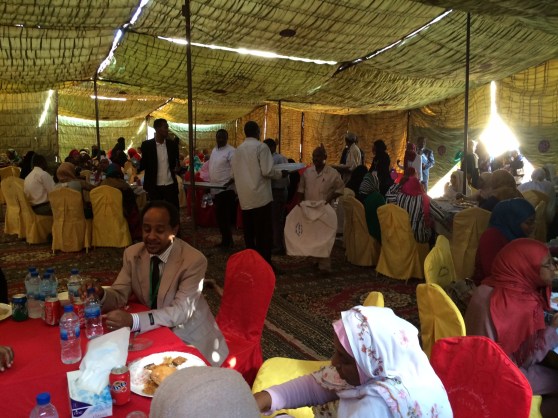
Just reminescing about my trip to Sudan. Lunch under the tent. Warm people working under difficult circumstances…..
shabir moosa
Int J Womens Health: Trends in delivery with no one present in Nigeria between 2003 and 2013
We have had much discussion on HIFA about how to improve the safety of childbirth in Nigeria and other low- and middle-income countries; the importance of access to a skilled birth attendant; and the role of (trained) traditional birth attendants where skilled attendance is not available. This new paper is a reminder that huge numbers of women give birth alone, with no one present, not even a TBA. Such women ‘neither have access to skilled attendance nor do they have the marginal protection and social support supplied by an unskilled birth companion’. Previous research has found that ‘almost 20% of all women in Nigeria had given birth with NOP in 2008, and the most recent data available show… the proportion of women giving birth with NOP is still unacceptably high, 14% nationally in 2013’. The paper identifies some socio-economic factors associated with birth alone. These factors include the denial of women’s rights to make decisions surrounding their health care.
CITATION: Austin A, Fapohunda B, Langer A, Orobaton N. Trends in delivery with no one present in Nigeria between 2003 and 2013. International Journal of Women’s Health. 2015:7:345—356 DOI http://dx.doi.org/10.2147/IJWH.S79573
ABSTRACT
Purpose: Skilled attendance at birth is a proven intervention to improve maternal and newborn health outcomes. Unfortunately, in Nigeria there are many women who give birth alone, with no one present (NOP). The purpose of this study was to document trends in women delivering with NOP between 2003 and 2013, and to identify the characteristics of women who are engaging in this risky practice.
Methods: We utilized pooled data sets from the 2003, 2008, and 2013 Nigerian Demographic and Health Surveys. Married women, who had given birth in the 5 years before each survey were included, resulting in a sample size of 38,949 women. We used logistic regression to assess the unadjusted and adjusted odds of a woman delivering with NOP over time, by sociodemographic characteristics.
Results: Prevalence of delivery with NOP in Nigeria declined by 30% between 2003 and 2013. The largest declines occurred in Sokoto State, where the number of women giving birth with NOP declined by almost 100% between 2003 and 2013. In the North West of the country, however, there was a 27% increase in the number of women giving birth alone over this time period. Older, poorer, less educated, higher parity, Muslim women residing in the Northern regions were significantly more likely to give birth with NOP. Women, who were involved in decisions surrounding their own health, and who had accessed antenatal care were significantly less likely to give birth with NOP.
Conclusion: Although there have been improvements in Nigeria’s Maternal Mortality Ratio since 1990, recent estimates suggest a stagnation in this trend. One reason for this protracted decline may be lack of access to skilled delivery care. The 2013 national prevalence of Nigerian women giving birth with NOP was 14%, equivalent to over 1 million births in 2013. Nigeria must implement interventions to ensure every woman’s timely access to, and use of skilled care to reduce preventable maternal mortality and morbidity.
—
Best wishes, Neil
Let’s build a future where people are no longer dying for lack of healthcare knowledge – Join HIFA: www.hifa2015.org
Dimagi-hosted CommCare webinars on April 15th & 22nd
Dimagi is hosting two free 90-minute webinars this March on our open source mobile platform CommCare [http://www.commcarehq.org/home/]. This webinar series provides participants with an introduction to CommCare and training on advanced technical topics.
To join either or both webinars, please sign up here.
http://dimagi.us5.list-manage.com/subscribe?u=3723a6bdc9bae1db8dda1623e&id=8f8681bcfa
CommCare 101: An Introduction to CommCare (Wednesday, April 15th from 2-3:30 PM EDT): For those who missed it last month, we’ll be hosting another CommCare101 webinar. This webinar will provide a general overview of the CommCare platform, including looking at specific CommCare use cases. We will demonstrate how to build and deploy mobile applications using CommCare, and see how these mobile applications function on a phone. The webinar will end with Q&A from participants and is designed for people who haven’t used CommCare before.
Can’t make it? Watch a recording of last month’s CommCare101 webinar! https://www.youtube.com/watch?v=bnDnWgjbpag
Using Multiple Languages In CommCare (Wednesday, April 22nd from 10-11:30am EDT): This webinar will provide participants with an overview of how to use multiple languages in CommCare. Participants will learn how to add languages to applications (including non-roman character languages) and how to switch between languages on a phone. Participants will also see how to use the “bulk upload” feature for easy translation uploads, and hear best practices from using and field testing multi-language applications. The webinar will end with Q&A.
To join either or both webinars, please sign up here.
If you have questions, please email me or webinars@dimagi.com.
Thanks!
Gillian
Gillian Javetski, MPH
Director of Communications I Dimagi Inc.
585 Massachusetts Ave, Suite 3 | Cambridge, MA 02139
M: 617.817.2495 (ext. 69) I www.dimagi.com
HIFA profile: Gillian Javetski is a Senior Program Analyst at Dimagi, Inc., United States. gjavetski AT dimagi.com
__________
To send a message to the HIFA forum, simply send an email to: HIFA2015@dgroups.org
A scoping review of classification schemes of interventions to promote and integrate evidence into practice in healthcare
A scoping review of classification schemes of interventions to promote and integrate evidence into practice in healthcare
Cynthia Lokker, K Ann McKibbon, Heather Colquhoun and Susanne Hempel
Implementation Science 2015, 10:27 doi:10.1186/s13012-015-0220-6
The full text is freely available here: http://www.implementationscience.com/content/10/1/27
ABSTRACT
Background: Many models and frameworks are currently used to classify or describe knowledge translation interventions to promote and integrate evidence into practice in healthcare.
Methods: We performed a scoping review of intervention classifications in public health, clinical medicine, nursing, policy, behaviour science, improvement science and psychology research published to May 2013 by searching MEDLINE, PsycINFO, CINAHL and the grey literature. We used five stages to map the literature: identifying the research question; identifying relevant literature; study selection; charting the data; collating, summarizing, and reporting results.
Results: We identified 51 diverse classification schemes, including 23 taxonomies, 15 frameworks, 8 intervention lists, 3 models and 2 other formats. Most documents were public health based, 55% included a literature or document review, and 33% were theory based.
Conclusions: This scoping review provides an overview of schemes used to classify interventions which can be used for evaluation, comparison and validation of existing and emerging models. The collated taxonomies can guide authors in describing interventions; adequate descriptions of interventions will advance the science of knowledge translation in healthcare.
—
Let’s build a future where people are no longer dying for lack of healthcare knowledge – Join HIFA: www.hifa2015.org
USAID: mHealth Database
The United States Agency for International Development (USAID) and the African Strategies for Health (ASH) project are pleased to announce the launch of the mHealth Database. This resource compiles over 100 case studies on mobile health applications that have been featured in ASH’s series of the mHealth Compendium.
Mobile health (mHealth) is the provision of health services and information via mobile and wireless technologies. Within Africa the mobile phone has become ubiquitous, making mHealth applications an important tool with which to impact the health of Africans. When applied correctly, mHealth can make real contributions to improved health outcomes.
The mHealth Compendiums contain case studies which document a range of mHealth applications being implemented primarily in Africa. They serve as a comprehensive resource for implementers and donors to access mHealth information, resources, and contact information.
This database compiles information on applications featured in the compendiums and facilitates a quick and targeted search based on health area, application type, and location.
Click here or visit http://www.africanstrategies4health.org/mhealth-database.html to start your search.
—
Let’s build a future where people are no longer dying for lack of healthcare knowledge – Join HIFA: www.hifa2015.org
Google to put health information directly into search results
The post below is forwarded from Health Information Updates to and from Africa, administered by Partnerships in Health Information.
Google to put health information directly into search results
Google is changing the way it displays search queries to pull medical facts directly into its results.
The medical information is being added to the company’s Knowledge Graph, which underpins Google’s instant search results and powers Google’s Now personal assistant and app. It will allow health questions to be answered directly, without a user having to click.
Google already does this with dictionary definitions, schedules for big sporting events and Wikipedia extracts for famous people. Knowledge Graph is essentially a built-in encyclopaedia, which pulls in facts, data and illustrations from various sources.
One in 20 searches on Google are health-related, according to the company. “We’ll show you typical symptoms and treatments, as well as details on how common the condition is – whether iit’s critical, if it’s contagious, what ages it affects, and more,” said Prem Ramaswami, a product manager for Google’s search. Read more:
Chipo Msengezi, ITOCA
—
Let’s build a future where people are no longer dying for lack of healthcare knowledge – Join HIFA: www.hifa2015.org
White Ribbon Alliance and Medical Aid Films launch new animation on women’s rights in childbirth
White Ribbon Alliance and Medical Aid Films launch on International Maternal Health and Rights Day, a new animation focused on women’s rights in childbirth. The film highlights seven points in White Ribbon’s Universal Rights of Childbearing Women Charter, and will be used as part of a Respectful Maternity Care package developed to ensure engagement and support for healthcare providers to provide RMC.
To view the film, please go to: http://medicalaidfilms.org/respectful-maternity-care/
The film follows Aziza, a health worker who is learning about respectful maternity care, as she looks after Mama who is giving birth to her baby. Aziza is helped by her colleague, Sara. The film is voiced by Zawadi Machibya from the BBC World Service.
The film has been reviewed by a team of experts; Sheena Currie, Blami Dao, Soo Downe, Pandora Hardtman, Rima Jolivet, Mande Limbu, Brigid McConville, Nester Moyo, Kristin Savard, and our own advisors; Natalie Greenwold and Zoe Vowles.
This film is free to view and download at www.medicalaidfilms.org
For further information please contact Josie@medicalaidfilms.org
HIFA profile: Josie Gallo is Content Co-ordinator for Medical Aid Films in the United Kingdom. Professional interests: Media for development. josie AT medicalaidfilms.org
Do Young Adults Perceive That Cigarette Graphic Warnings Provide New Knowledge About the Harms of Smoking?
Below is the citation and abstract of a new paper in the journal Annals of Behavioural Medicine. Unfortunately, the full text is restricted-access, which is regrettable for a paper that may have profound implications for global public health. A commentary on the news website Vox points out that 77 countries now require mandatory graphic photos of the physical harms of smoking on all cigarette packets. http://www.vox.com/2015/4/8/8371613/graphic-warnings-on-cigarette-packs-are-changing-the-smoking
This means, by implication, that 118 countries do not have such legislation, including the United States. As HIFA has shown, in collaboration with the New York Law Scool, governments worldwide have a legal responsibility under international human rights law to inform their citizens on health issues.
http://www.hifa2015.org/hifa2015-and-human-rights/
All governments therefore are legally obliged to take steps towards mandatory inclusion of graphic clinical photos on cigarette packets.
—
CITATION: Magnan RE & Cameron LD. Do Young Adults Perceive That Cigarette Graphic Warnings Provide New Knowledge About the Harms of Smoking? Annals of Behavioural Medicine 2015. http://link.springer.com/article/10.1007%2Fs12160-015-9691-6
ABSTRACT
Background: Although much research on graphic cigarette warnings has focused on motivational responses, little focus has been given to how much individuals learn from these labels.
Purpose: This study aims to investigate whether graphic warnings provide greater perceived new knowledge of smoking consequences compared to text-only warnings, and to test a mediational model whereby perceived new knowledge promotes discouragement from smoking through its impact on worry.
Methods: In two studies, young adult smokers and nonsmokers (ages 18–25) evaluated graphic + text and corresponding text-only labels on perceived knowledge, worry about the harms addressed by the warning, and discouragement from smoking.
Results: Compared to text-only labels, graphic + text labels were rated as providing better understanding, more new knowledge, and being more worrisome and discouraging. Perceived new knowledge predicted greater discouragement from smoking directly and through worry.
Conclusions: Graphic warnings may be more efficacious than text-based warnings in increasing knowledge and worry about harms, and discouragement from smoking.
—
Let’s build a future where people are no longer dying for lack of healthcare knowledge – Join HIFA: www.hifa2015.org
E-learning Resources for Global Health Researchers
The Fogarty International Center has launched a list of ‘free and low-cost e-learning resources to those working in the field of global health research. Resources include training courses, MOOCs and course materials (presentations, videos, reading lists, visual aids, articles), resource centers and resource networks.’
The list is available here:
http://www.fic.nih.gov/Global/Pages/training-resources.aspx
Fogarty invites suggestions for additional resources to: ficinfo@mail.nih.gov
Best wishes,
Neil
Let’s build a future where people are no longer dying for lack of healthcare knowledge – Join HIFA: www.hifa2015.org
Human Resources for Health: Exploring the influence of trust relationships on motivation in the health sector
“I feel comfortable working here… In most instances I can rely on my experience. But if I am not sure then I do not worry but ask my colleagues for their help.”
This is a quote from an auxiliary midwife in Burkina Faso, in a review of 23 studies from low- and middle-income countries. Below is the citation and abstract.
Many health workers worldwide do not feel so comfortable in the workplace, often because of hierarchical power dynamics, and this is a serious threat to patient safety and quality iof care. I am reminded of a personal experience where I interviewed a pharmacist in a primary care centre in Tamil Nadu. He told me that he would never question what the doctor wrote on the prescription, even if the dose was dangerously incorrect. He did that when he was young, he said, and the doctors reprimanded him. Now he just does exactly as he is told.
CITATION: Exploring the influence of trust relationships on motivation in the health sector: a systematic review
Dickson R O Okello and Lucy Gilson
Human Resources for Health 2015, 13:16 doi:10.1186/s12960-015-0007-5
ABSTRACT
Background: Dedicated and motivated health workers (HWs) play a major role in delivering efficient and effective health services that improve patients’ experience of health care. Growing interest in HW motivation has led to a global focus on pay for performance strategies, but less attention has been paid to nurturing intrinsic motivation. Workplace trust relationships involve fair treatment and respectful interactions between individuals. Such relationships enable cooperation among HWs and their colleagues, supervisors, managers and patients and may act as a source of intrinsic motivation. This paper presents findings from a qualitative systematic review of empirical studies providing evidence on HW motivation, to consider what these studies suggest about the possible influence of workplace trust relationships over motivation.
Methods: Five electronic databases were searched for articles reporting research findings about HW motivation for various cadres published in the 10-year period 2003 to 2013 and with available full free text in the English language. Data extraction involved consideration of the links between trust relationships and motivation, by identifying how studies directly or indirectly mention and discuss relevant factors.
Results: Twenty-three articles from low- and middle-income countries and eight from high-income countries that met predetermined quality and inclusion criteria were appraised and subjected to thematic synthesis. Workplace trust relationships with colleagues, supervisors and managers, employing organisation and patients directly and indirectly influence HW motivation. Motivational factors identified as linked to trust include respect; recognition, appreciation and rewards; supervision; teamwork; management support; autonomy; communication, feedback and openness; and staff shortages and resource inadequacy.
Conclusion: To the authors’ knowledge, this is the first systematic review on trust and motivation in the health sector. Evidence indicates that workplace trust relationships encourage social interactions and cooperation among HWs, have impact on the intrinsic motivation of HWs and have consequences for retention, performance and quality of care. Human resource management and organisational practices are critical in sustaining workplace trust and HW motivation. Research and assessment of the levels of motivation and factors that encourage workplace trust relationships should include how trust and motivation interact and operate for retention, performance and quality of care.
—
Let’s build a future where people are no longer dying for lack of healthcare knowledge – Join HIFA: www.hifa2015.org
Optimizing the delivery of contraceptives in low- and middle-income countries through task shifting: a systematic review of effectiveness and safety
Below is the citation and abstract of a new systematic review in the open access journal Reproductive Health. The full text is available here:
http://www.reproductive-health-journal.com/content/12/1/27
—
CITATION: Optimizing the delivery of contraceptives in low- and middle-income countries through task shifting: a systematic review of effectiveness and safety
Stephanie Polus, Simon Lewin, Claire Glenton, Priya M Lerberg, Eva Rehfuess and A Metin Gülmezoglu.
Reproductive Health 2015, 12:27 doi:10.1186/s12978-015-0002-2
ABSTRACT
Objective: To assess the effectiveness and safety of task shifting for the delivery of injectable contraceptives, contraceptive implants, intrauterine devices (IUDs), tubal ligation and vasectomy in low- and middle-income countries.
Methods: Multiple electronic databases were searched up to 25 May 2012 for studies which had assessed the delivery of contraceptives by health workers with lower levels of training, compared to delivery by health workers usually assigned this role, or compared to no organized provision of contraceptives. We included randomized controlled trials, non-randomized controlled trials, controlled before-after studies, and interrupted time series. Data were extracted using a standard form and the certainty of the evidence found was assessed using GRADE.
Results: We identified six randomized controlled trials published between 1977 and 1995 that assessed the safety and effectiveness of task shifting for the delivery of long-term contraceptives. Two studies assessed IUD insertion by nurses compared to doctors, two assessed IUD insertion by auxiliary nurse-midwives compared to doctors, one assessed tubal ligation by midwives compared to doctors, and one assessed the delivery of vasectomy by medical students compared to doctors. In general, little or no difference was found in contraceptive outcomes between cadres. Study design limitations and the low number of eligible studies, however, allow only limited conclusions to be drawn.
Conclusions: The findings indicate that task shifting for the delivery of long-term contraceptives may be a safe and effective approach to increasing access to contraception. Further research is needed because the certainty of the evidence identified is variable.
—
Let’s build a future where people are no longer dying for lack of healthcare knowledge – Join HIFA: www.hifa2015.org
 AfroPHC