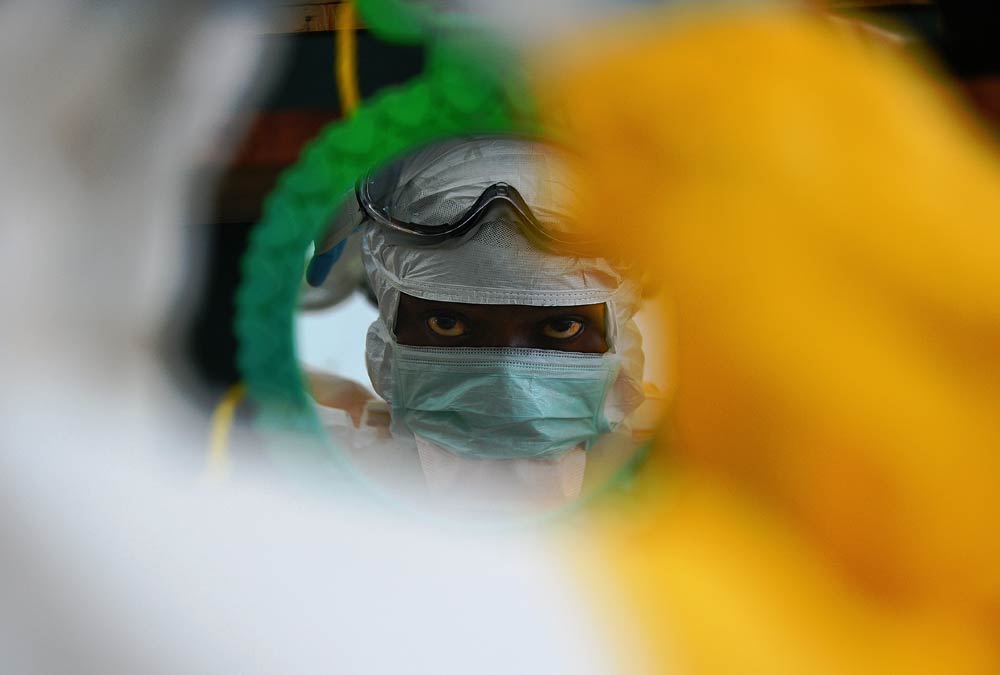
How Ebola challenges the ‘Africa Rising’ narrative

A Cameroonian friend shares a conversation between two of his fellow nationals in an airport. One of them remarks that he is not feeling too well. The immediate, and hysterical, reaction of the other is that he must have Ebola. “Maybe you’ve been infected with Ebola from those Lagos passengers at the arrival hall,” my friends recounts one of them saying. On Twitter, a Kenyan user notes that passengers on flights from Entebbe to Nairobi are not being screened for Ebola. The checks are inconsistent, he notes, meaning the disease can be brought in to the nation via Uganda…..more


Dirty linen: Gauteng health department suspends CFO

Gauteng health department suspends its chief financial officer following allegations of irregularities in departmental procurement processes….more

Ghent University on place 70 in Shanghai ranking

Shabir Moosa is registered for a PhD at Ghent University.He hopes colleagues at Wits will not deprecate a PhD from Ghent. Ghent University rises from place 85 to 70 in the recently published Shanghai ranking, an impressive increase. Again Ghent University has the highest score of all Belgian universities in this world ranking of universities….more.  Wits is quite happy to be ranked 201-300 in this list.

New health proposals may head for court

THE constitutional rights of those who cannot afford medical aid are being violated by the Treasury’s proposed regulations for health insurance, providers of the service say, and the plan is likely to be challenged in court….more

The key to a successful PhD thesis? Write in your own voice

In the last couple of months of completing my law thesis I found myself struggling to put things into the simplest terms. All the ideas I had been researching and writing about were coming together like the pieces of a puzzle, but I kept wanting to re-explain everything in great detail in every chapter, and sometimes even within a chapter. The word count was growing every day, but my arguments and conclusions weren’t necessarily getting any clearer….more

South Africans ‘gatvol’ with politicians: Wits vice-chancellor

South Africa’s “out of control” public violence will transform into a revolution if inequality isn’t dealt with now. This is according to Wits University vice-chancellor Professor Adam Habib, who added that the Marikana tragedy, which saw the loss of 34 miners’ lives during a violent unprotected strike exactly two years ago, was the “most dramatic manifestation” of public violence and inequality….more and more

Speeches: Gauteng, Western Cape, KZN health budgets

Selected health budget vote speeches from Gauteng, the Western Cape and North West provinces….more

Hatred of others flourishing in Gauteng

Gauteng residents are satisfied with their quality of life but want foreigners out of South Africa and are hostile towards people of other races and homosexuals. This was revealed in a survey by the Gauteng City-Region Observatory, a partnership between the SA Local Government Association, the provincial government and the universities of Johannesburg and the Witwatersrand…..more

WHAT TO DO IN THE EVENT OF A TREMOR/ EARTHQUAKE

MESSAGE FROM THE DIRECTORATE: OCCUPATIONAL HEALTH, SAFETY AND ENVIRONMENTAL MANAGEMENT

 WHAT TO DO IN THE EVENT OF A TREMOR/ EARTHQUAKE

 Although earthquakes/tremors do not commonly occur in most parts of South Africa, it is still considered necessary to take note of the below guidelines regarding what to do if an earthquake, severe tremor (or tremor as recently happened) should occur:

 IF INDOORS

  • Stay calm and kneel or sit on the floor (before the tremors knock you down). This position protects you from falling and allows you to still move around if necessary.
  • Crawl under a large sturdy object (such as a strong table or desk) to avoid being struck by falling debris from the roof/ceiling/walls/windows. Cover your head/neck with your arms/hands.
  • Be prepared to move with your shelter if the shaking shifts it around.
  • If there is nothing sturdy to crawl under then position yourself at an interior wall near the centre of the building. Interior walls are less likely to collapse than outer / exterior walls.
  • Stay away from windows, mirrors, loose standing cupboards, shelves, light fixtures and ceiling fans (i.e. anything that could fall on you).
  • Stay inside until the tremors and shaking stops and until it is considered safe to go outside.
  • Use the stairs to evacuate from a building (not the elevator/lift) and only evacuate when it is considered safe to do so. Do not exit a building during the tremors/shaking.
  • Be aware that the power may go out and sprinkler systems or fire alarms may be activated. 

IF OUTDOORS

  • Stay calm and move away from exterior walls of buildings to avoid being struck by falling debris from collapsing walls, windows and roof tiles/sheeting.
  • Move away from power cables, trees and structures that may collapse and fall on you.
  • Once in the open, stay there until the tremors/shaking stops while covering your head and neck with your arms and hands. 

IF DRIVING

  • Stay calm and stop the vehicle as quickly but as safely as possible.
  • Do not stop next to buildings and large trees or under bridges and overhead power lines.
  • If considered safe to do so, stay in the vehicle.
  • Proceed cautiously after the earthquake has stopped avoiding damaged roads/bridges. 

IF TRAPPED UNDER DEBRIS

  • Stay calm and do not disturb unstable structures which may cause further collapse.
  • Try not to inhale dust by covering your mouth with a handkerchief or clothing.
  • If possible, shout or tap on a pipe, wall or any other object so rescuers can locate you.

Jonathan De Villiers

DIRECTOR: OCCUPATIONAL HEALTH, SAFETY AND ENVIRONMENTAL MANAGEMENT

Gauteng residents don’t trust government: Survey

Residents of Gauteng are happy with service delivery but have no faith and trust in the people elected to lead them, a survey released on Thursday found. “People just don’t want efficient government, they want a clean and transparent government that is approachable,” Gauteng City-Region Observatory (GCRO) executive director Professor David Everatt said…..1 2 3 4

Obama declares first US-Africa summit an ‘extraordinary event’

WASHINGTON — The first summit between the US and nearly all African countries broke parts of the usual mould for such events, and was declared an overall success on Thursday. US President Barack Obama, the host and probably the world’s biggest individual draw card, called it an “extraordinary event” when the curtain came down on the three days on Wednesday night, when Washington’s poshest hotels and key government buildings were temporarily but heavily African….more

Immigrants flock to Hillbrow Clinic for healthcare

The Hillbow Clinic is inundated with Zimbabwean women who want to give birth in South Africa, staff told newly appointed Deputy Health Minister Joe Paahla and Gauteng Health MEC Qedani Mahlangu yesterday. The clinic’s Dr Sibongile Ntuli said many of the women arrived fully dilated and ready to give birth. “When they are ready to deliver, we cannot send them away to other health facilities, so they get stuck here and we deliver their babies,” said Ntuli, who added that 90 percent of the clinic’s pregnant women were non-South Africans…..more

West African nations overwhelmed by Ebola

A FAST-SPREADING Ebola epidemic sparked states of emergency in overwhelmed west African nations yesterday as the death toll neared 1 000 and an elderly Spanish missionary was flown home for treatment. In Liberia, where the dead lay in the streets, lawmakers gathered to ratify a state of emergency while Sierra Leone sent troops to guard hospitals and clinics handling Ebola cases. Nigeria held out hope it could receive an experimental US-developed drug to halt the spread of the virus….more

Barriers to implementation of clinical practice guidelines

I was interested to see this paper on the limited success of implementation of clinical practice guidelines (with thanks to Irina Ibraghimova). The emphasis is on high-income countries. I would be interested to hear perspectives on implementation of clinical practice guidelines in low-income settings.

Hand Clin. 2014 Aug;30(3):361-365. doi: 10.1016/j.hcl.2014.04.007. Epub 2014 May 27. Clinical Practice Guidelines: What Are They and How Should They Be Disseminated? [restricted access] Graham B.

Abstract

Clinical practice guidelines summarize the available evidence for patient management in a format that is easy for clinicians to use. These guidelines usually use methodologically rigorous principles for retrieving and evaluating the literature and for establishing consensus among work group members, but implementation by clinicians is often incomplete. The reasons why guidelines fail to gain widespread acceptance vary with the topic and clinician group. Successful dissemination of practice guidelines requires an understanding of the barriers to implementation and the use of multiple strategies to address these. This article examines the factors affecting implementation and the approaches to overcoming these obstacles.

Key points

  • Clinical practice guidelines use rigorous methods to find, evaluate, and summarize the literature into a series of points that should help guide clinicians in their management of patients.
  • Clinicians are often reluctant to implement the recommendations of practice guidelines and the reasons for this vary with the topic and with the practice context.
  • Multiple strategies to overcome the barriers preventing implementation should be used together and be selected from the particular characteristics of the target clinician population.

EXTRACTS (selected by Neil PW)

‘The evidence-based practice movement that started in the 1980s had at its foundation the idea that outcomes would improve if patients were managed using principles developed from medical knowledge accumulated from a body of methodologically sound clinical research. Clinical practice guidelines (CPGs) sought to summarize this medical evidence into general management pathways that clinicians could use to provide patients with the best care possible. However, despite this seemingly laudable objective, CPGs in general have had, in most instances, a modest impact on day-to-day practice. In some cases CPGs have been essentially ignored by most clinicians. The reasons for the failure of CPGs to influence practice are varied but, before examining these, it is important to understand how CPGs are developed (although these methods continue to evolve) and what they represent.’

‘Why do physicians not use CPGs?

  • Implementation of CPGs by clinicians may be poorer than expected despite the methodologically rigorous process in the CPG development…
  • Lack of Awareness…
  • Lack of Familiarity…
  • Lack of Agreement…
  • Lack of Self-efficacy…
  • Lack of Outcome Expectancy…
  • Inertia of Previous Practice…
  • External Barriers may include simple factors such as the time required to put into practice a particular recommendation. Guidelines may be perceived as difficult to implement or physicians may think that recommendations conflict with patient preferences. In addition, implementation of guidelines may also be affected by practice circumstances, such as facilities that are under the control of an institution, increased costs, decreased reimbursement, or the perception of an increased vulnerability to liability…’

How and why do physicians change their practices?

The ways that physicians change their behavior has been reviewed by Molding and colleagues.10 They identify 8 key principles that have an important impact on changing physician behavior and they conclude that these factors have to be taken into consideration in the dissemination of evidence-based CPGs:

  • – Recognition that change in behavior is a process
  • – Thought leaders (change agents) must identify with the concerns of clinicians who are the targets of CPGs
  • – Assessment of the readiness to change and the specific barriers to these changes
  • – The recognition that multiple strategies for change are more effective than any single strategy; education of clinicians must address the domains of knowledge, attitudes, and skill development; education strategies must encourage interaction and participation by clinicians
  • – Social influences may play an important role
  • – Environmental support (ie, support by institutions) is important to both initiating change and maintaining the new status quo

The investigators concluded that consideration of these factors should allow the development of effective dissemination strategies that address the specific barriers to change of the target clinician population… The reasons underlying the failure of physicians to adopt the recommendations contained in CPGs are varied and dictate a similarly varied and multidimensional approach to informing, reminding, and reinforcing clinician behavior.

— Let’s build a future where people are no longer dying for lack of healthcare knowledge: Join HIFA www.hifa2015.org

WHO Bulletin: A prospective study of maternal, fetal and neonatal deaths in low- and middle-income countries

‘An estimated 340 000 maternal deaths, 2.7 million stillbirths and 3.1 million neonatal deaths occur worldwide each year – almost all in low-income countries.1–4 In some parts of sub-Saharan Africa, a woman’s lifetime risk of dying in childbirth is as high as one in seven…’

‘Since most deaths occurred near to delivery and because most obstetric complications are not recognized in advance, the intervention most likely, by far, to reduce mortality is the provision of high-quality emergency obstetric and neonatal care in hospitals capable of carrying out deliveries by caesarean section, blood transfusion and neonatal resuscitation in addition to other key elements of obstetric care, such as uterine evacuation of the retained products of conception, manual removal of the placenta, assisted vaginal delivery by forceps or vacuum and the administration of oxytocin, anticonvulsants and antibiotics.’

This is the conclusion of a paper in the August 2014 issue of the WHO Bulletin, The full text is available here:

http://www.who.int/bulletin/volumes/92/8/13-127464/en/

The paper underlines the importance of increased investment in healthcare facilities: ‘… as more emphasis is placed on delivery at health-care facilities and as women become more aware of the benefits, there has been an increase in the workload at referral hospitals in low-resource areas, many of which are underequipped and understaffed. Thus, even when a referral is made, the quality of care is often inadequate, especially for women who arrive late with a complication’.

CITATION: Sarah Saleem et al. A prospective study of maternal, fetal and neonatal deaths in low- and middle-income countries. Bulletin of the World Health Organization 2014;92:605-612. doi: http://dx.doi.org/10.2471/BLT.13.127464

Let’s build a future where people are no longer dying for lack of healthcare knowledge: Join HIFA www.hifa2015.org

Global antibiotic consumption 2000 to 2010

(With thanks to Dieter Neuvians and HESP Newsletter – highly recommended – hesp-news.org/ )

A new paper in The Lancet infectious Diseases finds that access to antibiotics has increased by 36% in 10 years, and concludes: ‘To prevent a striking rise in resistance in low-income and middle-income countries with large populations and to preserve antibiotic efficacy worldwide, programmes that promote rational use through coordinated efforts by the international community should be a priority.’ The paper refers to the WHO Factsheet on Antimicrobial Resistance, updated in April 2014:

http://www.who.int/mediacentre/factsheets/fs194/en/

CITATION: Thomas P Van Boeckel et al. Global antibiotic consumption 2000 to 2010: an analysis of national pharmaceutical sales data. The Lancet Infectious Diseases, Volume 14, Issue 8, Pages 742 – 750, August 2014. doi:10.1016/S1473-3099(14)70780-7

http://www.thelancet.com/journals/laninf/article/PIIS1473-3099(14)70780-7/fulltext?_eventId=login

SUMMARY

Background: Antibiotic drug consumption is a major driver of antibiotic resistance. Variations in antibiotic resistance across countries are attributable, in part, to different volumes and patterns for antibiotic consumption. We aimed to assess variations in consumption to assist monitoring of the rise of resistance and development of rational-use policies and to provide a baseline for future assessment.

Methods: With use of sales data for retail and hospital pharmacies from the IMS Health MIDAS database, we reviewed trends for consumption of standard units of antibiotics between 2000 and 2010 for 71 countries. We used compound annual growth rates to assess temporal differences in consumption for each country and Fourier series and regression methods to assess seasonal differences in consumption in 63 of the countries.

Findings: Between 2000 and 2010, consumption of antibiotic drugs increased by 36% (from 54 083 964 813 standard units to 73 620 748 816 standard units). Brazil, Russia, India, China, and South Africa accounted for 76% of this increase. In most countries, antibiotic consumption varied significantly with season. There was increased consumption of carbapenems (45%) and polymixins (13%), two last-resort classes of antibiotic drugs.

Interpretation: The rise of antibiotic consumption and the increase in use of last-resort antibiotic drugs raises serious concerns for public health. Appropriate use of antibiotics in developing countries should be encouraged. However, to prevent a striking rise in resistance in low-income and middle-income countries with large populations and to preserve antibiotic efficacy worldwide, programmes that promote rational use through coordinated efforts by the international community should be a priority.

Let’s build a future where people are no longer dying for lack of healthcare knowledge: Join HIFA www.hifa2015.org