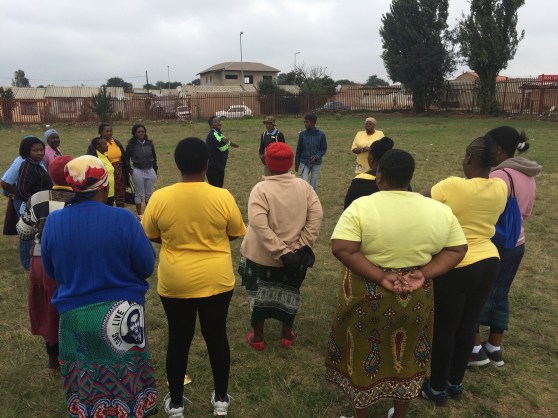
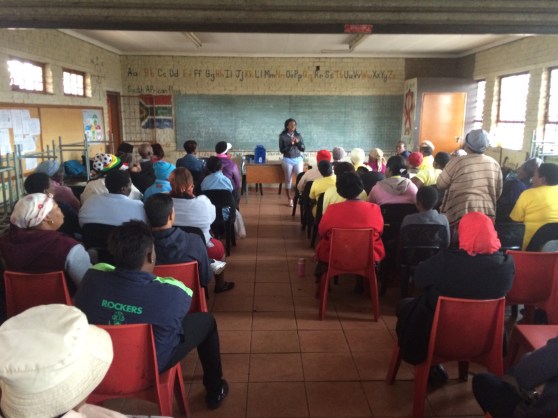
Gathered for health education

Members of the community listen to a CHWs talk on HIV after an introduction to CCP and learning how to do a Mexican wave👍

Khomanani Fair on!

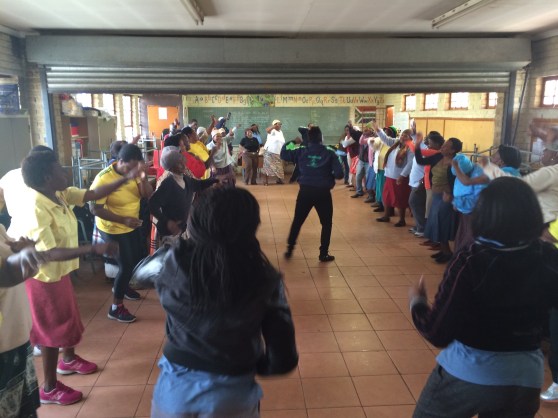
Excited members of the 5 walking clubs in Ward 11 have gathered in the TshilidI Primary School to launch the Khomanani Fair for Chiawelo Community Practice. The blustery weather is not deterring the enthusiasm

Nigeria will be Africa’s first global superpower

South Africa has many attributes that make it a worthy representative of Africa on the world stage, but is set to lose its first place…..more

Health Promotion at Chiawelo Community Practice

Chiawelo Community Practice’s

Khomanani Fair

Come together for community health: healthy food-recipes, exercise classes, health education, screening, youth organization, child activities, etc.

9am – 1pm Sat 18th Apr

Tshilidzi Primary School

Corner Budeli / Mbave Streest, Chiawelo

Build your community’s health

TB: Taxis’ deadly passenger

Millions of South Africans rely on minibus taxis daily, but South Africa’s most widely used mode of public transport could also be ferrying a deadly passenger……more

excellent article in BMJ on research in Africa

Increasing the value of health research in the WHO African Region beyond 2015—reflecting on the past, celebrating the present and building the future: a bibliometric analysis

Olalekan A Uthman1,2, Charles Shey Wiysonge1,3, Martin O Ota4,Mark Nicol5, Gregory D Hussey5, Peter M Ndumbe4, Bongani M Mayosi6  http://bmjopen.bmj.com/content/5/3/e006340.full

This very important article just appeared in the British Medical journal on research productivity in Africa. The article indicated that the number of publications rose in Africa from 3623 in 2000 to 12709 in 2014.  The percent of world publications was .7% in 2000 and 1.3% in 2014. Clearly the rise is impressive, but still Africa contributes only 1.3% of the publications, despite 16% of the world living in Africa.  The article correlated various factors to the publication rates, and only one was significant, that of GDP.  Interestingly the amount spent on research and development was not significant.  It is rather difficult,  to raise the GDP in a country, however.

We have suggested two additional factors which can rapidly raise research productivity.  The first is of course building capacity in research methods with the Research Methods Library of Alexandria as most  countries are statistically malnourished, with few skills in research methods

“Research is what I’m doing when I don’t know what I am doing”  (von Braun)

The second one is the concept of Publish or Perish/ University meritocracies.   When we  examined publication rates by countries, there are several  countries that demonstrated rapid spiking of research productivity.  In Iran over a 3 year period of time there was a tripling in the number of scientific publications, in Serbia, well after the war, public health publications jumped from 3 in a year to 183. Similar results have been seen in Universities in Kazakhstan and elsewhere. We asked scientist in  these countries as to why this occurred. Typically they responded that recently  degrees, grants, hiring, promotion and raises were tied to productivity, .e.g. publication. In many universities across the world Ph.D. degrees are now dependent upon publication. Obviously the ossified full professor will not like to be told to publish more. However it is a simple incentive, and appears to be very effective way to increase scientific productivity. Tying publication with promotion and raises is a very strong motivator! 

Partnering improved research methods training with a scientific motivators can produce a major increase in productivity.

“If we knew what it was we were doing, it would not be called research, would it?” (Einstein)

There is the concern that countries cannot compete because of lack of money. Clearly this is true for “Expensive” science”. However there are many areas of science that are frugal (Epidemiology, geology, linguistics, archeology).   For example it was not expensive to find the enormous historically important Geoglyphics in Kazakhstan last year, finding the  next Lucy in Africa will not be expensive. Also, my field of epidemiology is also frugal and important as most of the most significant finds have come from counting sick people or dead bodies. Now also with the Internet, there is the death of distance, we can communicate and collaborate with almost any scientist in the world, and access to research knowledge is much better.

For these reasons,  we think the Library of Alexandria Africa, can triple the 1.3% articles from Africa in 5 years.

Best Regards, Ron, Ismail, Musa, Eugene, Faina, Francois, Nicholas,  Youssef, Kamal, Eman, Shalkar, Eric, Alsi, Ghassan, Francis

Ronaldlaporte@gmail.com,

Study reveals African mobile phone usage stats

A survey of mobile phone usage in five African countries has delivered startling findings on the rise of Internet access via phones, the potential demise of Nokia and the continued appeal of BlackBerry.

The Mobile Africa 2015 study, conducted by mobile surveying company GeoPoll and World Wide Worx, surveyed 3 500 mobile phone users in five of Africa’s major markets, namely South Africa, Nigeria, Kenya, Ghana and Uganda.

The most significant finding was that Internet browsing via phones now stands at 40 per cent across these markets, with 51% of respondents in Ghana and 47% in Nigeria reporting that they use their phones to access the internet. South Africa lags behind at 40%, and Kenya (34%) and Uganda (29%) are slowest on the uptake.

However, South Africa leads in app downloads, usually an indication of higher smartphone adoption, with 34% of phone users making downloads from app stores. This compares to 31% in Ghana, 28% in Nigeria, 19% in Kenya and 18% in Uganda.

“This finding also indicates that mobile broadband infrastructure is more robust in South Africa, despite anecdotal reports of the Internet being used more actively in Nigeria and Kenya,” says Arthur Goldstuck, managing director of World Wide Worx, a leading technology analysis organisation. “Internet use is far greater in some of these countries in terms of number of people, but substantially lower in terms of intensity of use.”

The survey confirms a widely held view that Nokia remains the single biggest phone brand in the major African markets. However, its market share is plummeting fast.

While almost half of respondents – 46% – reported owning a Nokia as their previous phone, only 34% own one now. And only half of those – 18% – intend buying a Nokia next. The big winner is Samsung, which is currently owned by 17% of respondents, up marginally from 14% ownership previously.

When asked what phone will be bought next, the Samsung proportion shot up to 26% – more than a quarter of phone users.

A big surprise of the survey was the finding that BlackBerry, which has held steady at 6% penetration for current and previous phones, is expected to rise to 16%. While this flies in the face of international trends, it reveals a hidden dynamic of the aspirations of new smartphone users.

Matt Angus-Hammond, Business Development Lead for GeoPoll in Southern Africa, explains one reason for the possible surge in Blackberry adoption: “BlackBerry introduced most of Africa to the idea of a smartphone, and for the first few years was the flagship brand for the category. They initially hit the market through companies who got contracts for their executives, but as new models were introduced the old Blackberries have entered the mass market, and are still regarded as a status symbol in much of Africa.”

The hand-me-down effect suggests BlackBerry will retain its position as the third most popular phone brand in major African markets for now.

However, brands that will challenge both BlackBerry and Nokia in the near future include Apple (2% currently, expected to rise to 11%), Huawei (3%, expected to go to 9%), Sony (2% to 5%) and LG (3% to 5%).

Current phone usage varies dramatically by country, with Nokia dominance ranging from a high 43% in Nigeria, 36% in South Africa and 34% in Uganda to 32% in Kenya and 28% in Ghana. In each of the five countries, however, the data shows it will drop to below 25% when the next phone is acquired, with Kenya least loyal to the brand: only 14% of Kenyans surveyed say they expect to buy a Nokia as their next phone.

Samsung finds its strongest current markets in Ghana (29%) and South Africa (21%), but is expected to rise in most other countries when the next phone is purchased. While it will remain at a similar level in South Africa and Ghana, it will rise from 18% to 39% in Kenya, and to 28% in Uganda, where it currently stands at only 10%. Nigeria market share will double, from 8% to 16%.

Apple is the surprise challenger for third place, with 16% of respondents in Ghana, 15% of Nigerians and 14% of South Africans indicating they would buy one next. Uganda at 8% and Kenya at 5% also show surprisingly strong intentions to buy the high-cost iPhone next.

The data collected in the survey tends to contradict formal retail data, as these questions ask about future purchases from those who are not yet in the market for a new phone.  The survey was conducted through GeoPoll’s SMS survey platform, and the sample size of 700 per country gives a margin of error of 3.7% for each country.

“By reaching respondents across Africa through the mobile phone, GeoPoll is able to provide consumer data faster than ever before, and in addition we can collect data around intended purchases and brand affinity which is not represented by straightforward retail data” Angus-Hammond explains.

Goldstuck adds: “Africa will always hold surprises in technology uptake, and continue to underline the reality that every country on the continent is different, and each will reflect different market dynamics.”

Most common phone activity in Kenya, Nigeria, Uganda, Ghana, and South Africa.

– 48% use Facebook

– 45% send SMS

– 41% listen to radio

– 37% take photos

– 36% use instant messaging

– 32% play games

– 26% download apps

– 13% use Twitter

Most common use phone activity by country:

       SA      Nigeria         Ghana   Kenya   Uganda

Facebook        41%     58%     54%     44%     44%

Send SMS        52%     39%     40%     55%     43%

FM Radio        40%     36%     40%     46%     46%

Browse Internet         40%     47%     51%     34%     29%

Take Photos     45%     38%     37%     34%     31%

Instant Messaging       41%     34%     34%     40%     34%

Play Games      34%     34%     33%     30%     27%

Download Apps   34%     28%     31%     19%     18%

Twitter         14%     14%     13%     14%     11%

http://linkis.com/www.itnewsafrica.com/28pwG

Let’s build a future where people are no longer dying for lack of healthcare knowledge – Join HIFA: www.hifa2015.org  
Ruling party is losing the power to shape events

IF THE African National Congress (ANC) is as powerful as we are told, why can’t it get its trade union ally to stop destroying itself? When the government fails the people, the usual response is to blame an ANC, which is said to be willing and able to impose itself on the country. But the Congress of South African Trade Unions’ (Cosatu’s) current state may show the problem is not what the ANC leadership does but what it seems unable to prevent others doing….more

World Bank: Essential Surgery

I was interested to see this new publication from the World Bank, part of a series to be published in 2015 and 2016 which delineates ‘essential intervention packages — such as the essential surgery package in this volume — and their related delivery platforms. This information will assist decision makers in allocating often tightly constrained budgets so that health system objectives are maximally achieved’.

Essential Surgery. Disease Control Priorities – Third Edition

Editors: Haile T. Debas, Peter Donkor, Atul Gawande et al.

International Bank for Reconstruction and Development/The World Bank, 2015

445pp.20.2 MB(!):

https://openknowledge.worldbank.org/bitstream/handle/10986/21568/9781464803468.pdf?sequence=5

‘Essential Surgery identifies and studies a group of “essential” surgical conditions and the procedures needed to treat them. These surgical conditions can be

defined as those that (1) are primarily or extensively treated by surgery, (2) have a large health burden, and (3) can be successfully treated by surgical procedures that are cost-effective and feasible to promote globally. To address these conditions, the authors derive a set of 44 essential surgical procedures. These include procedures to treat injuries, obstetric complications, abdominal emergencies, cataracts, and congenital anomalies, among others. We estimate that universal access to this package of essential procedures would prevent about 1.5 million deaths per year or 6 to 7 percent of all preventable deaths in low- and middle-income countries.’

EXTRACTS (selected by Neil PW)

‘Measures to expand access to surgery, such as task-sharing, have been shown to be safe and effective while countries make long-term investments in building surgical and anesthesia workforces. Because emergency procedures constitute 23 of the 28 procedures provided at first-level hospitals, such facilities must be widely geographically available.’

‘We point to estimates that full coverage of the component of UCES applicable to first-level hospitals would require slightly more than $3 billion annually

of additional spending and yield a benefit:cost ratio of better than 10:1. It would efficiently and equitably provide health benefits and financial protection, and

it would contribute to stronger health systems.’

Below is the list of 44 procedures, showing which procedures could be provided at community level, first-level hospital (‘first-level hospitals imply fairly well-developed surgical capabilities with doctors with surgical expertise; otherwise, many of the procedures would need to be carried out at higher-level facilities’), and second and third-level hospitals. (I have reproduced this manually for the benefit of those who may not have immediate web access. Please refer to the original table on pages 4-5, which has important explanatory notes)

COMMUNITY FACILITY AND PRIMARY HEALTH CENTER

  • Dental Extraction / Drainage of dental abscess / Treatment for caries
  • Obstetric: gynecologic, and family planning / Normal delivery
  • General surgery: Drainage of superficial abscess / Male circumcision
  • Injury: Resuscitation with basic life support measures / Suturing laceration  / Management of nondisplaced fractures

FIRST-LEVEL HOSPITAL

  • Obstetric, gynecologic, and family planning: Cesarean birth / Vacuum extraction/forceps delivery / Ectopic pregnancy / Manual vacuum aspiration and dilation and curettage / Tubal ligation / Vasectomy / Hysterectomy for uterine rupture or intractable postpartum hemorrhage / Visual inspection with acetic acid and cryotherapy for precancerous cervical lesions
  • General surgery: Repair of perforations: for example, perforated peptic ulcer, typhoid ileal perforation / Appendectomy / Bowel obstruction / Colostomy / Gallbladder disease, including emergency surgery / Hernia, including incarceration  / Hydrocelectomy / Relief of urinary obstruction: catheterization or suprapubic cystostomy
  • Injury: Resuscitation with advanced life support measures, including surgical airway / Tube thoracostomy (chest drain) / Trauma laparotomy / Fracture reduction / Irrigation and debridement of open fractures / Placement of external fixator; use of traction / Escharotomy/fasciotomy (cutting of swelling) / Trauma-related amputations/  Skin grafting / Burr hole
  • Non-trauma orthopaedic / Drainage of septic arthritis / Debridement of osteomyelitis

SECOND- AND THIRD-LEVEL HOSPITALS

  • Obstetric, gynecologic, and family planning: Repair obstetric fistula
  • Congenital: Repair of cleft lip and palate / Repair of club foot / Shunt for hydrocephalus / Repair of anorectal malformations and Hirschsprung’s Disease
  • Visual impairment: Cataract extraction and insertion of intraocular lens / Eyelid surgery for trachoma

A footnote to the above reads: ‘All of the procedures listed under community health and primary health centers are also frequently provided at fi rst-level and second-level hospitals. All of the procedures under first-level hospitals are also frequently provided at second-level hospitals. The column in which a procedure is listed is the lowest level of the health system in which it would usually be provided. Not included in the table are prehospital interventions, such as fi rst aid, basic life support procedures, or advanced life support procedures done in the prehospital setting. Health systems in different countries are structured differently, and what might be suitable at the various levels of facilities will differ. In this table, community facility implies primarily outpatient capabilities (as would be used to provide the elective procedures such as dental care), whereas primary health center implies a facility with overnight beds and 24-hour staff (as would be needed for procedures such as normal delivery). First-level hospitals imply fairly well-developed surgical capabilities with doctors with surgical expertise; otherwise, many of the procedures would need to be carried out at higher-level facilities. Referral and specialized hospitals (which could also be considered as second- and third-level hospitals) imply facilities that have advanced or subspecialized expertise for treatment of one or more surgical conditions, not usually found at lower-level facilities.’

Let’s build a future where people are no longer dying for lack of healthcare knowledge – Join HIFA: www.hifa2015.org  

The critical issue about surgical service is hands-on skill acquisition which can be achieved only by apprenticeship in the true definition of the word.

This is the challenge in Nigeria in the last three decades and current trainers have not been pragmatic like our teachers. http://www.medicalworldnigeria.com/2013/11/new-trend-in-surgical-residency-in-nigeria-by-oluyombo-awojobi  and http://dailytrust.info/index.php/health/15928-lack-of-mentorship-bane-of-medical-practice-in  [*see note below]

Since May 2012, we have shown that a consultant surgeon in a busy practice can train six medical officers annually to be proficient in primary care surgery, basic surgical pathology, abdominal ultrasonography and hospital administration. http://www.ifrs-rural.com/MEDRACE%20ISSUE%20SEPTEMBER.pdf

Another important aspect of the provision of safe and essential surgery at the primary and secondary levels is the generation of confidence of the populace in the health care delivery system.

Yombo.

HIFA profile: Oluyombo A Awojobi is a Consultant Rural Surgeon at Awojobi Clinic Eruwa, Oyo State, Nigeria. oluyombo2 AT yahoo.co.uk

White privilege carved in stone

Reactions to the Rhodes Must Fall campaign show up the white disconnectedness from issues that plague black lives, writes Gillian Schutte…..more

AND Why we need Verwoerd’s images….here

‘Our children learn better at home’

Home-schooling is becoming increasingly popular with black South African families….more

SET-TOP BOXES: Last year’s war

AS MUCH as the final resolution about encryption less decoders for digital television is a good thing, the sad truth is the next great information and entertainment paradigm — smartphones using wireless broadband — has been set back in this country by about half a decade…..more

GAUTENG HEALTH: Taken off support

THE Gauteng health department will come out of supervision by the provincial treasury in May, having cleared the bulk of its debts and put in place systems to manage its finances better. However, it has yet to resolve its dispute with the National Health Laboratory Service (NHLS) over money owed. MEC Qedani Mahlangu says her department will not pay for bills that are not backed up by receipts or patient records….more

Rich SA kids to show off their wealth in new TV show

A new reality show on Vuzu Amp is set to give ordinary citizens a glimpse into rich kids and the ‘nice life problems’…..more

The Lancet: Universal health coverage: not why, what, or when – but how?

‘The argument about universal health coverage (UHC) has been won, and won remarkably quickly… It is no longer a case of “why, what, or when” UHC. It is now about “how”,’ say Richard Horton (Editor-in-Chief) and Pamela Das (Senior Executive Editor) in this week’s issue of The Lancet (28 March 2015).

They conclude: ‘The great gap that now exists for countries trying to deliver UHC is access to a library of knowledge – evidence, experience, and resources – to assist their decision making. If countries had a reliable and independent source of information about the advantages and disadvantages, benefits and unanticipated harms, of one particular policy over another, each nation might be able to avoid the mistakes of the past. At present, no such library exists. This Series [Lancet Series on UHC in Latin America] could provide the basis for such a regional and eventually global resource – and enable a post-2015 target for UHC to be a realistic hope.’

CITATION: Richard Horton, Pamela Das. Universal health coverage: not why, what, or when—but how? Volume 385, No. 9974, p1156–1157, 28 March 2015 DOI: http://www.thelancet.com/journals/lancet/article/PIIS0140-6736(14)61742-6/fulltext

Best wishes,

Neil

Let’s build a future where people are no longer dying for lack of healthcare knowledge – Join HIFA: www.hifa2015.org  
A Repository and Database of Mobile Health Apps

Below is the citation, abstract and a selected extract from a new paper in the Journal of Medical Internet Research. The full text is freely available here:

http://mhealth.jmir.org/2015/1/e28/

We read that there are more than 100,000 apps now available, but it is unclear which of these, if any, are actually useful in terms of helping to protect the health of citizens in low-resource settings. Research in 2013/14 by the mHIFA Working Group found that ‘of the 1,700 mHealth programs/projects scanned, there are very few [<1%] projects that actually empower citizens in low-income countries with information on their phones for them to consult as and when they need it, in acute healthcare situations’. http://www.hifa2015.org/the-first-hifa-smart-goal-mobile-healthcare-information-for-all/

CITATION: Xu W, Liu Y. mHealthApps: A Repository and Database of Mobile Health Apps

JMIR mHealth uHealth 2015;3(1):e28  Published on 18.03.15 in Vol 3, No 1 (2015): Jan-Mar

DOI: 10.2196/mhealth.4026

ABSTRACT

Background: The market of mobile health (mHealth) apps has rapidly evolved in the past decade. With more than 100,000 mHealth apps currently available, there is no centralized resource that collects information on these health-related apps for researchers in this field to effectively evaluate the strength and weakness of these apps.

Objective: The objective of this study was to create a centralized mHealth app repository. We expect the analysis of information in this repository to provide insights for future mHealth research developments.

Methods: We focused on apps from the two most established app stores, the Apple App Store and the Google Play Store. We extracted detailed information of each health-related app from these two app stores via our python crawling program, and then stored the information in both a user-friendly array format and a standard JavaScript Object Notation (JSON) format.

Results: We have developed a centralized resource that provides detailed information of more than 60,000 health-related apps from the Apple App Store and the Google Play Store. Using this information resource, we analyzed thousands of apps systematically and provide an overview of the trends for mHealth apps.

Conclusions: This unique database allows the meta-analysis of health-related apps and provides guidance for research designs of future apps in the mHealth field.

JMIR mHealth uHealth 2015;3(1):e28)

EXTRACT (selected by Neil PW)

‘Limitations… our repository is limited in the regions the information was extracted from. For the AppStore, we only extracted apps information from the top 5 regions according to the market size, which neglects information from other well developed countries such as Australia and European countries (different stores are separated by different languages), as well as from fast developing regions such as Africa and India.’

Best wishes, Neil

Let’s build a future where people are no longer dying for lack of healthcare knowledge – Join HIFA: www.hifa2015.org  
Video explaining the importance of Open Access

This is some of the power of open access and the collaboration it allows

https://en.wikipedia.org/wiki/File:Reusing_Open_Access_materials_on_Wikimedia_projects.ogv

James Heilman

MD, CCFP-EM, Wikipedian

The Wikipedia Open Textbook of Medicine

www.opentextbookofmedicine.com

Emergency care or first aid algorithms or apps

Not exactly an “app”, but the WHO Surgical Care at the District Hospital manual is available in PDF and can be loaded onto any device that can read PDFs: http://www.who.int/surgery/publications/en/

Bill Cayley, Jr, MD MDiv

bcayley@yahoo.com


You could look at this website from South Africa

http://www.resuscitationcouncil.co.za/downloads/algorithms

Kind regards

Dr Mergan Naidoo,  naidoom AT ukzn.ac.za


Not sure about Algorithms but discussed Emergency Medicine/critical Care apps with some of our Anaesthetic trainees and have listed some below.

Life in the Fast Lane –   http://lifeinthefastlane.com/top-medical-iphone-apps/ a terrific website that recommends the best apps etc for Emergency Medicine & Critical care

WikEM / EMCRIT / Basics of Em Medicine / ERres / FOAM

Hope this is of help to you

Regards, Peter

Critical Care Outreach Practitioner http://www.justgiving.com/Peter-Smith2015


Those working in emergency medicine and triage will be interested to know about free apps from the Open Medicine Project in Cape Town. Their triage app recently won a major international app award.

Emergency Guidance App:

http://www.openmedicineproject.org/photo-gallery/emergency-medicine-guidance-app/

Other app projects from OMP:

http://www.openmedicineproject.org/projects/

(Thanks to Neil for suggesting that I share this here.)

Arthur Attwell, Director, Bettercare, bettercare.co.za