Released in December, this 56-page policy outlines the management of patient safety incidents, including the provision of feedback to patients, families and clinicians, as well as the sharing of lessons learned….more
Category Archives: News
News
Circular: Use of Fixed-dose Combinations in Place of Lamivudine Single Agents
 Issued on 7 January, the Department of Health circular offers guidance to clinicians regarding the use of two-in-one combination antiretrovirals (ARV) following a change in ARV tendering….more
Cricket: Temba’s test ton
A QUARTER of a century after SA’s readmission to international cricket, a black African has scored a century for his country for the first time. Temba Bavuma’s sparkling unbeaten 102 against England at Newlands on Tuesday, the fourth day of the second test, was not expected. In his seven previous test innings he had scored just 145 runs, and in the first test in Durban he had thrown his wicket away. In the match situation on Tuesday, a sudden rash of wickets — Hashim Amla, Faf du Plessis and Quinton de Kock as the score went from 439 for three to 449 for six — could easily (and understandably) have been fatally infectious to Bavuma….more
Building nonracial society requires mindset shift, says Zuma
THE African National Congress (ANC) anniversary statement ticked all the boxes but was lacklustre in inspiration, proceeding a economic crisis at the tail-end of 2015 and ahead of a crucial election mere months away. President Jacob Zuma delivered the ANC national executive committee’s anniversary statement in sweltering heat blazing down on some 60,000 supporters at the Royal Bafokeng Stadium in Rustenburg in the North West on Saturday….more
The force is strong with Elon Musk
FOR future historians, I’m pretty sure the most memorable thing this year happened on Monday last week, December 21, when South African-born Elon Musk’s dream of a reusable rocket came true…..more
Strategy: The Prevention and Control of Obesity in South Africa 2015-2020
The 57-page strategy document focuses on six broad goals including preventing childhood obesity, enabling access to healthy food and promoting physical activity. At the centre of the strategy is a broad emphasis on communication, education and mobilization around growing obesity rates in the country. The document also notes a particular focus on preventing childhood obesity due to the profound impact obesity can have on childhood development……more
Your New Medical Team: Algorithms and Physicians
 Can machines outperform doctors? Not yet. But in some areas of medicine, they can make the care doctors deliver better. Humans repeatedly fail where computers — or humans behaving a little bit more like computers — can help. Even doctors, some of the smartest and best-trained professionals, can be forgetful, fallible and prone to distraction. These statistics might be disquieting for anyone scheduled for surgery: One in about 100,000 operations is on the wrong body part. In one in 10,000, a foreign object — like a surgical tool — is accidentally left inside the body….more
South African black doll breaks the mould in high style
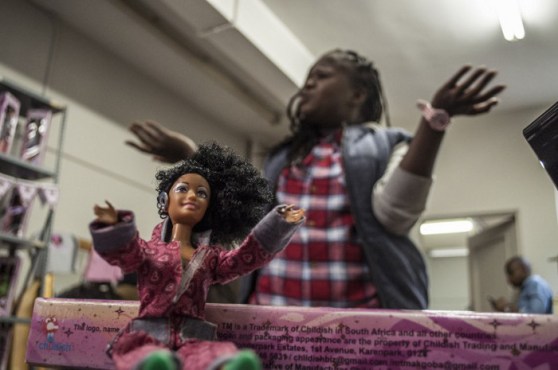 She is black and trendy, and young South African girls are learning to love her. Meet Momppy Mpoppy, who is a step ahead of other black dolls across Africa who are often dressed in traditional ethnic clothes. Decked out in the latest fashions and sporting an impressive Afro, complete with a tiara, Momppy could play her own small part in changing the way that black children look at themselves. Maite Makgoba, founder of Childish Trading and Manufacturing, said she started her small business after realising that black dolls available on the market “did not appeal to children”…..more
A vital role for science-based traditional medicine in Africa
In early 2015, clinical trials of a 1000 year-old Anglo-Saxon eye remedy established that it was almost 100% effective at wiping out the MRSA bacteria. The main ingredients of the remedy? Onion, garlic and wine. “We were blown away by just how effective the combination of ingredients was,” said Dr Freya Harrison of the University of Nottingham’s faculty of medicine and health sciences……more
White Paper fuzzy on how to get private doctors’ buy-in
 We’ve finally been given government’s blue-print for how it plans to marry the private and public health sectors – the NHI White Paper. But many areas are fuzzy, particularly how it will persuade private doctors to work in a system that is likely to mean more work and less pay…..more
App: Primary Health Care Clinical Guide
 Produced by South Africa’s The Open Medicine Project, the Department of Health app gives health care workers’ easy access to the country’s Primary Health Care Standard Treatment Guidelines and Essential Medicines List.
Aimed at a broad range of health care workers, the app includes features, like:
- A cardiovascular risk assessment tool, which efficiently calculates a patient’s percentage risk of having a cardiovascular event such as a stroke or a heart attack in the next 10 years;
- A paediatric drug dosage calculator, which accurately calculates weight or age-based dosage for children; and
- A medicine stock out tool, which allows healthcare professionals to report medication shortage and stock-outs directly to the Department of Health.
To download the app, search “PHC Clinical Guide”in the App Store or on Google Play
New agreement could help end ARV stock outs
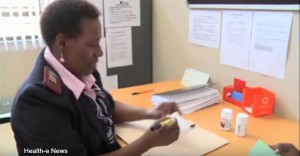 After months of erratic supply of its antiretroviral (ARV) Aluvia in South Africa, international pharmaceutical company AbbVie will now allow generic manufacturers to produce the drug to help safeguard supplies, according to an announcement made today…..more
Rwandans vote on constitution changes to let Kagame extend rule
KIGALI — Rwandans voted overwhelmingly on Friday in support of changing the constitution to allow President Paul Kagame to extend his term in office, possibly until 2034, partial results released by the electoral commission showed…..more
Doctors stage sleep-in at hospital
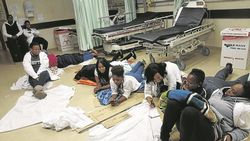 Witbank Hospital student doctors dragged their mattresses and blankets to the hospital’s casualty ward and slept there in protest over lack of security at their residences…..more
Education resources on the WHO’s International Classification of Functioning, Disability and Health
The International Classification of Functioning, Disability and Health (“ICF”) has been in circulation for more than a decade. Since its publication, members of the Functioning and Disability Reference Group (FDRG) have used this classification as the basis for teaching users (and potential users) the clinical, social, academic, research, health service administration and statistical uses of the classification in practical application. For this, they used a selection of materials and methods. For the classification to be most effective, it is important that it is applied consistently and reliably. This requires extensive training using quality training materials. However, the danger exists that effort could be duplicated as FDRG members and collaborators in different areas seek to achieve the same goal: educating users in implementing the classification. A central repository for the ICF learning materials will help everyone in teaching the practical application of the ICF….more
Video: What is Social and Behavior Change Communication?
Immunization in Practice – A practical guide for health staff 2015 update
Immunization in Practice – A practical guide for health staff 2015 update
This revised edition of Immunization in Practice is the result of team work between WHO and other GAVI alliance partners, particularly UNICEF, CDC, Program for Appropriate Technologies in Health (PATH) and John Snow Incorporated (JSI), and many other individuals who are committed to improving immunization services throughout the world.
http://www.who.int/immunization/documents/training/en/
http://www.who.int/entity/immunization/documents/IIPcover.JPG
Introduction pdf, 148kb
Module 1 : Target diseases and vaccines pdf, 1.81Mb
Module 2 : The vaccine cold chain pdf, 2.13Mb
Module 3 : Ensuring safe injections pdf, 718kb
Module 4 : Microplanning for reaching every community pdf, 1.23Mb
Module 5 : Managing an immunization session pdf, 995kb
Module 6 : Monitoring and surveillance pdf, 605kb
Module 7 : Partnering with communities pdf, 323kb
Word versions of Modules 1 to 7 (coming soon)
—
Let’s build a future where people are no longer dying for lack of healthcare knowledge – Join HIFA: www.hifa2015.org
Why it’s time all African countries took a stand on skin lightening creams
Below are extracts from an article in The Conversation (with thanks to Global Health Now). It is worth noting that governments have a legal obligation under international human rights law to ensure that citizens are fully informed of the health risks of skin lighteners, as demonstrated by HIFA and the New York Law School (http://www.hifa2015.org/hifa2015-and-human-rights/).
Why it’s time all African countries took a stand on skin lightening creams
‘Skin lighteners – used by up to 70% of women in parts of Africa – are damaging. In fact, the WHO has banned the active ingredients of skin lighteners – a hydroquinone and mercury?from being used in an any unregulated skin products.
‘“Unregulated products have significantly higher quantities of hydroquinone and mercury than those recommended by dermatologists,” he writes. “Using them could lead to liver and kidney failure or hyperpigmentation. There is also a risk of skin cancer . . . .”
‘Cote d’Ivoire has led the charge in tackling skin lighteners and has banned the practise nationally. It is time for the rest of the continent to follow…’
‘The motivation for using skin lighteners is linked to colonial history. Lightening one’s skin is perceived to come with increased privileges, higher social standing, better employment and increased marital prospects. This, coupled with influential marketing strategies from transnational cosmetic houses using iconic celebrities, increases the allure – primarily for women, but increasingly for men…’
‘The attraction to the practise is encouraged by overt advertising and the advent and influence of social media and mobile phones with roaming apps…’
‘… governments should encourage the view that being paler skinned isn’t a panacea and that black is beautiful too.’
Best wishes, Neil
Let’s build a future where people are no longer dying for lack of healthcare knowledge – Join HIFA: www.hifa2015.org
Open access healthcare information
- Indmed – http://indmed.nic.in
- Medknow – www.medknow.com
- WHO – SEARO Index – http://imsear.hellis.org/
- Bioline International ( http://www.bioline.org.br)
-
Academy Health-http://academyhealth.org/Publications/
-
African Journals Online (open)-http://www.ajol.info/index.php/index/browse/alpha?letter=oa
-
Bio-line International (Register through eIFL) [*see note below]
-
HINARI (Register through INASP) [*see note below]
-
Directory of Open Access Journals
-
Free Medical Books
-
Free Medical Journals
-
London School of Hygiene and Tropical Medicine-http://researchonline.lshtm.ac.uk/
Systematic review: Health system and community level interventions for improving antenatal care coverage and health outcomes
Health system and community level interventions for improving antenatal care coverage and health outcomes
What is the issue?
The World Health Organization recommends at least four antenatal visits for all pregnant women. Almost half of pregnant women worldwide miss out on this level of care, and this is more problematic in low- and middle-income countries.
Why is this important?
Healthcare during pregnancy is a priority because poor antenatal attendance is associated with delivery of low birthweight babies and more newborn deaths. Antenatal care also provides opportunity for nutritional and health checks, such as whether a woman has a disease like malaria or has been exposed to infectious diseases such as HIV (human immunodeficiency virus) or syphilis.
What evidence did we find?
We reviewed randomised controlled trials that tested ways to improve the uptake of antenatal care during pregnancy. Some trials tested community-based interventions (media campaigns, education on self and infant care or financial incentives for pregnant women to attend antenatal care), while other trials looked at health systems interventions (home visits for pregnant women or provision of equipment for clinics). We included 34 trials with approximately 400,000 women. Most trials took place in low- and middle-income countries, and most trials were conducted in a way that made us feel confident about trusting the published reports. We assessed 30 of the 34 trials as of low or unclear overall risk of bias. The quality rating (high, moderate or low) shows our level of confidence that the result is robust and meaningful.
Trials comparing one intervention with no intervention
Single interventions only marginally improved the numbers of women attending four antenatal visits (high quality). Interventions did not improve rates of maternal death (low quality), baby deaths (moderate quality) or low birthweight (high quality). Even so, interventions led to modest improvements in the number of women who had at least one antenatal visit (moderate quality) and who delivered in a health facility (high quality). The number of women who received intermittent preventive treatment for malaria was not reported.
Trials comparing two or more interventions with no intervention
Combined interventions did not improve the number of women with four or more visits (low quality), or reduce maternal deaths (moderate quality). Nor did it increase the number of women who delivered in a health facility (moderate quality). However, more women who received combined interventions had one or more antenatal visits (moderate quality); there were also fewer baby deaths (moderate quality) and fewer low birthweight babies (moderate quality). The number of women who received intermittent preventive treatment for malaria was not reported.
We found no evidence that trials of community interventions worked differently from trials of health systems interventions.
Trials comparing one intervention with another intervention – there were no trials for this comparison.
Trials comparing one intervention with a combination of interventions – There was no difference in the number of women attending four or more antenatal visits (and at least one visit), maternal deaths, baby deaths, the number of deliveries in a health facility or the number of women who received intermittent preventive treatment for malaria.
What does this mean?
Single interventions may improve antenatal care coverage (women attending at least one visit and women attending four or more visits) and encourage women to give birth to their babies in health facilities. Combined interventions may also improve antenatal care coverage (at least one visit), reduce baby deaths and reduce the number of babies born with low birthweight.
We recommend that further studies of pregnant women and women in their reproductive years use combinations of interventions to maximise impact and look at outcomes that are important to the women themselves, such as maternal and baby deaths or ill health and the use of healthcare services.
Health system and community level interventions for improving antenatal care coverage and health outcomes
http://onlinelibrary.wiley.com/doi/10.1002/14651858.CD010994.pub2/abstract
—
Let’s build a future where people are no longer dying for lack of healthcare knowledge – Join HIFA: www.hifa2015.org
 AfroPHC
