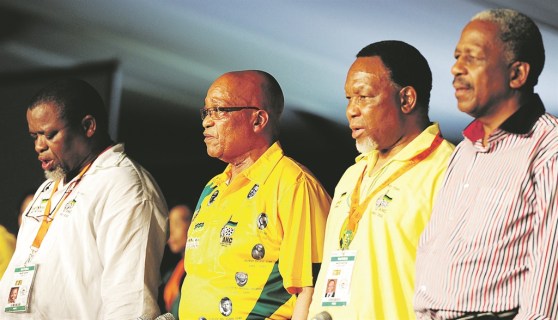
‘We’ve lost the plot’ – Motlanthe

fbd884a26e8d4db3921144cd8a4d5f2dThe country is on autopilot in the absence of real leadership. And it will get worse before it gets better, former president Kgalema Motlanthe tellsJeff Kelly Lowenstein

What have been the country’s greatest accomplishments in the past 22 years and what are the greatest challenges ahead? For starters, the system of apartheid was based on racial discrimination informed by skin colour. That’s the backdrop against which we then assess objectively changes that happened in 1994, which meant that for the first time all adults could vote, universal suffrage applied, and so on…..more

Join the Chiawelo Community Practice Group on Facebook!

Screen Shot 2016-08-01 at 11.18.39 PM.png

Amazing stuff happening here….. join us!

WHIG: Dutch platform for Family Medicine and International Health

WHIG wants to contribute to the development of FM in low income countries.

Means are:

  • Being a platform for those GPs who are active in the exchange of expertise and are willing to contribute to this.
  • Offering expertise on FM for capacity building  in FM-training sites. E.g. support FM-training in Eldoret (read the executive summary  of the Kenyan Family Medicine strategy for the Kenyan Ministry of Health). See also The ‘Peter Manschot fund’ for activities they fund.
  • Facilitate the exchange of young doctors. We help Dutch trainees in FM and GPs to increase their knowledge on global diseases (import diseases).
  • Contribute to the FM-orientation of those doctors who want to work in a low resource country.
  • Contribute to the FM-orientation of those doctors/ MO’s who have to do compulsary service in their country. See also Medicus Tropicus sept 2010 48-3
  • Contribute in research and publication on the subject.

See important mentions of Family Medicine in Africa at the website here

Protesters run riot in Kliptown over unpopular ANC council candidate

With just five days to go before the local government elections start with special votes‚ residents of Kliptown in Soweto took to the streets on Wednesday to express their unhappiness about a councillor candidate put forward by the ANC.

The ANC had announced Pamela Sibanyoni as its candidate for councillor in ward 19, Soweto, but some residents were insisting on their own candidate, said ANC Johannesburg spokesperson Jolidee Matongo.

“We are very clear: If people are standing in the path of the ANC towards victory‚ those comrades have defined themselves as the enemy of the ANC‚” he said. …more

A tragedy waiting to happen

2135819157Johannesburg – One by one they pen their accounts, which read like multiple tragedies waiting to happen. “At 34 weeks pregnant and doing a 24-hour shift, I drew blood on one of the last patients I was seeing. “Exhausted, I sustained a needle-stick injury of a high-risk HIV patient. “The stress, the ARVs and everything that went with it could have easily been avoided if I was not already seeing double after working such long hours.” Signed, anonymous.

The next reads: “I was involved in a motor vehicle accident (the only accident I have ever had) when I was post call in my community service year…..more

Not bigger router but fleet of smaller ones now the way to go

IN EVERY home, some poor soul is responsible for keeping the internet running. The job is a lot like voodoo: Netflix conked out? Unplug the router, then plug it in again. Wi-Fi dead zone in the far room? Give those antennas a wiggle.

So I’ve got big news for you home tech-support personnel: You can stop faking it now. A significant overhaul of the router, that blinking box of frustration that beams wireless internet, is making Wi-Fi much, much better at covering an entire home. It’ll just cost you much, much more.

This next-generation Wi-Fi isn’t about bigger routers — it’s about deploying a fleet of smaller ones. Routers struggle with long distances and interference, but can work great in teams. So in large or hard-to-network homes, the new idea is to put an access point upstairs, downstairs and in that troublesome side room. They link to each other wirelessly, forming a “mesh” that spreads internet around the house like butter on a hot bagel. Not long ago, a really, really good Wi-Fi router cost $200. Now these mesh systems cost $350 and up, way up. Are those prices worth it? Ask yourself this: How much would you pay not to have to worry about Wi-Fi anymore? When a home mesh system called Eero debuted last February, I liked it so much I bought a set of three for myself — for a budget-busting $500….more

WHO Report: Health Workforce in India

See this new WHO report on the health workforce in India.

http://www.who.int/hrh/resources/16058health_workforce_India.pdf?ua=1

Below are five of the key findings, highlighted in the Preface:

(i) At the national level the density of doctors of all types (allopathic, ayurvedic, unani and homeopathic) in 2001 was 80 doctors per 100,000 of the population and the density of nurses was 61 per 100,000. The comparable figures for China were 148 for doctors and 103 for nurses. In both countries the densities were higher in urban areas than rural areas, but in India the density in urban areas was 4 times the rural, whereas in China it was twice the rural density. What this showed was that in the matter of health personnel we were less well endowed than China, which is not entirely surprising considering that China had a much higher per capita GDP, but such resources as we had were more unequally distributed between urban and rural areas.

(ii) Many individuals claiming to be doctors in their occupation did not have the requisite professional qualifications. Almost one third of those calling themselves doctors were educated only up to secondary school. The lack of medical qualifications was particularly high in rural areas. Whereas 58% of the doctors in urban areas had a medical degree, only 19% of those in rural areas had such a qualification.

(iii) The lack of trained health professionals was obviously a major constraint on our ability to achieve health delivery in a short period. To reach the Chinese level of density of doctors we would need an additional 700,000 doctors but the capacity of our medical universities at the time was limited to producing only 30,000 doctors per year. It has increased since then, but hardly to the level which would allow early closing of the gap. I also pointed out that all doctors do not need to have an MBBS degree. In China, many doctors hold only three-year medical diplomas and much of our need could also be met through paramedicals. However, there was strong opposition from the medical profession to allow “unqualified persons” to practice as doctors in any public facility. There has been some change since then, with some states recognizing three-year licentiate diplomas and thus allowing these persons to serve in public clinics and hospitals.

(iv) There was enormous variation in density across states. The density of doctors in Chandigarh (a city which is a Union Territory) was ten times that in the worst state, Meghalaya. The doctor density in Punjab, one of the upper income states, was 2.6 times higher than in Bihar, which is one of the poorest states.

(v) One of the interesting findings in the study was that the percentage of female doctors who had medical degrees was much higher than male doctors. I took the liberty of drawing the Prime Minister’s attention to an interesting inference from this fact: viz. if one was somewhere in India with no personal knowledge of individuals but in need of a doctor, one would do better in a probabilistic sense by going to a woman doctor!

Let’s build a future where people are no longer dying for lack of healthcare knowledge – Join HIFA: www.hifa2015.org  
‘Nurses were asleep when my sister fell’

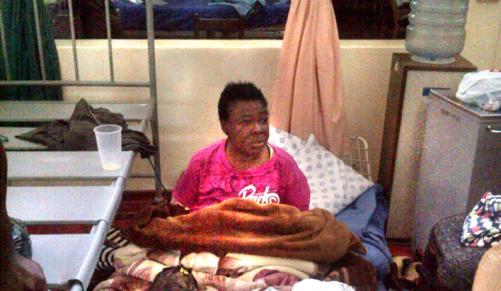
1930689188Johannesburg – Fifty-year-old Nomsa Dhlongolo passed away at Chris Hani Baragwanath Academic Hospital during the early hours of Thursday morning. And her sister Lorraine Mashao is adamant that the nurses helping her could have done better….more
Rural grannies walk for health

In a remote rural village, community leaders are educating the elderly about how to stay healthy. More than 80 grannies from Makuya village, near Niani in Limpopo participated in a recent fun walk which was organised by the local community leaders to educate the elderly about how to fight diabetes and high blood pressure. During the walk, the senior citizens were not only encouraged to exercise but to eat healthily in order for them to stay fit and live long….more

Pooling of resources for NHI could lower cost of universal access.

district-clinical-specialist-teams-300x166On Tuesday, Minister of Health Dr Aaron Motsoaledi addressed the media along with members of the Board of As the debate on National Health Insurance (NHI) funding continues, the minister of health has come out in response to the criticism over the high cost associated with rolling out universal health care in South Africa….more

How Terminology Mapping Drives Semantic Interoperability

The increasing use of electronic health records (EHRs) opens opportunities for data sharing and collaborative care that simply didn’t exist when patient information was confined to paper charts.

Emerging healthcare business models such as accountable care organizations (ACOs) and patient-centered medical homes (PCMHs) rely on the exchange of data among primary care physicians, specialists, hospitals and other providers. Health information exchanges (HIEs), whether localized or regional in scope, naturally depend on the ability to move clinical data among the participating parties. Population health management, a component of the nation’s healthcare reform initiative, calls for a robust data analysis infrastructure that can pull in anonymized patient data from myriad healthcare systems.

Ironically, the electronic systems that liberate data from paper records often end up restricting communications. Different healthcare providers tend to use different EHR systems, selecting from the dozens of products available in the market. Systems tend to represent data differently, which leads to interoperability issues. A recent report published in the Journal of the American Medical Informatics Association noted “615 observations of errors and data expression various” across the 21 EHR technologies examined.

A Semantic Foundation for Achieving HIE Interoperability

Abstract
This paper describes the challenges that are being tackled and those that remain to be addressed if we are to enable electronic health record information to be shared seamlessly and meaningfully. This goal is known as semantic interoperability, and is needed if computational services are to be able to interpret safely clinical data that has been integrated from diverse sources. Based on sustainable architectural approaches, the paper describes the clinical case for consistently expressed clinical meaning within electronic health records, in particular where computers rather than humans need to be able to process EHR data safely. It outlines the main kinds of information and knowledge artefact that are used to represent meaning within EHRs, and considers for each its role and limitations. The problems that arise with trying to use terminology consistently with EHR reference models is explored, together with the implications for designing EHR archetypes. Examples are given of situations where a diversity of options exists for how to represent compound (multi-part) clinical expressions. Recommendations are made for the kinds of change that are needed both in record structures and in terminology systems to minimise this diversity and thereby aid semantic interoperability….. more.

Approaching semantic interoperability in Health Level Seven

Robert H Dolincorresponding author1 and Liora Alschuler2

‘Semantic Interoperability’ is a driving objective behind many of Health Level Seven’s standards. The objective in this paper is to take a step back, and consider what semantic interoperability means, assess whether or not it has been achieved, and, if not, determine what concrete next steps can be taken to get closer. A framework for measuring semantic interoperability is proposed, using a technique called the ‘Single Logical Information Model’ framework, which relies on an operational definition of semantic interoperability and an understanding that interoperability improves incrementally. Whether semantic interoperability tomorrow will enable one computer to talk to another, much as one person can talk to another person, is a matter for speculation. It is assumed, however, that what gets measured gets improved, and in that spirit this framework is offered as a means to improvement. ….more

Semantic Interoperability: The Future of HealthCare Data

Good healthcare depends so much upon having high-quality information about a patient. The problem is that that data lives across multiple providers and institutions, and that the industry has yet to fully conquer the challenge of exchanging and integrating this information, thanks to the use of multiple vocabularies, formats, and systems by all the players in the chain.

Last year, at a workshop held at the Semantic Technology & Business Conference in San Francisco, a big step was taken towards tackling this problem. It came in the form of The Yosemite Manifesto, a position statement that debuted at that conference’s panel on RDF as a Universal Healthcare Exchange Language. The Manifesto recommended using the World Wide Web Consortium’s (W3C) RDF (Resource Description Framework) standard model for data interchange as a universal healthcare exchange language, describing RDF – one of the core technologies of the Semantic Web – as the best available candidate for the job. …more

How Ontologies Can Improve Semantic Interoperability in Health Care

Stefan Schulz* and Catalina Martínez-Costa Institute for Medical Informatics, Statistics and Documentation, Medical University of Graz, Austria {stefan.schulz,catalina.martinez}@medunigraz.at

Abstract. The main rationale of biomedical terminologies and formalized clinical information models is to provide semantic standards to improve the exchange of meaningful clinical information. Whereas terminologies should express context-independent meanings of domain terms, information models are built to represent the situational and epistemic contexts in which domain terms are used. In practice, semantic interoperability is encumbered by a plurality of different encodings of the same piece of clinical information. The same meaning can be represented by single codes in different terminologies, pre- and postcoordinated expressions in the same terminology, as well as by different combinations of (partly overlapping) terminologies and information models. Formal ontologies can support the automatically recognition and processing of such heterogeneous but isosemantic expressions. In the SemanticHealthNet Network of Excellence a semantic framework is being built which addresses the goal of semantic interoperability by proposing a generalized methodology of transforming existing resources into “semantically enhanced” ones. The semantic enhancements consist in annotations as OWL axioms which commit to an upper-level ontology that provides categories, relations, and constraints for both domain entities and informational entities. Prospects and the challenges of this approach – particularly human and computational limitations – are discussed.

Keywords: Formal Ontology, Medical Terminologies, Health Care Standards

More