‘Regeneration should be for all’: will change in Johannesburg benefit its poorest residents?

Very early in the morning, Diana Phololo and a dozen elderly women from 54 Soper Road step out on to the dark streets of central Johannesburg. If they are quick, they will beat the municipal cleaners to the detritus left overnight by revellers in the newly hip neighbourhoods of South Africa’s sprawling commercial capital.

There is little solidarity among the 100 residents of the burned-out building where Phololo, 58, has lived unlawfully for nearly 20 years. Each races to the shattered bottles left on the pavements outside the bars and restaurants. Sold by the kilo for recycling, the glass provides the residents with enough money to eat.

“It’s not easy at my age, but it’s all I’ve got,” Phololo says …more

“Years of dental neglect have caused my teeth to fall out”

patrick-300x288While dental services at government health facilities are free, the fact that they are limited, many poor people in rural communities are unable to make use of them or are not aware of them. It’s an issue that is receiving some attention as September is oral hygiene month…..more

Nyaope’s deadly grip on Orange Farm

nyaope-pic-900x468

Orange Farm – a relatively young township situated about 45 kilometres south of Joburg – is under siege by nyaope addicts, with residents afraid to leave their homes in case they are burgled.

Teenagers and young adults in the area are increasingly becoming hooked on the deadly drug, which is highly  addictive mix of heroin and dagga. But while the problem is growing, there is no rehabilitation clinic in the area.

“If you leave home you will come back to an empty house,” said one woman, who described waking up one morning to a flooded yard because addicts had stolen her copper pipes to sell for scrap metal. “Now we use plastic taps outside,” she said….more

Youth unemployment: A foot in the door

Business has backed a plan to place 1m young people in paid one-year internships over the next three years in a move that is expected to raise private sector employment by around 3% and generate at least R2bn more in Vat for treasury.

The programme, which was signed off by President Jacob Zuma last week, has been developed by the CEO Initiative — a group of top businessmen who have rallied to finance minister Pravin Gordhan’s call to put the economy on a firmer footing.

Youth unemployment is among the biggest structural shortcomings of the economy, with almost 55% of people between 15 and 24 years old — roughly 1.5m people — in the labour force not working.

“This programme, which seeks to place 1m young people aged 18-29 in internships, will have a significant effect on employment,” says Colin Coleman, MD and partner of Goldman Sachs.

Coleman and Investec CEO Stephen Koseff chair the joint business-government working group that has been developing the concept since May.

The initiative has been announced on the eve of a visit to SA by Moody’s Investors Service. The New-York based credit rating agency has said it is likely to downgrade SA in the absence of growth recovery and structural reforms, including to state-owned enterprises (SOEs). It regards youth unemployment as one of SA’s key credit challenges. …more

Five billion human minds about to come online

It’s now clear that we will not need to physically wire the planet. Satellites, possibly aided by drones and balloons, will get the job done a lot faster. The major internet and space technology corporations, among others, have confirmed multibillion-dollar investments to bring low-cost broadband internet to every square metre of Earth’s surface within 10 years. They are building the railway tracks and freeways of the 21st century — but at global scale, and with breathtaking speed. Five billion human minds are about to come online, mostly via sub-$50 smartphones. And unlike the 2-billion who preceded them, their first experience of the internet may not be clunky text, but high-resolution video and a fast connection….more

This invention by a British student could save millions of lives across the world

91068632_willbroadwayfridgelead976A 22-year-old British student has invented a mobile fridge that could save millions of lives across the world.

Will Broadway’s “Isobar” has been designed to keep vaccines at the ideal temperature while in transit in developing countries. And Will doesn’t plan to make money from his creation. His focus is to get it to people who need it, which is why he won’t be trying to get a patent.

“I make things every day for people who have everything,” Will, an industrial design and technology graduate from Loughborough University, tells Newsbeat. “I wanted to make something for people who have next to nothing. It should be a basic human right, in my opinion, to have a vaccination. “I don’t think that it should be patented to restrict use.”

More

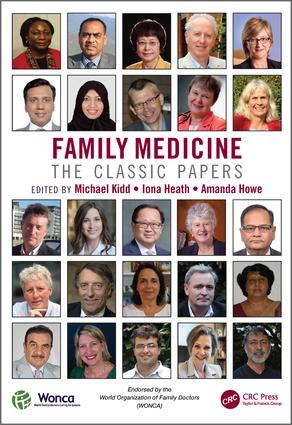
Family Medicine: The Classic Papers, by Wonca

9781846199943About the Book

Containing papers carefully compiled for both their historical importance and contemporary relevance, Family Medicine: The Classic Papers brings together a team of experts, led by global family medicine leaders Michael Kidd, Iona Heath and Amanda Howe, who explain the importance of each selected paper and how it contributes to international health care, current practice and research.

The papers demonstrate the broad scope of primary health care delivered by family doctors around the world, showcasing some of the most important research ever carried out in family medicine and primary care. This unique volume will serve as an inspiration to current family doctors and family medicine researchers and educators, as well as to doctors in training, medical students and emerging researchers in family medicine. …order yours here

11 tech innovations changing global education

A giant shipping container now provides computers to students in remote locations. The simplest cell phone records and distributes local stories to improve literacy rates. Voicemails teach mothers how to care for, and educate, their young children. These are just some of the exciting technological adaptations changing education in the world’s remote and poor regions.

Education is a community-wide challenge. It requires talented teachers, committed parents and guardians, and tools for pupils. Providing these things in rural and poor areas has challenged policy makers across the planet.

Add poverty into the mix, and the situation can turn dire very quickly. In rural and remote areas, people struggle to pool enough resources and expertise to reach every child with an education.

To face this challenge, development experts, technology giants, entrepreneurs, and education leaders are adapting technology to improve educational outcomes in some of the world’s hardest to reach places.

Here are some of the innovations changing education around the world: ……more

NEW BOOKS AFRICAN EDITIONS

Dear Shabir,

Acrodile Publishing Ltd has released two revised books as follows revised edition of

  • ‘Primary mother care and population’ (Africa edition) by Dr. Maurice King. This is ideal training and reference book/manual for your training programme
  • Environmental health and occupational health and safety by Samuel Obura Afubwa and Prof. Mutuku Alexander Mwanthi .

See book summaries and prelims/table of contents:

The e-books is available at Amazon (http://amzn.com/B00JQHZKF8 )  and https://amzn.com/B00JVANNKY  respectively.

Send us a request to quote for the print edition.

Kind regards

Kennedy Kilaho Chadeka
Acrodile Publishing Ltd

+254722496674/733196509 | kennedy@acrodile.co.ke | http://www.acrodile.co.ke | Skype: kennedy.chadeka | 15298-00509, Nairobi

WHA69 approves Framework on integrated people-centred health services. Supporting web platform launched.

Dear colleagues,

On 28 May 2016 at the Sixty-ninth World Health Assembly, WHO Member States officially adopted the Framework on integrated people-centred health services (IPCHS) and its resolution on “Strengthening integrated, people-centred health services”, formally giving the WHO Secretariat the mandate to work on this new programmatic area.

During a high-level side event at the Assembly, WHO – and its Collaborating Centre the Andalusian School for Public Health – officially launched the IntegratedCare4People web platform. The platform is a global network for sharing knowledge and leading practices, and for joint learning on transforming health services to become more integrated and people-centred. Intended for practitioners and organizations, the platform aims to improve health service delivery by curating high quality knowledge products and resources that provide technical and operational insight into how health services can be transformed towards this vision.

As Member States emphasized during the WHA discussions, integrated people-centred health services are paramount to achieving universal health coverage, and Sustainable Development Goal 3. Member States further highlighted the importance of strengthening primary health care as a key strategy, of putting people and their needs at the centre of the focus, of combating fragmentation, and of making IPCHS one of the main pillars of a health model that will better deal with the challenges faced by today’s health systems. 

In the run-up to this important milestone, we have consulted with a large number of health providers, health care managers, policy-makers, advocates and community leaders and your feedback has been crucial in shaping the Framework on integrated people-centred health services and its associated web platform. We continue to invite and welcome your collaboration in building a truly global virtual network for moving towards integrated people-centred health services.

To help us spread the word about the Framework and the IntegratedCare4People web platform, we invite you to share this announcement with your colleagues and relevant partners. For those active on Twitter, we invite you to share the integratedcare4people.org link using the hashtag #IntegratedCare4People.

Thank you for your support and we look forward to continuing this important collaboration.

Kind regards,

 Dr Hernan Montenegro

Coordinator, Services Organization and Clinical Interventions Unit

Service Delivery and Safety Department

World Health Organization

Avenue Appia 20

CH-1211 Geneva 27 – Switzerland

+41 22 791 14 65 (Phone)

+41 22 791 41 74 (FAX)

montenegroh@who.int
Wonca Africa Statement at WHO Afro 66th Ministerial Conference, Addis Ababa

Statement of the World Organisation of Family Doctors, WONCA, Africa Region to the 66th Session of WHO Afro Regional Committee held in Addis Ababa, Ethiopia, 19th to 23rd August, 2016.

Mr Chairman,

Distinguished Delegates,

I am grateful for the opportunity to bring the perspective of family doctors in Africa to the subject of “Health in the 2030 Agenda for Sustainable Development” to this august assembly.

The World Organisation of Family Doctors, WONCA, is an international organisation with over 500,000 members in about 130 countries and territories around the world. However, in the Africa Region, only Nigeria, South Africa, Ghana, Zimbabwe, Kenya, Uganda and Lesotho are currently members. Our mission is to assist member countries develop the content and delivery of good quality care by family doctors/primary care physicians around the world. WONCA has been in collaboration with WHO for several years now.

Evidence abounds that national health systems based on primary health care is the most cost effective way to deliver universally accessible health care to populations.

We believe the adoption the adoption and implementation of this is an attainable goal for all counties in Africa by 2030. However, this will require the political commitment and creative approach to harness available resources. Such commitment would involve :

  1. A paradigm shift in budgetary allocation that prioritise primary care. The management of the funds should target direct benefits to the end users and not bureaucratic services. This can be achieved through the implementation of a well designed national social health insurance scheme.
  2. A commitment to an effective public-private partnership that utilises resources in the private sector, which in some countries provide as much as 65% of health care services, in a complementary way with those in the public sector. The public sector can concentrate more in providing secondary and tertiary care while the private sector is empowered to take care of primary care and decongest the government hospitals.
  3. Human capacity development for primary health care. The WHA in its declaration on Primary Care: Now More than Ever in 2008, highlighted the need to develop human resources for the primary health care team. The ultimate goal for universal health coverage should be a system that guarantees the coverage of every family by a designated family doctor within a strong team. It is most critical to develop primary care physicians to lead such teams and bring high quality person-centred care to the population in Africa. There is the urgent need to pay attention to this call and align our medical education at both undergraduate and postgraduate levels to meet our need for more doctors in Africa by 2030.

WONCA has been partnering with Member Organisations around the world to enhance the contributions of family doctors to the national health service of their respective countries. We need the support of the distinguished delegates to this conference to encourage our respective countries to engage with their family doctors in developing primary health care in their countries and encourage them to benefit from WONCA through formal membership.

Thank you for listening.

Dr Ehimatie Obazee,

President,

WONCA,

Africa Region.

State medical aid may go bust

THE Government Employees Medical Scheme (Gems) could be insolvent by financial year-end if drastic cost-containment measures are not instituted.

This would mean the scheme would need to be bailed out by the Treasury or amalgamated into a different scheme, forcing significant changes in benefits for its 1.8-million members.

It would be a big blow to those in government who hoped the scheme could provide a viable funding model for the proposed National Health Insurance.

It would also be an embarrassment for the Council of Medical Schemes, which has used its discretion to avoid putting the scheme under curatorship, despite its longstanding failure to meet the industry’s minimum statutory requirements……more

The six meetings that changed South African politics

SIX meetings over 10 days at different locations in Gauteng, following the sensational local government election results of August 3, have changed the face and dynamic of South African politics, perhaps forever.

At the heart of the battle was the EFF, which had to choose between siding with Africa’s oldest liberation movement, the ANC — which spawned the EFF but with which it has had a grim and bloody history over the past three years; or joining an opposition grouping that did not share the EFF’s ideology but with which it had forged strong ties in an increasingly volatile and violent Parliament, together facing down ANC bias and kragdadigheid.

Interviewed separately, EFF spokesman Mbuyiseni Ndlozi and DA federal executive chairman James Selfe have offered a fascinating look inside the talks that have left the ANC out of power in several of the country’s biggest cities and towns, with Johannesburg, Tshwane and Nelson Mandela Bay the most glittering jewels to be added to Cape Town in the opposition crown. …..more

Obamacare Is a Money-Loser for Insurers, Who Are Giving Up

Last November, when UnitedHealth Group said it expected to post big losses on its Obamacare policies in 2016, rivals such as Anthem and Aetna signaled their Affordable Care Act businesses were doing fine. The Obama administration used that as evidence to refute claims that systemic problems were brewing in its landmark insurance program.

Now, there’s no denying it. The four biggest U.S. health insurers admit they’re each losing hundreds of millions of dollars on their Obamacare plans. Rather than expand coverage, many are pulling out of the exchanges that were set up by the ACA so people can shop for insurance plans, often with the help of government subsidies.

UnitedHealth expects to lose $850 million on Obamacare in 2016, while Aetna, Anthem, and Humana are all on track to lose at least $300 million each on their ACA plans this year, according to company reports and estimates from Bloomberg Intelligence. UnitedHealth says it’s quitting 31 of the 34 states where it sells ACA policies. Humana is exiting 8 of 19 states and reducing its presence to just 156 counties, from 1,351 a year ago. Anthem hasn’t announced plans to change its participation in the program. …..more