Systematic review and metanalysis. Online Course on Coursera

There have been many discussionson the list on the importance of systematic reviview and metanalysis.

I wish to share the opportunity offered by the  ohns Hopkins University to have a free online 6 week course through Coursera.  Introduction to systematic review and metanalysis.

The online course will introduce methods to perform systematic reviews and meta-analysis of clinical trials. How to formulate an answerable research question, define inclusion and exclusion criteria, search for the evidence, extract data, assess the risk of bias in clinical trials, and perform a meta-analysis. Upon successfully completing this course, participants will be able to: – Describe the steps in conducting a systematic review – Develop an answerable question using the “Participants Interventions Comparisons Outcomes” (PICO) framework – Describe the process used to collect and extract data from reports of clinical trials – Describe methods to critically assess the risk of bias of clinical trials – Describe and interpret the results of meta-analyses

The course will start today, but I think you can still enroll.
https://www.coursera.org/learn/systematic-review

You can do it for free, or upon payment only if you wish to get a certificate.

Best wishes
Paola

Paola De Castro
Direttore, Settore Attività Editoriali
Istituto Superiore di Sanità
Viale Regina Elena, 299 – 00161 ROMA (Italy)

tel. + 39 06 49906004
e-mail   paola.decastro@iss.it

John Hopkins CCP & World Animation Day (28 October)

‘To mark World Animation Day (28 October), John Hopkins CCP pulled together a selection of animation videos that have been used over the years for social and behaviour change communication.’
https://medium.com/@johnshopkinsCCP/happy-world-animation-day-a6572bd299d#.vevzpdos7

‘Happy World Animation Day!
Animation’s Use in Social and Behavior Change Communication

‘Can animations inspire greater health and wellbeing? You bet. CCP uses animation as a tool to convey important health messages to a variety of audiences. There are several reasons why we might choose to use animated videos (over live action films) in our public health campaigns. Animated characters can be drawn somewhat generically, appealing to a broader audience. From a practical perspective, animation allows for certain creative licenses that live-action doesn’t. It’s easier to translate and its minimalist qualities keep viewers focused on the message, rather than on distracting background details…’

Let’s build a future where people are no longer dying for lack of healthcare knowledge – Join HIFA: www.hifa.org

CABI tackles global health with its first open access book – Global Health Research in an Unequal World: Ethics case studies from Africa

The CABI website links to the Directory of Open Access Books where you can find downloadable books on various subjects including over 300 on medicine and 350 on social science. The books are not all in English, there are publications in a number of other languages too, and the website itself has English and French versions. Definitely worth a look.

http://www.doabooks.org/doab?func=subject&uiLanguage=en

HIFA profile: Malcolm Brewster is a Community Nurse with the National Health Service, UK

“Almost Half Of Medical Trials Are Never Published And It’s Hurting Patients”

‘A new website has found that 8.7 million patients in the last decade have taken part in clinical trials that have never seen the light of day – and says this failure to publish stops doctors making good decisions about medicines.’

‘Nearly half of clinical trials worldwide are never published, according to a new website run by academics at University of Oxford including the data transparency campaigner Dr Ben Goldacre.

‘Scientists say the failure to publish medical data harms patients by skewing scientific understanding and preventing doctors from providing the best available treatments…’

Full text: https://www.buzzfeed.com/tomchivers/almost-half-of-medical-trials-are-never-published-and-its-hu?utm_term=.jiKJNKGlQa#.flKynpEgLk

It would be interesting to know the level of non-publication in different countries, including clinical trials carried out in high-income versus low- and middle-income countries. For example, is it easier for pharmaceutical companies to avoid publication of results that do not support their commercial interests, when the research is undertaken in LMICs?

Also, what proportion of non-clinical health research is never published?

Best wishes, Neil

Let’s build a future where people are no longer dying for lack of healthcare knowledge – Join HIFA: www.hifa.org

New AIDSFree PMTCT Technical Brief

AIDSFree is happy to announce the release of our latest technical brief on PMTCT of HIV/AIDS!

The past decade has seen tremendous progress in making services to prevent mother-to-child transmission of HIV (PMTCT) services more available in many HIV high-prevalence settings. Despite this progress, new HIV infections among pregnant women, newborns, and infants remain unacceptably high, and AIDS remains one of the leading causes of death among women of reproductive age and infants worldwide.

To eliminate MTCT, HIV programs are increasingly seeking ways to engage private actors more fully in expanding and sustaining national HIV and PMTCT responses. This technical brief presents options for engaging private sector actors in rapidly extending the availability of PMTCT services. The discussion includes successes, lessons, and challenges that can inform the efforts of governments, donors, and implementers to adapt or replicate private sector models in new settings.

Read more here: http://bit.ly/2cmT2PF

ALEX PENLER COMMUNICATIONS OFFICER | AIDSFREE
PHONE: 703.310.5232 | WWW.JSI.COM FB Twitter
TWITTER: @APenler SKYPE: alex.penler

HIFA profile: Alex Penler is Communications Officer at JSI in the USA. Professional interests: Gender, Global Health, HIV/AIDS.  alexandra_penler AT jsi.com

Upgrading Community Healthcare Providers knowledge in family planning, care and basic life saving know-how is imperative

Press release: working to contribute to the achievement of major global efforts, especially efforts towards promoting family planning, sexual and reproductive health, AIDS-free generation, Ending Preventable Child and Maternal Deaths.
We are delighted that this initiative has been published by International Trade Council on their website to spread the news for us since we’ve the challenge to design our own website. The HIFA and CHIFA Groups can also help to spread the information about this project for us. Those interested in collaborating in this project can also contact us. Please, you can see the link here: http://thetradecouncil.com/the-clinical-training-center-for-family-planning-ctcfp-in-cameroon

UHC Day 2016: Let’s Get Started!

The Health for All movement — in which health information plays a vital role — is at a crossroads. In the last year, more world leaders than ever have echoed our calls to action. At the same time, historic commitments are being tested in practice, and it’s up to all of us to band together and ensure that progress doesn’t fall short for those who need it most.

Fortunately, this movement is unstoppable for a reason: We rejected complacency the moment we committed to health for all. Ambition and action are in our DNA.

We hope the 12.12.16 Starter Kit will inspire, guide and energize you as you plan your activities for UHC Day (translations will be made available in the coming week). More resources, including a more robust digital toolkit and directory of partner activities, will follow as we get closer to 12 December. In the meantime, if you already have a sense of how you’re planning to mark the day, let us know here.
http://universalhealthcoverageday.org/activities/

Thank you again for all that you do to keep this movement going strong. We hope you find the Starter Kit helpful, and encourage you to reach out with questions or comments anytime.

Let the countdown begin!

Emily T. Bigelow
Global Health Strategies | UHC Coalition
Mobile:  +1 646 619 7631
Twitter: @UHC_Day

“Dr. Moosa: No queues, no fuss, bringing healthcare to your door” Health24

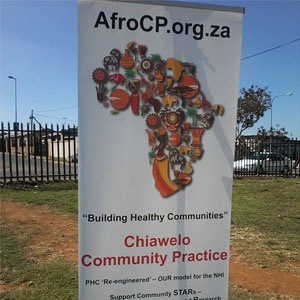
9f0c5d6b713f4f1e8d3763d5e75a4797For those living in ward 11, one of the poorer areas of Soweto, waiting in long queues for medical treatment had become increasingly problematic.

One of the first in Africa

For the inhabitants of this area, though, things have changed for the better. Nowadays, community-based health workers, trained and equipped with basic health education, go from door-to-door to do household assessments, gathering information about the family’s medical history.

Chiawelo Community Practice (CCP) is an experiment in developing community-based care in South Africa, a model that involves General Practitioner (GP) teams contracted to the National Health Insurance. It is one of the first of these projects on the African continent….more

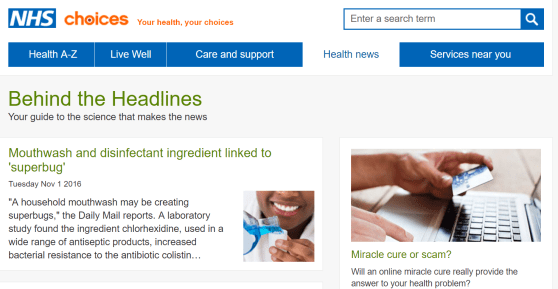
Behind the Headlines: Your guide to the science that makes the news

Capture.PNG

http://www.nhs.uk/news/Pages/NewsIndex.aspx

Privilege and inclusivity in shaping Global Health agendas

‘How then can discussions in Global Health begin to embrace global diversity?’ asks an editorial in the latest issue of Health Policy and Planning. I would argue that forums like HIFA are one way to do this and have invited the authors to join us…

CITATION: Privilege and inclusivity in shaping Global Health agendas
Kabir Sheikh, Sara C Bennett, Fadi el Jardali and George Gotsadze.
Health Policy Plan. (2016)
doi: 10.1093/heapol/czw146
Corresponding author: kabir.sheikh@phfi.org

EXTRACTS
‘Northern voices dominate Global Health discussions… Only two out of the 16-member Board of Directors of the Consortium of Universities of Global Health come from the global South (CUGH 2016). No current or past president and only one current member of the World Health Summit’s scientific committee is from the global South (WHS 2016)…

‘Only 15% of the world’s population lives in high-income countries. Yet Global Health conferences continue to be dominated by invited Northern speakers and important committees on Global Health composed mainly of Northerners. The words of a few from the global North wield a disproportionate power that carries well beyond their own boundaries. How can it be acceptable that these groups continue to dominate in deciding what problems we think about in Global Health and how we approach them?

‘The lack of inclusivity in Global Health carries major risks for the field. The most excellent research study or Global Health program risks failure unless it is informed by and contextualized by the people close to where change is sought. The Ebola crisis starkly illustrated the follies of a top-down system of global response to local health problems, and the crying need to develop local institutions and systems, access the experiential and tacit knowledge of local and country actors and listen more closely to voices from the ground…

‘How then can discussions in Global Health begin to embrace global diversity?… We need to push towards real inclusion so that diverse voices are not just brought to the table but are empowered to shape the debate and set the agenda…

‘Inclusivity… must be written into the fabric of Global Health so that the field becomes a learning system and community, and ultimately more relevant, where it is needed most.’

Best wishes, Neil

Let’s build a future where people are no longer dying for lack of healthcare knowledge – Join HIFA: www.hifa.org

Impact of interventions and the incidence of Ebola virus disease in Liberia

Many HIFA members have emphasised the importance of community engagement, communication and healthcare information to contain epidemics such as Ebola. This paper in Health Policy and Planning confirms these observations. ‘Much of the decline in the epidemic curve was driven by critical behaviour changes within local communities, rather than by international efforts that came after the epidemic had turned.’

CITATION: Impact of interventions and the incidence of ebola virus disease in Liberia — implications for future epidemics
Thomas D Kirsch, Heidi Moseson, Moses Massaquoi, Tolbert G Nyenswah, Rachel Goodermote, Isabel Rodriguez-Barraquer, Justin Lessler, Derek Cumings, and David H Peters

Corresponding author: tkirsch1@jhmi.edu

ABSTRACT

To better understand the impact of national and global efforts to contain the Ebola virus disease epidemic of 2014–15 in Liberia, we provide a detailed timeline of the major interventions and relate them to the epidemic curve.

In addition to personal experience in the response, we systematically reviewed situation reports from the Liberian government, UN, CDC, WHO, UNICEF, IFRC, USAID, and local and international news reports to create the timeline. We extracted data on the timing and nature of activities and compared them to the timeline of the epidemic curve using the reproduction number—the estimate of the average number of new cases caused by a single case.

Interventions were organized around five major strategies, with the majority of resources directed to the creation of treatment beds. We conclude that no single intervention stopped the epidemic; rather, the interventions likely had reinforcing effects, and some were less likely than others to have made a major impact. We find that the epidemic’s turning coincided with a reorganization of the response in August–September 2014, the emergence of community leadership in control efforts, and changing beliefs and practices in the population. Ebola Treatment Units were important for Ebola treatment, but the vast majority of these treatment centre beds became available after the epidemic curve began declining. Similarly, the United Nations Mission for Ebola Emergency Response was launched after the epidemic curve had already turned.

These findings have significant policy implications for future epidemics and suggest that much of the decline in the epidemic curve was driven by critical behaviour changes within local communities, rather than by international efforts that came after the epidemic had turned. Future global interventions in epidemic response should focus on building community capabilities, strengthening local ownership, and dramatically reducing delays in the response.

KEY MESSAGES
– The epidemic curve began decreasing before most global efforts were in place, limiting their impact on stopping the epidemic’s spread.
– Future global interventions should focus on strengthening local leadership, individual and community behaviour change, along with better body management and burial.
– Early models of the Ebola outbreak in Liberia and the resulting global strategies highlighted less important interventions, notably the rapid building of ETUs, and proved inaccurate.

Let’s build a future where people are no longer dying for lack of healthcare knowledge – Join HIFA: www.hifa.org

Health Policy & Planning: Perceptions on diabetes care provision among health providers in rural Tanzania: a qualitative study

Below are the citation, key messages and extracts of a new paper in Health Policy and Planning. The paper raises questions about the availability and use of healthcare information and knowledge. It draws attention to the know-do gap: the gap between what health workers know and what they do, and links this with ‘low motivation’, ‘lack of guidance’ and ‘no drive for providers to perform’.

CITATION: Perceptions on diabetes care provision among health providers in rural Tanzania: a qualitative study
Mary Mwangome, Eveline Geubbels, Paul Klatser and Marjolein Dieleman.
Health Policy Plan. (2016)
doi: 10.1093/heapol/czw143
http://heapol.oxfordjournals.org/content/early/2016/10/20/heapol.czw143.full?papetoc

Corresponding author: mmwangome@ihi.or.tz; mmwangome@gmail.com

KEY MESSAGES
– A know–do gap exists among providers regarding diabetes care provision.
– Self-management support to patients is limited and sometimes contradictory.
– Guidance for diabetes services at facility and district levels must be strengthened if diabetes services are to be provided according to the ICCC framework in this rural district.

EXTRACTS
‘over 60% of persons with diabetes in Tanzania do not know they have it (Kavishe et al. 2015)’

‘Whereas it has been shown in other Tanzanian settings that health workers lacked knowledge on diabetes care (Peck et al. 2014), health providers in our study seemed to have some knowledge of what was expected of them but did not practice according to that knowledge. Although providers gave reasons for not performing tasks, such as financial and geographical constraints for not tracking patients, there seemed to be minimal effort to improve the services in terms of patient referral, patient recording and patient education practices, especially at the district-hospital.

‘These observations point to a know–do gap, which has also been demonstrated among reproductive and child health service providers in Tanzanian and is thought to exist across Africa among health workers in general (Soucat and Scheffler 2013). The know–do gap is associated with low levels of motivation and professionalism (Leonard and Masatu 2010). Motivation of workers determines their performance and their performance determines the quality of services they deliver (Dussault and Dubois 2003). In our setting, low motivation and lack of guidance to providers could be possible factors contributing to the performance limitations as there was no drive for providers to perform. Improving human resources management and assuring guidance and support in diabetes care at facility level could address the know–do gap and improve performance of health providers in rural settings (Soucat and Scheffler 2013).’

Best wishes, Neil

Let’s build a future where people are no longer dying for lack of healthcare knowledge – Join HIFA: www.hifa.org

Guardian: 11 health innovations to drastically cut maternal and child mortality rates

‘Recent analysis has identified 11 health interventions that could save more than 6 million mothers and children by 2030, if they are invested in 24 countries’, says an article in The Guardian’s Global development professionals network.’ Full text http://bit.ly/2eq6IeT

‘Achieving the ambitious target to end maternal and child deaths, enshrined in the sustainable development goals (SDGs), will require ingenuity. The good news is that 11 health innovations could save more than 6 million mothers and children by 2030, if they are invested in and used widely in 24 priority countries…

‘The 11 innovations modelled in our analysis, crowdsourced from experts around the world, are gamechanging health technologies and approaches that will have wide-scale impact, ensure healthier babies, protect mothers, and secure better health in the long term.

1 Injectable contraceptives…
2 Better pneumonia treatment…
3 Kangaroo mother care…
4 Chlorinators for water treatment…
5 Antiseptic gel…
6 Single-dose anti-malarial drugs…
7 Neonatal resuscitators…
8 Low-cost balloon tamponade…
9 Drugs to stop blood loss after childbirth…
10 Rice fortification…
11 New tests for a life-threatening maternal condition.’

A personal comment: Most of the above are basic interventions and have been available for decades. The article says nothing about implementation (other than a brief comment on funding), and yet this is the fundamental issue. As we discussed on HIFA recently (Thematic Discussion on Implementation Research, supportd by TDR, WHO, The Lancet): ‘Millions of people die needlessly every year because they did not receive basic lifesaving interventions. Implementation research is all about finding ways to improve access to medical treatments and other health services. There is no area of research that is more important in terms of its potential to save lives and reduce suffering.’

Best wishes, Neil

Let’s build a future where people are no longer dying for lack of healthcare knowledge – Join HIFA: www.hifa.org

Navigating institutional complexity in the health sector: lessons from tobacco control in Kenya

Below are the citation and key messages of a new paper in Health Policy and Planning. This illustrates a new dimension – intra-governmental coordination and cooperation – that was not described in our previous discussion. The paper appears to support WHO’s promotion of ‘Health in All Policies’ (http://www.who.int/healthpromotion/frameworkforcountryaction/en/) although the authors do not use the term.

CITATION: Navigating institutional complexity in the health sector: lessons from tobacco control in Kenya
Raphael Lencucha, Peter Magati and Jeffrey Drope
Health Policy Plan. (2016) 31 (10): 1402-1410.
doi: 10.1093/heapol/czw094
http://heapol.oxfordjournals.org/content/31/10/1402.full?etoc

Corresponding author. raphael.lencucha@mcgill.ca

KEY MESSAGES
– Policy implementation is influenced by intra-governmental coordination and cooperation.
– Frameworks that have used to analyse tobacco control policy development and implementation have largely focused on the dynamics between government and tobacco industry interests.
– Our findings point to the need to expand this framework to include institutional and bureaucratic elements.
– These elements contribute to a more robust understanding of the barriers and facilitators of policy implementation.

Best wishes, Neil

Let’s build a future where people are no longer dying for lack of healthcare knowledge – Join HIFA: www.hifa.org

WHO Bulletin: Research on community-based health workers

Below are the citation and selected extracts of an ediorial in the November 2016 issue of the WHO Bulletin. The full text is freely available here: http://www.who.int/bulletin/volumes/94/11/16-185918.pdf?ua=1

CITATION: Research on community-based health workers is needed to achieve the sustainable development goals
Dermot Maher & Giorgio Cometto
Bull World Health Organ 2016;94:786–786 | doi: http://dx.doi.org/10.2471/BLT.16.185918

SELECTED EXTRACTS:

We identify five key issues for consideration in building this evidence base.

First, while there is a wealth of research experience on the role of community-based health workers regarding communicable diseases and maternal and child health, there is less research on
their role regarding noncommunicable diseases…

Second, more attention should be paid to cross-cutting enabling factors, for example, education, accreditation and regulation, management and supervision, effective linkage to professional cadres, motivation and remuneration, and provision of essential drugs and commodities…

Third, there is a research gap in understanding how to ensure the sustainability of programmes supported by community-based health workers, by using innovative national planning, governance,
legal and financing mechanisms…

Fourth, previous research experience on the role of community-based health workers represents a mix of varying degrees of quality, while the emphasis of future research must be on scientific
rigour to strengthen the evidence base for policy and practice.

Finally, it is important to avoid too narrow a disease- or intervention-specific focus to community-based health workers’ research…

Best wishes, Neil

Let’s build a future where people are no longer dying for lack of healthcare knowledge – Join HIFA: www.hifa.org

Announcing the African Citation Index

The Council for the Development of Social Science Research in Africa (CODESRIA) wishes to inform the African Social Science community and its partners that the initial framework of the African Citation Index (ACI) has been delivered. The Index is presently undergoing testing while data build-up is on-going and subscription to access the index will soon be open to institutions and individuals.

The Rationale for the Index
A citation index is a digital library infrastructure required for much deeper understanding of the nature and extent of scholarly information production, dissemination and use. Hitherto there have existed bibliographies and other reference sources. While these resources remain very useful in meeting the information needs of people, they do not contain Meta-information and their derivatives which are relevant for understanding the characteristics of users, patterns of use and characteristics of the publications.

Africa has been very poorly represented in western citation indexes; these indexes are also inaccessible due mainly to dominant fundamentalist methodologies of knowledge valuation which attribute poor quality and low value to research reports emanating from developing regions. This situation has been condemned by numerous leading scholars in Africa and underscores the need for a local citation index of African scholarly literature.

Why do we need the Citation Index?
Africa needs the citation index:
•       to provide information on research already performed in order to support ongoing research;
•       to provide information on the evolution of scientific knowledge and on the pursuit of science as a human activity;
•       to provide information that will be required to manage scholarly activities, and;
•       to provide an authoritative curated list of journals in Africa that meet high quality criteria set for the Index.

In addition to the above, the citation index will enable Africa to:
•       monitor the use and users, sources and characteristics of African scientific publications;
•       establish the visibility and productivity of scientists, disciplines, institutions and countries based on high quality local content;
•       know the core competencies and paradigmatic shifts in knowledge production in Africa;
•       understand the pattern of knowledge exchange and balance of intellectual influence in Africa and internationally;
•       map scholarly areas and fields to provide information about relevance and spread of research endeavours, as well as
•       study of the evolution of research/science.

African Citation Index – Location and Operational Mechanism
(i)     African Citation Index shall be located in the Council for the Development of Social Research in Africa (CODESRIA) in Dakar Senegal.
(ii)    Data creation and entry shall be initially centralised in Dakar until the project matures when data creation will then be decentralised in select locations in Africa.
Access to the Index
Access to the resources in the index shall be based on annual subscription.

Languages of the index
The resources shall be indexed in two languages namely: English and French. Extension to Arabic and Portuguese will be considered in the course of time.

Data Depth of African Citation Index
Five years retrospective data from select journals shall be inputted initially and after successful demonstration, the rest of the identified select journals data will be inputted.

Criteria for journal inclusion/selection
i.      The journal must be of African continent origin
ii.     The journal must have a board of editors of experts in the field/disciplinary area of the journal
iii.    The journal must be peer reviewed and research oriented
iv.     Coverage – all disciplines
v.      The journals must have an ISSN
vi.     The overall scientific quality of the journal should be high and it must conform to international conventions
vii.    The documents or journal must have a minimum of one issue per year.

Disciplinary coverage of the Index
The index will cover the following:
•       Science Citation Index (ASCI)
•       Social Science Citation Index (ASSCI)
•       Arts and Humanities Citation Index (AAHI)
•       Conferences Citation Index (ACCI)
•       Book Citation, and, (ABCI)
•       Data Citation Index (ADCI)

Types of Documents to be indexed
African Citation Index will index the following types of documents:
•       Research articles
•       Review articles
•       Short communication
•       Editorials
•       Research notes
•       Case studies
•       Research methods
•       Opinion papers
•       Observations (R&D)
•       Special articles
•       Conference papers
•       Patents

Availability
The Index will soon be available for free public access (for testing purposes only).

Application for Admission of Serials/Journals
To apply for the inclusion of a journal into the index, please visit: WWW.africancitationindex.codesria.org (to be active soon) and complete the journal admission form. For further enquiry please contact Dr Williams E. Nwagwu, africancitationindex@codesria.sn.

You may consult these Resources
Nwagwu, WE (2006). Cybernating the academe: Centralized scholarly ranking and visibility of scholars in the developing world Journal of Information Science, 36 (2) 2010, pp. 228–241.
Nwagwu, WE. (2006). Organising and Monitoring Research Production and Performance in Africa: Towards an African Citation Index. Electronic Publishing in Africa in the Digital Era. Proceedings of the Second International Conference on Electronic Publishing and Dissemination, Leiden, Holland, CODESRIA, 91 – 109pp.
Nwagwu, W.E. (2008). Online Journals and Visibility of Science in Africa: A Role for African Social Science Citation Index. Putting African Journals Online: Opportunities, Implications and Limits. Proceedings of the Third International Conference on Electronic Publishing and Dissemination, Dakar: CODESRIA, pp 1-14.
The World Bank (2014). Improving the Quality and Quantity of Scientific Research in Africa. Sep. 30th, 2014.
wa Thiongo N. (2005). Europhone or African Memory: The challenge of the pan-Africanist Intellectual in the Era of Globalization. In Mkandawire T (Ed). African Intellectuals. Rethinking Politics, Language, gender and Development. Dakar: CODESRIA.

HIFA profile: Williams Nwagwu teaches Informetrics and other quantitative applications in Information Science at the Africa Regional Centre for Information Science (ARCIS), University of Ibadan, Nigeria. Dr Nwagwu is on the editorial board, as well as the being the Editor (ICT, Africa) of the World Review of Science and Technology for Sustainable Development (WRSTSD, http://www.inderscience.com/browse/index.php?journalCODE=wrstsd), a journal of the World Association for Sustainable Development located in University of Sussex in England.  willieezi AT yahoo.com
Julia Belluz: This is why you shouldn’t believe that exciting new medical study

Below are extracts of an opinion piece by Julia Belluz, Senior health correspondent and evidence enthusiast
Read the full text online here: http://www.vox.com/2015/3/23/8264355/research-study-hype


“There’s a big, big, difference between how the media think about news and how scientists think about news,” Naomi Oreskes, a Harvard professor of the history of science, recently told me in an interview. “For you, what makes it news is that it’s new — and that creates a bias in the media to look for brand new results. My view would be that brand new results would be the most likely to be wrong.”

It’s a fact that all studies are biased and flawed in their own unique ways. The truth usually lies somewhere in a flurry of research on the same question. This means real insights don’t come by way of miraculous, one-off findings or divinely ordained eureka moments; they happen after a long, plodding process of vetting and repeating tests, and peer-to-peer discussion. The aim is to make sure findings are accurate and not the result of a quirk in one experiment or the biased crusade of a lone researcher…

We don’t wait for scientific consensus; we report a little too early, and we lead patients and policymakers down wasteful, harmful, or redundant paths that end in dashed hope and failed medicine…

More often than not, single studies contradict one another — such as the research on foods that cause or prevent cancer. The truth can be found somewhere in the totality of the research, but we report on every study in isolation underneath flip-flopping headlines. (Red wine will add years to your life one week, and kill you quicker the next.)…

I often wonder whether there is any value in reporting very early research. Journals now publish their findings, and the public seizes on them, but this wasn’t always the case: journals were meant for peer-to-peer discussion, not mass consumption.

For my part, I’ve tried to report new studies in context, and use systematic reviews — meta-analyses of all the best studies on clinical questions — wherever possible… I try to proceed cautiously, to remind myself that most of what I’m seeing today is hopelessly flawed, that there’s value in looking back.

Best wishes, Neil

Let’s build a future where people are no longer dying for lack of healthcare knowledge – Join HIFA: www.hifa.org

The Lancet: Quality of maternal health care

‘The Lancet’s Maternal Health Series paints a sobering picture of the state of maternal health today…’ says a Comment in The Lancet by Lynn Freedman (Averting Maternal Death and Disability Program, Columbia University, USA).

‘Seemingly, what counts is that facility-based delivery has increased, sometimes dramatically. [But what] do women experience when they arrive at facilities ready to give birth?’

‘Suellen Miller and colleagues identify 51 high-quality global and national clinical practice guidelines issued since 2010 for routine maternity care in facilities. Focusing on middle-income countries to determine what actually transpires, they document pervasive, health-threatening deviations from those guidelines, characterised by too little, too late (insufficient appropriate care) and too much, too soon (excessive medicalisation).’

Miller et al point out that ‘On the continuum of maternal health care, two extreme situations exist: too little, too late (TLTL) and too much, too soon (TMTS) [eg excessive use of episiotomy and caesarean section]’. While the former and latter are often perceived as problems of LMICs and high-income countries, respectively, these two extremes often co-exist within the same country [and even, I would suggest, within the same health facility and at different times in the care of the same patient].

The paper highlights (inter alia) that ‘women value not only appropriate clinical interventions, but relevant, timely information and support so they can maintain dignity and control’ and that care should include:

‘- Provide information about normal course of pregnancy, including breastfeeding if possible, by written material…
– Provide information about consumption of well cooked meat, drinking water and food preparation hygiene, washing hands after gardening and handling of animals (cats), to prevent toxoplasma infection and other infectious diseases…
– Treat every woman with respect, provide her with all information about what she might expect, ask her about her expectations, and involve her in the decisions about her care…
– At time of discharge from health facility, provide information about danger signs for the mother and baby, and counsel women on adequate nutrition, hygiene, handwashing, and safe sex…’

Both papers are freely available (after free registration):

Citation 1: Lynn P. Implementation and aspiration gaps: whose view counts? Thye Lancet Volume 388, No. 10056, p2068–2069, 29 October 2016  DOI: http://dx.doi.org/10.1016/S0140-6736(16)31530-6

Citation 2: Miller, S, Abalos, E, Chamillard, M et al. Beyond too little, too late and too much, too soon: a pathway towards evidence-based, respectful maternity care worldwide. Lancet. 2016; (published online Sept 15.) http://dx.doi.org/10.1016/S0140-6736(16)31472-6.

Best wishes, Neil

Let’s build a future where people are no longer dying for lack of healthcare knowledge – Join HIFA: www.hifa.org

Medical Aid Films – New film about a unique piece of kit to prevent bleeding after birth

Postpartum haemorrhage (severe bleeding after childbirth, or PPH) is the leading cause of maternal morbidity and mortality in developing countries.  More than 30 percent of maternal deaths worldwide are attributable to PPH, accounting for approximately 130,000 deaths and 2.6 million disabled women every year.

Medical Aid Films, in partnership with the Division of Global Health and Human Rights at Massachusetts General Hospital, has produced a new film about how to stop bleeding from the uterus after birth using an award-winning, minimally invasive, and highly effective treatment, the Every Second Matters for Mothers and Babies- Uterine Balloon Tamponade (ESM-UBT).

Watch or download the film for free: How to use the uterine balloon tamponade http://www.medicalaidfilms.org/film/uterine-balloon-tamponade/

The ESM-UBT – a simple kit assembled from components readily available in developing countries – has been shown to rapidly halt blood loss in women suffering from uncontrolled PPH.  Introduced in eight countries including South Sudan, Kenya and Sierra Leone, it has resulted in a 96% survival rate among critically ill women.  As an ultra-low cost treatment (each kit costing less than $5), this provides a truly cost-effective way to save lives.

Your feedback is important to us.  If you use these films, please take five minutes to complete this short survey [https://www.tfaforms.com/438280?tfa_76=%20a0R58000002p8of&tfa_208=7015800000016zl], and films like these are dependent on your donations so please do support our work http://www.medicalaidfilms.org/give/

Many thanks,

Will Sanderson | Fundraising & Communications Coordinator | Medical Aid Films
16 Lincoln’s Inn Fields, London, WC2A 3ED, UK
07738223510
www.medicalaidflms.org

HIFA profile: Will Sanderson is Fundraising & Communications Coordinator at Medical Aid Films, London, UK. www.medicalaidflms.org  will AT medicalaidfilms.org