Looking back on the Cochrane Colloquium, Seoul, South Korea

More info here:

http://us7.campaign-archive2.com/?u=1d383d09bbdd7387b83db6f3c&id=2f4bc7e66a&e=e39011a5a8

The plenary and AGM videos of the recent Cochrane Colloquium in Seoul are now available here:

https://www.youtube.com/playlist?list=PLCo8P5_ppmQhnV33Wbz_0KMSCr3BRnR18

Congratulations to Cochrane CEO, Mark Wilson, Editor-in-Chief David Tovey and all at Cochrane for what was clearly a hugely successful conference.

Our thanks also to Soumyadeep Bhaumik, HIFA Country Repreesentative, India, for giving a presentation at the event about the HIFA discussion earlier this year on Evidence-Informed Country-level Policymaking

http://www.hifa.org/news/drivers-and-barriers-evidence-informed-country-level-health-policymaking-hifa-presentation

Best wishes, Neil

Let’s build a future where people are no longer dying for lack of healthcare knowledge – Join HIFA: www.hifa.org  
How can research be made more accessible in LMICs? (10) AJPP & AJOL

Dear Jan De Maeseneer,

“I think the African Journal for Primary Health Care and Family Medicine, started in 2008 with a Seed money from Belgium Development of 12000 Euro, and actually with Prof Bob Mash as Editor, provides an excellent example of what can be realised with vision, enthusiasm and skills.”

We have repeatedly heard on HIFA that local health research published in ‘local’ (national) journals is vital to inform ‘local’ policy and practice. Time and time again, we hear that practitioners and policymakers are persuaded only when they are provided with local evidence.

I find it hugely encouraging to read about the growing success of journals such as the African Journal for Primary Health Care and Family Medicine. It seems to me that an increasing number of African medical journals are flourishing, and indeed are doing so with an open-access business model. I would be interested to better understand this success and what has supported it. In the case of the African Journal for Primary Health Care and Family Medicine, it seems this has been seeded with a relatively modest amount of money (12,000 Euros). Other African journals are in twinning partnerships with journals in high-income countries in the African Journals Partnership Programme. Many (most?) African medical journals are also part of the African Journals OnLine (AJOL) programme, which was started by INASP and which is now run independently from South Africa. INASP has since replicated the AJOL approach in other regions and countries, including Bangladesh, Nepal and Sri Lanka.

I pay tribute to all these initiatives. Financially, their cost is (I think) minimal and yet they have had such a huge impact on the availability of local health research. And yet I suspect that the success of many individual journals is precarious. So what can be done to further strengthen local publishing in Africa and other regions worldwide?

Best wishes, Neil

Let’s build a future where people are no longer dying for lack of healthcare knowledge – Join HIFA: www.hifa.org  
HIFA profile: Neil Pakenham-Walsh is the coordinator of the HIFA campaign (Healthcare Information For All – www.hifa.org ) and current chair of the Dgroups Foundation (www.dgroups.info).  Twitter: @hifa_org   FB: facebook.com/HIFAdotORG     neil@hifa.org

Healthcare information on YouTube: A systematic review

Below are the citation, abstract and selected extracts of a new paper in Health Informatics Journal, highly relevant to the the HIFA working group on Health Information for Citizens, Parents and Children: http://www.hifa.org/projects/citizens-parents-and-children

Unfortunately the full text is restricted-access.

CITATION: Healthcare information on YouTube: A systematic review

Kapil Chalil Madathil, A Joy Rivera-Rodriguez, Joel S Greenstein and Anand K Gramopadhye Clemson University, USA

Health Informatics Journal 2015, Vol. 21(3) 173 –194

https://www.ncbi.nlm.nih.gov/pubmed/24670899

ABSTRACT

This article reviews the peer-reviewed literature addressing the healthcare information available on YouTube. Inclusion and exclusion criteria were determined, and the online databases PubMed and Web of Knowledge were searched using the search phrases: (1) YouTube* AND Health* and (2) YouTube* AND Healthcare*. In all, 18 articles were reviewed, with the results suggesting that (1) YouTube is increasingly being used as a platform for disseminating health information; (2) content and frame analysis were the primary techniques employed by researchers to analyze the characteristics of this information; (3) YouTube contains misleading information, primarily anecdotal, that contradicts the reference standards and the probability of a lay user finding such content is relatively high; (4) the retrieval of relevant videos is dependent on the search term used; and (5) videos from government organizations and professional associations contained trustworthy and high-quality information. YouTube is used as a medium for promoting unscientific therapies and drugs that are yet to be approved by the appropriate agencies and has the potential to change the beliefs of patients concerning controversial topics such as vaccinations. This review recognizes the need to design interventions to enable consumers to critically assimilate the information posted on YouTube with more authoritative information sources to make effective healthcare decisions.

SELECTED EXTRACTS

Studies focusing a health issue. The five studies focusing on specific healthcare concerns analyzed videos on vaccinations (n = 3), organ donation (n = 1), and obesity (n = 1). Keelan et al.14 found that 32 percent of the videos they analyzed were not supportive of immunization and that these videos received a higher mean star rating and more views than the supportive ones.

In an effort to make informed healthcare decisions, patients are increasingly turning to the Internet to better understand their medical conditions and treatments. As seen in this review, YouTube hosts videos providing information on the pathogenesis, diagnosis, treatment, and prevention of various health conditions. The majority of the videos reviewed in the articles cited were narrative experi-ences posted by individual users. This review of 18 articles provides six insights on the character-istics of health-related information available on YouTube: (1) YouTube hosts health care–related communication and health consumers are viewing this information; (2) public service announce-ments from organizations, documentaries, and TV shows, and user-generated anecdotal content in which users discuss their perspectives and their experiences were the most commonly found sources; (3) misleading information is found on YouTube, and the probability of healthcare con-sumers encountering such material during the information-seeking process is high; (4) reliable postings from government/professional organizations are available; (5) overall, there was little difference between the frequency of viewings between misleading and accurate posts; and (6) there has been little research on developing interventions to increase the ease with which users can find useful healthcare information on YouTube.

Three major safety concerns were identified when consumers use information obtained from YouTube for health care decision-making: (1) YouTube is used as a medium for promoting unsci-entific therapies that are yet to be approved by the appropriate agency,10 (2) YouTube contains information contradicting reference standards/guidelines, and (3) YouTube has the potential to change the beliefs of patients about controversial topics such as vaccinations.

As seen from this review, YouTube holds a vast amount of data pertaining to health care. Some of this information is mis-leading or incorrect. With the results of recent surveys suggesting that YouTube is ranked as the third most accessed website worldwide, the probability of disseminating such misleading informa-tion to healthcare consumers is high and can have catastrophic implications.

Best wishes, Neil

Let’s build a future where people are no longer dying for lack of healthcare knowledge – Join HIFA: www.hifa.org  
Key Role of Drug Shops and Pharmacies for Family Planning in Urban Nigeria and Kenya

CITATION: Key Role of Drug Shops and Pharmacies for Family Planning in Urban Nigeria and Kenya

Meghan Corroon, Essete Kebede, Gean Spektor, Ilene Speizera.

Global Health: Science and Practice

http://www.ghspjournal.org/content/early/2016/11/11/GHSP-D-16-00197.1.full.pdf+html

‘Pharmacies and drug shops provide a rich opportunity for expanding family planning access to urban women, especially unmarried and younger women. In urban Nigeria and Kenya, drug shops and pharmacies were the major sources for most short-acting methods, including oral contraceptive pills, emergency contraceptives, and condoms.’

The authors note that ‘the low levels of reported family planning-related training by interviewed staff in these outlets is a significant area for possible program expansion and improvement’.

In many countries, women need a prescription to access oral contraceptives, but there is a growing movement for oral contraceptives to be made available over-the-counter. http://ocsotc.org/  The latter site says ‘Additional research suggests that requiring a prescription from a health care provider for hormonal contraception does not necessarily improve reproductive health outcomes, and that women [in the USA] are able to screen themselves for contraindications’. This is not likely generalisable to women in LMICs, where access to understandable information on absolute contra-indications is likely to be very limited.

Best wishes, Neil

Let’s build a future where people are no longer dying for lack of healthcare knowledge – Join HIFA: www.hifa.org  

The use of specialty training to retain doctors in Malawi: A discrete choice experiment

The use of specialty training to retain doctors in Malawi: A discrete choice experiment

Kate L. Mandeville, Godwin Ulaya, Mylène Lagarde et al.

Social Science & Medicine, Vol. 169, November 2016, pp. 109–118

10 pp. 770 kB

http://www.sciencedirect.com/science/article/pii/S027795361630541X/pdfft?md5=ee9653c853795554fbd9eb673d600480&pid=1-s2.0-S027795361630541X-main.pdf

‘Emigration has contributed to a shortage of doctors in many sub-Saharan African countries. Specialty training is highly valued by doctors and a potential tool for retention. Yet not all types of training may be valued equally. Doctors preferred timely training outside of Malawi in core specialties (internal medicine, general surgery, paediatrics, obstetrics & gynaecology). The results indicate that indiscriminate expansion of postgraduate training to slow emigration of doctors from sub-Saharan African countries may not be effective unless doctors’ preferences are taken into account.’

Let’s build a future where people are no longer dying for lack of healthcare knowledge – Join HIFA: www.hifa.org  

WONCA E-Update Friday 18th November 2016

WONCA News – October 2016
The latest WONCA News (October 2016) is still available via the WONCA website, with lots of WONCA news, views and events.  

All change at WONCA
Following on from the recent WONCA Executive and Council meetings in Brazil there have been a number of significant changes in the WONCA Executive and in Chairs of the various WONCA Working Parties and SIGs.  The biggest changes are that Professor Amanda Howe has now taken over as the new WONCA President – and WONCA’s first woman President – whilst Dr Donald Li of Hong Kong was elected by Council as the new WONCA President-elect.  He will assume office in October 2018 at the WONCA Council meeting in Korea.

WONCA News in coming months will feature all the new Executive and Chairs, so keep clicking on www.globalfamilydoctor.com

WONCA Rio Statement 
At its recent meeting in Rio de Janeiro, WONCA Council approved the WONCA Rio Statement on the Contribution of Family Doctors to Universal Health Coverage:

The World Organization of Family Doctors (WONCA) calls for all countries to increase the number of family doctors in order to achieve high quality comprehensive primary care and universal health coverage.

Effective strategies include: improving the skills of doctors already working in the community; recognising Family Medicine as a specialty and enhancing the academic basis of the discipline; strengthening the family medicine experience of all medical students; actively recruiting more medical graduates into more postgraduate family medicine training programs; giving all family doctors and members of their teams the resources to carry out their work, recognising their contribution, and ensuring their retention in the workforce – all in order to deliver excellent integrated cost-effective people-centred care.

WONCA EMR Conference – abstract deadline extended
The next major event in the WONCA calendar will be the WONCA EMR (Eastern Mediterranean Region) conference scheduled from 2nd to 4th March 2017 at the Dusit Thani Hotel in Abu Dhabi. We have been advised that the deadline for abstracts has been extended until 1st December – more details are available through the conference website (www.woncaemr2017.com) or via the WONCA website.

WONCA Rural Health Conference – call for abstracts closes November 30
The Australian College of Rural and Remote Medicine (ACRRM) is encouraging researchers, rural medical practitioners and other health professionals to submit abstracts for the 14th WONCA World Rural Health Conference which will be held in Cairns from 29 April to 2 May 2017.

Global monitoring system for action on the social determinants of health (SDH) – web-based consultation (WHO)

Global monitoring system for action on the social determinants of health (SDH) – web-based consultation

World Health Organization

Further Information: http://www.who.int/social_determinants/monitoring-consultation/en/

Deadline: 31 December 2016

Background (consultation Paper) / Panorama (documento de consulta):

The World Health Organization (WHO) is holding a global consultation on its proposed global monitoring system for action on the social determinants of health (SDH). To support submissions on the monitoring system, this consultation paper aims:

To introduce the monitoring of action on the SDH (pp 1-4);

To present the proposed monitoring framework (pp 4-6);

To present the proposed core basket of indicators (pp 6-13); and

To present the rationale and evidence base for the measurement concepts (pp 14-18).

Link to the document: click here

http://www.who.int/social_determinants/consultation-paper-SDH-Action-Monitoring.pdf?ua=1

Member States and any other organizations or individuals are invited to comment on any aspect of the proposed framework and indicators that are presented in this consultation paper. However, WHO especially welcomes feedback on the following questions:

– Do the framework objectives cover the pledges made in the Rio Political Declaration on the Social Determinants of Health?

– Do you recommend other indicators – either as preferred indicator or place-holder indicators?

– Do you recommend other data sources for proposed indicators?

Deadline for feedback / Fecha límite para contribuciones:

Please email feedback to actionsdh@who.int by 31 December 2016

Visit the Portal/Blog of the PAHO/WHO Equity List & Knowledge network : http://equity.bvsalud.org

Visite el Sítio/Blog de la Lista de Equidad y Red de Conocimiento: : http://equity.bvsalud.org/es

For additional information and to send contributions, please contact Mrs. Eliane P. Santos, Advisor, Library and Information Networks – KBR/ PAHO, Regional Office of the World Health Organization – pereirae@paho.org

Pan American Health Organization, Regional Office of the World Health Organization for the Americas http://www.paho.org

Office of the Assistant Director. Area of Knowledge Management, Bioethics and Research (KBR)

2016 Symposium Stop Double Standards: From Prevention through Cure to ZERO TB

A conference was recently held in Liverpool (UK) to address ‘very large disparities in recommendations and services for TB prevention and drug-resistant TB care between limited and well-resourced settings’. I would be interested to hear more from HIFA members about ‘disparities in recommendations’. Presumably WHO international recommendations are universal and not contributing to these disparities? One would expect the disparities to arise not from these recommendations but from differences in the way that MoHs develop national policy (taking into account the burden of disease, available funding and so on)?

‘On October 27, 2016, in Liverpool, UK, Treatment Action Group, Advanced Access & Delivery, Harvard Medical School, Partners In Health, and the Stop TB Partnership sponsored a symposium in conjunction with the Union World Conference on Lung Health.

‘The symposium, “Stop Double Standards: From Prevention through Cure to ZERO TB,” focused on biomedical TB prevention and in treating drug-resistant TB. We know both of these areas are essential to an effective TB response, yet very large disparities in recommendations and services for TB prevention and drug-resistant TB care persist between limited and well-resourced settings. Opening and closing speakers provided overviews on the scientific, human rights, and patient perspectives on the importance of ending double standards in TB prevention and drug-resistant TB care. Two panels composed of legal, activist, implementer, and researcher experts further discussed and provided ideas for a way forward. Question and answer sessions followed each panel.’

Video recordings of the event are available here:

http://www.treatmentactiongroup.org/tb/advocacy/zero-symposium-2016

Let’s build a future where people are no longer dying for lack of healthcare knowledge – Join HIFA: www.hifa.org  

Webinar: The Health Workforce, with Tana Wuliji, Technical Officer for Health Workforce, WHO

To view this email as a web page, go here. http://bit.ly/2f6Fg56

Global Health Programme  

You are cordially invited to join the Public Webinar Organised by the Global Health Centre at the Graduate Institute: The Health Workforce: A Good Investment

Tuesday, 22 November 2016 | 12:00 – 13:00 CET

The High Level Commission on Health Employment and Economic Growth:

  • Investing in the health workforce in the context of the SDGs
  • Why is investing into the health workforce the right political choice?
  • How does investing in the health workforce contribute to the SDGs?
  • What needs to be changed to maximise future returns on investments? Who has to act?

The health sector is not only a key economic sector and job generator, but economic growth and development also depend on a healthy population. The High-Level Commission on Health Employment and Economic Growth recently published its first report outlining the importance of a global investment in the health workforce, and the social and economic benefits this will have in areas beyond just health. Gains can be made across several SDGs, but upholding rights, good governance, political commitments and inter-sectorial and multi-stakeholder cooperation are required.

The Global Health Centre invites you to join a webinar discussion with Dr Tana Wuliji to explore the implications of the Commission’s recommendations on our economies and to foster an understanding of the urgency to act.

Tana Wuliji, Technical Officer for Health Workforce, World Health Organization

Tana Wuliji is a health workforce specialist, researcher and policy advisor at the World Health Organization (WHO). She has led workforce studies and advised on health workforce planning and strategy implementation in 15 countries in Africa, Asia and the Middle East. Her current work supports the Joint Secretariat with the ILO and OECD for the High-Level Commission on Health Employment and Economic Growth. In 2015 she acted as the WHO focal point on health workforce for Ebola-affected countries. Tana directed the Health Workforce Development unit in a USAID program to improve the quality of care and strengthen health systems in 32 low and middle- income countries between 2010 and 2014. In 2005-2009, she established a new portfolio on workforce and education at the International Pharmaceutical Federation (FIP). She received her PhD from the University of London and a BPharm from the University of Otago.

Please join us for this discussion with Tana and ask your questions! In order to receive the login details, please register here, free of charge. The webinar is supported by the Swiss Federal Department of Foreign Affairs. For more information, please visit the event website or contact globalhealth@graduateinstitute.ch

GRADUATE INSTITUTE OF INTERNATIONAL AND DEVELOPMENT STUDIES

PO BOX 136 – 1211 GENEVA 21 – SWITZERLAND – Tel. +41 22 908 57 00 – http://graduateinstitute.ch

Exposure Patterns Driving Ebola Transmission in West Africa: A Retrospective Observational Study

CITATION: Exposure Patterns Driving Ebola Transmission in West Africa: A Retrospective Observational Study

International Ebola Response Team , Junerlyn Agua-Agum, Archchun Ariyarajah, Bruce Aylward, Luke Bawo, Pepe Bilivogui, Isobel M. Blake, Richard J. Brennan, Amy Cawthorne, Eilish Cleary, Peter Clement, Roland Conteh, Anne Cori,  [ … ], Zabulon Yoti [ view all ]

Published: November 15, 2016http://dx.doi.org/10.1371/journal.pmed.1002170

http://journals.plos.org/plosmedicine/article?id=10.1371/journal.pmed.1002170

AUTHOR SUMMARY

Why Was This Study Done? 

Knowing how and from whom individuals acquire infection can help inform the response to limit the impact of an epidemic; this study presents updated versions of analyses initially performed to assist the international response during the 2013–2016 Ebola epidemic in West Africa. Over 19,000 individuals with confirmed or probable Ebola (“cases”) were reported in West Africa by 4 May 2015. Cases were asked whether they had exposure to potential Ebola cases (“potential source contacts”) in a funeral or non-funeral context prior to becoming ill.

What Did the Researchers Do and Find? 

We analysed data from 3,529 cases in Guinea, 5,343 in Liberia, and 10,746 in Sierra Leone; exposures were reported by 33% of cases. Non-funeral exposures were strongly peaked around the time of death of the contact. There was evidence of super-spreading, with only 20% of cases accounting for at least 73% of new infections.

What Do These Findings Mean? 

Safe funeral practices and fast hospitalisation contributed to the containment of this Ebola epidemic.

The data are highly detailed despite the challenging circumstances in the three countries; however, the analyses were limited by data quality, mostly missing data and incorrect entries. In light of viral persistence in reservoirs, it is vital to maintain active surveillance and analysis of Ebola outbreaks to avoid and contain future outbreaks.

Best wishes, Neil

Let’s build a future where people are no longer dying for lack of healthcare knowledge – Join HIFA: www.hifa.org  

Overflowing cities: The State of the World’s Toilets 2016

Tomorrow is World Toilet Day, and I wanted to share with you our new report, ‘Overflowing cities: The State of the World’s Toilets 2016’, [http://www.wateraid.org/what-we-do/our-approach/research-and-publications/view-publication?id=a84491eb-f8e1-415b-80b7-b6ea5c7ecf21 ] and to seek your support in taking action to expand access to safe sanitation for the 700 million of the world’s poorest people who currently live in urban areas without a basic toilet.

Read the report at www.wateraid.org/stateoftoilets2016

‘Overflowing cities’ is WaterAid’s second annual report on the state of the world’s toilets, and this year we focus attention on urban sanitation. Human beings are now largely an urban species: for the first time in history, more than half of the world’s population lives in towns, cities and megacities. By 2050, that’s expected to rise to two-thirds.

Many new urbanites, and particularly the poorest, are not moving into gleaming apartment blocks or regenerated post-industrial areas. They are arriving – or being born into – overcrowded, rapidly expanding slums. More often than not, these neighbourhoods have no safe, private toilets or clean water sources. Worldwide, it is estimated that almost one-fifth of all urbanites – over 700 million people – live without a decent toilet. To put that into context, the queue for people waiting for toilets in our cities and towns would stretch around the world 29 times.

In this year’s State of the World’s Toilets, we look at some of the world’s worst countries for urban sanitation, and some of the jobs that are created when the challenge is addressed head-on. There is tremendous progress happening in some cities and countries, but politics, patchy coverage, land tenure issues, inadequate systems and technical challenges stand in the way.

The UN Sustainable Development Goals recognise that providing a toilet and clean water for everyone everywhere by 2030 (Goal 6), will be fundamental to achieving many of the other goals, from gender equality, healthy lives and ending malnutrition, to quality education and a decent job for all. With only 14 years to achieve the goals, there’s no time to waste. That’s why this World Toilet Day, WaterAid is calling for:

– Everyone living in urban areas, including slums, to be reached with a toilet to ensure public health is protected

– More money, better spent from governments and donors on sanitation, clean water and hygiene for the urban poor.

– Coordination from all actors in the sanitation chain including governments, city planners, NGOs, the private sector, informal service providers and citizens

– Sanitation workers to be given the respect they deserve with stable employment, safety and decent pay. Without them healthy communities and cities are impossible.

Please join us this World Toilet Day to demand action. Share the report widely, and please get in touch with me or one of my team if you see ways we can bring about change together.

Best wishes,

Margaret Batty

Director of Global Policy and Campaigns

WaterAid

+44 (0) 207 793 4512

MargaretBatty@wateraid.org

Enhancing emergency care in low-income countries using mobile technology-based training tools

Here is an important new open-access paper from Mike English (Kenya) and colleagues. ‘The worldwide shift to mobile technology, which is occurring rapidly in both LMIC and HIC settings, offers the opportunity to explore mobile-based training apps as potential tools with which to improve access to training for health workers worldwide. As yet little evidence exists on how to do this most effectively, and what success might look like, and so we urge developers and clinicians to produce training tools and evaluate them rigorously, in partnership with learners, in order to maximise their effectiveness and improve global health.’

CITATION: Arch Dis Child 2016;101:1149-1152 doi:10.1136/archdischild-2016-310875

Global child health

Enhancing emergency care in low-income countries using mobile technology-based training tools

Hilary Edgcombe, Chris Paton, Mike English

http://adc.bmj.com/content/101/12/1149.full

ABSTRACT

In this paper, we discuss the role of mobile technology in developing training tools for health workers, with particular reference to low-income countries (LICs). The global and technological context is outlined, followed by a summary of approaches to using and evaluating mobile technology for learning in healthcare. Finally, recommendations are made for those developing and using such tools, based on current literature and the authors’ involvement in the field.

SELECTED EXTRACTS

‘As a team working to develop mobile technology-assisted training in the field of paediatric emergency care in LMICs and taking into account the situation outlined above, we suggest that the following principles may be useful both for other developers and for those considering using such tools in their professional lives.

Principle 1: adopt a development strategy appropriate for the rapidly moving world of mobile technology…

Principle 2: partnership and collaboration between high-income and low-income settings…

Principle 3: ambition to evaluate effectiveness in the medium-to-long term…

Principle 4: recognition of the limitations and qualifications of mobile technology…

Best wishes, Neil

Let’s build a future where people are no longer dying for lack of healthcare knowledge – Join HIFA: www.hifa.org  

Lancet Global Health: Breast cancer in Africa

Below are two linked articles on this subject from The Lancet Global Health (open access).

CITATION: Elima Jedy-Agba, MD, Valerie McCormack, PhD, Prof Clement Adebamowo, MD, Prof Isabel dos-Santos-Silva, PhD

Stage at diagnosis of breast cancer in sub-Saharan Africa: a systematic review and meta-analysis

Lancet Global Health, Volume 4, No. 12, e923–e935, December 2016

DOI: http://dx.doi.org/10.1016/S2214-109X(16)30259-5

SUMMARY

Background: The incidence of breast cancer in sub-Saharan Africa is relatively low, but as survival from the disease in the region is poor, mortality rates are as high as in high-income countries. Stage at diagnosis is a major contributing factor to poor survival from breast cancer. We aimed to do a systematic review and meta-analysis on stage at diagnosis of breast cancer in sub-Saharan Africa to examine trends over time, and investigate sources of variations across the region.

Methods: We searched MEDLINE, Embase, Web of Knowledge, and Africa-Wide Information to identify studies on breast cancer stage at diagnosis in sub-Saharan African women published before Jan 1, 2014, and in any language. Random-effects meta-analyses were done to investigate between-study heterogeneity in percentage of late-stage breast cancer (stage III/IV), and meta-regression analyses to identify potential sources of variation. Percentages of women with late-stage breast cancer at diagnosis in sub-Saharan Africa were compared with similar estimates for black and white women in the USA from the Surveillance, Epidemiology, and End Results database.

Findings: 83 studies were included, which consisted of 26?788 women from 17 sub-Saharan African countries. There was wide between-study heterogeneity in the percentage of late-stage disease at diagnosis (median 74·7%, range 30·3–100%, I2=93·3%, p<0·0001). The percentage of patients with late-stage disease at diagnosis did not vary by region in black women, but was lower in non-black women from southern Africa than in black women in any region (absolute difference [AD] from black women in western Africa [reference group] -18·1%, 95% CI -28·2 to -8·0), and higher for populations from mixed (urban and rural) settings rather than urban settings (13·2%, 5·7 to 20·7, in analyses restricted to black women). The percentage of patients with late-stage disease at diagnosis in black Africans decreased over time (–10·5%, -19·3 to -1·6; for 2000 or later vs 1980 or before), but it was still higher around 2010 than it was in white and black women in the USA 40 years previously.

Interpretation: Strategies for early diagnosis of breast cancer should be regarded as a major priority by cancer control programmes in sub-Saharan Africa.

CITATION: How advanced is breast cancer in Africa?

Eva Johanna Kantel, Kirstin Grosse Frie

Lancet Global Health, Volume 4, No. 12, e875–e876, December 2016

http://www.thelancet.com/journals/langlo/article/PIIS2214-109X(16)30283-2/fulltext?elsca1=etoc

Breast cancer is a growing problem in low-resource settings. According to the GLOBOCAN database, an estimated 94,378 new cases of breast cancer are diagnosed in sub-Saharan Africa annually…

Jedy-Agba and colleagues also report that the average age at diagnosis in sub-Saharan Africa (35–49 years) is lower than in high-income countries, which is due to the high proportion of young people in these countries…

A debate about whether the advanced stages are due to a unique aggressive biology of the disease or a delay in presentation is ongoing…

Trained volunteers and health-care workers have been shown to be able to do simplified screening to find advanced breast cancer at a village level. The need for patient advocates, such as survivors, and education of health-care workers to correctly help women with symptoms of breast cancer is evident. Their success will depend on the assurance of diagnosis and the availability of appropriate treatment…

Best wishes, Neil

Let’s build a future where people are no longer dying for lack of healthcare knowledge – Join HIFA: www.hifa.org  

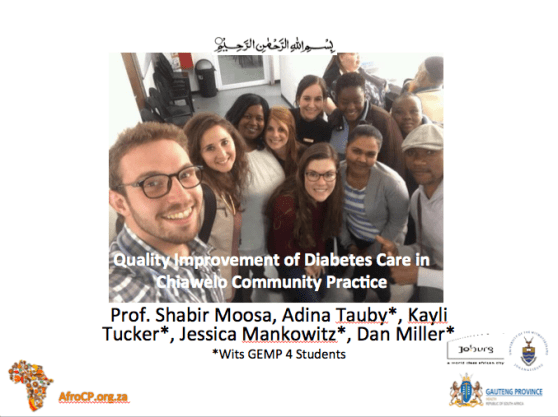
CCP presentation at Jhb District Research Conference

Screen Shot 2016-11-17 at 6.38.56 AM.png

prof-s-moosa-16-11-17-jhb-research-conference

Turning diamonds’ defects into long-term 3-D data storage

1334916_1083921

With the amount of data storage required for our daily lives growing and growing, and currently available technology being almost saturated, we’re in desparate need of a new method of data storage.

The standard magnetic hard disk drive (HDD) – like what’s probably in your laptop computer – has reached its limit, holding a maximum of a few terabytes. Standard optical disk technologies, like compact disc (CD), digital video disc (DVD) and Blu-ray disc, are restricted by their two-dimensional nature – they just store data in one plane – and also by a physical law called the diffraction limit, based on the wavelength of light, that constrains our ability to focus light to a very small volume.

And then there’s the lifetime of the memory itself to consider. HDDs, as we’ve all experienced in our personal lives, may last only a few years before things start to behave strangely or just fail outright. DVDs and similar media are advertised as having a storage lifetime of hundreds of years. In practice this may be cut down to a few decades, assuming the disk is not rewritable. Rewritable disks degrade on each rewrite. …more

Trump’s isolationism: Threats and opportunities for Africa

Donald Trump’s ascension to the US Presidency has stunned many across the globe due to his strange views and prejudices. The Conversation Africa business and economy editor Sibonelo Radebe asked Professor Patrick Bond to unpack implications for Africa.

What does a Trump victory mean for Africa?

The most catastrophic long-term consequence is climate change. This is because Trump is a denialist who will give the green light to widespread fracking, coal and oil exploration. Africa will be the most adversely affected continent. United Nations scientists estimate that 9 out of 10 small-scale farmers are unlikely to farm by 2100 due to drying soils and global warming, plus extreme weather will also cause 180 million unnecessary African deaths by then, according to Christian Aid. Under Trump, we can safely predict that Washington will no longer seek to control United Nations climate negotiations, as did Barack Obama’s administration. The WikiLeaks Clinton emails and State Department cables revealed blatant manipulations of the Copenhagen and Durban climate summits. Instead, Trump will simply pull the US out of the 2015 Paris agreement, as did George W. Bush from the Kyoto Protocol. …more

6 killed in Gauteng flood horror

2574925689Johannesburg – The floods that lashed Joburg and Ekurhuleni on Wednesday left a trail of destruction, with at least six people killed, dozens of vehicles swept away and dwellings damaged. Several people were recovering in hospital after they were injured. Flights were delayed at OR Tambo International Airport.  The flooding, and its impact, was described by police as nothing short of a disaster. On Wednesday night, Joburg metro police department spokesperson Edna Mamonyane said the situation on the roads was a disaster. …more

Donald Trump’s foreign policy on Africa is likely to be: ‘Where’s that?’

deb76143f68b4899b0fe22267e548f74Africa is likely to slide down the list of foreign policy priorities of a Donald Trump administration. This is because America’s foreign policy is determined by both domestic and foreign issues.

When it comes to domestic factors Trump is not going to be open to lobbying by the African diaspora in the US which has, historically, always played an important role in pushing African policy and keeping the continent on the domestic agenda. But this constituency hasn’t helpedTrump at all in this election so there’s no need for any payback. And I think that the kind of visibility Africa had is also going to fall in social movements and society in general in the US. ….more

BBC: Self-care could cut need for millions of GP visits

Below are extracts from a news item on the BBC website. Full text here: http://www.bbc.co.uk/news/health-37871180

‘Simple self-care measures could end the need for millions of visits to GPs every year… Back pain is one of the most common causes for a GP visit yet the majority of cases can be treated with over-the-counter treatments and self care. The same is true, says the LGA, of other minor ailments, such as coughs, colds and indigestion…

‘Dr Ian Banks, of the Self Care Forum – a body made up of representatives from organisations including the Men’s Health Forum, Public Health England and the Royal College of Nursing, said: “Most people are entirely capable of looking after themselves most of the time, self-treating when it’s safe and knowing where and when to seek help when they need it. “There will always be others however, who might need a bit more support to become empowered and confident in making the right health decision.”‘

Comment: The above relates to the National Health Service (UK). However, the same principle applies to all countries. More could be done to empower citizens, families and children with the healthcare information they need to provide basic health care. And to help them know when the patient needs to be transferred to a health facility. In the UK, there is an excellent website for patients called NHS Choices:
http://www.nhs.uk/pages/home.aspx  In low- and middle-income countries, the most promising method for delivering healthcare information to citizens is via mobile phones. The working group of the HIFA Project on Mobile Healthcare Information For All is campaigning for such information to be preloaded onto all mobile phones before sale. http://www.hifa.org/projects/mobile-hifa-mhifa

Best wishes, Neil

Let’s build a future where people are no longer dying for lack of healthcare knowledge – Join HIFA: www.hifa.org