Sustainability of performance based incentivized community health worker’s model in high priority districts of Odisha, India

Abstract: Mixed method approach was used to explore the sustainability of Accredited Social Health Activists (ASHAs) model in high priority districts of Odisha, India. A survey was conducted among 134 ASHAs followed by qualitative study among anganwadi workers auxiliary nurse midwives and non-governmental field coordinators. A conceptual framework was developed using grounded theory approach. The sustainability of ASHA model depended on the balance relationship between motivating and demotivating factors – the model may collapse if demotivating factors will be more than the motivating factors. In order to sustain the program, the demotivating factors should be minimized through eight mechanisms – incentive, insurance, free transport, recognition, role definition, training, hand holding support and supplies of logistics for sustainability of the ASHAs model. This study recommends the further research on policy or decision makers and program implementer’s prospective towards ASHA model in India.

The full text is freely available here: http://www.worldwidejournals.in/ojs/index.php/ijsr/article/view/13988/14107 

Who is a CHW? Liberators or Lackeys?

Community Health Workers: Liberators or Lackeys?  [1]

David Werner had raised this question in 1981, and today 16 years later, it is still valid. Community Health Workers can be paid workers or volunteers [2], and both situations have implications for strategies of supporting them, and articulating expectations from them. Under the leadership of Jack Bryant [3], Community Health Sciences Dept of Aga Khan University, two models of CHW were tested. One was called ‘CHS led’ model in which an honorarium was paid to the CHWs, and the other was Community led model where health volunteers worked with the PHC team. The striking feature of the latter was manifest in a question a health volunteer asked the community health nurse, ‘why are you late today?’. The paid CHW, would never have the courage to ask such a question, and their subordination was embodied in their remark when at a meeting in the PHC center, they refused to sit on the chair of the field director of the PHC program. ‘we can’t sit on that chair’, said one when she was being goaded to take the chair, looking at the large black, high back chair, leaning back,  behind a desk. What is the source of power of a CHW, one could ask. What ‘power’ does a CHW have when she is subordinate to the PHC team, and undertake tasks determined by the PHC Team, compared to a CHW who derives her strength from the community to which she is accountable.

The trend in approach to CHW is more to seek improvement in her performance, and for fulfilling the task assigned to her. A systematic review of published articles on CHWs was said to provide following key messages:

1. A systematic review of 140 quantitative and qualitative studies identified factors related to the nature of tasks and time spent on delivery, human resource management, quality assurance, links with the community, links with the health system and resources and logistics having an influence on CHW performance.

2. Good performance was associated with intervention designs involving a mix of incentives, frequent supervision, continuous training, community involvement and strong co-ordination and communication between CHWs and health professionals, leading to increased credibility of CHWs.

3. When designing CHW programmes, policymakers should take into account factors that increased CHW performance in comparable settings, to maximize programme outcomes. [4]

As is quite apparent from the above points, CHWs is seen as  a means for achieving some objectives, which are supposed to ensure health of the population being served. This is what makes them ‘lackeys’ (doing what has been assigned by somebody else), and not liberators, as Paolo Freire outlines liberation and liberators.

The notion of ‘liberator’ that is invoked in David Werner’s article is well explained in Paolo Freire’s thoughts and practices.

This person is not afraid to meet the people or to enter into a dialogue with them. This person does not consider himself or herself the proprietor of history or of all people, or the liberator of the oppressed; but he or she does commit himself or herself, within history, to fight at their side.”  Paulo Freire, Pedagogy of the Oppressed

“Liberating education consists in acts of cognition, not transferals of information.”  [5]

For a CHW to be a liberator  means she is a critical thinker who recognized the structures of oppression which lead to poor health outcomes. In other words she would understand the importance of social determinants of health (SDH).  She would be trained to reflect, analyze and facilitate the community to do the same, so that they could explore options for actions. In other words, the pedagogy used for CHWs would be critical. It would not only be based on scientific knowledge, but also on Freirean principles of education. (Education as liberation and not domestication.)

CONCLUSION

… the point is that if poor health is a political problem it will need a political not a technical solution. The answer is not more health care workers. The answer is health care workers who I. – can mobilize their own communities to improve their own health. Susan Rifkin [6]

There are many developing countries where the State commitment to the health of the poor is grossly inadequate. (Example Pakistan). Where there is no state, then other actors are needed – both professionals, and the community (the oppressed groups specially). How CHWs become liberators means they can mobilize/engage/involve communities to address social determinants of health, and also  hold the state accountable

Role of CHWs as leaders and not mere agents of health managers is the goal to promote and support.

1. David Werner had raised this issue in his article The Village Health Worker,  Lackay or Liberator.  1981(http://www.fastonline.org/CD3WD_40/JF/JF_VE/SMALL/27-714.pdf)

2. CHWs are volunteers in Kenya and Iran, to name some countries . In Kenya, when I had an opportunity to meet some CHWs I was struck by the role of a church in creating economic  opportunities for them.

3. Jack Bryant had led the US delegation to the Alma Ata meeting in 1978. He was a friend of Hafden Mahler and was instrumental in getting Mahler spend a week in the department of Community Health Sciences (CHS) of Aga Khan University (AKU), Karachi. He was committed to PHC which was integrated in the undergraduate medical education of AKU.

4. Shared in list serve of HIFA (health information for all)  (HIFA@dgroups.org; on behalf of; Neil Pakenham-Walsh neil.pakenham-walsh@ghi-net.org. Jan 17, 2017)

5. Paulo Freire (https://www.goodreads.com/author/quotes/41108.Paulo_Freire)

6. Quoted in HEALTH PROMOTERS, POLITICAL STRUGGLE AND SOCIAL TRANSFORMATION , A Framework for Systematizing the Experience of a Popular Health Education Project in Chile A Master’s Project Completed by Karen L. Anderson

HIFA profile: Kausar Skhan is with the Community Health Sciences Dept of Aga Khan University, Karachi, Pakistan. kausar.skhan AT aku.edu
Effect of a Primary Care–Based Psychological Intervention on Symptoms of Common Mental Disorders in Zimbabwe A Randomized Clinical Trial

Key Points

Question  Does a lay health worker–delivered psychological intervention improve symptoms of depression and anxiety in Zimbabwe?

Findings  In a cluster randomized clinical trial of 573 randomized patients with common mental disorders and symptoms of depression, the group who received the intervention had significantly lower symptom scores after 6 months compared with a control group who received enhanced usual care.

Meaning  The use of lay health workers in resource-poor countries like Zimbabwe may be effective primary care–based management of common mental disorders.

Abstract

Importance  Depression and anxiety are common mental disorders globally but are rarely recognized or treated in low-income settings. Task-shifting of mental health care to lay health workers (LHWs) might decrease the treatment gap.

Objective  To evaluate the effectiveness of a culturally adapted psychological intervention for common mental disorders delivered by LHWs in primary care.

Design, Setting, and Participants  Cluster randomized clinical trial with 6 months’ follow-up conducted from September 1, 2014, to May 25, 2015, in Harare, Zimbabwe. Twenty-four clinics were randomized 1:1 to the intervention or enhanced usual care (control). Participants were clinic attenders 18 years or older who screened positive for common mental disorders on the locally validated Shona Symptom Questionnaire (SSQ-14).

Interventions  The Friendship Bench intervention comprised 6 sessions of individual problem-solving therapy delivered by trained, supervised LHWs plus an optional 6-session peer support program. The control group received standard care plus information, education, and support on common mental disorders.

Main Outcomes and Measures  Primary outcome was common mental disorder measured at 6 months as a continuous variable via the SSQ-14 score, with a range of 0 (best) to 14 and a cutpoint of 9. The secondary outcome was depression symptoms measured as a binary variable via the 9-item Patient Health Questionnaire, with a range of 0 (best) to 27 and a cutpoint of 11. Outcomes were analyzed by modified intention-to-treat.

Results  Among 573 randomized patients (286 in the intervention group and 287 in the control group), 495 (86.4%) were women, median age was 33 years (interquartile range, 27-41 years), 238 (41.7%) were human immunodeficiency virus positive, and 521 (90.9%) completed follow-up at 6 months. Intervention group participants had fewer symptoms than control group participants on the SSQ-14 (3.81; 95% CI, 3.28 to 4.34 vs 8.90; 95% CI, 8.33 to 9.47; adjusted mean difference, −4.86; 95% CI, −5.63 to −4.10; P < .001; adjusted risk ratio [ARR], 0.21; 95% CI, 0.15 to 0.29; P < .001). Intervention group participants also had lower risk of symptoms of depression (13.7% vs 49.9%; ARR, 0.28; 95% CI, 0.22 to 0.34; P < .001).

Conclusions and Relevance  Among individuals screening positive for common mental disorders in Zimbabwe, LHW-administered, primary care–based problem-solving therapy with education and support compared with standard care plus education and support resulted in improved symptoms at 6 months. Scaled-up primary care integration of this intervention should be evaluated.

CITATION: Effect of a Primary Care–Based Psychological Intervention on Symptoms of Common Mental Disorders in Zimbabwe.

A Randomized Clinical Trial.

Dixon Chibanda, Helen A. Weiss, Ruth Verhey, Victoria Simms, Ronald Munjoma, Simbarashe Rusakaniko, Alfred Chingono, Epiphania Munetsi, Tarisai Bere, Ethel Manda, Melanie Abas, Ricardo Araya.

JAMA. 2016;316(24):2618-2626. doi:10.1001/jama.2016.19102

The abstract is available here:

http://jamanetwork.com/journals/jama/article-abstract/2594719

Which intervention design factors influence performance of community health workers in low- and middle-income countries? A systematic review

CITATION: Which intervention design factors influence performance of community health workers in low- and middle-income countries? A systematic review

Maryse C Kok, Marjolein Dieleman, Miriam Taegtmeyer, Jacqueline EW Broerse, Sumit S Kane, Hermen Ormel, Mandy M Tijm1 and Korrie AM de Koning

Health Policy and Planning 2015;30:1207­1227 doi:10.1093//heapol/czu126

http://heapol.oxfordjournals.org/content/early/2014/12/11/heapol.czu126  (open access)

Abstract

Community health workers (CHWs) are increasingly recognized as an integral component of the health workforce needed to achieve public health goals in low- and middle-income countries (LMICs). Many factors influence CHW performance. A systematic review was conducted to identify intervention design related factors influencing performance of CHWs. We systematically searched six databases for quantitative and qualitative studies that included CHWs working in promotional, preventive or curative primary health services in LMICs. One hundred and forty studies met the inclusion criteria, were quality assessed and double read to extract data relevant to the design of CHW programmes. A preliminary framework containing factors influencing CHW performance and characteristics of CHW performance (such as motivation and competencies) guided the literature search and review.

A mix of financial and non-financial incentives, predictable for the CHWs, was found to be an effective strategy to enhance performance, especially of those CHWs with multiple tasks. Performance-based financial incentives sometimes resulted in neglect of unpaid tasks. Intervention designs which involved frequent supervision and continuous training led to better CHW performance in certain settings. Supervision and training were often mentioned as facilitating factors, but few studies tested which approach worked best or how these were best implemented. Embedment of CHWs in community and health systems was found to diminish workload and increase CHW credibility. Clearly defined CHW roles and introduction of clear processes for communication among different levels of the health system could strengthen CHW performance.

When designing community-based health programmes, factors that increased CHW performance in comparable settings should be taken into account. Additional intervention research to develop a better evidence base for the most effective training and supervision mechanisms and qualitative research to inform policymakers in development of CHW interventions are needed.

High Intensity Interval Training (HIIT): Best Cardio to Burn Fat

When most people think of cardio, they think of long, boring jogs, or endless hours on the elliptical. I’ve got good news for you: there’s a method of cardio that takes much less time and is far superior to jogging to help you burn fat. It’s called High Intensity Interval Training (HIIT) and this article will give you the basics so you can take your body to a new fitness level….more

App on Safe Pregnancy

Hesperian’s comprehensive app on pregnancy and birth contains a wealth of information on:

  • how to stay healthy during pregnancy
  • how to recognize danger signs during pregnancy, birth, and
    after birth
  • what to do when a danger sign arises
  • when to refer a woman to emergency care
  • instructions for community health workers with step-by-step explanations such as “How to take blood pressure,” “How to treat someone in shock,” “How to stop bleeding.”

See here

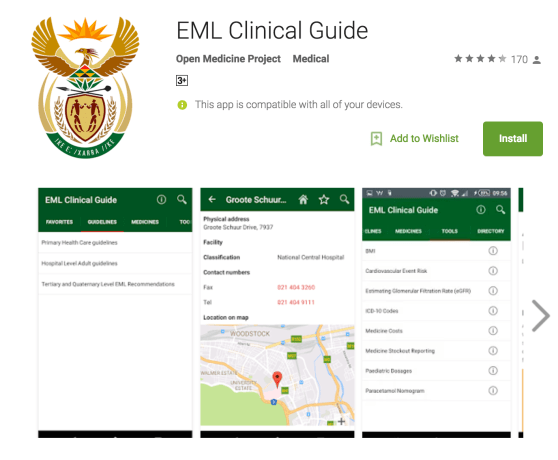
Free Clinical Guide Apps from SA

Screen Shot 2017-01-09 at 4.44.16 PM.png

Get the three Clinical Guides from South Africa free on IoS and Android.

  • TB
  • HIV
  • PHC EML- Essential Medicines List and Standard Treatment Guidelines

Just search for “Clin Guide” or “Clinical Guide”

Soweto health club making a difference

What started out as a small health group for five Soweto senior citizens just four years ago has grown to into a massive health club with 349 active members and a proud track record of improved overall health.  Earlier this month the Soweto Senior Citizens Health Club met at the Chiawelo Community Park where they participated in a diabetes awareness event. It was an event on a packed calendar that has members participating regularly in exercise and other health-related activities. Francis Muthakhi, the club’s coordinator, said: “The Soweto Senior Citizen Health Club has been growing well since we started it four years ago. Now we have meetings of over 300 people at a time who get together to participate in exercise sessions.”….more

Decree for 20% maths pass mark sets a dangerous precedent for schooling

The Department of Basic Education has reacted to pupils’ low marks for maths in a controversial way. It issued an urgent circular to its heads of departments, principals, managers, directors and exam and curriculum heads outlining a “special condonation dispensation”. This applies to pupils completing grades 7, 8 and 9 in the 2016 academic year just ended. Pupils who did not get 40% in mathematics may now progress to the next grade, provided they got more than 20% in mathemantics and met all other pass requirements. Only those who passed Grade 9 maths with 30% or more will be allowed to continue with the subject. Those who scored in the 20% band will in their final school years have to take mathematical literacy — a somewhat different and far less demanding subject. The move has been widely condemned. For instance, the Western Cape education department warned that if no “drastic action” was taken “we will be sitting in the same position next year”. The national department claims its directive is “an interim measure”. But how does it hope to address the crisis in maths education? What can be done to develop necessary skills through good maths teaching? ….more

SA’s medical scheme fees are shooting up as the package of care is sliding

With more above-inflation medical scheme tariff increases on the horizon for 2017, many consumers have been left bewildered by the escalating costs of medical care. Most feel powerless in the face of double-digit increases such as Discovery Health’s 10.2% contributions hike, Momentum Health’s average hike of 11% and Government Employees Medical Scheme’s (GEMS’s) increases ranging from 13% to 16.8%. These increases are coming at the same time that the South African Society of Anaesthesiologists (Sasa) is seeing a consistent below-inflation increase for healthcare practitioners and an erosion of their payments. It is becoming harder for practitioners to provide services and harder for the consumer to afford the cover….more

Randomized controlled trial of a nationally available weight control program tailored for adults with type 2 diabetes

O`Neil PM, Miller-Kovach K, Tuerk PW, et al. Randomized controlled trial of a nationally available weight control program tailored for adults with type 2 diabetes. Obesity (Silver Spring). 2016 Nov;24(11):2269-2277. doi: 10.1002/oby.21616. (Original) PMID: 27804264

OBJECTIVE: Modest weight loss from clinical interventions improves glycemic control in type 2 diabetes (T2DM). Data are sparse on the effects of weight loss via commercial weight loss programs. This study examined the effects on glycemic control and weight loss of the standard Weight Watchers program, combined with telephone and email consultations with a certified diabetes educator (WW), compared with standard diabetes nutrition counseling and education (standard care, SC).

METHODS: In a 12-month randomized controlled trial at 16 U.S. research centers, 563 adults with T2DM (HbA1c 7-11%; BMI 27-50 kg/m(2) ) were assigned to either the commercially available WW program (regular community meetings, online tools), plus telephone and email counseling from a certified diabetes educator, or to SC (initial in-person diabetes nutrition counseling/education, with follow-up informational materials).

RESULTS: Follow-up rate was 86%. Twelve-month HbA1c changes for WW and SC were -0.32 and +0.16, respectively; 24% of WW versus 14% of SC achieved HbA1c <7.0% (P = 0.004). Weight losses were -4.0% for WW and -1.9% for SC (Ps?

CONCLUSIONS: Widely available commercial weight loss programs with community and online components, combined with scalable complementary diabetes education, may represent accessible and effective components of management plans for adults with overweight/obesity and T2DM.

WHO technical package on the management of cardiovascular disease (“HEARTS”) in low resource settings

The Lancet Commission on Hypertension will create a library of success stories (studies) on strategies to improve blood pressure control in low-resource settings/countries – and you might be able to help

A recent paper by Mills et al. (Circulation 2016;134:441-450) demonstrated that the age-adjusted prevalence of hypertension increased from 2000 to 2010 in low- and middle-income countries (LMIC), surpassing that of high-income countries. Three-quarters of patients with hypertension are now living in LMIC. Furthermore, awareness and treatment improved only slightly from 2000 to 2010, whereas control rates of hypertension in men decreased in LMIC. The situation is even worse in low-income countries compared to middle-income countries. Therefore, the Lancet Commission on Hypertension (Olsen MH et al. A call to action and a lifecourse strategy to address the global burden of raised blood pressure on current and future generations: the Lancet Commission on hypertension. Lancet. 2016 Sep 22. doi:10.1016/S0140-6736(16)31134-5) will focus efforts to try to improve blood pressure control in low-income settings/countries.

To initiate this action, the Lancet Commission on Hypertension will collaborate with the International Society of Hypertension (ISH), World Hypertension League (WHL), World Heart Federation (WHF), Pan-African Society of Cardiology (PASCAR), African Heart Network (AHN), Latin American Society of Hypertension (LASH), and Centers for Disease Control and Prevention (CDC), in order to create a library of success stories (studies) on strategies to improve blood pressure control in low-income settings/countries as a foundation for more impactful initiatives.

Therefore, we invite you, as a member of the ISH, to contribute to this initiative. Are you aware of a published success story (study) on methods to improve blood pressure control in low-income settings/countries? If you recall such a success story, please go to our web-page using the link

http://bpstudyform.hypertensioncommission.org to answer a few questions regarding the studymho@dadlnet.dk. If some of the questions cannot be answered, please write N/A.

The Commission will present the results at the European Meeting on Hypertension and Cardiovascular Protection in Milan in June 2017. Furthermore, the Lancet Commission on Hypertension and the organizers of the ISH Meeting on Hypertension 2018 in Beijing will invite abstract submissions for a new topic “Methods to Improve Blood Pressure Control in Low-Income Settings/Countries” and host a session dedicated entirely to this very important area of clinical research.

Listen To Community Health Workers To Strengthen Health Systems

I would like to share a couple of articles produced by our research group regarding CHW roles.

1. Trapé CA, Soares CB. Educative practice of community health agents analyzed through the category of praxis. Rev Latino-am Enfermagem 2007 janeiro-fevereiro; 15(1):142-9. http://www.scielo.br/pdf/rlae/v15n1/v15n1a21.pdf

This study aimed to: analyze the conceptions of health education that guide educational practices of community health agents in the Family Health Program of the Butantã Health Coordination, São Paulo, Brazil, and analyze the character of these educational activities. Data were collected through focus groups and indepth semi-structured interviews with 39 agents. The analysis procedures followed the recommendations of thematic content analysis, and praxis was the analytical category. Regarding theoretical activity as a component of praxis, we found that most health education conceptions were based on the transmission of normative information learned from health technicians. This theoretical activity ended up guiding a practical activity typical of repetitive praxis, in which the agents do not participate in the health work planning process and do not dominate the “ideal object”, reproducing tasks planned by others.

2. Work Process in Primary Health Care: action research with Community Health Workers. http://www.scielosp.org/pdf/csc/v20n11/en_1413-8123-csc-20-11-3581.pdf

The aim of this article was to describe and analyze the work of community health workers (CHW). The main objective of study was to analyze the development process of primary health care practices related to drug consumption. The study is based on the Marxist theoretical orientation and the action research methodology, which resulted in the performance of 15 emancipatory workshops. The category work process spawned the content analysis. It exposed the social abandonment of the environment in which the CHWs work is performed. The latter had an essential impact on the identification of the causes of drug-related problems. These findings made it possible to criticize the reiterative, stressful actions that are being undertaken there. Such an act resulted in raising of the awareness and creating the means for political action. The CHWs motivated themselves to recognize the object of the work process in primary health care, which they found to be the disease or addiction in the case of drug users. They have criticized this categorization as well as discussed the social division of work and the work itself whilst recognizing themselves as mere instruments in the work process. The latter has inspired the CHW to become subjects, or co-producers of transformations of social needs.

Thank you for your attention,

Cassia Baldini Soares

Associate Professor, Department of Collective Health Nursing

School of Nursing, University of São Paulo

HIFA profile: Cassia B Soares is Director at the Joanna Briggs Institute Collaborating Centre in Brazil. cassiaso AT usp.br

New collection of articles highlights effectiveness of health communication in HIV care continuum

On December 9, the Journal of Acquired Immune Deficiency Syndromes (JAIDS) published a supplement highlighting the effectiveness of health communication in keeping people engaged and on treatment throughout the HIV continuum of care – leading to more positive health outcomes.

The supplement, Impact of Health Communication on the HIV Continuum of Care, presents a series of 10 articles that make the case for using health communication in highly diverse HIV contexts in low- and middle-income settings.

http://healthcommcapacity.org/health-communication-leads-to-better-outcomes-for-those-receiving-hiv-treatment/?utm_source=twitter.com&utm_medium=social&utm_campaign=hc3&utm_term=hiv

Please take a look and feel free to spread the word among your colleagues by sharing within your networks.

The articles in this supplement are open access.

Click here for easy tweet:

https://twitter.com/intent/tweet?text=New%20collection%20of%20articles%20%40journalaids%20highlights%20effectiveness%20of%20health%20communication%20in%20HIV%20care%20continuum%3A%20http%3A%2F%2Fbit.ly%2F2hflp6A%20&source=clicktotweet&related=clicktotweet

New collection of articles @journalaids highlights effectiveness of health communication in HIV care continuum: http://bit.ly/2hflp6A  

This collection was coordinated by the Health Communication Capacity Collaborative (HC3) and is a follow-up to the 2014 JAIDS supplement [http://healthcommcapacity.org/technical-areas/hiv-and-aids/jaids-health-communication-plays-hiv-prevention-care/] devoted to health communication and its role in and impact on HIV prevention and care. More information can be found here on the HC3 website [http://healthcommcapacity.org/health-communication-leads-to-better-outcomes-for-those-receiving-hiv-treatment/], along with a list of articles, authors and related tweets.

Marla K. Shaivitz

Digital Communications Manager | Health Communication Capacity Collaborative

111 Market Place, Suite 310 | Baltimore, Maryland  21202 | 410-223-1618

www.healthcommcapacity.org

HIFA profile: Marla Shaivitz is Digital Communications Manager, Health Communication Capacity Collaborative, USA. marla.shaivitz AT jhu.edu

WHO: World Malaria Report 2016 – Malaria control improves for vulnerable in Africa, but global progress off-track

Download at

http://www.who.int/malaria/publications/world-malaria-report-2016/report/en/

Press Release at

http://www.who.int/mediacentre/news/releases/2016/malaria-control-africa/en/

[extracts of Press release below]

Malaria control improves for vulnerable in Africa, but global progress off-track

News release

13 December 2016 | GENEVA – WHO’s World Malaria Report 2016 reveals that children and pregnant women in sub-Saharan Africa have greater access to effective malaria control. Across the region, a steep increase in diagnostic testing for children and preventive treatment for pregnant women has been reported over the last 5 years. Among all populations at risk of malaria, the use of insecticide-treated nets has expanded rapidly…

Diagnostic testing enables health providers to rapidly detect malaria and prescribe life-saving treatment. New findings presented in the report show that, in 2015, approximately half (51%) of children with a fever seeking care at a public health facility in 22 African countries received a diagnostic test for malaria, compared to 29% in 2010…

In many countries, health systems are under-resourced and poorly accessible to those most at risk of malaria. In 2015, a large proportion (36%) of children with a fever were not taken to a health facility for care in 23 African countries…

If global targets are to be met, funding from both domestic and international sources must increase substantially.

Let’s build a future where people are no longer dying for lack of healthcare knowledge – Join HIFA: www.hifa.org