Who is a CHW?

Who is a CHW? . But at the same time I want add another question Who is CHV (Community Health Volunteer)?.

When I look at the functional roles of these two I see a lot of differences. For example;

1. Uganda: VHTs are volunteers; midwives, nurse, enrolled nurse etc are CHWs

2. Ethiopia; WDA are volunteers; HEWs are CHWs

3. Nepal : FCHVs are volunteers; VHWs, MCHWs are CHWs

4. Ghana: CHV are volunteers: midwives, nurse, enrolled nurses are CHWs

5. India: ASHAs are volunteers; Nurses are CHWs

Almost all countries have this structure i.e. CHWs are incharge of community health system (which a part of the formal system) and CHVs are volunteers to support them.

It is important to understand this. Because of the following reasons:

1. CHWs are salary paid formal health system workers; they have to follow government rules and regulations for their hours of work, salary, benefits, incentives etc.

2. CHWs are legally responsible for their health facility

3. Any change in their status has to go through the government system and there are p.

4. their motivation problem and issues are the same as clinicians or doctors this can be solved by changing the processes in government system; community can provide only some temporary solutions

Whereas Community Health Volunteers are selected by community and are part of the community. They are not formally linked with health facility. It is expected that they should get strong support from the community like bicycle, incentives, respect, tc. It is important to maintain CHVs motivation in order to reach vulnerable, underserved and hard to reach people. Their motivation is also important for home visits and support patients for self-management.

I hope the discussion of CHWs will keep this in mind and not lumped them together. Because only addressing CHWs problems, without addressing CHVs problems, will not fix the problem of coverage, follow-up, referral and equity at the community level.

Thank you very much.

Ram Shrestha, D.Sc. (hon.), MS, M.Sc.

HIFA profile: Ram Shrestha is a Senior Quality Improvement Advisor, Community Health and Nutrition, USAID Health Care Improvement Project, University Research Company, Bethesda, Maryland, USA. www.hciproject.org         rshrestha AT urc-chs.com
The Neglected Tropical Disease NGDO Network

The Neglected Tropical Disease NGDO Network was established in October 2009 to create a global forum for nongovernmental development organizations (NGDOs) working to control onchocerciasis, lymphatic filariasis, schistosomiasis, soil transmitted helminths, trachoma, and leprosy. These Neglected Tropical Diseases (NTDs) share common strategies including community-based health interventions that can be integrated to strengthen health care systems…..more http://www.ntdngdonetwork.org/

The odd meaning of ‘radical economic transformation’ in South Africa

The only thing radical about South Africa’s ruling party’s understanding of “radical economic transformation”, a commentator once suggested, is its use of the word ‘radical’. The comment was made a few years ago, when the African National Congress (ANC) was in the habit of using the slogan to describe very modest change. Now it’s back.

In his 2017 state of the nation address South Africa’s President Jacob Zuma brought back the phrase “radical economic transformation” causing nationwide debate. Other senior ANC politicians have done the same.

Have the ANC’s intentions changed?

To answer that, we need to understand why “radical economic transformation” is back on the ANC’s agenda. As with much of what happens in the ANC today, factional politics is a crucial part of the story…..more

Diagnosis and management of Type 2 Diabetes

Management of type 2 diabetes includes:

  • Healthy eating
  • Regular exercise
  • Possibly, diabetes medication or insulin therapy
  • Blood sugar monitoring

These steps will help keep your blood sugar level closer to normal, which can delay or prevent complications.

Healthy eating

Contrary to popular perception, there’s no specific diabetes diet. However, it’s important to center your diet on these high-fiber, low-fat foods:

  • Fruits
  • Vegetables
  • Whole grains

You’ll also need to eat fewer animal products, refined carbohydrates and sweets.

Low glycemic index foods also may be helpful. The glycemic index is a measure of how quickly a food causes a rise in your blood sugar. Foods with a high glycemic index raise your blood sugar quickly. Low glycemic index foods may help you achieve a more stable blood sugar. Foods with a low glycemic index typically are foods that are higher in fiber.

A registered dietitian can help you put together a meal plan that fits your health goals, food preferences and lifestyle. He or she can also teach you how to monitor your carbohydrate intake and let you know about how many carbohydrates you need to eat with your meals and snacks to keep your blood sugar levels more stable…..more

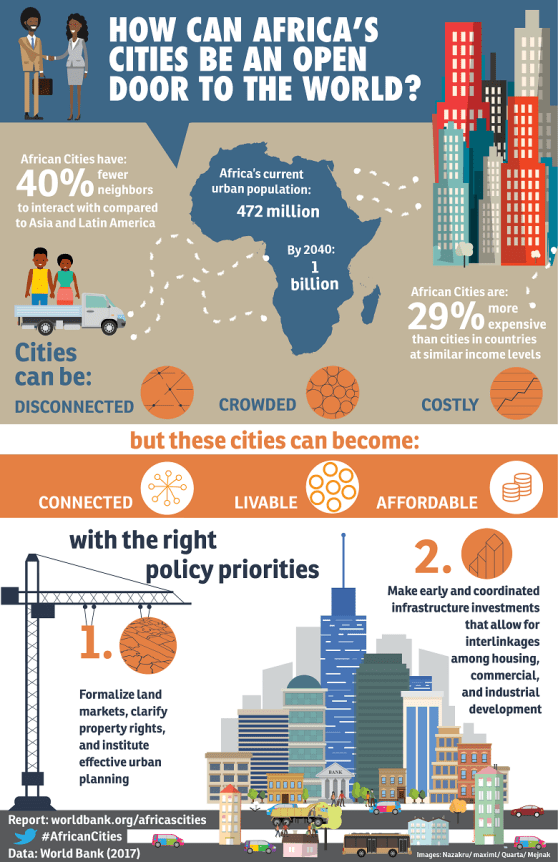
Productive, Livable Cities Will Open Africa’s Doors to the World

How-Can-Africas-Cities-Be-an-Open-Door-to-the-World-780x1205.pngVIDEO

STORY HIGHLIGHTS

  • A new World Bank report notes that Sub-Saharan Africa’s cities are crowded, disconnected and costly
  • African urban areas contain 472 million people, and that number is expected to double over the next 25 years
  • If well managed, cities can help countries accelerate growth and “open the doors” to global markets

More

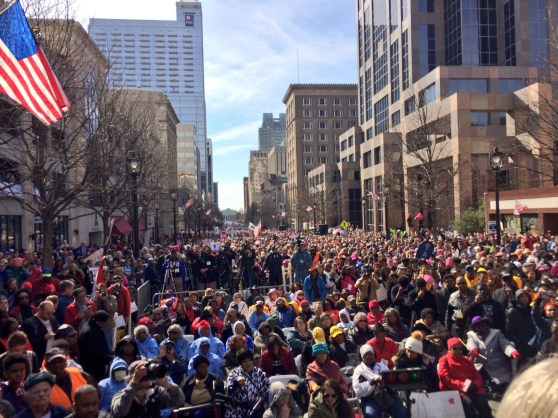
Moral march on Raleigh

moral-march-062Message from Viviana Martinez-Bianchi, Exco Member WONCA World

I was honored to represent the “white coats” today with this speech at the Moral March on Raleigh, an annual civil rights protest in Raleigh, North Carolina. It was an experience I will never forget. To speak from my heart about the health and healthcare needs of our communities. I was inspired by the presence of the large number of medical students and PA students who attended the march today, plus a large number of faculty, residents, and community clinicians. And more importantly inspired by the diverse humanity who passionately attended the march. 

Someone taped my speech, linked below, it is only missing my introduction. At my 5th line, I choked up thinking about the 80,000 people I could see from the stage, still marching in, the mall filled with people all the way from the Old Capitol to the Center for performing arts.  

Thankful to Perri Morgan and the organizers of HKonJ March in Raleigh for having given me the opportunity  to speak. 

https://youtu.be/mRfgvJ1xoqc

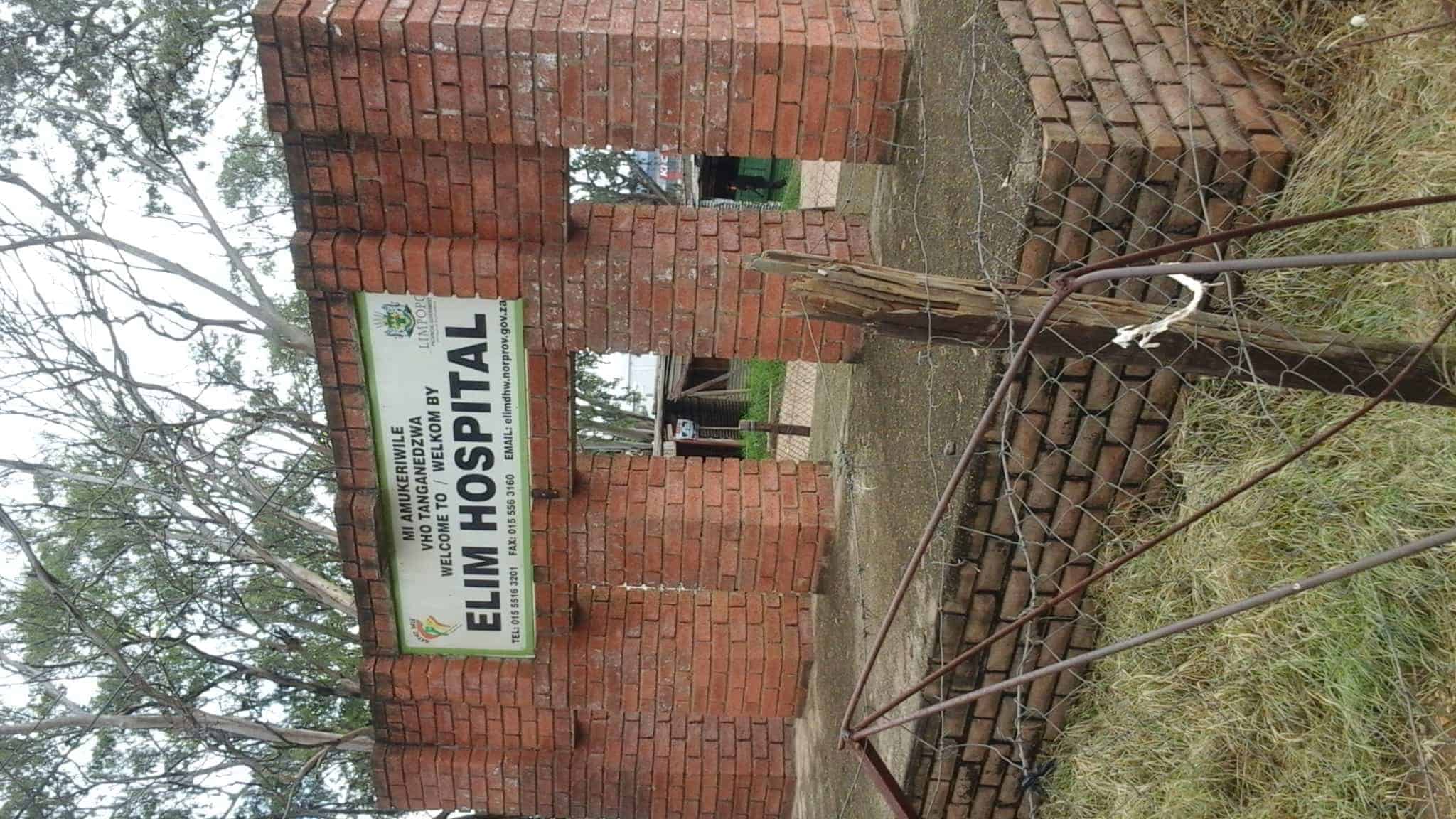
Patient dies in Elim Hospital after shower

Hospital negligence under investigation after elderly patient dies of burns from shower.

Ongoing complaints of shocking conditions at Elim Hospital in Limpopo have gone unresolved, and now an 83-year-old patient has died of third degree burns after being left to take a shower on her own.

Last Thursday Mujaji Manganye allegedly received no assistance when she went to take a shower. She stepped under scalding hot water and was overwhelmed. After sustaining bad burns she passed away.

This incident follows numerous complaints by the patients at Elim Hospital. Many claimed conditions in general were poor and staff were also negliglent. Now that a patient has actually died, patients in the hospital are in shock and fear….more

#SONA2017: Mbete refuses moment of silence for 94 dead mental health patients

President Jacob Zuma wants national Health Minister Aaron Motsoaledi to have more power over health MECs in provinces. “We welcome the recommendations of the health ombudsman that there is an urgent need to review the  National Health Act of 2003 and the Mental Health Care Act of 2002 with a view that certain powers and functions revert back to the national Minister of Health,” he said in his State of the Nation address in parliament on Thursday.

Zuma was referring to the report of the health ombudsman, which was released last week, on the deaths of 94 state mental healthcare users in Gauteng. They were part of a group of close to 2 000 mental health patients that the Gauteng health department transferred from private Life Esidimeni facilities, for which the state had paid, to unequipped nongovernmental organisations, where many died as a result of insufficient care.

Gauteng Health MEC, Qedani Mahlangu, resigned as a result of the scandal…..more

Do Social Ties Affect Our Health?

Cuddles, kisses, and caring conversations. These are key ingredients of our close relationships. Scientists are finding that our links to others can have powerful effects on our health. Whether with romantic partners, family, friends, neighbors, or others, social connections can influence our biology and well-being.

Wide-ranging research suggests that strong social ties are linked to a longer life. In contrast, loneliness and social isolation are linked to poorer health, depression, and increased risk of early death.

Studies have found that having a variety of social relationships may help reduce stress and heart-related risks. Such connections might improve your ability to fight off germs or give you a more positive outlook on life. Physical contact—from hand-holding to sex—can trigger release of hormones and brain chemicals that not only make us feel great but also have other biological benefits. …more

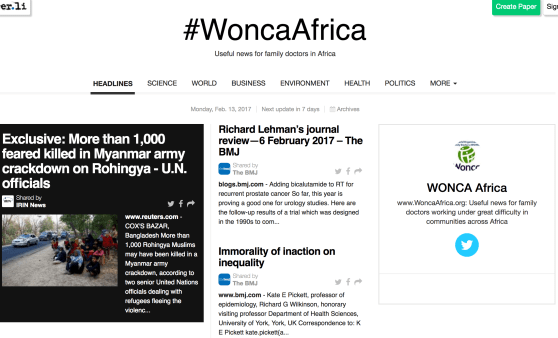
WHO Geneva-based Internships on Trialect

We have a posting on Trialect soliciting applications for WHO Geneva-based Internships.  WHO offers 6-12 weeks internships with a wide range of opportunities for students to gain insight in the technical and administrative programmes of WHO and global health. To be considered for a internship, applications are accepted before February 28. The application process is very simple and requires filling a questionnaire that covers your education, current studies, language skills and experience. Please feel free to refer your fellows, graduate students, medical students, and residents to this program. The details can be perused at : WHO Internships

 Thanks,
Trialect Support
+1.805.850.6002(USA)
Support@trialect.com

Stroke: Causes, Symptoms, Diagnosis and Treatment

Stroke is the 5th leading cause of death in the US, with one person dying every 4 minutes as a result. For black people, stroke is the 3rd leading cause of death.

Approximately 800,000 people have a stroke each year; about one every 40 seconds. Only heart disease, cancer, chronic lower respiratory diseases and accidents are more deadly.1-3

Strokes occur due to problems with the blood supply to the brain: either the blood supply is blocked or a blood vessel within the brain ruptures, causing brain tissue to die. A stroke is a medical emergency, and treatment must be sought as quickly as possible….more

Other resources

Family medicine in South Africa: exploring future scenarios

This paper reports on a workshop held at the 19th National Family Practitioners Conference in August 2016. The aim of the workshop was to describe possible future scenarios for the discipline of family medicine in South Africa and identify possible options for action. The workshop led a group of 40 family physicians from academic, public and private sector settings through a scenario planning process developed by Clem Sunter and Chantell Ilbury. After an overview of the current situation the participants reached a consensus on the rules of the game, key uncertainties, future scenarios and options for action. The main message was that the South African Academy of Family Physicians as a professional body needs to take a stronger role in advocating for the contribution of family medicine to government, health managers and the public.

Who is a CHW?

In thinking about who is a CHW in relationship to their task, education, and professionalization, we worked with policymakers and UNICEF teams to look at what various cadres of CHWs do and how they are not one homogeneous group but rather a mix of typologies: https://www.unicef.org/health/files/Access_to_healthcare_through_community_health_workers_in_East_and_Southern_Africa.pdf

Some excerpts from the executive summary:

In addition to a comprehensive literature review, the study used a cross-sectional survey with closed- and open-ended questions administered to UNICEF Country Offices and other key informants to investigate and map CHW characteristics and activities throughout the region. Responses were received from 20 of the 21 UNICEF Country Offices in the UNICEF East and Southern Africa region in May?June 20133. Data on 37 cadres from across the 20 countries made up of nearly 266,000 CHWs form the basis of this report. This report catalogues the types and characteristics of CHWs, their relationship to the broader health system, the health services they provide and geographic coverage of their work.

At the global level, CHWs have largely been considered to be a homogeneous class of healthcare worker. A more nuanced differentiation would be helpful to improve policy coordination, strategic planning and implementation of community-based health care. Based on results of the present survey, a post-hoc classification identified four distinct types of CHWs in ESAR countries:

Summary Table: CHW classification model [*see note below]

1. Case Manager

2. Community Liaison

3. Health Promoter

4. Traditional Birth Attendant (TBA)-plus

There was only one TBA-plus CHW cadre reported in this study. However, this may be due to the underreporting of traditional birth attendants, as these are often considered a separate class of healthcare worker rather than a subset of CHWs. Having TBAs engaged in a slightly broader range of reproductive health activities beyond maternal delivery (including family planning) is likely more widespread and would be a low-cost model for expanding CHW care given the high geographic coverage of TBAs in many countries.

In summary, this research documents that CHWs provide a variety of services with a broad range of potential tools. The report presents current training, responsibilities, and the scale of CHW programs in 20 ESAR countries. It also puts forward a potential CHW classification model to improve advocacy for and targeting of appropriate community health interventions (see Summary Table, Table 3 and Annex 5).

Meghan Kumar

REACHOUT Research Manager

+254 733440052

WHO Bulletin: Breaking down the barriers to universal health coverage

The new issue of the WHO Bulletin (February 2017) is themed on Universal Health Coverage and is freely available here:

http://www.who.int/bulletin/volumes/95/2/en/

Below are extracts from the lead editorial:

CITATION: Breaking down the barriers to universal health coverage

Piyasakol Sakolsatayadorn & Margaret Chan

http://www.who.int/bulletin/volumes/95/2/17-190991.pdf

‘The 2030 agenda for sustainable development calls on the international community to prioritize the needs and rights of vulnerable populations, so that no one is left behind…

Models for extending service coverage stress the importance of education, training and community engagement. Enhanced recruitment, training, supervision, and compensation of community health workers rapidly improved coverage with maternal and child health services in rural areas of Liberia.  Brazil has used a package of incentives to recruit physicians to work in remote and deprived areas and to improve the primary healthcare infrastructure, leading to better working conditions and better quality of care…

The inclusion of an SDG target for reaching universal health coverage, including financial risk protection, affirms the power of health to build fair, stable, and cohesive societies while also contributing to poverty alleviation. The target provides a unifying platform for moving towards all other health targets through the delivery of integrated, people-centred services that span the life course, bring prevention to the fore and protect against financial hardship. Universal health coverage is the ultimate expression of fairness and one of the most powerful social equalizers among all policy options.’

Best wishes, Neil

Let’s build a future where people are no longer dying for lack of healthcare knowledge – Join HIFA: www.hifa.org

‘Many researchers do not use their right to make their papers freely available online’

“Where do you find this “right”?”

The dissemin.in website states: ‘Many researchers do not use their right to make their papers freely available online, in addition to the paywalled version offered by traditional publishers.’

Different publishers (and, for large publishers, different journals of the same publisher) have different archiving rights with regards to what the author is allowed to place in an open-access repository. These different levels are colour-coded by the Sherpa/Romeo initiative and are described here:

http://www.sherpa.ac.uk/romeo/definitions.php?la=en&fIDnum=|&mode=simple&version=#colours

Romeo have compiled some interesting statistics on this, which show that 80% of the 2322 publishers listed formally allow some form of self-archiving. This includes major publishers like Elsevier and Springer.

http://www.sherpa.ac.uk/romeo/statistics.php

Best wishes, Neil

Let’s build a future where people are no longer dying for lack of healthcare knowledge – Join HIFA: www.hifa.org  


We have often noted on HIFA that most authors do not upload the full text of their papers on open-access repositories, even where the (restricted-access) journal allows them to do so.

With this in mind I was interested to see this new website:

http://dissem.in/

‘Many researchers do not use their right to make their papers freely available online, in addition to the paywalled version offered by traditional publishers.

‘Dissemin helps researchers ensure that their publications are freely available to their readers. Our free service spots paywalled papers and lets you upload them in one click to Zenodo, an innovative repository backed by the EU.’

Best wishes, Neil

Let’s build a future where people are no longer dying for lack of healthcare knowledge – Join HIFA: www.hifa.org  

Multiple methods in formative evaluation: reflections from a South African study

The science of programme evaluation has grown over the years, particularly in response to the complexity of many programmes implemented within health systems, in which multiple actors, services, interventions and levels of care may be involved. We recently reported on a formative evaluation that used multiple and mixed methods to assess such a programme that focused on using lay or community health workers to support people in South Africa receiving treatment for TB and HIV/AIDS. To inform the field of programme evaluation, we reflect in this paper on each of the methods used in relation to the evaluation objectives, and offer suggestions on ways of optimising the use of multiple, mixed-methods within formative evaluations of complex health system interventions.

Some of the issues we discuss include viewing programme evaluation as a creative and innovative process, in which thoughtful selection of methods may result in a more textured understanding of the programme; the relevance and application of the concept of triangulation; and balancing the range and mixing of methods with the resources and experience available in the evaluation team. As programme evaluations ultimately aim to improve programme implementation and strengthen health systems, it is important that evaluators be mindful of how their methods and findings will inform the policies and practices of the programmes they evaluate. The full paper is available here and we welcome comments and other evaluation experiences from members of the forum: http://bmcmedresmethodol.biomedcentral.com/articles/10.1186/s12874-016-0273-5

Regards

Arrie Odendaal

Health Systems Research Unit

South African Medical Research Council

Tel: +27 21 9380454 | Cell: 072 8665 173

Francie van Zijl Drive, Parow Valley | Cape Town| Western Cape

www.samrc.ac.za

Uganda CHWs on WhatsApp

These are the views of Ugandan Village Health Teams (VHTs) from their Whatsapp group discussions.

Participate in planning meetings

“We want health centres to invite us for their planning meetings as some of the issues discussed during these meetings are of our concern such as community outreaches.”

Transport allowances

“When drugs are delivered at the health facilities, VHTs are responsible for picking them. Makerere University gave us motorbikes, however, they are not enough to be used by the whole subcounty. As VHTs we are only volunteers, we should not use our own money for transport, instead we should be given some transport allowances to help us pick drugs from health centres. If not, then health centres should deliver these drugs to us in our villages.”

Sports activities

“We need to engage in sports activities and will be very grateful if they are organised for us. These activities will bring us closer as VHTs.”

Special attention

“As a VHT I do not want to wait in that long line when I visit a health centre with my patient. Health workers should give us immediate attention when we visit health centres.”

Exchange visits

“We would like to visit VHTs from otther districts in Uganda/ outside countries and learn more on how they operate in their communities. We should also get VHTs from other places to come and learn from us too. However, we cannot use our own money for these visits. We need facilitation.”

HIFA profile: Carol Namata is an Environmental Health Officer at Makerere University School of Public Health in Uganda. Professional interests: Health promotion in communities. carolnamata1 AT gmail.com

Radio, health education and public health communication

‘Since their invention, radios have played a crucial role in public health communications – especially in the event of disasters and public emergencies. That’s why they’re one of our 100 Objects That Shaped Public Health.

‘In fact, the CDC works with health departments to maintain a radio network in case other means of communication fail. And in Malawi, a program called “Life Is Precious” profiles people with public health lessons to impart.’

‘Research has shown that radio shows can reduce stigma associated with and increase testing for HIV, as well as improve outcomes for other conditions in developing nations. In Malawi, a program called Life is Precious showcases role models the audience can identify with and covers topics including maternal health, poor nutrition, and diarrheal diseases.’

https://www.globalhealthnow.org/object/radio?utm_source=Global+Health+NOW+Main+List&utm_campaign=025a332bde-EMAIL_CAMPAIGN_2017_02_07&utm_medium=email&utm_term=0_8d0d062dbd-025a332bde-856251

I would be interested to hear people’s experience of health education and public health messaging on radio.

Given the failure of public health communication during the Ebola crisis, it seems that radio was relatively ineffective in providing reliable health information to the people, and countering mininformation and myth? Or, perhaps, radio was used appropriately but other channels such as mobile health networks dominated and spread misinformation?

Best wishes, Neil

Let’s build a future where people are no longer dying for lack of healthcare knowledge – Join HIFA: www.hifa.org