
Researchers based in less-economically developed countries are able to apply for waivers and discounts to support publishing in fully open access journals which have Article Publishing Charges (APCs):
– Corresponding authors based in low-income countries, as categorized by the World Bank, are eligible to apply for a full waiver of the APC.
– Corresponding authors based in lower-middle-income countries, as categorized by the World Bank, are eligible to apply for a 50% discount of the APC which applies to their article.
Eligibility is determined by the country of the corresponding author’s primary affiliation.
Our discretionary waiver policy, for researchers who are not automatically eligible under the above policy, will still be handled on a case-by-case basis. Authors should supply full details of institutional affiliations and grant funding when making their request.
Applications must be made upon submission.
All discussion and decision on APC waivers and discounts is entirely separate from the peer review process. This is key for our membership of the Open Access Scholarly Publishers Association (OASPA) and inclusion in the Directory of Open Access Journals (DOAJ). We therefore ask editors to defer all questions from authors regarding the policy and requests under the policy to Rebecca Evans, Open Access Coordinator (Rebecca.evans@tandf.co.uk)…. see details below and here
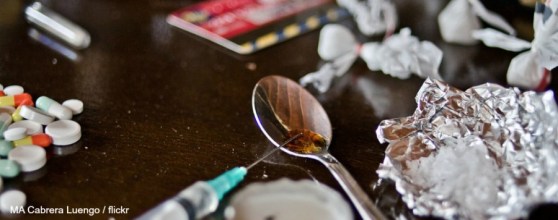 Staff shortages at clinics in Alexandra, social workers brought in for extra help and drug rehabilitation centres at some clinics – these are amongst the plans and improvements for state health institutions in Johannesburg. These strategies were announced by Dr Mpho Phalatse, Member of the Mayoral Committee (MMC) for Health and Social Development in the City of Johannesburg, during a surprise visit to the four Region E clinics in Alexandra. Her unannounced visit was to the Sandown, 8th Avenue, Eastbank and the newly built Riverpark clinics. Riverpark, she said, would be expanded to include a drug rehabilitation centre…..
 The practice of medicine has changed dramatically over the past 50 years. In addition to the incredible breakthroughs and advancements in medical knowledge, there has been a revolutionary change in the delivery of healthcare. Specialties such as hospitalists, medical informatics, and palliative care didn’t even exist just a few decades ago and now are integral to modern healthcare. There is also a growing demand for physicians to have administrative and leadership skills. For example, there has been a growth in physicians serving as hospital CEOs since a 2011 report suggested better outcomes (in terms of ranked quality) with a physician CEO. Expectations of knowledge and skills of physicians graduating from medical schools have expanded in parallel to these changes.
 By identifying the most influential kids in small social media circles, researchers can create positive peer pressure that persuades young people to live healthier lives. Generation Z, or those born after 1995, are digital natives who grew up in a world of constant connectivity. They often see their online and offline lives as one and the same, and may spend as much time, or more, interacting with friends on social media as they do face-to-face. Important habits are also being formed within these groups, ones around eating, drinking and physical activity. This raises the question: what if we could harness the power of this peer pressure to influence adolescents to lead healthier lives? That’s the goal of researchers in the EU-funded SNIHCY project at Radboud University in Nijmegen, the Netherlands. They have developed the Wearable Lab – a bracelet that can track the activities and social networking of adolescent in small groups – and combine it with a mobile phone app, which includes a game and personalised avatar…..
 Extremely thin printable solar panels could power your phone and are amongst a range of new ways nanotechnology is opening the door to a clean energy and waste-free future. Nanotechnology, a science that focuses on understanding materials on an atomic scale, is helping researchers and businesses introduce new technologies that could transform our economy into a greener, less wasteful one. ‘Nanotechnology as a field has an enormous role to play in moving our planet to sustainable and intelligent living,’ said Professor Martin Curley from Maynooth University in Ireland, speaking on 21 June at the EuroNanoForum conference, in Malta, organised by the Maltese Presidency of the Council of the European Union and co-funded by the EU. He explained to an audience of businesspeople and researchers that nanotechnology holds the potential to spark ‘an explosion of innovation’…..
 AfroPHC