
Workshop on Lancet Commission on financing PHC

AfroPHC South Africa has managed to engage Dr Kara Hanson, chair of the The Lancet Global Health Commission on financing primary health care: putting people at the centre. She will speak on an overview of the Lancet Report at the monthly meeting of the AfroPHC South Africa Chapter: 2-4pm Friday 13 May 2022.

Join Zoom Meeting Meeting ID: 841 2268 5709 | Passcode: 947479

Please download and import the following iCalendar (.ics) files to your calendar system.

Dr Kara Hanson

Kara Hanson is Professor of Health System Economics and Dean of the Faculty of Public Health and Policy, London School of Hygiene and Tropical Medicine.  She has over 30 years’ experience in health economics research, focusing on low- and middle-income countries, particularly in Africa and Asia. She has spent extended periods working in Africa and has led several large multi-partner, cross-regional research programs. Her research interests include health care financing, the operation of healthcare markets, human resources, and the economics of delivering priority health interventions.   She chaired the recent Lancet Global Health Commission on Financing PHC.
Advancing Primary Health Care in Africa

A lecture by Prof Shabir Moosa, Executive Coordinator of the African Forum of Primary Health Care (AfroPHC) on Advancing Primary Health Care in Africa Global Leadership in Nursing And Midwifery Program Course Course.

Introduction to Primary Health Care

A lecture by Prof Shabir Moosa, Executive Coordinator of the African Forum of Primary Health Care (AfroPHC) on an Introduction to Primary Health Care for Global Leadership in Nursing And Midwifery Program Course.

Barriers in Case Managers’ Roles: A Qualitative Systematic Review.

Abstract

The challenges faced by case managers when implementing case management have received little focus. Several qualitative studies have been published that may be able to shed light on those challenges. This study is a systematic review of qualitative literature to identify barriers case managers have when implementing case management. Five electronic bibliographic databases were systematically searched, and 10 qualitative studies were identified for inclusion in the review which were published from 2007 to 2016. Through thematic synthesis of findings, five themes were identified as barriers to case management implementation: unclear scope of practice, diverse and complex case management activities, insufficient training, poor collaboration with other health-care providers, and client relationship challenges. This review study suggested that standardized evidence-based practical protocols and certification programs may help overcome case managers’ barriers and improve case management practices. Health policymakers, case management associations, and health-care management researchers should develop educational and practical supports for case managers.

Healthcare Analytics are the Problem. Applied AI is the Solution

aaeaaqaaaaaaaavoaaaajgmzotvinmzmlty2ntqtndfjzs1hzgm1lwu2nmvkogi1ztfhzaThe combination of electronic medical records, financial data, clinical data, and advanced analytics promised to revolutionize healthcare.

It hasn’t happened.

The common excuse is that healthcare wasn’t really prepared for the enormity and complexity of the data challenge and that, over time, with the next EMR implementation, that healthcare will be positioned to reap the benefits. Unfortunately, the next generation of EMR, or the one after that, isn’t going to solve the problem.

They problem is on the analytics side.

Healthcare analytics are still driven by a question-first approach. The start of our analytics journey still begins with the question. The challenge is which question? The more data we have at our disposal, the more potential questions there are and the lower the likelihood that we will ask the one that generates new value for the patient, the provider, or the payer. Even when we are successful in asking the right question, we have engaged in a confirmatory process – we have confirmed something we already knew.

Some will suggest that predictive analytics solves the problem, but it too is hypothesis driven – just in a different way. With predictive analytics, the set of variables selected, the choice of algorithms are, in effect, guesses as to what will produce the best outcome.

Ultimately, both approaches are flawed.

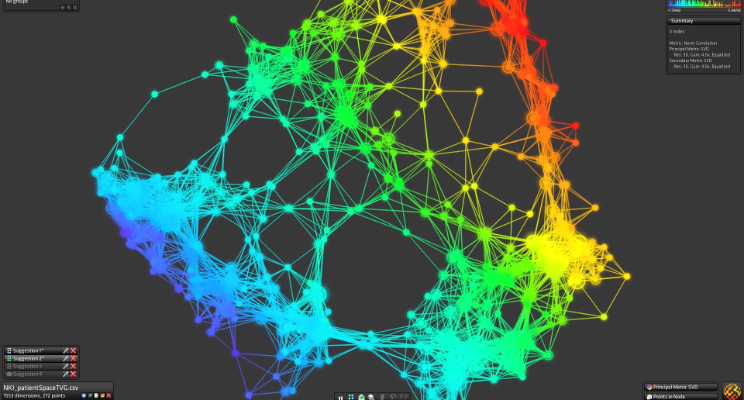
We need a new approach that surfaces trends we humans haven’t even considered, and that delivers a host of meaningful insights to clinicians before they even ask any questions. We need technology solutions that combine the best qualities of human intelligence (artificial intelligence) with the best computing capabilities that exceed human ability (machine learning). When these technologies are operationalized systematically across an enterprise, it’s called Applied AI. Applied AI is here to replace healthcare analytics, and we all stand to benefit.

Five Keys to Applied AI….more