 The Economic Freedom Fighters (EFF) rocketed into Parliament and the country’s provincial legislatures on a ticket of revolution, evolution and genuine social change. Now they’re fighting about clothes. The fighters’ insistence on wearing red overalls and domestic workers’ outfits has given their opponents yet another stick to beat them with…..1 2
Author Archives: Shabir Moosa
The Global Health Network’s new interactive process map could help transform health research around the world
The Global Health Network has launched a brand new, interactive Global Health Research Process Map, the first digital toolkit designed to enable researchers anywhere in the world to initiate rigorous global health research studies. As the HIFA community know all too well, health research is often lacking in the regions where evidence to improve health is needed most. Crucial evidence is not being generated because doctors and nurses lack access to training, information, and support. Effort is also regularly duplicated or conducted using different criteria in different territories and studies, and sometimes it falls by the wayside from lack of simple resources and guidance on best practice. The Global Health Research Process Map (http://processmap.org/) is set to change this. It’s an open-access internationally-available online resource that guides every process and method needed to initiate a health research study. For each step researchers and their staff are provided with the information, support and training that they need to successfully run a health study. Researchers will also gain the opportunity to engage with their peers along the way, aiding collaboration and the spread of ideas.
The Process Map was released just over one week ago, and has already generated nearly 2,500 views from around the world. It is the product of four years of best practice gathered and refined by the research community who use the pioneering Global Health Network to guide and support their effort to conduct research in challenging settings. The Global Health Network works like an online science park for exchanging knowledge, sharing research methods and facilitating collaboration among global health professionals to fuel faster and better evidence to improve health. The Global Health Network facilitates global partnerships between researchers allowing researchers in low-resource settings and those with more support to learn from each other and conduct research studies in places where this is difficult and unusual.
The Process Map is a pioneering research tool that centralises the information and resources that researchers anywhere in the world need to develop and initiate rigorous and effective global health studies. It has the potential to revolutionise the current process, speeding the development of new drugs and vaccines, and improving how diseases are managed. With this toolkit, researchers can access the guidance, training and support that they need in order to run their own studies. This is important because there is much evidence that shows that locally-led research rarely happens in low-income settings because health workers lack research skills and any access to training and support. Therefore the Global Health Network is meeting that gap and the Global Health Research Process Map will take them through the process of conducting accurate research, step-by-step.
Visit the tool today, and click on each node to access formally written information, links to eLearning courses, guidance articles, discussions, blogs, up-to-date news, and all sorts of tools and templates which will help you complete each step. As with everything else on the Global Health Network, it’s completely free and open-access, and always will be. Your feedback is always greatly appreciated, so feel free to have a look and leave comments, either here or on the map itself.
Thank you!Tamzin
Tamzin Furtado
Project Manager
The Global Health Network
Interview with Wiley: Why we started HIFA and why it’s so important
Dear HIFA colleagues,
I was interviewed recently by the publisher Wiley about why we started HIFA and why it’s so important:
http://exchanges.wiley.com/blog/2014/07/14/saving-lives-by-spreading-knowledge/
Please forward this message/link to your contacts and networks to help raise global awareness, and encourage more people to join HIFA by going to hifa2015.org
Many thanks, Neil
Let’s build a future where people are no longer dying for lack of healthcare knowledge: Join HIFA www.hifa2015.org
HIFA profile: Neil Pakenham-Walsh is the coordinator of the HIFA campaign (Healthcare Information For All) and co-director of the Global Healthcare Information Network. He is also currently chair of the Dgroups Foundation (www.dgroups.info ), a partnership of 18 international development organisations promoting dialogue for international health and development. He started his career as a hospital doctor in the UK, and has clinical experience as an isolated health worker in rural Ecuador and Peru. For the last 20 years he has been committed to the global challenge of improving the availability and use of relevant, reliable healthcare information for health workers and citizens in low- and middle-income countries. He is also interested in the wider potential of inclusive, interdisciplinary communication platforms to help address global health and international development challenges. He has worked with the World Health Organization, the Wellcome Trust, Medicine Digest and INASP (International Network for the Availability of Scientific Publications). He is based near Oxford, UK. www.hifa2015.org neil.pakenham-walsh AT ghi-net.org
British National Formulary is available for free online in HINARI countries
The BNF is actually available for free online in HINARI countries [*] BNF.org provides free access for users in the UK and the HINARI group of developing nations to the British National Formulary and BNF for Children on Medicines Complete http://www.bnf.org/bnf/org_450070.htm
WHO: Consolidated guidelines on HIV prevention, diagnosis, treatment and care for key populations
 WHO has just published ‘Policy brief: Consolidated guidelines on HIV prevention, diagnosis, treatment and care for key populations’
This 184 page document is freely available here: http://www.who.int/hiv/pub/toolkits/keypopulations/en/
The text below is reproduced from the above URL:
OVERVIEW
In this new consolidated guidelines document on HIV prevention, diagnosis, treatment and care for key populations, the World Health Organization brings together all existing guidance relevant to five key populations men who have sex with men, people who inject drugs, people in prisons and other closed settings, sex workers and transgender people and updates selected guidance and recommendations.
These guidelines aim to:
– provide a comprehensive package of evidence-based HIV-related recommendations for all key populations;
– increase awareness of the needs of and issues important to key populations;
– improve access, coverage and uptake of effective and acceptable services; and
– catalyze greater national and global commitment to adequate funding and services.
Unravelling the quality of HIV counselling and testing services in Zambia
A new paper in Health Policy and Planning seeks to evaluate the quality of VCT services and reveals ‘serious underperformance in counselling about key risk-reduction methods’. ‘In a generalized HIV epidemic where multiple concurrent sexual partners are a significant problem for transmitting the disease, risk-reduction methods and discussion should be a main focus of pre-test and post-test counselling.’ CITATION: Levey IR & Wang W. Unravelling the quality of HIV counselling and testing services in the private and public sectors in Zambia. Health Policy Plan. (2014) 29 (suppl 1): i30-i37. doi: 10.1093/heapol/czt036
ABSTRACT
Background: Despite the substantial investment for providing HIV counselling and testing (VCT) services in Zambia, there has been little effort to systematically evaluate the quality of VCT services provided by various types of health providers. This study, conducted in 2009, examines VCT in the public and private sectors including private for-profit and NGO/faith-based sectors in Copperbelt and Luapula.
Methods: The study used five primary data collection methods to gauge quality of VCT services: closed-ended client interviews with clients exiting VCT sites; open-ended client interviews; interviews with facility managers; review of service statistics; and an observation of the physical environment for VCT by site. Over 400 clients and 87 facility managers were interviewed from almost 90 facilities. Sites were randomly selected and results are generalizable at the provincial level.
Results: The study shows concerning levels of underperformance in VCT services across the sectors. It reveals serious underperformance in counselling about key risk-reduction methods. Less than one-third of clients received counselling on reducing number of sexual partners and only approximately 5% of clients received counselling about disclosing test results to partners. In terms of client profiles, the NGO sector attracts the most educated clients and less educated Zambians seek VCT services at very low rates (7%). The private for-profit performs equally or sometimes better than other sectors even though this sector is not adequately integrated into the Zambian national response to HIV.
Conclusion: The private for-profit sector provides VCT services on par in quality with the other sectors. Most clients did not receive counselling on partner reduction or disclosure of HIV test results to partners. In a generalized HIV epidemic where multiple concurrent sexual partners are a significant problem for transmitting the disease, risk-reduction methods and discussion should be a main focus of pre-test and post-test counselling.
Best wishes, Neil
MOTECH Suite workshop: August 27-29 in Accra, Ghana
 Dimagi and Grameen Foundation are hosting the first ever MOTECH Suite workshop from August 27-29 in Accra, Ghana!
MOTECH Suite is an open source software platform that enables organizations to deploy and manage a wide range of mobile health applications. MOTECH Suite is being developed to deliver economies of scale by supporting multiple use cases to be scaled on the same platform, and by supporting integration to national information and reporting systems.
The goals of the workshop are to:
– Build a community of mHealth implementers in Ghana
– Share best practices & strategies for mHealth projects running at scale
– Enable participants to be leaders in mHealth within their organizations
– Introduce attendees to MOTECH Suite’s array of tools, including CommCare, CommTrack, CommConnect, and core MOTECH systems
– Share case studies about regional mHealth programs and how they use mobile technology
Workshop Details:
Dates: Wednesday, August 27th through Friday, August 29th
Time: 9:00AM — 5:00PM
Location: Kofi Annan Center for Excellence in ICT
Who should attend? Directors, program managers, and heads of departments from NGOs, IGOs, funding organizations, research institutions, and government agencies
Language: The workshop will be run in English
Workshop fee: $75 for the entire workshop. Lunch and coffee will be provided daily. Per diems or travel stipends are not available.
For those interested in attending, please submit your application by Friday, August 8, 2014. Attendance will be limited to 35 participants.
Please refer any questions you have about this workshop and similar workshops to workshops@dimagi.com.
Thanks, Gillian
Gillian Javetski
Senior Program Analyst
Dimagi, Inc | 585 Massachusetts Ave | Suite 3 | Cambridge, MA 02139 USA
2014 Partners Forum Draft Communique
The Communique below is forwarded from the Partnership for Maternal, Newborn & Child Health, based at WHO Geneva, following a major conference held in Johannesburg last week.
http://www.who.int/pmnch/about/governance/partnersforum/pf2014/en/index23.html
2014 Partners’ Forum *Draft Communiqué
*This draft Communiqué takes into account all comments received.
Ensuring the health and well being of every woman, child, newborn and adolescent
We, the participants of the Partners’ Forum meeting in Johannesburg on June 30 and July 1, 2014:
– Reaffirm that the health of women, newborns, children and adolescents is a human right and at the heart of a people-centered approach to sustainable development.
– Applaud the progress in almost halving global maternal and child mortality since 1990 and note in particular the achievements on women and children’s health since the 2010 launch of the UN Secretary-General’s Global Strategy for Women’s and Children’s Health, the related Every Woman Every Child movement, and regional initiatives such as the African Union’s CARMMA and the Maputo Plan of Action.
– Regret that progress has been uneven in many countries, with marginalized and underserved groups, including adolescents and newborns making the least progress. No one should be left behind and there is no room for complacency.
– Recognize the right of marginalized and underserved groups, including young people, to actively participate as partners in the design of policies and strategies that affect their lives and health.
– Emphasize that preventing unintended pregnancies, violence against women, and early and forced marriage will significantly reduce maternal and newborn mortality and improve women’s and children’s health worldwide.
– Stress that universal access to sexual and reproductive health and rights, including quality, comprehensive and integrated sexual and reproductive health information, education, services and supplies, is central to ending preventable maternal, newborn, child and adolescent morbidity and mortality and preventing stillbirths. This must be fully incorporated into the priorities and obligations of the post-2015 development framework, alongside the crucial multi-sector actions and investments necessary for healthy lives.
– Reaffirm that country leadership, including both governments and civil society, is vital for the success of these efforts.
In the remaining days of the Millennium Development Goals and beyond 2015, we commit ourselves to accelerate progress for women and children’s health through smart investments, in line with a country’s unique needs:
– Invest in universal access to integrated sexual and reproductive health information, education, services and supplies, including by upholding this access as a human right by providing the awareness and information that enables women and youth to make informed decision, and by strong partnerships with the public, private, and civil society sectors.
– Invest in poor and marginalized populations and in other groups requiring special attention, such as newborns and adolescents. Support community-led efforts to address these challenges and advance inclusion.
– Invest in high-impact health interventions, such as immunization; skilled attendance at birth and quality care for mothers and newborns; access to contraception; prevention, diagnosis and treatment of HIV, malaria and TB, as set out in the Global Investment Framework for Women’s and Children’s Health and the Commission on Investing in Health.
– Invest in high-impact, health-enhancing interventions in other sectors to improve education, skills and employment; access to clean water, sanitation and hygiene; nutrition; rural electrification; roads; and women’s political and economic participation, including preventing early and forced marriage.
– Couple these investments with long-term strategies that ensure sustainability through innovations and strengthening health systems to facilitate scaled-up access to quality health services.
We call for the health and human rights of women, newborns, children and adolescents to be prioritized in the post-2015 Sustainable Development Goals, targets and indicators:
– Include, at a minimum, a standalone health goal to uphold health as a human right and to maximize access to health and wellbeing, end preventable mortality and morbidity and meet individual demand for sexual and reproductive health and contraception and to be aware that other goals might emerge, for example on RMNCH.
– Endorse global targets for 2030 to reduce child mortality to 25 or fewer deaths per 1,000 live births, newborn mortality to 12 of fewer deaths per 1,000 live births, and to reduce maternal mortality in all countries to a global ratio of less than 70 per 100,000 live births and a minimum of 75 percent of demand for contraceptives is met by modern methods.
– Commit to differentiated targets and indicators to guarantee focus on key populations including adolescents, marginalized and underserved groups, and to take into account different levels of development in countries.
– Establish shared goals with health-enhancing sectors, such as education, nutrition, water and sanitation, rural electrification, roads, skills and employment. Develop capacity for multi-stakeholder and multi-sector partnerships in order to maximize health outcomes and the contribution that better health makes to other sectors.
– Strengthen the capacity of civil society and ensure the meaningful engagement of young people and other key populations in policy-making and implementation, as well as in holding stakeholders to account.
– Develop civil registration and vital statistics systems and strengthen national health information systems to collect and publish key RMNCH data, including for neglected groups such as newborns and adolescents.
– Support good governance and leadership at all levels of government, civil society, the private sector and the global community, strengthened by the use of timely, reliable data and evidence for transparency in decision-making and accountability.
We, the participants of the Partners’ Forum leave with a renewed sense of commitment and joint accountability to achieve our goals of eliminating preventable death and morbidity for women, newborns, children and adolescents and ensuring universal access to the full range of services and goods for sexual, reproductive, maternal, newborn, child and adolescent health. We further commit to collaborate together to:
– Learn continuously and adjust: We will share lessons as a global community on what works and what doesn’t;
– Review progress regularly and work together to achieve our shared goals.
SuSanA: Sustainable Sanitation Alliance
 I would like to recommend to you an excellent discussion forum on sanitation, which I joined a few months ago. The forum is called SuSanA, which stands for Sustainable Sanitation Alliance. I am in touch with the moderators and have added SuSanA to our map of global health forums related to HIFA: http://www.hifa2015.org/hifa-global-forums/ You can join here: http://www.susana.org/ The forum is currently discussing a paper in the open-access journal PLoS NTDs (Neglected Tropical Diseases):
CITATION: Campbell SJ, Savage GB, Gray DJ, Atkinson J-AM, Soares Magalhães RJ, et al. (2014) Water, Sanitation, and Hygiene (WASH): A Critical Component for Sustainable Soil-Transmitted Helminth and Schistosomiasis Control. PLoS Negl Trop Dis 8(4): e2651. doi:10.1371/journal.pntd.0002651
The paper concludes: ‘Progress towards achieving global control of helminths crucially depends on sustainable solutions that move beyond treating symptoms towards reducing exposure. With that in mind, it is necessary to augment chemotherapy with WASH and other interventions such as health promotion to achieve a cumulative impact of preventing reinfection and providing the greatest and most sustainable gains for helminth control and elimination. We believe that a strong justification exists to revise the WHO guidelines in the face of the abovementioned shortcomings. Such revision will result in a much-enhanced document that covers the full spectrum of short- and longer-term interventions for more holistic STH and schistosomiasis control. Impact indicators for WASH, in addition to disease-related indicators such as prevalence of infection, should define the success of a control programme and guide decisions as to when such programmes should cease. This would ensure current gains in helminth control are built upon beyond the current dependence on chemotherapy.’
The authors concede ‘There is very little literature that indicates direct WASH impact on helminth control’ but claim that ‘existing evidence is already strong enough to support complementing drug-based interventions with the provision of WASH for all’.
‘The WHO guidelines published in 2002 were the first such document of its kind. It admirably articulated a large volume of technical information to assist programme managers develop prevention and control strategies. The more recent version [http://whqlibdoc.who.int/publications/2011/9789241548267_eng.pdf – dated 2011], however, does not seem to have progressed considerably from the earlier version. Rather, the recognition in the 2002 version that resources must not be diverted prematurely in countries where morbidity has been significantly reduced but transmission continues mitigates risk more appropriately than the current second edition guidelines. We believe there is a strong justification for a further revision to be undertaken.’
Best wishes, Neil
3 more childbirth videos just released
 Global Health Media Project is expanding their Childbirth Series with 3 new videos: Initial Assessment of a Woman in Labor, Preventing Infection at Birth, and Immediate Care After Birth (integrating care for mother and baby). The primary audience for these teaching videos are birth attendants in developing countries. They can be accessed, along with our other videos on childbirth, at: http://globalhealthmedia.org/childbirth/childbirth-videos/ Our Childbirth Series is intended to improve the quality of care during childbirth and help protect the lives of birthing women. All of our videos are can be downloaded free-of-charge for use in low-resource settings. The childbirth films will soon be available in French and Spanish. As always, we value your feedback and would appreciate receiving any comments about how you use the videos in your training.
Warm regards, Deb [Deborah Van Dyke, Director, Global Health Media Project, 802-496-7556
Report: South Africa’s National Health Insurance
 Issued by the South African Department of Health, this 18-page booklet broadly outlines the country’s recently introduced national health insurance (NHI). This background document states that the NHI will take 14 years to fully introduce in South Africa. The first five years of the roll out will comprise a preparation phase in which the country will uplift the public health sector…..1 2
Eastern Cape rural nurses speak
 Bad attitudes and long clinic queues are just some of the reasons why nurses can get bad rap. OurHealth talks to three rural nurses about the challenges they face….more
Opinion: Doctors don’t need coercion to respond to need
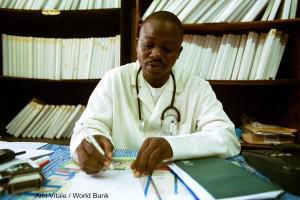 The country’s top three doctors’ associations continue to rail against new legislation that gives government the final say over where doctors practice, writes South African Medical Journal News Editor Chris Bateman. In April, President Jacob Zuma promulgated the controversial and long-dormant Certificate of Needs (CoN) provisions in the National Health Act…..more
R5bn down the drain on consultants

SA looks to Malaysia to fix NDP
The government is looking to Malaysia to speed up the implementation of its National Development Plan (NDP). Addressing Parliament on Friday at the conclusion of the debate on his state of the nation address, President Jacob Zuma said government would adopt what is termed Operation Phakisa, which is based on Malaysia’s Big Fast Results initiative….1 2 3 4 5 6 7 8 9
West Africa Ebola outbreak worst ever, says WHO
 The Ebola epidemic in West Africa is officially the worst the world has seen as the death toll breaches 600, says the World Health Organisation….more
Taxi driver who touched the nation
 Taxi driver Thilivhali Singo’s single deed of kindness became a landmark moment, writes Malaika wa Azania…..more
Great ideas to help make every day Mandela Day
Palestinian death toll tops 300

‘Ten days paternity leave for men’
 Men should be provided with 10 days’ paternity leave, non-profit organisation Sonke Gender Justice (SGJ) said on Thursday. The non-profit organisation came out in support of financial manager Hendri Terblanche launching the 10-day paternity leave campaign, eight months after his twin children were born three months premature….more
 AfroPHC