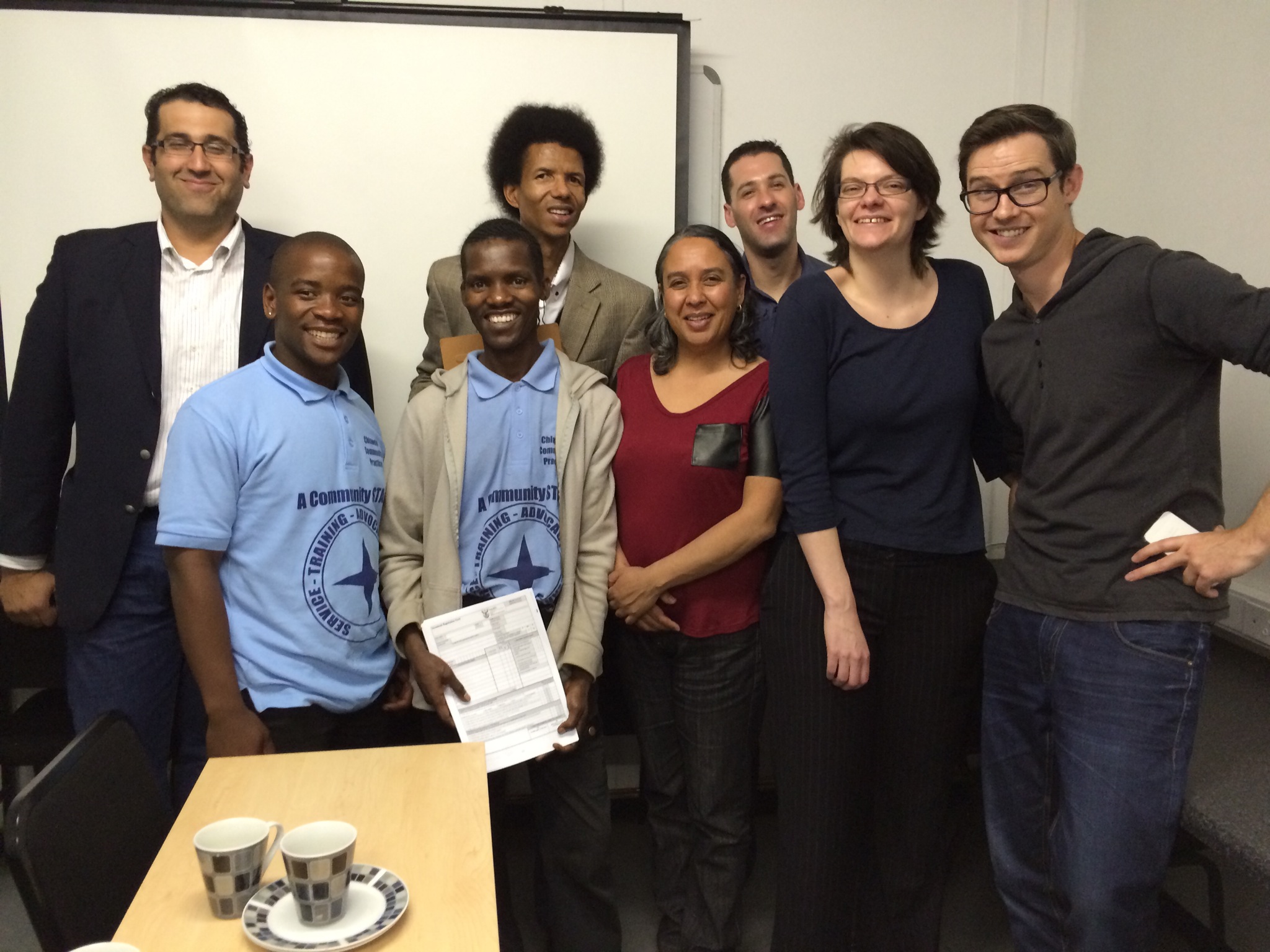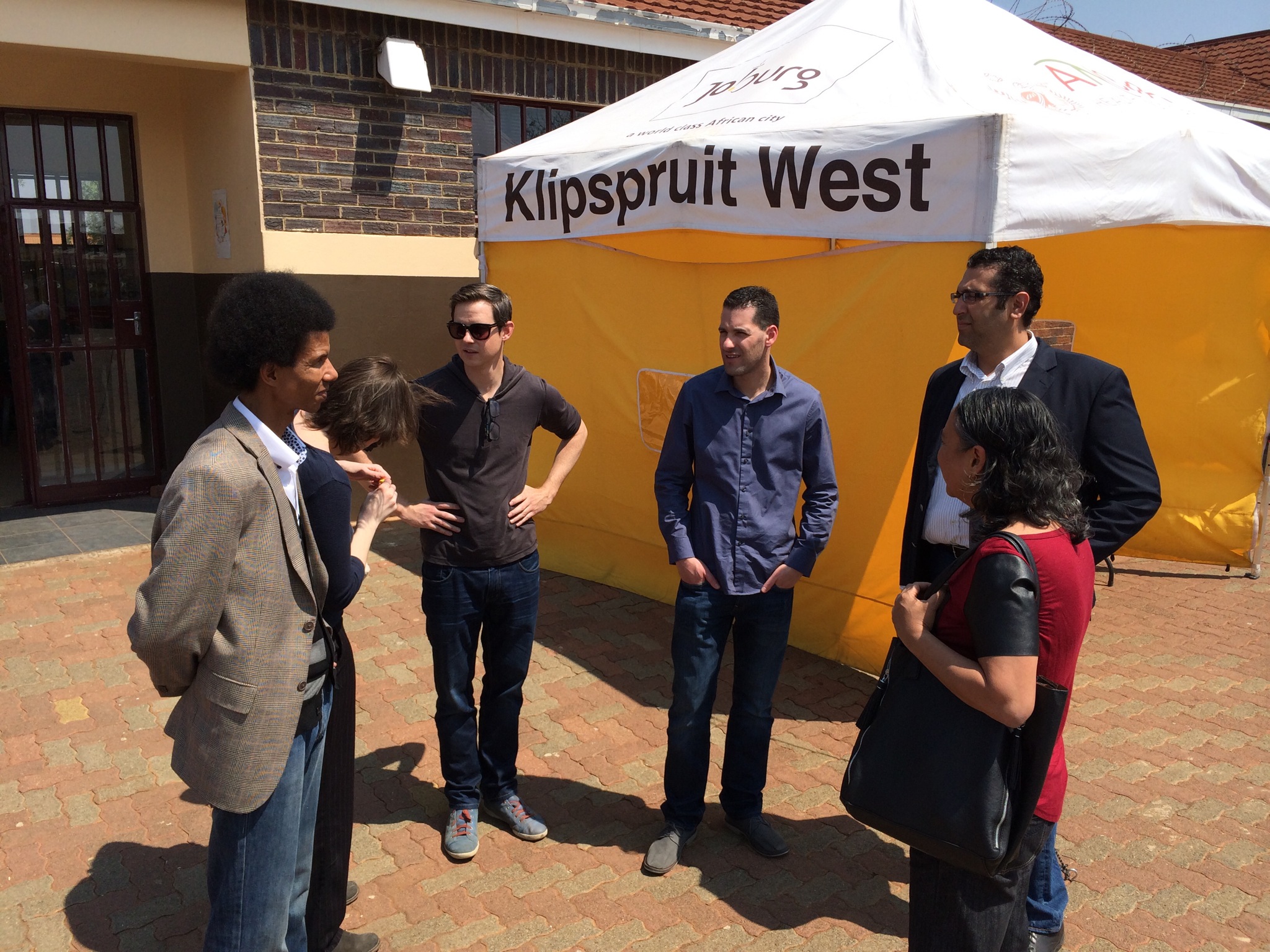
A team from Wits visited CCP and Klipspruit West Clinic to explore it as a base for an NRF collaboration with Egypt on ICT . The plan is to support re engineering of PHC services in a site in SA based on 10 years of experience of this in Egypt. The ICT team are having a workshop on the project in Wits on Thursday.
Author Archives: Shabir Moosa
‘BEE stifles young blacks’ prospects’
Presentation: NHI Sneak Preview – From Green to White Paper (2013)
In this 2013 presentation, the Department of Health outlines legislative, governance and institutional reforms accompanying the National Health Insurance (NHI) as well as timeframes….more
Nyaope tearing Tshwane families apart while rehab centres are scarce
Community leaders say nyaope is tearing Tshwane communities apart while there are too few rehabilitation centres to help people who use the drug. Recently, NGOs from Eersterust, Hammaanskraal and Montana gathered for a march and prayer vigil in response to the area’s nyaope problem, which local community leaders say is fuelling crime and causing learners to leave school. Dimakatso Mahapa says she wishes she could turn back time to when she was 15 years old – before nyaope destroyed her relationship with her family…. more
Huraprim is hard work
Shehnaz Munshi is hard at work on her research project in Ekurhuleni District. She is interviewing community health workers and their supervisors who are part of the Ward Based Outreach Teams. A startling comment from a community health worker:
They (government) dont care!
HURAPRIM presence
CHWs from Chiawelo at Wits Research Day
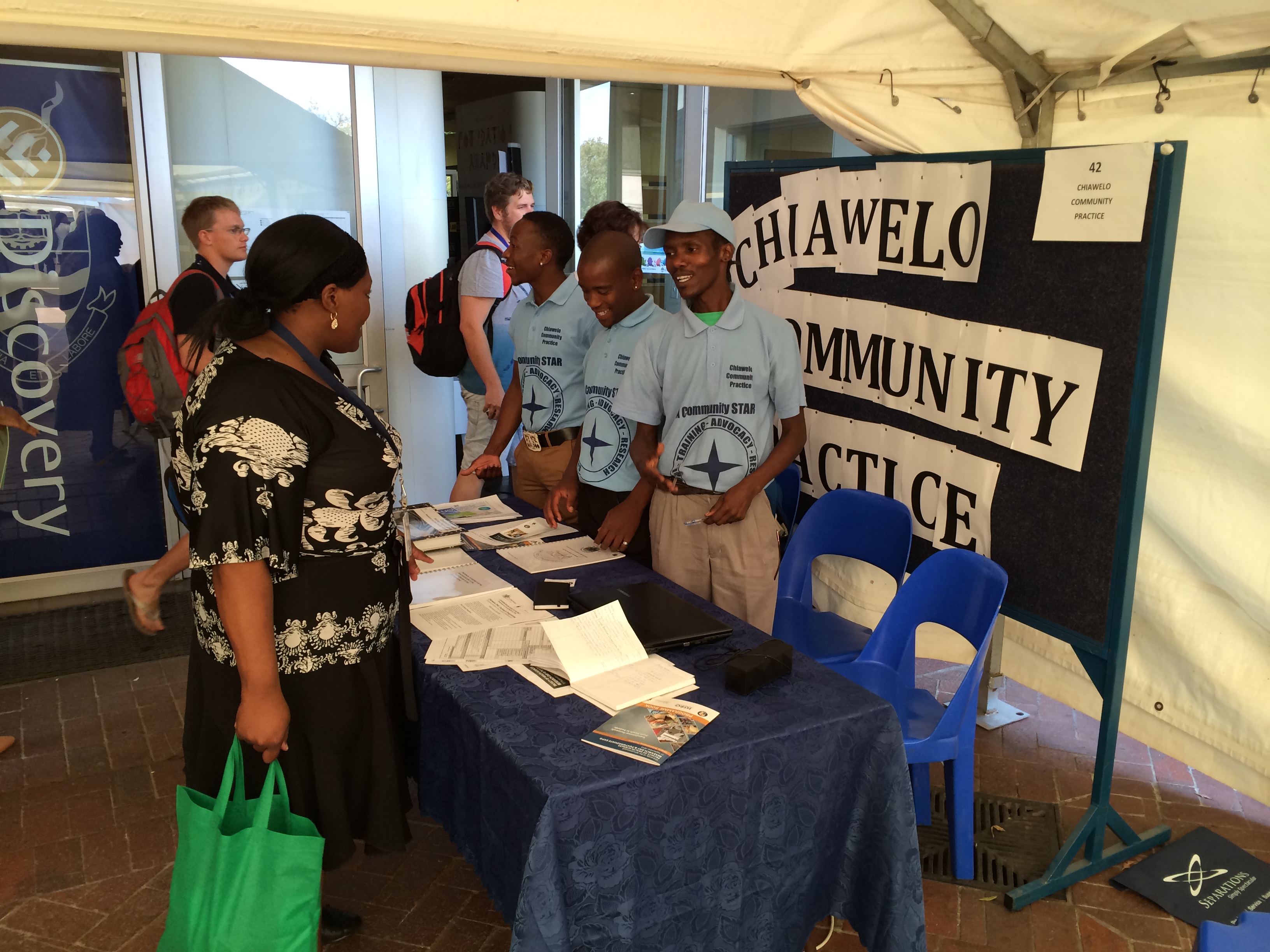
CHWs from Chiawelo Community Practice (CCP) were represented well with three very enthusiastic CHWs – David, Nkosinathi and Gundo – manning a stand in the Wits Research Day at Medical School. There were actively ‘selling’ CCP to students and professors whilst the video on CCP ran. Many academics noticed them and have shown indicated interest in visiting CCP. They collected names and contact details and went away satisfied with their experience.
Community healthworkers shafted by SA’s policy shambles
The community healthworker system is in chaos, leaving vulnerable communities at risk…..more
More jobs but fewer skills among blacks
The rate of employment creation has increased since 1994 with black people benefiting the most, the presidency said on Monday. The number of jobs created for blacks had almost doubled, said deputy minister in the presidency Buti Manamela in a statement…..more
Jozi Family Medicine Team to present at Wits Research Day
The team from Jozi Family Medicine will be giving three different presentations at the Wits Research Day on the 17th of September.
Shabir Moosa will be talking about the views of key leaders in South Africa on implementation of family medicine, and the critical role in the district health system.
Stephen Pentz will be presenting on ethical challenges in Primary Healthcare Re-engineering
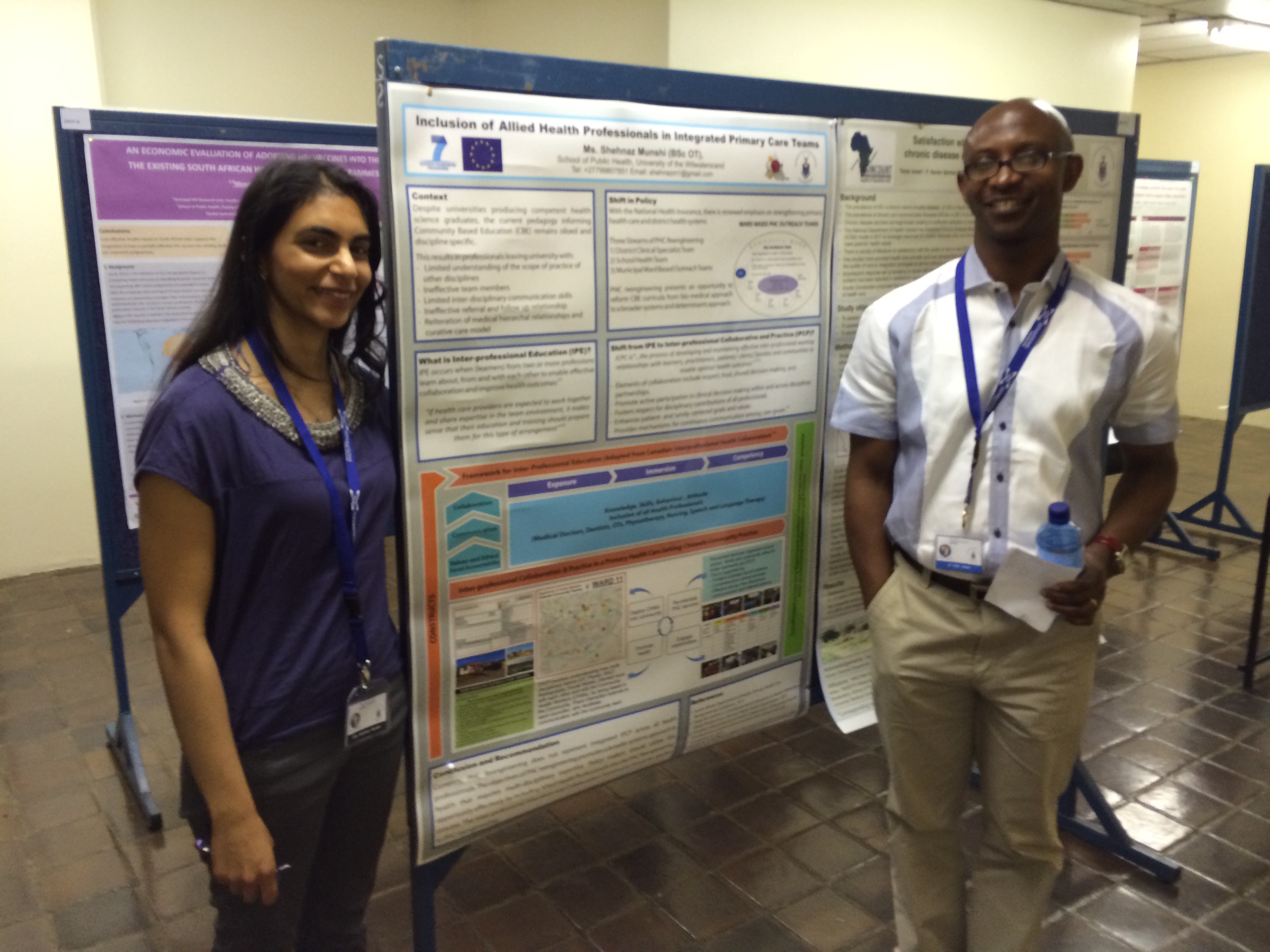
And Shehnaz Munshi has a poster looking at the inclusion of allied health professionals in integrated primary care teams
Go here to find out more about Wits Research Day
See abstracts for the presentations below:
Ethical challenges in Primary Healthcare Re-Engineering
Primary health care (PHC) re-engineering in South Africa is seen as crucial to reforming and strengthening the current health system and represents a change is thinking from poorly co-ordinated, verticalised programmes characteristic of current PHC services to a more integrated, team-based approach within PHC. This research focused on the ethical challenges with regards to the implementation of Municipal Ward-based PHC Outreach Teams; one of the three streams in the model for PHC re-engineering (aside from district-based clinical specialist teams and school health services). The study conducted 28 focus group interviews with purposively selected stakeholders in 5 of the 7 sub-districts of the City of Johannesburg, including stakeholders from government, private and academic institutions, NGOs, and people in the community identified as influential to the implementation of PHC re-engineering. The data was analysed qualitatively following the framework method. The results revealed ethical concerns with the current health service including poor services; poor standards of care; concerns with medication; problematic attitudes; and fear of attending clinics. The ethical challenges particularly associated with PHC re-engineering included issues with confidentiality; the reception of Community Health Workers (CHWs) in the community; challenges encountered by CHWs; political dynamics; and transparency, corruption and nepotism. Beyond an ethical crisis in health care in South Africa, the research concludes that challenges with professionalism with regards to CHWs remains problematic. CHWs have an incredible potential to increase access to services and effect meaningful health prevention and promotion at community level, however, the researchers caution that it is unethical to send poorly trained, incapacitated non-professionals into dangerous, structurally violent areas to deal with serious social and health conditions without adequate support.
“The views of key leaders in South Africa on implementation of family medicine: critical role in the district health system”
Background: Integrated team-based primary care is an international imperative. This is required more so in Africa, where fragmented verticalised care dominates. South Africa is trying to address this with health reforms, including Primary Health Care Re-engineering. Family physicians are already contributing to primary care despite family medicine being a new discipline in South Africa. However the views of leaders on family medicine and the role of family physicians is not clear, especially with recent health reforms. The aim of this study was to understand the views of key government and academic leaders in South Africa on family medicine, roles of family physicians and human resource issues.
Methods: This was a qualitative study with academic and government leaders across South Africa. In-depth interviews were conducted with sixteen purposefully selected leaders using an interview guide. Thematic content analysis was based on the framework method.
Results: Whilst family physicians were seen as critical to the district health system there was ambivalence on their leadership role and ‘specialist’ status. National health reforms were creating both threats and opportunities for family medicine. Three key roles for family physicians emerged: supporting referrals; clinical governance / quality improvement; and providing support to community-oriented care. Respondents’ spoke of consolidating the development and training of family physicians, and shaping human resource policy to include family medicine.
Conclusions: Family physicians were seen as critical to the district health system in South Africa despite difficulties around their precise role. Whilst their role was dominated by filling gaps at district hospitals to reduce referrals it extended to clinical governance and developing community-oriented primary care – a tall order, requiring strong teamwork. It requires family physicians to proactively develop team-based models of care, reform education and advocate for clearer policy.

Report: eHealth Strategy South Africa (2012)
This 36-page policy document outlines the Department of Health’s eHealth strategy, which is set to lead the department in improving patient information systems nationwide….more
Herbalists crucial link to health services
Since the 1970s, Soweto’s Ikwezi train station has been abuzz with local herbalists. But after more than three decades into South Africa’s HIV epidemic, traditional healing has changed – and found a new role within the public health system…..more
Gauteng health department ‘still plagued with problems’, says Creecy
GAUTENG’s departments of health and human settlements have remained underperformers even though the number of departments with unfavourable audit outcomes decreased…..more
CHW Training on Stroke and Rehabilitation

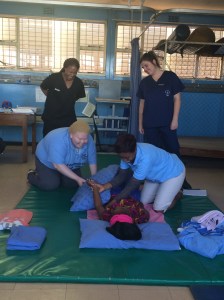
A team of Occupational Therapist and Physiotherapists, along side students from Wits University, trained the Community Health Workers (CHW) at Chiawelo Community Practice on stroke and rehabilitation. The training focused on the role of physiotherapy, dealing with pressure sores, positioning stroke patients, and upper and lower limb exercises; all accompanied by practical sessions.
Here are a few responses from the CHWs who reported back on what they learnt from the training:
“Going for Physiotherapy training has taught me not only what a stroke means, but how to help the stroke patient to be more independent and get a feel of having their lives back to normal”
“We were taught hot to assist the patients with dressing up, hot the family/friends can move them from one chair to another, and how to position the patients to check for bed sores and pressure sores”.
“The training was good. We learnt how to transfer patients from the bed to a wheelchair, or chair”.
“We learnt how to help a stroke patient to be independent, to be able to do things for him/herself”.
“I learnt how to position patients who are bed-ridden and teach the whole family to do exercises to help them with their habits”
“Empowering me more and making me see that stroke patients can still get help and live a normal life”
A special thanks to Sanchia Adam, Talor Golach, Zainab Ismail, and Reggie Sefeffe, as well as all the Wits students who were involved in training.
MEC to join march for better school loos
Oscar Pistorius: the judgment unpacked
Judge Thokozile Masipa on Friday found Oscar Pistorius guilty of some charges, innocent on others. Here is how she found, and her reasoning….more
A street-friendly solution for congested cities?
TRAMS — last seen in South Africa’s city centres decades ago — can be a cost-effective way to provide reliable public transport, says Alstom South Africa, which is supplying 600 commuter trains to the Passenger Rail Agency of South Africa with its consortium partners….more
“Health care is a human system”: A Panel Discussion on Primary Health Care, Social Justice and the Dignity of the Health Worker

A public debate was held at WiSER (Wits Institute for Social and Economic Research) along side the Wits Department of Politics and the History Workshop as part of a series of Public Positions on History and Politics.
Mark Heywood (Section 27) presented a short paper, followed by discussions from Ayanda Ntsaluba (Discovery Health) and Martin Smith (Surgery at Wits and Baragwanath Hospital). The panel was chaired by Laetitia Rispel (Wits School of Public Health).
The debate looked at the provision of health care in South Africa and questioned whether the existing state of primary care has enabled a more equitable society in keeping with the vision of the National Health Plan post 1994. The discussion sought to examine how economic questions can obscure what are often more important problems of proper care in both private and publicly funded institutions. In relation to plans for a National Health Insurance, the debate asked the fundamental question as to how South Africans will secure a health care system that provides them with the kind of considerate, dignified and careful service that all citizens should expect?
To read the discussion paper, click here
NHLS unsure where to send bill, suspends services
Billing errors and lack of payment have been blamed for the National Health Laboratory Service’s (NHLS) recent suspension of services to some Gauteng clinics.Results for HIV monitoring and cervical cancer screening disrupted due to service interruptions. A 31 July NHLS memo circulated to health facilities warned that clinics that were not on a Gauteng Department of Health list of clinics able to charge lab services to the province would have their NHLS services terminated that same day….more
Tshwane clinics share medicines amid stock outs
Clinics in Soshanguve outside Pretoria are helping each other to solve recurring problems in drug orders from the regional pharmacy. Health workers at Maria Rantho, KT Motubatse and other Soshanguve clinics are complaining that incorrectly filled orders from the regional pharmacy have forced clinics to share medicines among themselves. A health worker* at Maria Rantho Clinic claims that incorrectly filled orders have become a recurring problem and have resulted in shortages at clinics…..more