The Lancet: Can mass media interventions reduce child mortality?

In February 2015 we highlighted a Lancet paper by HIFA member Will Snell and colleagues: ‘Can mass media interventions reduce child mortality?’ The midline results of this randomised controlled trial (the first of its kind) were highly positive. The London School of Hygiene and Tropical Medicine is currently doing an endline survey and the final results will be available in early 2016.

Meanwhile, the research group reports two further, related developments – I have extracted text below. The full text is available here:

http://www.developmentmedia.net/burkina-faso?utm_source=DMI+CapsuleCRM+Updates&utm_campaign=fe038d3857-DMI+Country%2FPublicity+Update+July+2015&utm_medium=email&utm_term=0_5bdf86678f-fe038d3857-73468289

It is especially encouraging to see health education video for citizens on mobile phones, taking off in Africa as it is already doing in India (thanks to Nand Wadhwani and HealthPhone).

Child survival national campaign (2015-)

In 2014 we secured funding from four organisations (SPRING, Alive & Thrive, Comic Relief and the Vitol Foundation) to scale up our child health campaign from the seven community radio stations covered by the RCT to 28 community radio stations across Burkina Faso (see map below), giving us full national coverage (reaching 14.9m people, or 78% of the population). We began broadcasting radio spots nationwide in May 2015.

‘Viral videos’ mHealth pilot (2014-15)

Since late 2014 we have been running a pilot project in south-western Burkina Faso: ‘viral videos’. Funded by a Grand Challenges Exploration grant from the Bill & Melinda Gates Foundation, the project promotes maternal and child health using short entertaining films that can be watched on mobile phones.

People in Burkina Faso are increasingly watching and sharing short videos on their mobile phones. The project taps into this trend by creating ‘viral videos’ in local languages that promote positive maternal and child health behaviours. Each of the films delivers a specific message, such as the benefits of hand washing, and the promotion of treatment-seeking for diseases such as malaria, pneumonia and diarrhoea.

We are currently analysing the initial evaluation results from this pilot and will publish more information soon.

Let’s build a future where people are no longer dying for lack of healthcare knowledge – Join HIFA: www.hifa2015.org  

Contamination of Stethoscopes and Physicians’ Hands After a Physical Examinationof a

Results of a study suggest that the contamination level of the stethoscope is substantial after a single physical examination and comparable to the contamination of parts of the physician’s dominant hand….. more
Request for health education videos in Spanish – Hesperian Health Guides

Our book Where There Is No Doctor, which includes practical information on first aid, nutrition and infection and disease prevention, among other topics, is available in English and Spanish in a variety of formats on our website (http://store.hesperian.org/HB/prod/B010R.html, http://store.hesperian.org/HB/prod/B011R.html). While we don’t have any of our resources available on DVD, we do have a PDF of Doctor in Spanish and English on CD, which line up page for page, and are meant for bilingual use (http://store.hesperian.org/HB/prod/CD010.html). We also have thousands of illustrations from our materials available for download on our Image Library (http://images.hesperian.org/home.tlx), which can be a great teaching tool.

Please let me know if you have any questions about our materials, or if I can help you find any specific resource on our website. Thank you for the work you and your husband are doing, and I hope you enjoy your time in Peru!

Best regards,

Rachel Grinstein

Rachel Grinstein

Development and Marketing Associate

Hesperian Health Guides

P: 510.845.1447 | F: 510.845.9141

www.hesperian.org

Engaging communities for increasing immunisation: what do we know?

3ie has recently published a scoping paper, Engaging communities for increasing immunisation: what do we know?, analysing the role of community engagement approaches in immunisation programmes. The paper includes an evidence gap map that outlines available evidence on the subject, analysis of survey findings and expert interviews. Below are links to the paper, a blog and a short video on the findings from the study.

Scoping paper(http://bit.ly/1DdPZWU):

Engaging communities for increasing immunisation coverage: what do we know?

This paper analyses the role of community engagement approaches in immunisation programmes. It finds that these programmes focus mainly on demand generation. Technology-based interventions may work but contextual factors should inform the programme design. The study also highlights implementation problems, which if not addressed, can lead to a lack of confidence in the programme. However, more studies are needed to identify what works in this regard.

Blog(http://bit.ly/1gsu989):

Collaborating with communities to improve vaccine coverage: a strategy worth pursuing?

Can community-based approaches increase immunisation coverage in developing countries? Shagun Sabarwal and Jyotsna Puri blog about the findings from 3ie scoping paper. This is part of a programme that will generate new evidence on what works to engage communities in increasing immunisation coverage, test the feasibility and effectiveness of these approaches, and inform their scale up.

Video(http://bit.ly/1MB1MBu):

Collaborating with communities to improve vaccine coverage: a strategy worth pursuing?

Shagun Sabarwal, 3ie evaluation specialist and the lead author of a scoping paper,Engaging communities for increasing immunisation: what do we know?, discusses the role of community engagement approaches in immunisation

programmes.

View html version:

http://www.3ieimpact.org/media/filer_public/2015/07/31/immunisation-31july15.html

==============================================

Our mailing address is:

International Initiative for Impact Evaluation (3ie) 202-203, Rectangle One

D-4, Saket District Center New Delhi 110017 India

Our telephone:

+91 11 4989 4444

HIFA profile: Paromita Mukhopadhyay is Online Communications Officer at the International Initiative for Impact Evaluation, India. pmukhopadhyay AT 3ieimpact.org

__________

Forum 2015 – Access to Health Research – Engaging civil society – James Lind Alliance

‘The James Lind Alliance (JLA) is a non-profit making initiative which was established in 2004. It brings patients, carers and clinicians together to identify and prioritise the Top 10 uncertainties, or ‘unanswered questions’, about the effects of treatments that they agree are most important. The aim of this is to help ensure that those who fund health research are aware of what matters to both patients and clinicians. The JLA method, described in the JLA Guidebook, is designed to lead to changes in the way research funding is granted, with a view to raising awareness of research questions which are of direct relevance and potential benefit to patients and the clinicians who treat them.’

http://www.lindalliance.org/

The James Lind Alliance model could perhaps be extended internationally?

Best wishes, Neil

Let’s build a future where people are no longer dying for lack of healthcare knowledge – Join HIFA: www.hifa2015.org  

Public consultation on the WHO’s ‘Global Strategy on Human Resources for Health: Workforce 2030’

All WONCA members and member organizations are urged to respond to the online public consultation towards the development of a Global Strategy on Human Resources for Health. In May 2014, the 67th World Health Assembly requested the development of a new global strategy on human resources for health to be considered by the 69th World Health Assembly in May 2016. The draft strategy is now open for consultation until 31 August 2015.  It represents a critical component of the WHO strategic vision towards universal health coverage (UHC) in the framework of the post 2015 health development agenda. The draft will also be discussed at various global health events as well as a number of WHO regional technical consultations. This global dialogue will inform the continuing improvement of the draft and a final version to be submitted to the WHO Executive Board in January 2016.  It is vital that the role of family doctors and multidisciplinary primary care teams are highlighted in this strategy, we therefore urge all WONCA members to respond to the consultation. ….more

Forum 2015 – Access to Health Research: Open access

Many thanks for re-emphasising the important difference between free and open access. Open access is defined differently by different people, which can create some confusion. Wikipedia itself, arguably  the world’s greatest example of open-access publishing, defines open access as: “Open access (OA) means unrestricted online access to research. Open access is primarily intended for peer-reviewed academic journals, but is also provided for a growing number of theses,[2] book chapters,[3] and monographs.[4] Open access comes in two degrees: gratis open access, which is online access free of charge, and libre open access, which is online access free of charge and with some additional usage rights.[5] These additional usage rights are often granted through the use of various specific Creative Commons licenses.[6] Only libre open access is fully compliant with definitions of open access such as the Berlin Declaration on Open Access to Knowledge in the Sciences and Humanities.” Arguably, this definition itself needs to be updated (and the beauty of Wikipedia is that anyone can do so). I sense, for example, that more and more people think it is misleading for a publisher to describe their content as “open access” when in fact it is free-to-view, but without usage rights. That said, free-to-view is vastly preferable to restricted-access.

To take our discussion on open access forward, I would be grateful to hear your thoughts on three questions:

1. Is universal open access to health research the long term vision that we should all be working towards?

Personally, I believe the answer to this statement is a resounding “Yes”. What do you think?

If you agree, I would like to put a second question:

2. What is already happening, and what more can be done, to accelerate progress towards universal open access to health research?

Open access publishers such as PLoS and BioMed Central have led the way, and I hope they are enjoying as much support as ever to continue to grow. Now virtually every major publisher is introducing open-access within their business strategy – isn’t it amazing to think that, until just a few years ago, all major publishers were resisting open access? All the ‘traditional’ publishers collectively have enormous experience and expertise, and it is surely desirable that they transition successfully and progressively towards open-access publishing. What might be done to help such transition?  

Some observations: More and more research funders are insisting on open access to research findings (and including a budget line for this purpose as part of the overall research costs). This is a hugely important driver. Also, more and more research institutions have agreements with open-access publishers, thereby removing costs and time for individual researchers. And bibliometric research is increasingly showing clear benefits and impact of open-access research. Here on HIFA, it is quite obvious that the vast majority of papers that are discussed are open-access. A HIFA member recently even said that if a paper isn’t free or open access, they don’t need to know about it! I suspect many share this, and it is food for thought for researchers who are still wondering whether to publish open versus restricted access.

Furthermore, more and more citizens worldwide are aware of what open access is all about, and see it as a logical and ethical imperative.

Is there anything further that can be done to accelerate progress and smooth the transition towards universal open access to health research?

And lastly, given the focus of HIFA:

3. What is already happening, and what more can be done, to encourage and support journals published in LMICs to transition to open access?

Best wishes,

Neil

Let’s build a future where people are no longer dying for lack of healthcare knowledge – Join HIFA: www.hifa2015.org  

Basic medical aid could soon be within reach of the poor

THE Council for Medical Schemes (CMS) could allow medical schemes to launch cheap products for low-income workers as early as next year, it emerged on Tuesday at the annual Board of Healthcare Funders (BHF) conference. The CMS is a statutory body charged with regulating the medical schemes industry, while the BHF is an industry association for medical schemes and administrators. ….more

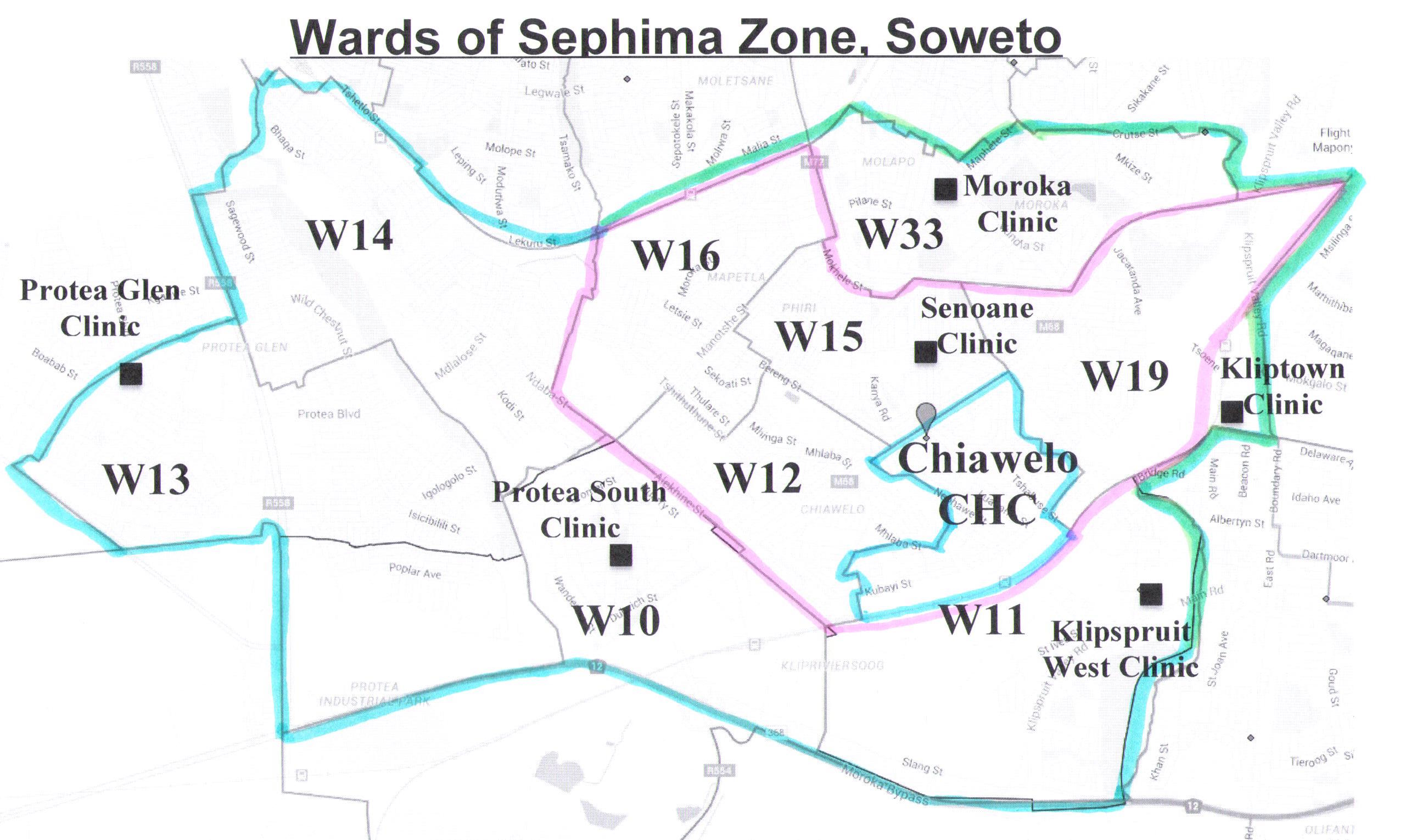
Chiawelo Community Practice grows

Sephima Expansion MapWe just switched on today the CCP model of care that applies to half of Ward 11 ±20 000 people (blue) to 4 more wards involving 120 000 people (pink). It went off reasonably smoothly for the first day. We plan to extend range of care and switch other wards on one by one over the next few weeks to cover ±250 000 people in 10 wards totally (green), ±25% of Soweto. Keep your eye on this space!

Depression Screening Test

Use this brief 18-question online automated quiz to help you determine if you may need to see a mental health professional for diagnosis and treatment of depression, or for tracking your depression on a regular basis….more

Depression in children and young people: identification and management in primary, community and secondary care.

Stepped Care

The stepped-care model of depression draws attention to the different needs that depressed children and young people have – depending on the characteristics of their depression and their personal and social circumstances – and the responses that are required from services. It provides a framework in which to organise the provision of services that support both healthcare professionals and patients and their parent(s) or carer(s) in identifying and accessing the most effective interventions (see table below).

Table. The Stepped Care Model

Focus Action Responsibility
Detection Risk Profiling Tier 1
Recognition Identification in presenting children or young people Tiers 2-4
Mild depression (including dysthymia) Watchful waiting
Non-directive supportive therapy/group cognitive behavioural therapy/guided self-help
Tier 1
Tier 1 or 2
Moderate to severe depression Brief psychological therapy
+/– fluoxetine
Tier 2 or 3
Depression unresponsive to/recurrentdepression/psychotic depression Intensive psychological therapy
+/– fluoxetine, sertraline, citalopram, with an antipsychotic
Tier 3 or 4

See more

Amitriptyline for neuropathic pain in adults

Moore RA, Derry S, Aldington D, et al. Amitriptyline for neuropathic pain in adults. Cochrane Database Syst Rev. 2015 Jul 6;7:CD008242. (Review) PMID: 26146793

Amitriptyline has been a first-line treatment for neuropathic pain for many years. The fact that there is no supportive unbiased evidence for a beneficial effect is disappointing, but has to be balanced against decades of successful treatment in many people with neuropathic pain. There is no good evidence of a lack of effect; rather our concern should be of overestimation of treatment effect. Amitriptyline should continue to be used as part of the treatment of neuropathic pain, but only a minority of people will achieve satisfactory pain relief. Limited information suggests that failure with one antidepressant does not mean failure with all. ….more

Oral non-steroidal anti-inflammatory drugs versus other oral analgesic agents for acute soft tissue injury

Jones P, Dalziel SR, Lamdin R, et al. Oral non-steroidal anti-inflammatory drugs versus other oral analgesic agents for acute soft tissue injury. Cochrane Database Syst Rev. 2015 Jul 1;7:CD007789. (Review) PMID: 26130144

There is generally low- or very low-quality but consistent evidence of no clinically important difference in analgesic efficacy between NSAIDs and other oral analgesics. There is low-quality evidence of more gastrointestinal adverse effects with non-selective NSAID compared with paracetamol. There is low- or very low-quality evidence of better function and fewer adverse events with NSAIDs compared with opioid-containing analgesics; however, one study dominated this evidence using a now unavailable COX-2 selective NSAID and is of uncertain applicability. Further research is required to determine whether there is any difference in return to function or adverse effects between both non-selective and COX-2 selective NSAIDs versus paracetamol…… more

Financing global health: the poverty of nations

Financing global health: continued and expanded support for health is not a choice, it is a necessity if the vision for sustainable and resilient human development is to be fully realised…..more

Africa Sexual Medicine Congress 2015 in Durban

The Africa Sexual Medicine Congress is taking place in Durban in November 2015. We are having prominent speakers from different parts of the world such as USA, Australia, UK, France. See ASSM PROGRAMME and site

New online course on implementation research under development

A massive open online course (MOOC) on implementation research is being developed by TDR. The value and utility of this type of research will be introduced through case studies to be presented and interpreted by experienced public health researchers, practitioners and academics.

The content being developed will be free to anyone. This is TDR’s first foray into this type of training, building on materials such as the Implementation Research Toolkit. http://www.who.int/tdr/publications/topics/ir-toolkit/en/

Dermot Maher, TDR coordinator of research capacity strengthening, says, “We can reach relatively small groups of people through the usual training methods. However, this new on-line training approach enables us to reach a potentially huge number of people, to help them better understand and apply this important and growing field of research. MOOCs have the potential to revolutionise TDR’s approach to research training.” […]

Let’s build a future where people are no longer dying for lack of healthcare knowledge – Join HIFA: www.hifa2015.org  

Access to Health Research: Pubmed/Medline

‘MEDLINE is the U.S. National Library of Medicine® (NLM) premier bibliographic database that contains more than 22 million references to journal articles in life sciences with a concentration on biomedicine. A distinctive feature of MEDLINE is that the records are indexed with NLM Medical Subject Headings (MeSH)… [Medline includes] citations from more than 5,600 worldwide journals in about 40 languages… Since 2005, between 2,000-4,000 completed references are added each day… For citations published in 2010 or later, over 40% are for cited articles published in the U.S., about 93% are published in English’

http://www.nlm.nih.gov/pubs/factsheets/medline.html

Much research from LMICs has limited visibility because it is published in journals that are not indexed by Pubmed/Medline.

The Medline selection criteria state (inter alia):

– ‘Foreign language journals: Criteria for selection are the same as for those written in English. In order to extend the accessibility of the journal’s content to a wider potential readership, the majority of published articles in the review issues must contain an English-language abstract before the title will be considered for possible indexing.’

– ‘Geographic coverage: The highest quality and most useful journals are selected without regard for place of publication. In order to provide broad international coverage, special attention is given to research, public health, epidemiology, standards of health care, and indigenous diseases. Journals will generally not be selected for indexing if the contents are subjects already well represented in MEDLINE or that are being published for a local audience.’

In practice, the majority of journals published in low- and middle-income countries are not indexed by Medline.

This raises many questions:

Q1.4 How can journals published in LMICs be better supported to achieve the criteria demanded by Medline?

Q1.5 Should the Medline criteria be changed to accommodate more journals from LMICs?

Q1.6 How can non-Medline journals be made visible through alternative indexes? For example, what is the experience of indexing services such as WHO’s African Index Medicus, the Western Pacific Region Index Medicus, Index Medicus of the South East Asia Region and Global Index Medicus, and how can these indexing services be strengthened?

I look forward to learn more from HIFA members – Medline staff, publishers, journal editors, researchers and users of health research. What are your experiences, observations and suggestions for the future?

Best wishes,

Neil

Let’s build a future where people are no longer dying for lack of healthcare knowledge – Join HIFA: www.hifa2015.org  

mHealth Knowledge: Facilitating Knowledge Management for mHealth by Connecting Global Health Professionals to People, Products, and Ideas

mHealth Knowledge offers users a curated selection of key resources on mHealth. Visitors to the site can review the latest evidence, find program tools and resources, plan mHealth initiatives, and connect with other mHealth practitioners. mHealth Knowledge offers a range of essential resources:

– Applications & Platforms: Browse the latest mobile health applications and software platforms.

– Blogs & News: Connect to current discussion forums, mHealth news sites, and RSS feeds for important global mHealth updates, information, and conversations.

– Capacity Building & Learning: Access the free K4Health mHealth Basics Course, TechChange classes, and other online learning modules.

– Communities of Practice: Find technical working groups and email distribution lists that build capacity, facilitate collaboration, and provide a space for mHealth knowledge sharing.

– Multimedia Content: Find engaging mHealth-related images, videos, audio program files, and SMS messaging.

– Project Repositories: Search our collection of project registries and inventories to find relevant program examples.

– Tools & Guides: Browse essential resources for planning and implementation.

– mHealth Alliance Archive: Tap into the rich collection of reports supporting national digital health systems strengthening from the mHealth Alliance.

mHealthEvidence.org: Our comprehensive database makes it easier for software developers, researchers, program managers, funders, and other key decision makers to quickly get up to speed on current state-of-the-art programs.

To view K4Health’s mHealth portfolio, please visit K4Health’s mHealth page.

https://www.k4health.org/topics/mhealth?utm_source=The+Knowledge+for+Health+%2528K4Health%2529+Project+Newsletter&utm_campaign=20c812122a-K4Health_Newsletter_July_2015&utm_medium=email&utm_term=0_71dffef8fd-20c812122a-7368509

Let’s build a future where people are no longer dying for lack of healthcare knowledge – Join HIFA: www.hifa2015.org  

Forum 2015: Access to research: The role of AuthorAID

Dear HIFA colleagues,

This week we are exploring the question “How can health research from LMICs be made more visible and accessible?”. In our introductory message, we mentioned several programmes and initiatives, and perhaps it would be useful to say a few words about each of them. They are all represented here on HIFA, so I look forward to learn more about them.

The first project we mentioned is AuthorAID: ‘AuthorAID is a global network that provides support, mentoring, resources and training for researchers in developing countries’. ‘The AuthorAID community includes over 10,000 researchers from around the world. If you are looking for help, want to share your expertise or are searching for someone to work with, then the AuthorAID community can help!’ ‘AuthorAID is a pioneering program based at INASP. It is supported by the UK Department for International Development (DFID) and the Swedish International Development Cooperation Agency (SIDA). AuthorAID helps researchers in developing countries to publish and otherwise communicate their work. It also serves as a wider global forum to discuss and disseminate research.’

http://www.authoraid.info/en/

http://www.authoraid.info/en/about/

We noted that AuthorAID helps (inter alia) to support health researchers in LMICs (including and especially those who speak languages other than English) to write papers for publication. As we can see from the above description, AuthorAID provides a wide range of support and activities for researchers. As far as I know it is the leading (and perhaps the only) example of its kind and is as successful as it is needed.

When I searched on “health” on their website, I found lots of requests from health researchers looking for a mentor. This suggests perhaps that the demand is much greater than the supply? I would be grateful to hear from anyone who works with AuthorAID (whether as staff, mentor, mentee, or other capacity) whether this is indeed a challenge, and how this (and any other challenges) might be addressed.

Best wishes, Neil

Let’s build a future where people are no longer dying for lack of healthcare knowledge – Join HIFA: www.hifa2015.org  


Thank you for featuring AuthorAID (http://www.authoraid.info/en/ and http://www.authoraid.info/es/), a project primarily to help researchers in developing countries to publish and otherwise communicate their work. As a HIFA member deeply involved in AuthorAID since it began in 2007, I am delighted to reply.

AuthorAID activities include mentorship, online and face-to-face workshops, a resource library, a blog, a discussion list, and small grants to give workshops and present at conferences. As you perceived, many AuthorAID members seeking mentors are health researchers, and the demand for mentors greatly exceeds the supply. I encourage HIFA members who have not yet done so to become AuthorAID mentors. In my view, AuthorAID mentorship is a substantial service and can be highly rewarding. Registering on the AuthorAID website is quick and easy.

We would be grateful as well for other involvement by HIFA members. Examples include responding to questions posed on the AuthorAID discussion list, writing guest blog posts, suggesting or developing materials for the AuthorAID resource library, and translating AuthorAID presentations into additional languages. Those who might like to contribute in such ways can contact me at bgastel@inasp.info.

HIFA colleagues also can help extend our effort by encouraging others to join AuthorAID and by using AuthorAID resources in their work. The AuthorAID resource library (http://www.authoraid.info/en/resources/) contains many presentations and other materials on research communication and related topics. We are pleased to have others use or adapt these items.

My thanks to Neil and others who have been supporting or taking part in AuthorAID. We hope to welcome many more HIFA members as mentors or other participants in the AuthorAID community.

Regards to all,

Barbara

HIFA profile: Barbara Gastel, a physician specializing in biomedical editing and writing, is a Professor at Texas A&M University, where she coordinates the master’s degree program in science and technology journalism. She plays a lead role in AuthorAID, a project based at INASP. bgastel AT cvm.tamu.edu