BMC Psychology: An introduction to implementation science for the non-specialist.

Please find below the citation, abstract and selected extracts of a new paper in the open-access journal BMC Psychology.

Implementation science is “the scientific study of methods to promote the systematic uptake of research findings and other EBPs into routine practice, and, hence, to improve the quality and effectiveness of health services.”

‘This field incorporates a scope broader than traditional clinical research, focusing not only at the patient level but also at the provider, organization, and policy levels of healthcare. Accordingly, implementation research requires trans-disciplinary research teams that include members who are not routinely part of most clinical trials such as health services researchers; economists; sociologists; anthropologists; organizational scientists; and operational partners including administrators, front-line clinicians, and patients.’

CITATION: An introduction to implementation science for the non-specialist.

Bauer MS, Damschroder L, Hagedorn H, Smith J, Kilbourne AM.

BMC Psychol. 2015; 3(1): 32.

Published online 2015 Sep 16. doi:  10.1186/s40359-015-0089-9

http://www.ncbi.nlm.nih.gov/pmc/articles/PMC4573926/

Contact: mark.bauer@va.gov

Abstract

BACKGROUND: The movement of evidence-based practices (EBPs) into routine clinical usage is not spontaneous, but requires focused efforts. The field of implementation science has developed to facilitate the spread of EBPs, including both psychosocial and medical interventions for mental and physical health concerns.

DISCUSSION: The authors aim to introduce implementation science principles to non-specialist investigators, administrators, and policymakers seeking to become familiar with this emerging field. This introduction is based on published literature and the authors’ experience as researchers in the field, as well as extensive service as implementation science grant reviewers. Implementation science is “the scientific study of methods to promote the systematic uptake of research findings and other EBPs into routine practice, and, hence, to improve the quality and effectiveness of health services.” Implementation science is distinct from, but shares characteristics with, both quality improvement and dissemination methods. Implementation studies can be either assess naturalistic variability or measure change in response to planned intervention. Implementation studies typically employ mixed quantitative-qualitative designs, identifying factors that impact uptake across multiple levels, including patient, provider, clinic, facility, organization, and often the broader community and policy environment. Accordingly, implementation science requires a solid grounding in theory and the involvement of trans-disciplinary research teams.

SUMMARY: The business case for implementation science is clear: As healthcare systems work under increasingly dynamic and resource-constrained conditions, evidence-based strategies are essential in order to ensure that research investments maximize healthcare value and improve public health. Implementation science plays a critical role in supporting these efforts.

SELECTED EXTRACTS (selected by Neil PW)

‘It has been widely reported that evidence-based practices (EBPs) take on average 17 years to be incorporated into routine general practice in health care [1–3]. Even this dismal estimate presents an unrealistically rosy projection, as only about half of EBPs ever reach widespread clinical usage.’

‘A useful conceptualization of the biomedical research process has been as a “pipeline” whereby an intervention moves from efficacy through effectiveness trials to sustained application in general practice. Blockages can appear at various stages, leading to quality gaps as EBPs are applied in less controlled settings. Many factors can impede EBP uptake, including competing demands on frontline providers; lack of knowledge, skills and resources; and misalignment of research evidence with operational priorities can all impede uptake. Accordingly, there is clear need to develop specific strategies to promote the uptake of EBPs into general clinical usage. Implementation science has developed to address these needs.’

Best wishes,

Neil

Let’s build a future where people are no longer dying for lack of healthcare knowledge – Join HIFA: www.hifa2015.org  

J Clin Epidem: Strength of recommendations in WHO guidelines using GRADE was associated with uptake in national policy

‘The results of this study represent a first step in the analysis of the uptake of WHO recommendations at the country level based on the strength of the recommendation.’ Below are the citation, abstract and key findings of a paper in the Journal of Clinical Epidemiology. Unfortunately the full text is restricted-access.

CITATION: Nasser SM, Cooke G, Kranzer K, Norris SL, Olliaro P, Ford N. Strength of recommendations in WHO guidelines using GRADE was associated with uptake in national policy. J Clin Epidemiol. 2015 Jun;68(6):703-7. doi: 10.1016/j.jclinepi.2014.11.006. Epub 2014 Dec 13.

http://www.ncbi.nlm.nih.gov/pubmed/25578218

Contact email: fordn@who.int

Abstract

OBJECTIVES: This study assesses the extent to which the strength of a recommendation in a World Health Organization (WHO) guideline affects uptake of the recommendation in national guidelines.

STUDY DESIGN AND SETTING: The uptake of recommendations included in HIV and TB guidelines issued by WHO from 2009 to 2013 was assessed across guidelines from 20 low- and middle-income countries in Africa and Southeast Asia. Associations between characteristics of recommendations (strength, quality of the evidence, type) and uptake were assessed using logistic regression.

RESULTS: Eight WHO guidelines consisting of 109 strong recommendations and 49 conditional recommendations were included, and uptake assessed across 44 national guidelines (1,255 recommendations) from 20 countries. Uptake of WHO recommendations in national guidelines was 82% for strong recommendations and 61% for conditional recommendations. The odds of uptake comparing strong recommendations and conditional recommendations was 1.9 (95% confidence interval: 1.4, 2.7), after adjustment for quality of evidence. Higher levels of evidence quality were associated with greater uptake, independent of recommendation strength.

CONCLUSION: Guideline developers should be confident that conditional recommendations are frequently adopted. The fact that strong recommendations are more frequently adopted than conditional recommendations underscores the importance of ensuring that such recommendations are justified.

Key findings

– Uptake of World Health Organization recommendations in national guidelines is high and associated with strength of recommendation and evidence quality. A higher level of evidence quality was associated with greater uptake of the recommendation, independent of strength.

What this adds to what was known?

– Conditional recommendations are frequently adopted, although less frequently than strong recommendations.

Best wishes, Neil

Let’s build a future where people are no longer dying for lack of healthcare knowledge – Join HIFA: www.hifa2015.org  

Pedagogical strategies to teach bachelor students evidence-based practice: A systematic review

Below are the citation, highlights and a selected extract of a new open-access paper in the journal Nurse Education Today. The authors suggest that ‘students struggle to see how evidence contributes to practice’.

CITATION: Pedagogical strategies to teach bachelor students evidence-based practice: A systematic review

B. Aglen, Faculty of Nursing, Sør-Trøndelag University College, Institute of Nursing, PO Box 2320, 7004 Trondheim, Norway

DOI: http://dx.doi.org/10.1016/j.nedt.2015.08.025

Nurse Education Today 2015

Contact: bjorg.aglen@hist.no

HIGHLIGHTS

– Students struggle to see how evidence contributes to practice.

– Students need to learn how knowledge relates to practice in general to see the relevance of research findings to EBP.

– Discretion and critical thinking are the most needed competencies for EBP.

– Knowledge transfer related to clinical problems should be prioritized teaching EBP.

SELECTED EXTRACT (selected by Neil PW)

‘The majority of the students do not have the eager and motivation needed to gather, evaluate and use information (Burns and Foley, 2005). They expect the right answer served from authorities like teachers, experienced nurses, physicians, and do not see themselves as active knowledge creators.’

Let’s build a future where people are no longer dying for lack of healthcare knowledge – Join HIFA: www.hifa2015.org  
The role of data in achieving the Sustainable Development Goals

I was fortunate to attend an event in New York this week discussing the role of data in achieving the Sustainable Development Goals. The panelists brought up many of the key points we have discussed here as well. Speakers gave examples for how data can be used (not only collected) by frontline health workers, and how it can be translated into policy- as well as some challenges in these same areas.

The recording of the event (sponsored by Johnson & Johnson, the Frontline Health Workers Coalition, the One Million Campaign and others) is available here: http://livestream.com/JNJandPartners/Data

If you use Twitter, you can also find quotations from the event by searching #Data4GlobalGoals.

I am interested to hear your reactions to the points made at this event and available in the video. From your experience, do you agree with the points made? Do you disagree, or have additional comments to add?

Best wishes,

Carolyn

HIFA profile: Carolyn Moore is a Program Officer with Powering Frontline Health Workers in the USA.

Start-up Develops STD Testing Ring

Ernesto Rodríguez Leal has developed a new device that rapidly and painlessly diagnoses STDs like chlamydia, gonorrhoea, syphilis and trichomoniasis.

A Mexican Associate Professor of Robotics, Ernesto Rodríguez Leal, has developed a new device that rapidly and painlessly diagnoses Sexually Transmitted Diseases (STDs) like chlamydia, gonorrhoea, syphilis and trichomoniasis.

The device, called Hoope, is a ring that consists of four microfluidic channels for each STD test and a disposable cartridge and a needle. When the ring is placed on the thumb, a small needle inside the ring draws a small sample of blood and distributes it into the four different channels. The device uses an electrical pulse to numb the area where the needle will be inserted so there’s no pain.

Each channel contains antigens that have been created to detect antibodies for each STD. If there are antibodies in the blood for a particular disease, it produces an electrochemical reaction.

The test results are sent wirelessly to a smartphone, where the Hoope app displays the results in less than a minute. According to the founders, the results are completely confidential and those who are tested positive for an STD, the app provides medical guidance through a map with the location of a nearby specialist so they can get treatment.  The Hoope app also provides users with valuable information regarding sexual health and follow up recommendations to their test results.

Leal met his team, Damel Mektepbayeva and Irina Rymshina, at the Singular University Labs, a programme in the US that provides start-ups with tools needed to conceptualise social impact projects and transform the ideas from the lab to the end product. The programme consists of a three-month stay at NASA, which brings together 80 people from around the world.

The Hoope device will be manufactured in China and will be available in January 2016 through an Indiegogo campaign. It will first be marketed in Mexico, then the rest of Latin America, and later Europe and the US. Following the success of the STD testing device, the start-up hopes to develop similar cartridges to detect allergies, cancer and diabetes.

For more information contact news@eHealthNews.co.za, like us on Facebook or tweet us @eHealthNewsZA.

END OF ARTICLE

Link:  http://ehealthnews.co.za/std-testing-ring/

Hope you find this interesting.

Kind regards

The Team at Cura Nova Recruitment and Nursing CC

WONCA E-update 25 SEPTEMBER 2015

WONCA E-Update

Friday 25th September 2015

WONCA News – September 2015

The latest WONCA News, containing the usual mix of WONCA news, views and events, is available via the WONCA website.

WONCA Featured Doctors

Dr Viviana Martinez-Bianchi, an Argentinian doctor now residing in USA, is the Program Director of the Duke Family Medicine Residency Program at Duke University in North Carolina, USA.  She is a member of the WONCA Organizational Equity Committee (OEC), the Working Party on Education and the Special Interest Group on Migrant Health care.

Professor Enrique Barros has recently been appointed as Chair Pro Tem of WONCA’s Working Party on the Environment.  He lives and practices in Santa Maria do Herval, a rural town of 6,000 in the mountains of southern Brazil, and is also a professor at Universidade de Caxias do Sul.  

PEARLS

Clinical pearls are defined as small bits of free-standing, clinically relevant information based on experience or observation. They are part of the vast domain of experience-based medicine, and can be helpful in dealing with clinical problems for which controlled data do not exist.  Or, in brief, they are a short, straightforward piece of clinical advice.

From time to time WONCA publishes PEARLS which it feels may be of interest and use to its members.  Recent PEARLS published on the WONCA website include the following.  More information, and a library of previous PEARLS, can also be accessed via the website.

460 Calcium channel blockers minimally effective for Raynaud’s phenomenon

459 No evidence for routine systemic antibiotics for venous leg ulcers

458 Limited benefit from hip protectors

457 Vitamin D alone ineffective for preventing fractures

456 Short-term psychodynamic psychotherapies can benefit common mental disorders

461 Minimal benefits from neuraminidase inhibitors in influenza

WONCA Rio 2016 – Call for abstracts

Our colleagues in the Rio Host Organizing Committee for the WONCA World Conference in November 2016 have advised us that they are now inviting submission of abstracts.

WHO press release: Ensure healthy lives and promote well-being for all at all ages

WHO statement

25 September 2015

WHO welcomes the launch of the 2030 Sustainable Development (SDG) agenda, and commits to work with partners around the world to achieve the new development goals.

Building on the Millennium Development Goals (MDGs), the SDG agenda demonstrates unprecedented scope and ambition. Poverty eradication, health, education, and food security and nutrition remain priorities, but the 17 SDGs also encompass a broad range of economic, social and environmental objectives, as well as the promise of more peaceful and inclusive societies.

SDG 3: Ensure healthy lives and promote well-being for all at all ages, profiles health as a desirable outcome in its own right. Importantly, however, health is also presented as an input to other goals, and a reliable measure of how well sustainable development is progressing in general.

The health goal itself includes new targets for key issues on which major progress has been made under the MDGs. The global HIV, TB and malaria epidemics have been turned around. Worldwide, child mortality and maternal mortality have dropped greatly, by 53% and more than 40% respectively since 1990.

But much remains to be done. Reports of global progress have often masked discrepancies in progress between and within countries. There is a recognition of the need to focus not only on ensuring that people survive, but that they thrive as well.

It has also become clear that the world would be a healthier place if there were global targets for a much wider range of issues. Importantly, the new goal includes targets for tackling noncommunicable diseases. It also covers health security; reproductive, maternal, newborn, child and adolescent health; infectious diseases and universal health coverage.

WHO looks forward to collaborating with partners to meet all these targets, and particularly welcomes the inclusion of universal health coverage. Universal health coverage expresses the very spirit of the new development agenda, with its emphasis on equity and social inclusion that leaves no one behind.

__________

FINAL CALL: BMA Information Fund applications deadline is Monday 28 September 2015, 5pm (BST)

The BMA Information Fund 2015 is open for applications until 5.00pm (BST) on Monday 28th September, or until 100 applications are received. The Information Fund provides health information and educational materials to health-focussed organisations in developing countries.

Who can apply?

  • *             Health care institutions
  • *             Medical schools
  • *             Libraries
  • *             Health-focused non-governmental organisations and similar organisations

What do we donate?

  • *             Educational and training materials (e.g. books, CDs, DVDs).
  • *             There is a maximum limit of £1500 for each application. However, quantities requested may be reduced due to the high number of applications.
  • *             We do not donate money.

How to apply: http://bma.org.uk/working-for-change/international-affairs/information-fund

Thanks and best wishes

Martin Carroll

Deputy Head OISC Level 1 Immigration Adviser

International Department Policy Directorate

British Medical Association London, UK Tel: +44 (0)207 383 6231

New Cochrane Evidence on dressings for treating foot ulcers in people with diabetes

Wu L, Norman G, Dumville JC, O’Meara S, Bell-Syer SEM. Dressings for treating foot ulcers in people with diabetes: an overview of systematic reviews. Cochrane Database of Systematic Reviews 2015, Issue 7. Art. No.: CD010471. DOI: 10.1002/14651858.CD010471.pub2.

Here is what the plain language summary states:

‘This overview drew together and summarised evidence from 13 systematic reviews that contained 17 relevant randomised controlled trials (the best type of study for this type of question) published up to 2013. Collectively, these trials compared 10 different types of wound dressings against each other, making a total of 37 separate comparisons. The different ways in which dressing types were compared made it difficult to combine and analyse the results. Only four of the comparisons informed by direct data found evidence of a difference in ulcer healing between dressings, but these results were classed as low quality evidence.

There was no clear evidence that any of the ‘advanced’ wound dressings types were any better than basic wound contact dressings for healing foot ulcers. The overview findings were restricted by the small amount of information available (a limited number of trials involving small numbers of participants).

Until there is a clear answer about which type of dressing performs best for healing foot ulcers in people with diabetes, other factors, such as clinical management of the wound, cost, and patient preference and comfort, should influence the choice of dressing.’

Best wishes, Holly Millward

Communications and Engagement Officer Cochrane UK

E holly.millward@cochrane.nhs.uk<mailto:holly.millward@cochrane.nhs.uk>   T +44(0) 1865 516 300    S holly.millward2   T @MillwardHolly Cochrane UK, Summertown Pavilion, 18-24 Middle Way, Oxford, OX2 7LG UK

uk.cochrane.org

Opportunity to share information about your frontline health worker mHealth project

My research colleagues at the Johns Hopkins Global mHealth Initiative have created an opportunity for you to share information about your mHealth frontline health worker (FHW) project with the global health community – and it will only take you 5 mins!

They’ve got funding from Bill and Melinda Gates Foundation to conduct a landscape analysis of how tablets/smart phones are being used by community / frontline healthcare workers.

They’d especially like to know 2 things:

1.       How are you using ICT to support FHWs, and

2.       Which platforms and devices are you using to support the health workers in your programs?

The team will present the findings of their survey in a report which will be shared with the global community to identify current trends and future opportunities for innovation in primary health care systems.

It will only take 5 minutes for you to tell them about your program.

Just click on the link below to get started to ensure your project is included in the survey. You have until 2 October

Don’t be left out – join everyone else who is already connecting with us to share their information.

http://tinyurl.com/FHWDigitalSurvey

The team is looking forward to hearing from you!

Best wishes

Lesley-Anne

Lesley-Anne Long

Global Director

mPowering Frontline Health Workers

www.mpoweringhealth.org<http://www.mpoweringhealth.org>

Airbnb in SA selling trust to the wary

The homestay website has taken off in South Africa, with locals opening up their houses to visitors to make extra cash….more

Elementary School Health and the Role of the School Nurse

I have been a school nurse for 14 years. I currently work in the Salt Lake City School District, and have for 8 years, and before that I worked 6 years in Georgia.  I have learned that people view the role of school nurses differently depending on who you ask. Opinions vary from “applying bandages”, and “giving out ice packs”, to “performing miracles”, or they may not have an answer, and just give you a blank stare. It all depends on who you ask. Although all of these answers are in part correct, they are a very small part of my job…..more

Regulation of SA doctors back on the agenda

The White Paper on National Health Insurance (NHI) is complete, but reports The Mercury, Health Minister Aaron Motsoaledi still needs to present it to the cabinet before making it public. “We have given it to the Treasury (for a financing model) and at the next cabinet space I have, I will present it. In dealing with the issues going forward, what I can say now is that technology, different business models and a change in behaviour in public health facilities will all be central to changing public health care in South Africa,” said Motsoaledi, who was speaking at a medical conference at the weekend. The White Paper is set to map out how the NHI will be introduced….more

Hand grip beats BP in assessing health

The firmness of your hand grip is better than your blood pressure at assessing your health, researchers at the Population Health Research Institute of McMaster University and Hamilton Health Scienceshave found, and reduced muscular strength, measured by your grip, is consistently linked with early death, disability and illness.

“Grip strength could be an easy and inexpensive test to assess an individual’s risk of death and cardiovascular disease,” said principal investigator Dr Darryl Leong, an assistant professor of medicine at the Michael G DeGroote School of Medicine and cardiologist for the hospital. “Doctors or other healthcare professionals can measure grip strength to identify patients with major illnesses such as heart failure or stoke who are at particularly high risk of dying from their illness.”

The study followed almost 140,000 adults aged 35 to 70 over four years in 17 countries. Their muscle strength was measured using a handgrip dynamometer. They were taking part in the institute’sProspective Urban-Rural Epidemiology (PURE) study.

The researchers found that for every five kilogram decline in grip strength, there was a one in six increased risk of death from any cause. There was the same 17% higher risk of death from either heart disease or stroke, or non-cardiovascular conditions. These associations with grip strength were not accounted for by differences in age, sex, education level, employment status, physical activity, tobacco and alcohol use, diet, BMI, waist-to-hip ratio or other conditions such as diabetes, hypertension, cancer, coronary artery disease, COPD, stroke or heart failure, or their country’s wealth.

Healthy grip strength does depend on the individual’s size and weight, and in this study appeared to vary with ethnicity. Further analysis is needed to identify the cut-offs for healthy grip strength in people from different countries.

Leong added that more research is also needed to establish whether efforts to improve muscle strength are likely to reduce an individual’s risk of death and cardiovascular disease.

More

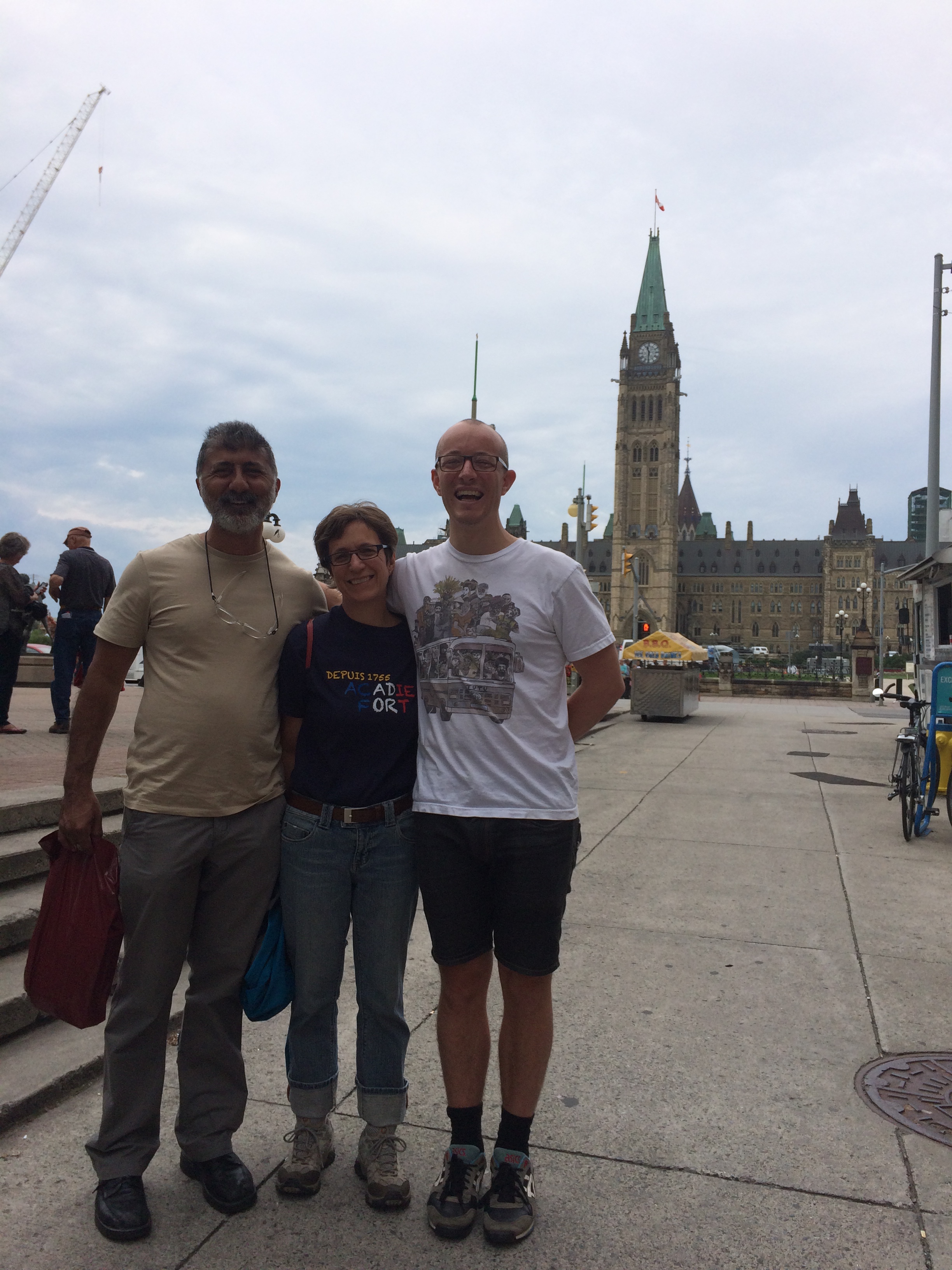
A short tour of Ottawa, Canada by our hosts – CACHC

IMG_3984

Shabir and Chris, Hope you both landed safely. It was a thrill to spend some quality time with both of you. Hope to see you both soon or at least find ways to continue our exchange.

I always come out of these international dialogues pumped as I’m reminded how well surrounded we are by others globally who care about community health and well-being.

Warm regards from sunny Ottawa.

Simone

Centretown CHC

http://www.centretownchc.org/en/home.aspx

South Africa’s growing middle class

South Africa as a relatively young democracy has had a number of challenges to say the least. One of the positives that has however come out of all the turmoil over the past two decades has been the emergence of a fast growing middle class….more

Selection and performance of village health teams (VHTs) in Uganda

I was interested to see this paper in the open access journal Human Resources for Health. It draws attention to the importance of the process for selection of CHWs: ‘Though there is consensus that local communities should be involved in the selection of CHWs, questions have remained on how that selection should be structured.

A review of studies on CHW programmes noted that authors state that CHW were “selected by the community” without showing how this was done. This is problematic if large-scale programmes involving volunteer CHWs are to be sustained in communities. The question that needs to be constantly asked is what is the best way to draw volunteers from a community, without relying on financial incentives?’ Indeed, this suggests a wider question: How to attract and retain CHWs, with or without financial incentives, in a way that maintains and indeed strengthens current links and trust between the CHWs and the communities they serve.

It seems to me that one of the biggest challenges facing scale-up of CHWs and their integration into the formal health system will be: How to integrate CHWs while maintaining their trust, accountability and sense of ownership to and by the communities they serve. I look forward to hear your views.

CITATION: Selection and performance of village health teams (VHTs) in Uganda: lessons from the natural helper model of health promotion

Emmanuei Benon Turinawe, Jude T. Rwemisisi, Laban K. Musinguzi, Marije de Groot, Denis Muhangi, Daniel H. de Vries, David K. Mafigiri, and Robert Pool

Human Resources for Health  (2015) 13:73

http://www.human-resources-health.com/content/pdf/s12960-015-0074-7.pdf

ABSTRACT

Background: Community health worker (CHW) programmes have received much attention since the 1978 Declaration of Alma-Ata, with many initiatives established in developing countries. However, CHW programmes often suffer high attrition once the initial enthusiasm of volunteers wanes. In 2002, Uganda began implementing a national CHW programme called the village health teams (VHTs), but their performance has been poor in many communities. It is argued that poor community involvement in the selection of the CHWs affects their embeddedness in communities and success. The question of how selection can be implemented creatively to sustain CHW programmes has not been sufficiently explored. In this paper, our aim was to examine the process of the introduction of the VHT strategy in one rural community, including the selection of VHT members and how these processes may have influenced their work in relation to the ideals of the natural helper model of health promotion.

Methods: As part of a broader research project, an ethnographic study was carried out in Luwero district. Data collection involved participant observation, 12 focus group discussions (FGDs), 14 in-depth interviews with community members and members of the VHTs and four key informant interviews. Interviews and FGD were recorded, transcribed and coded in NVivo. Emerging themes were further explored and developed using text query searches. Interpretations were confirmed by comparison with findings of other team members.

Results: The VHT selection process created distrust, damaging the programme’s legitimacy. While the Luwero community initially had high expectations of the programme, local leaders selected VHTs in a way that sidelined the majority of the community’s members. Community members questioned the credentials of those who were selected, not seeing the VHTs as those to whom they would go to for help and support. Resentment grew, and as a result, the ways in which the VHTs operated alienated them further from the community. Without the support of the community, the VHTs soon lost morale and stopped their work.

Conclusion: As the natural helper model recommends, in order for CHW programmes to gain and maintain community support, it is necessary to utilize naturally existing informal helping networks by drawing on volunteers already trusted by the people being served. That way, the community will be more inclined to trust the advice of volunteers and offer them support in return, increasing the likelihood of the sustainability of their service in the community.

SELECTED EXTRACTS:

‘The natural helper model (NHM) is based on a simple premise: within every community, an informal helping network already exists. People with problems naturally seek out other people they trust, and interactions are often spontaneous [31]. The NHM taps into and uses this already existing network to disseminate accurate information on health and other social services to the community; since many people are linked to different helping networks simultaneously [32], the dissemination of health messages can be reinforced.’

Let’s build a future where people are no longer dying for lack of healthcare knowledge – Join HIFA: www.hifa2015.org  

Towards health equity: a framework for the application of proportionate universalism

Research

Towards health equity: a framework for the application of proportionate universalism

Gemma Carey, Brad Crammond, Evelyne De Leeuw

International Journal for Equity in Health (2015) 14:81

Published online: 15 September 2015

Abstract / Resumen:

Introduction: The finding that there is a social gradient in health has prompted considerable interest in public health circles. Recent influential works describing health inequities and their causes do not always argue cogently for a policy framework that would drive the most appropriate solutions differentially across the social gradient This paper aims to develop a practice heuristic for proportionate universalism. Methods: Through a review the proposed heuristic integrates evidence from welfare state and policy research, the literature on universal and targeted policy frameworks, and a multi-level governance approach that adopts the principle of subsidiarity. Results: The proposed heuristic provides a more-grained analysis of different policy approaches, integral for operationalizing the concept of proportionate universalism. Conclusion: The proposed framework would allow governments at all levels, social policy developers and bureaucrats, public health professionals and activists to consider the appropriateness of distinctive policy objectives across distinctive population needs within universal welfare state principles.

Keywords / Palabras clave:

Equity in Health; Universal Health Coverage; Health Inequities; Health Planning; Health Research Policy

How to obtain this report / Como obtener este informe: click here.

http://www.equityhealthj.com/content/14/1/81

Visit the Portal/Blog of the PAHO/WHO Equity List & Knowledge network : http://equity.bvsalud.org/

Visite el Sítio/Blog de la Lista de Equidad y Red de Conocimiento: : http://equity.bvsalud.org/es/

For additional information of the Equity List or contributions please contact Mrs. Eliane P. Santos, Advisor, Library and Information Networks ­ KBR/ Pan American Health Organization, RRegional Office of the World Health Organization – pereirae@paho.org

Pan American Health Organization, Regional Office of the World Health Organization for the Americas

Office of the Assistant Director

Area of Knowledge Management, Bioethics and Research (KBR)

http://www.paho.org

__________

People’s Republic of China health system review

People’s Republic of China health system review

The World Health Organization

Health Systems in Transition, Vol. 5 No. 7 2015

Published online: September 2015

Abstract / Resumen:

China has made great achievements in improving health status over the past six decades with a huge population that accounted for about 19% of total world population in 2012. The life expectancy at birth in China has increased from 35 years in 1949 to 75 years in 2012, mainly the result of government commitment to health, provision of cost effective public health programmes, coverage of health financial protection mechanisms, and a basic health care delivery network. China is facing many health challenges amid its demographic and epidemiological transition of rapid economic growth, urbanization and industrialization, population ageing, diseases and risk factors related to lifestyle and environmental pollution. […] Social health insurance schemes, including the rural cooperative medical scheme, urban employee-based health insurance scheme, and urban resident-based health insurance schemes, have reached universal population coverage. These are run by government subsidies and individual contributions and cover both outpatient and inpatient care. Governments provide subsidies for covering essential public health programmes. Access to health care has increased rapidly with the expanded coverage of financial protection mechanisms. Over the past decade, out-of-pocket payments as a proportion of total health expenditures have declined dramatically…

Keywords / Palabras clave:

Health Care Reform; Health System Plans; 4. China. I. Asia Pacific Observatory on Health Systems and Policies.

How to obtain this report / Como obtener este informe: click here.

http://iris.wpro.who.int/bitstream/10665.1/11408/1/9789290617280_eng.pdf

Visit the Portal/Blog of the PAHO/WHO Equity List & Knowledge network : http://equity.bvsalud.org/

Visite el Sítio/Blog de la Lista de Equidad y Red de Conocimiento: : http://equity.bvsalud.org/es/

For additional information of the Equity List or contributions please contact Mrs. Eliane P. Santos, Advisor, Library and Information Networks – KBR/ Pan American Health Organization, Regional Office of the World Health Organization – pereirae@paho.org

Pan American Health Organization, Regional Office of the World Health Organization for the Americas

Office of the Assistant Director

Area of Knowledge Management, Bioethics and Research (KBR)

http://www.paho.org


The full text is freelay available here:

http://iris.wpro.who.int/bitstream/10665.1/11408/1/9789290617280_eng.pdf

‘The management of severe mental patients is one of the essential public health services in China. All diagnosed severe mental health patients who live at home can access information, diagnosis, relevant treatment, and follow-up assessment free of charge from local township hospitals, village clinics and community health centres (or stations).’

‘At the beginning of 1985, China stopped using the term “barefoot doctor”, and started to develop village doctors. By the end of 2012, China had 1.02 million village doctors (Ministry of Health, 2013a).’

‘A GP should first attend five-year undergraduate education in clinical medicine (including traditional Chinese medicine), after which they will receive three-year standardized GP training. GP training and use in China are still in their infancy and there is a severe shortage.’

‘Because of the differences in language and medical education systems, the migration of Chinese health-care professionals to foreign countries is not a significant phenomenon.’

‘China has established a health education system in which the key players are professional health education institutions, PHC and related health institutions, schools, enterprises and government departments. The National Health Education Centre is responsible for providing technical guidance on health education activities and carrying out health education-related research.’

Best wishes, Neil

Let’s build a future where people are no longer dying for lack of healthcare knowledge – Join HIFA: www.hifa2015.org  

100 Health Messages for Children to Learn and Share

Its a pleasure to bring to you our 100 messages for children to learn and share in our 10 priority topics. They have taken two years to create. They are designed for children aged 10-14. We know there are difficult words like ‘contaminated’ and ‘directed’ but we also know that children like difficult words and enjoy learning how to say them and what they mean.

Our messages and other content have already been used to help support the development of health education materials by Save the Children and by the Partnership for Child Development.

We are pasting the messages below plus here is a link to the PDF for anyone who wants to download them.

http://www.childrenforhealth.org/wp-content/uploads/2015/09/The-100-Messages.pdf

Our next step is to find interested experts who can help ensure these are the best and most up to date messages and to help us make changes to the messages as new evidence emerges. If you would like to help us or want to find out more, please get in touch!

We know that a ‘message’ for a child to learn and share is only a starting point. In the projects we help, we see how the messages have become like a doorways for children who use them to start chatting to their families and friends . The messages are the start of a mini investigationCould we do this? Why don’t we do thatt? etc.  

Please use this content as you wish and please let us know how you get on and what you think of it.

Best wishes

Clare Hanbury

100 messages for children to learn and share

MALARIA

  • 1.    Malaria is a disease spread by the bite of an infected mosquito.
  • 2.    Malaria is dangerous. It causes fever & can kill, especially children & pregnant women.
  • 3.    Prevent malaria by sleeping under insecticide treated bed nets that kill mosquitoes & stop them biting
  • 4.    Malaria mosquitoes often bite between sunset & sunrise.
  • 5.    When children get malaria they may grow and develop more slowly.
  • 6.    There are three types of insecticide spraying to kill malaria mosquitos: in houses, in the air & onto water.
  • 7.    The signs for malaria are high fever, headaches, muscle & stomach aches & chills. Rapid tests and treatment saves lives.
  • 8.    Malaria can be prevented & treated with medicine as directed by a health worker.
  • 9.    Malaria lives in an infected person’s blood and can cause anaemia that makes us tired and weak.
  • 10.    Anti-­-malaria pills prevent or reduce malaria and anaemia in places and at times when there is lots of malaria in a community.

DIARRHOEA

  • 1.    Diarrhoea is watery poo that happens three or more times a day.
  • 2.    Diarrhoea is caused by germs getting into the mouth from contaminated food, drink or touching the mouth with dirty fingers or using dirty spoons or cups
  • 3.    The loss of water and salts makes the body weak. Unless these are replaced, diarrhoea can kill young children quickly from dehydration.
  • 4.    Diarrhoea can be prevented by giving extra safe drinks like safe water or coconut or rice water. Babies need breast milk most of all.
  • 5.    A child with diarrhoea may have a dry mouth and tongue, sunken eyes, no tears, loose skin, cool hands and feet and in babies a sunken soft spot on the head.
  • 6.    Children doing more than 5 watery poos/day or bloody poo or who start to vomit too, MUST be seen by a health worker.
  • 7.    ORS stands for ‘Oral Rehydration Solution’. Find ORS at clinics & shops. Mix it right with clean safe water to make the best drink for diarrhoea.
  • 8.    Most medicines do not work but zinc pills stop diarrhoea sooner for children over 6 months. ORS and other drinks MUST be given as well.
  • 9.    Young children with diarrhoea need tasty, mashed food as often as possible to make their body stronger.
  • 10.    Diarrhoea can be prevented by breastfeeding babies, good hygiene habits, immunisation (especially against rotavirus and measles) and by making sure food is safe.

NUTRITION

  • 1.    Food that makes us GO plus food that makes us GROW, plus food that makes us GLOW is GOOD food that makes the body strong!
  • 2.    Malnutrition happens if we eat too little, or eat too much junk food. Avoid it by sitting & sharing the right amount of good food at meals.
  • 3.    Children under 2 years need to be weighed each month at an under 5’s clinic to check that they’re growing well.
  • 4.    If children become thin or swollen in the face or feet or too quiet, they need to see a health worker.
  • 5.    When children are ill they may lose appetite. Give them lots to drink and soup & more food than normal when getting better.
  • 6.    Breast milk is the only food and drink a baby needs from birth to 6 months. It has Go, Grow & Glow!
  • 7.    After  6  months  babies  need  breast  milk  +  mashed  or  ground  family food 3-­-4 times a day + 1 snack between each meal.
  • 8.    Eating natural foods of different colours every week is the best way to have a healthy balanced diet
  • 9.    Red, yellow and green fruits and vegetables are full of ‘micronutrients’  too small to see, but they make our bodies strong.
  • 10.&    Prevent sickness & sadness by washing food we eat & cook. Use cooked food quickly or store it properly.

COUGHS AND COLDS AND MORE SERIOUS ILLNESSES

  • 1.    Smoke from cooking fires has tiny bits in it that can go into the lungs and cause illness. Avoid smoke by cooking outside or where fresh air comes in and smoke escapes.
  • 2.    Smoking tobacco makes lungs weak. Breathing smoke from other people smoking is also harmful.
  • 3.    Everyone gets coughs and colds. Most get better quickly. If a cough or colds last more than 3 weeks, visit a health worker.
  • 4.    There are types of germs called bacteria and others called viruses. Viruses cause most coughs and colds and cant be killed using medicine.
  • 5.    Lungs are the part of the body that breathes. Coughs or cold make lungs weak. Pneumonia is a bacteria germ that causes serious illness in weak lungs.
  • 6.    A sign of pneumonia (a serious illness) is fast breathing. Listen to the breath. Watch the chest going up and down. Other signs are fever, sickness & chest pain.
  • 7.    Fast breathing is 40-­-50 or 60 breaths a minute or more (depending on a child’s age). A child breathing FAST must go to a health worker FAST!
  • 8.    A good diet (and breastfeeding babies) a smoke-­-free home and immunisation helps prevent serious illness like pneumonia.
  • 9.    Treat a cough or cold by keeping warm, drinking tasty drinks often (like soup and juice), resting and keeping the nose clean.
  • 10.    Stop coughs, colds and other illnesses spreading from one to another. Keep hands, eating and drinking utensils clean and cough into paper.

CARING FOR BABIES AND YOUNG CHILDREN

  • 1.    Play games, cuddle, talk, show, laugh and sing to babies and young children as much as you can.
  • 2.    Babies and young children become angry, afraid and tearful easily & can’t explain their feelings. Always be kind.
  • 3.    Young children learn fast: how to walk, make sounds, eat and drink. Help them but let them make safe mistakes too!
  • 4.    All girls and all boys, are as important as each other. Treat everyone well especially children who are sick or who have disabilities.
  • 5.    Young children copy the actions of those around them. Look after yourself, behave well near them & show them good ways.
  • 6.    When young children cry, there’s a reason (hunger, fear, pain). Try to find out why.
  • 7.    Help prepare young children for learning at school by playing number and word games, painting or drawing, Tell them stories, sing songs and dance.
  • 8.    In a group, watch and record in a notebook how a baby grows into a toddler and when they do important ‘firsts’ like speak, walk & talk.
  • 9.    Help prevent diseases by helping adult carers and older children check that babies & young children are clean (especially hands and faces), drink safe water & eat enough good food.
  • 10.    Give loving care to babies & young children but don’t forget about yourself. You are important too!

INTESTINAL WORMS

  • 1.    Millions of children have worms living inside their body, in a part called ‘the intestines’ . This is where the food we eat is used by our body.
  • 2.    Different kinds of worms can live in our bodies like roundworm, whipworm, hookworm and bilharzia (schistosomiasis). There are others too!
  • 3.    Worms can make us feel ill or weak. They can cause stomach-­-aches coughs, fever and sickness.
  • 4.    Worms live inside your body so you might not know they are there but sometime you can see worms in your poo.
  • 5.    Worms and their eggs get in to our bodies in different ways: some get in from food or drink like unsafe water. Others get in through bare feet.
  • 6.    Killing worms with ‘de-­-worming’ treatment is easy and cheap. It’s given by health workers every 6 or 12 months or more for some worms.
  • 7.    Worm eggs live in pee and poo. Use latrines or get rid of pee and poo safely. Wash your hands with soap after you pee or poo, and if you help someone younger so worm eggs don’t get on your hands.
  • 8.    Stop worms getting into your body by washing hands with soap after a pee or poo, washing fruit and vegetables, before preparing food,  eating or drinking and by wearing shoes.*
  • 9.    Some worms live in the soil so always wash your hands with soap after touching soil.
  • 10.    When watering plants to eat, make sure you use water that does not have human pee or poo in it.

WATER SANITATION AND HYGIENE

  • 1.    To wash hands properly: use water & a little soap. Rub for 10 seconds, rinse & air-­-dry or dry with a clean cloth/paper, not on dirty clothes.
  • 2.    Wash your hands properly before touching the T-­-zone on your face (eyes, nose and mouth) as this is where germs enter the body. Avoid touching the T-­-zone when you can.
  • 3.    Wash your hands BEFORE preparing food, eating or giving food to babies, AFTER pee or poo or cleaning baby or helping someone who is ill.
  • 4.    Keep your body and clothes fresh & clean. Keep your nails & toes, teeth & ears, face & hair CLEAN. Shoes/flip-­-flops protect against worms.
  • 5.    Keep human & animal poo & pee away from flies that spread germs. Use latrines & afterwards, wash your hands
  • 6.    Keep your face fresh and clean. Wash well with a little clean water and soap morning and evening, plus if flies buzz near sticky eyes.
  • 7.    Don’t touch clean, safe water with dirty hands or cups. Keep it safe & free from germs.
  • 8.    Sunlight makes water safer. Filter it into a plastic bottles & leave for 6 hours until it’s safer to drink.
  • 9.    When you can, use the sun to dry & destroy germs on plates & utensils after washing.
  • 10.    Kill or reduce flies by keeping the home & community free from rubbish & dirt. Store rubbish safely until it’s collected, burned or buried.

IMMUNISATION

  • 1.    Millions of parents all over the world every year make sure their children grow strong and protected from diseases by taking them for immunization.
  • 2.    When you are ill with an infectious disease, a tiny, invisible germ has entered your body. The germ makes more germs and stops your body working well.
  • 3.    Your body has special soldier-­-like protectors called ‘antibodies’ to fight germs. When germs are killed, antibodies stay in your body ready to fight more again.
  • 4.    Immunisation puts an ‘antigen’ into your body (by injection or by mouth). They teach your body to make the solider-­-like antibodies to fight a disease.
  • 5.    Some immunisations have to be given more than once to help your body build up enough antibodies to protect against a disease.
  • 6.    Horrible diseases that cause death and suffering like measles, tuberculosis, diphtheria, whooping cough, polio, and tetanus (and more!) can be prevented by immunisation.
  • 7.    To protect your body you need to be immunised before the disease strikes.
  • 8.    To protect children right away immunisations are given to babies. If a baby missed their chance they can be immunised later.
  • 9.    Children can immunised at different times for different diseases. Find out when and where your community immunises children.
  • 10.    If babies or young children are a little unwell on the day of immunisation they can still be immunised.

HIV AND AIDS

  • 1.    Our body is amazing and every day there are special ways it protects us from getting diseases from the germs we breathe, eat, drink or touch.
  • 2.    HIV is a germ called a VIRUS (the V is for VIRUS). It is an especially DANGEROUS virus that stops our body protecting itself well from other germs.
  • 3.    Scientists have created medicines that stop the HIV from being dangerous but no one has found a way to remove it from the body completely.
  • 4.    After time and without medicine, people with HIV develop AIDS. AIDS is a group of serious illnesses which make the body weaker and weaker.
  • 5.    HIV is invisible and lives in blood and other liquids in the body that are made during sex. HIV can be passed 1. During sex 2. From infected mothers to babies and 3. In blood.
  • 6.    People protect themselves from getting HIV from sex by 1. Not having sex 2. Being in a faithful relationship when both people know they do not have HIV or 3. By having sex using condoms (protected sex).
  • 7.    You can play, share food, drink, hold hands and hug people with HIV and AIDS. It is safe and you will not catch HIV this way.
  • 8.    People with HIV and AIDS sometime feel afraid and sad. Like everyone, they need love and support and so do their families. They need to talk about their worries.
  • 9.    To help themselves and others, people who think they may have HIV or AIDS must go to a clinic or hospital for testing and counselling.
  • 10.    In many countries, people that have HIV get help and treatment. A medicine called ‘Anti Retroviral Therapy’ (ART) helps them live long lives.

ACCIDENTS

  • 1.    Cooking areas are dangerous for young children. Keep them away from fire and from sharp or heavy objects.
  • 2.    Children need to keep away from breathing smoke from fires. It causes illness and coughing.
  • 3.    Anything poisonous must be kept out of the reach of children. Don’t put poisons in empty soft drink bottles.
  • 4.    If a child is burned, put cold water on the burn immediately until the pain lessens (10 minutes or more).
  • 5.    Vehicles and bicycles kill and injure children every day. Be aware of all vehicles & show others how to be safe too.
  • 6.    Look out for dangers for young children like knives, glass, electric plugs, wire, nails, pins etc.
  • 7.    Stop young children eating dirt or putting small things into or near their mouths (e.g. coins, buttons) as these can block breathing.
  • 8.    Stop young children playing near to water where they may fall in (rivers, lakes, ponds, wells).
  • 9.    Create a first aid kit for home or school (soap, scissors, disinfectant & antiseptic cream, cotton wool, thermometer, bandages/plasters & ORS).
  • 10.    When you go somewhere new with a young child, be aware! Look and ask about the dangers for young children.