Wits University and the Gauteng Department of Health have committed to greater co-operation to address health care challenges in the province. Qedani Mahlangu, MEC for Health and Wits Vice-Chancellor Professor Adam Habib signed a memorandum of understanding (MOU) on Tuesday, 10 May 2016. At the signing, Habib praised the manner in which the national government and the Gauteng and Limpopo provincial governments worked with Wits to deal with the recent tragedy in which the seven students from the University loss their lives, and believes this collaboration could mean great things for Gauteng residents. The VC noted that the injured students involved in the tragedy were transported to the Charlotte Maxeke Johannesburg Academic Hospital within 24 hours and had access to specialist services because government “came together in an incredible way.” – See more at: http://www.wits.ac.za/news/latest-news/general-news/2016/2016-05/gp-health-department-and-wits-sign-mou.html#sthash.iZXBO57t.dpuf
Author Archives: Shabir Moosa
Is Rwanda Africa’s answer to Switzerland?
MORE than two decades on from a genocide that claimed 800,000 lives, Rwanda is taking another step towards looking like the closest thing Africa has to Switzerland. The tiny, landlocked, mountainous nation’s economy has outperformed almost all its continental peers, with annual growth averaging 7.8% since 2000. Like Switzerland, which hosts the World Economic Forum (WEF) in Davos every year, it is also about to welcome delegates to the organisation’s annual African gathering. “Nurturing an attractive business environment has become more important for many African nations to sustain growth, as commodity revenue and aid inflows have fallen,” Mark Bohlund, Africa economist with Bloomberg Intelligence in London, said. “Rwanda has led the way by cutting red tape, providing tax incentives and improving governance, which has helped overcome the disadvantages of its small size, lack of port access and limited natural resources.”
However, the Swiss parallel of Rwanda’s economic success story, furthered with a ranking by the World Bank as mainland Africa’s easiest place to do business, does not extend to its reputation for upholding democracy. Civil-rights groups accuse the government of stifling opposition and have criticised a constitutional change that will allow President Paul Kagame, who has been in power since 2000 and taken credit for Rwanda’s economic success, to stand for a third term…..more
SA to adopt WHO’s ‘test and treat’ HIV guidelines
SA WILL adopt the World Health Organisation’s new “test and treat” guidelines for HIV patients in September, enabling people to start treatment as soon as they are diagnosed instead of having to wait until their immune systems weaken, Health Minister Aaron Motsoaledi announced on Tuesday. Current guidelines say patients should wait until their CD4 count, which measures the strength of the immune system, falls below 500 cells per mm³ and that pregnant HIV-positive women should start lifelong treatment . The government also plans to start providing sex workers with preventative treatment, known as pre-exposure prophylaxis, in June, said the minister. While at first sight the WHO’s guidelines might suggest that the country is destined to double the number of patients taking antiretrovirals, government officials and independent experts have previously told Business Day that a massive surge in demand is unlikely. Previous policy changes have not triggered large spikes in the numbers of those receiving treatment, and the numbers on treatment are expected to continue to rise steadily…..more
Kenya’s Health Workforce Looks to Technology for Training in Family Planning
‘Capitalizing on the spread of mobile phones and the growing capability of mobile technology, K4Health is implementing a program in Kitui, Kenya, to support refresher family planning training for students and health workers…
‘K4Health has a large repository of global family planning and reproductive health technical content, including eLearning courses, toolkits, journal articles, and more. For the past year and a half we’ve been looking into ways to adapt our global content to platforms that can reach health program managers and health providers that have limited access to our online content. One popular solution we found is Interactive Voice Response (IVR), which allows content to be sent as an audio recording via a phone call to a user’s mobile phone.
‘The training we designed is based on the Spaced Education learning methodology, which requires participants to answer 20 questions on family planning methods and counseling correctly twice in a row…
‘Janet Muli, a Diploma in Nursing student in her second year, told us, “I liked the mobile learning because, one thing, it is not expensive. You only send a request that you are ready to answer. They call you, they give you an explanation of a certain question. They are using simple language to explain to you. Even you can call at anytime when you’re free. You’re not limited in time. That’s the good thing about the Family Planning Counseling [training].”…
‘Perhaps one of the most interesting findings was that mobile phones are the most popular way of accessing information online. Both students and staff at the nearby hospital talked about using their phones to search the Internet, which they found preferable to using a computer. Phones are cheaper and easier to carry and charge than a laptop.
‘One key finding was that participants wanted to learn how to better search for information online. “I want to know where to go to find accurate, up-to-date information on family planning,” said one participant. “Such as what is supported by the WHO or not. I just Google and don’t know if what turns up is correct.” […]’
—
Let’s build a future where people are no longer dying for lack of healthcare knowledge – Join HIFA: www.hifa2015.org
Distributing clean needles to curb the spread of HIV
The Step Up Project runs needle exchange programmes with injecting drug users in Cape Town, Durban and Tshwane. Injecting drug users often use the same dirty needles for months on end or resort to sharing needles with others in order to get their fix. This contributes to the rapid transmission of diseases like HIV and Hepatitis C. It is estimated that there are currently over 60 000 injecting drug users in the country. The HIV prevalence among this group in South Africa is about 19 percent – almost twice the national average……more
Policy guidelines: 72-hour Assessment of Involuntary Mental Healthcare Users
These 18-page guidelines list facility requirements for holding mental health patients for 72-hour involuntary assessments as well relevant procedure and guidelines for clinicians. Released in 2012, the guidelines note involuntary admission and treatment of people living with mental illness, such as that involved in 72-hour in-patient assessments, remain controversial as they impinge on personal liberty and the right to choose. They also carry the risk of abuse. Thus, guidelines stress that any person or establishment providing care, treatment and rehabilitation services to a person living with mental illness without consent must follow procedures set out in the Mental Health Care Act….more
‘We can do better,’ doctor tells health market inquiry
In South Africa’s two-tiered healthcare system, no one wins, testify doctors as the Competition Commission Inquiry into Private Healthcare resumes, writes Section27. The Competition Commission’s Market Inquiry into the Private Health Care Sector resumed public hearings in Pretoria yesterday after extending the period of public hearings. The South African Nursing Council, the Office of Health Standards Compliance, Medscheme and theFree State Department of Health are some of the stakeholders that are expected to make oral submissions to the inquiry during the next three weeks. …more
Staff shortages, poor leadership cripple healthcare
There is a human resource crisis in healthcare that is driven partly by government tolerance of incompetent staff, according to Health Systems Trust’s South African Health Review 2016. You are least likely to see a dentist or a doctor in the North West’s public sector health facilities, which has the lowest rates of both in the country. While there is a dire shortage of dentists in the public sector with around 1,100 practicing throughout South Africa, the situation is worst in North West where there is only one dentist for every 50 000 people….more
Report: Saving Mothers 2011 – 2013
The sixth edition of the report on maternal deaths includes 4,452 maternal deaths logged into the national database for the period between 2011 and 2014. The report notes a decrease in maternal deaths due mainly to a decrease in deaths due to non-pregnancy related infections such as HIV and tuberculosis.
While these kinds of infections still rank among the top five causes of maternal deaths, the percentage of deaths attributed to infections like HIV has fallen by about 25 percent in the last eight years. Authors attribute this decrease to increasing numbers of women accepting the offer of HIV testing and earlier HIV treatment….more
Dlamini hits back at Public Protector
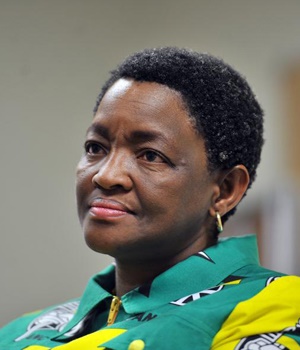 The Public Protector today was criticised for getting “too personal” following her latest report on food parcels. Minister of Social Development Bathabile Dlamini said in Parliament today that Thuli Madonsela got personal in her report. “I was not even part of the event she is talking about. The report sounds very personal and I do not take kindly to that, because if you do your work, it must be based on principles not individuals.” Yesterday, Madonsela released a report on the separation between state and political parties. In the report she found that the distribution of food parcels in 2009 by Julius Malema, who was the leader of the ANC Youth League at the time, was contrary to the Constitution and an abuse of state resources…..more
WONCA 2016 global five star doctor Dr Atai Omoruto passes on
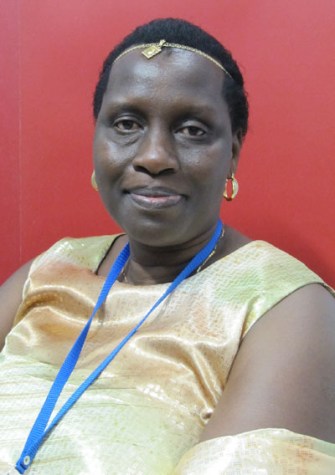 The winner of the WONCA Global Five Star Doctor Award for 2016 is Dr Atai Anne Deborah Omoruto from Uganda, known to all as Atai. I am sad to advise that Atai passed away in Kampala on May 5, 2016 after a short illness. For this reason, we have brought forward the announcement of our Five Star Family Doctor Award for 2016. The Five Star Doctor Award is WONCA’s award of Excellence in Health Care by a family doctor. The Five Star Doctor must demonstrate excellence as a care provider, decision maker, communicator, community leader and team member….see more from WONCA President
The Solution to Millennial College Dropouts? More High-School Seniors Should Follow Malia Obama and Take a Gap Year
Sunday’s announcement from the White House that Malia Obama would take a gap year before starting at Harvard University in the fall of 2017 drew swift reactions on social media—a mix of support, ridicule for delaying adulthood, and some envy that the idea of taking a break before college is too often reserved for the wealthy. But more high school students should be following Malia’s lead and getting off the conveyor belt that leads them to follow the well-plotted and well-trod course to college simply because they don’t know what else to do with their lives three months after they leave high school…..more
Global strategy on human resources for health: Workforce 2030
In May 2014, the Sixty-seventh World Health Assembly adopted resolution WHA67.24 on Follow-up of the Recife Political Declaration on Human Resources for Health: renewed commitments towards universal health coverage. In paragraph 4(2) of that resolution, Member States requested the Director-General of the World Health Organization (WHO) to develop and submit a new global strategy for human resources for health (HRH) for consideration by the Sixty-ninth World Health Assembly.
Development of the draft Global Strategy was informed by a process launched in late 2013 by Member States and constituencies represented on the Board of the Global Health Workforce Alliance, a hosted partnership within WHO. Over 200 experts from all WHO regions contributed to consolidating the evidence around a comprehensive health labour market framework for universal health coverage (UHC). A synthesis paper was published in February 2015(1) and informed the initial version of the draft Global Strategy.
An extensive consultation process on the draft version was launched in March 2015. This resulted in inputs from Member States and relevant constituencies such as civil society and health care professional associations. The process also benefited from discussions in the WHO regional committees, technical consultations, online forums and a briefing session to Member States’ permanent missions to the United Nations (UN) in Geneva. Feedback and guidance from the consultation process are reflected in the draft Global Strategy, which was also aligned with, and informed by the draft framework on integrated peoplecentred health services.(2)
The Global Strategy on Human Resources for Health: Workforce 2030 is primarily aimed at planners and policy-makers of WHO Member States, but its contents are of value to all relevant stakeholders in the health workforce area, including public and private sector employers, professional associations, education and training institutions, labour unions, bilateral and multilateral development partners, international organizations, and civil society.
Throughout this document, it is recognized that the concept of universal health coverage may have different connotations in countries and regions of the world. In particular, in the WHO Regional Office for the Americas, universal health coverage is part of the broader concept of universal access to health care. …more
Lack of private GP buy-in is the Achilles heel of NHI
AFTER three years of laying the groundwork for the introduction of National Health Insurance (NHI), Health Minister Aaron Motsoaledi has run into a major stumbling block: the private-sector general practitioners (GPs), whose services will be essential to scale up the provision of health services at public facilities, simply do not want to work in his clinics. Fewer than 200 of the 8,000 GPs working in private practice have agreed to work in public clinics since the NHI pilot programme was launched in 11 of SA’s 53 health districts in April 2012, despite a national roadshow by Motsoaledi to talk up the benefits of the project. While more GPs have shown a willingness to work for the state in their own consulting rooms, the Department of Health has balked at the prospect, fearing it will not be able to exercise proper oversight…..more
Nursing Educom – meeting the Health information need of Nurses and Midwives working in Low and Middle income Countries
The link below is a project I have entered for the Connecting-nurses care-challenge innovation platform. This project aims to help improve the Health information need of nurses and midwives working in both rural and urban areas. I hope you take time to read and react to this project either by liking it and commenting on it through the link below. I also hope to work with HIFA in developing this project if it gets selected at any stage. Below is a brief of the project:
Goal: Nursing Educom is a web/mobile based platform which will provide care information to nurses
Problem: Nurses and midwives working in low and middle income countries especially in the communities have limited knowledge on how to save life and perform some life saving procedures in simple emergency situation. This causes unnecessary deaths and complications in the line of duty. The lack of quick and guaranteed care information lab or information database where nurses and midwives can easily access information in line of duty as well as update their knowledge in the current practices tends to be very low. 3 in 5 nurses working in communities and rural setting in Nigeria do not have the basic life saving know, do not have money for continuous continuing education, cannot afford seminars and conference fees and hence cannot upgrade their care knowledge. This is a major contributor to the outcome of patients care as well as patients experiences while receiving nursing care. The information need for nurses and midwives in Nigeria and Africa is at a very low rate, hence the need to provide them with access to health information. 80% of nurses working in Low and Middle income Countries find it difficult to pass information to the patient during and after treatment and do not engage their patient during treatment because of lack of knowledge, they do not know what to inform the patient even if the patient requests for the information, this creates a gap in the care and reduce the nurse-patient relationship to near zero. There is no dedicated platform for nurses to freely access research information, nursing practical demonstrations, new treatment guidelines and reference information when the need arises.
Nursing Educom… at: http://care-challenge.com/ideas/nursing-educom
Regards
Ralueke Ekezie
Establishing learning health systems in Africa and a better way to publish science
F1000Research
PeerJ (https://peerj.com/)
Cureus (http://www.cureus.com/)
The advantage of Cureus is that it is absolutely free although their peer review system is probably not as rigorous as F1000Research
SciDev.Net: Dispel rumours to fix immunisation’s image problems
Below are extracts from a news article on SciDev.Net
http://www.scidev.net/global/health/editorials/immunisation-vaccine-health-problems.html
—
Dispel rumours to fix immunisation’s image problems
Inga Vesper
Vaccine programmes can trigger fears of conspiracies and oppression. It’s time they got more collaborative…
“Each individual case of vaccine reluctance needs its own individual response — be it an explanatory website or a conjoined international diplomatic effort.”
“Some people think it’s sterilisation, or that we are infecting people with HIV/AIDs,” an MSF nurse working in the camp told SciDev.Net. “They say it’s the government’s way of controlling the refugees.”…
Fear of vaccination is one example of difficulties that arise when modern healthcare meets customs, beliefs, experiences and traditions — and it is not limited to the developing world, as the case of the MMR vaccine and fear of autism has shown…
In the 1990s, scientists recruited Zimbabweans for HIV/AIDS research without properly informing them of the risks, and many participants became infected with HIV/AIDS. Up until the 1980s, forced sexual reassignment surgery was conducted on homosexual black people in South Africa as part of medical experiments.
So, it is no wonder that modern vaccination programmes are regarded with suspicion in many parts of the world. But the health implications of such misperception are evident.
In Nigeria, a polio vaccine was widely boycotted in 2003 because local officials so mistrusted the government they believed rumours that the vaccine spread cancer.
What this suggests is that international health organisations and national health authorities are struggling to adapt their vaccine campaigns to address lingering concerns and meet cultural expectations. The problem of immunisation reluctance is widely known, yet few health authorities are making concerted efforts about it.
This is because the issue goes beyond merely providing better information. According to Unicef, people resist vaccines for many reasons. Culture and belief play a part, as does history. And sometimes it’s about how the vaccine is delivered. During polio vaccinations in India, for example, people from Uttar Pradesh did not want doctors from New Delhi to do the vaccinations for fear there would be no one to turn to in case of complications…
Modern media and communication technologies can play a part in dispelling myths about vaccines. Health providers need to team up with local opinion-shapers, such as religious and community leaders, education authorities and even celebrities, to dispel rumours and encourage people to get vaccinated.
One success story is the tetanus vaccine programme in Kenya. Shortly after its launch in 1994, the programme attracted misleading news reports stating that the vaccine’s ingredients were sterilising women. In this case, the World Health Organization teamed up with the Vatican to reassure local faith leaders and spread the message on the vaccine’s benefits.
—
Let’s build a future where people are no longer dying for lack of healthcare knowledge – Join HIFA: www.hifa2015.org
Using Twitter to drive research impact: A discussion of strategies, opportunities and challenges
Below are the citation and abstract of a new paper on the use of Twitter to drive research impact.
You can follow the HIFA Twitter feed here: @hifa_org (and the HIFA Facebook page here: facebook.com/HIFAdotORG )
With thanks to HIFA Twitter coordinator Jules Storr (and HIFA Facebook coordinator Tara Ballav Adhikari)
CITATION: International Journal of Nursing Studies
Volume 59, July 2016, Pages 15–26
Using Twitter to drive research impact: A discussion of strategies, opportunities and challenges
Katy Schnitzler, Nigel Davies, Fiona Ross, Ruth Harris
doi:10.1016/j.ijnurstu.2016.02.004
ABSTRACT:
Researchers have always recognised the importance of disseminating the findings of their work, however, recently the need to proactively plan and drive the impact of those findings on the wider society has become a necessity. Firstly, this is because funders require evidence of return from investment and secondly and crucially because national research assessments are becoming powerful determinants of future funding. In research studies associated with nursing, impact needs to be demonstrated by showing the effect on a range of stakeholders including service users, patients, carers, the nursing workforce and commissioners. Engaging these groups is a well-known challenge influenced by lack of access to academic journals, lack of time to read long complex research papers and lack of opportunities to interact directly with the researchers. This needs to be addressed urgently to enable nursing research to increase the impact that it has on health delivery and the work of clinical practitioners. Social media is potentially a novel way of enabling research teams to both communicate about research as studies progress and to disseminate findings and research funders are increasingly using it to publicise information about research programmes and studies they fund. A search of the healthcare literature reveals that advice and guidance on the use of social media for research studies is not well understood or exploited by the research community. This paper, therefore, explores how using social networking platforms, notably Twitter offers potential new ways for communicating research findings, accessing diverse and traditionally hard-to-reach audiences, knowledge exchange at an exponential rate, and enabling new means of capturing and demonstrating research impact. The paper discusses approaches to initiate the setup of social networking platforms in research projects and considers the practical challenges of using Twitter in nursing and healthcare research. The discussion is illuminated with examples from our current research. In summary, we suggest that the use of social media micro-blogging platforms is a contemporary, fast, easy and cost effective way to augment existing ways of disseminating research which helps drive impact.
What is already known about the topic?
– Demonstrating impact of research is an increasing requirement of universities, funding bodies and governments in higher income countries, a trend which almost certainly will spread internationally.
– The use of social networking sites is expanding communication and networking in business and increasingly used in health and nursing communities.
– The use of social networking/micro-blogging platforms such as Twitter™ and Facebook™ by researchers as part of strategies to engage wider audiences are not well developed.
What this paper adds
– Comprehensive review and discussion of how micro-blogging platforms can be used to support dissemination and potentially increase the spread and impact of research.
– A scholarly discussion of how social networking sites can contribute to proactively engaging with multiple audiences to facilitate research impact.
– A detailed practical guide for researchers to enable them to consider how social networking platforms can support their research and its ongoing impact.
Best wishes, Neil
Let’s build a future where people are no longer dying for lack of healthcare knowledge – Join HIFA: www.hifa2015.org
New free e-learning course on Personalised Medicine
This course has been developed by ecancer in conjunction with the ‘Personalised Medicine’ project, co-funded under the European Community’s 7th Framework Programme, aimed at developing new tools, IT infrastructure and VPH models to accelerate personalised medicine for the benefit of the patient.
The course consists of 12 separate modules which contain explanations of a number of topics including molecular profiling, molecular imaging, personalised treatments, tailored surgery, cognitive psychology and pharmacogenomics, and is aimed at Healthcare professionals and researchers wanting to expand their knowledge of Personalised Medicine.
The modules are all free to take and can be accessed here http://ecancer.org/education/course/9-personalised-medicine.php
HIFA profile: Katie Foxall is Head of Publishing at eCancer, Bristol, UK. katie AT ecancer.org
Exploring the role of communication in community health in Sierra Leone
Below are extracts from an important new report from BBC Media Action, by Annabelle Wittels…
The full report [1.5 Mb] is available here: http://downloads.bbc.co.uk/rmhttp/mediaaction/pdf/research/communication-in-community-health-report.pdf
—
BBC Media Action, the BBC’s international development charity, uses the power of media and communication to support people to shape their own lives. Working with broadcasters, governments, other organisations and donors, we provide information and stimulate positive change in the areas of governance, health, resilience and humanitarian response.
Giving communities access to reliable and actionable health information is particularly valuable in countries where there are exceptionally few health professionals, for example Sierra Leone…
As part of the efforts to rebuild and strengthen health systems in Sierra Leone, BBC Media Action conducted two studies in late 2015 to explore the role that media and communication can play in improving health outcomes across communities. This report presents the insights gained about people’s access to health information, decision-making processes and communication networks. Previous BBC Media Action research has revealed that the most effective health communication is two-way, involving audience feedback, discussion and use of information. BBC Media Action therefore extended the research focus to explore the health-seeking and information-seeking behaviour of participants.
This report draws on two studies: first, a nationally representative quantitative survey, and, second, a qualitative study across three locations in Sierra Leone. Data for the nationally representative quantitative survey was collected between October and mid-November 2015 across the country’s 14 districts. In total, 2,500 Sierra Leoneans were interviewed for the quantitative survey. The qualitative study had a strong focus on rural communities as these tend to have worse access to health centres and to be less wealthy and less educated than urban populations – factors that are associated with more negative health outcomes. Focus group discussions (FGDs) and in-depth interviews (IDIs) were conducted in rural Port Loko, rural Kenema, Western Area Rural and Western Area Urban.
The main research findings are:
Radio and mobile phones are the media platforms that can reach the most people…
People are accessing health information. Ninety-five per cent of research participants reported accessing health information in the previous three months – 93% receiving information about Ebola and 43% receiving information about pneumonia.
There is a strong interest in health information in Sierra Leone. Eighty-six per cent of Sierra Leoneans want to receive more information on health for themselves and their families.
People are interested in receiving information on a range of health issues…
The qualitative research revealed a number of factors that explain why people do not seek formal health providers or health information. These are:
– Seriousness of health issue. If there is a perception that a health issue is not acutely life-threatening, people are less likely to seek information about it…
– Previous experience. If the individual or their family has personal experiences of informal healthcare that are better than their experiences of formal healthcare, they prefer to rely on informal services before consulting formal healthcare providers.
– Prioritise the health of their children. Parents are more inclined to seek healthcare information when their children are ill. However, Sierra Leoneans are less likely to seek information for illnesses perceived as non-urgent.
– Preference for traditional healers for some illnesses. When illnesses are believed to have a spiritual source, people initially seek help from traditional healers…
– Costs of healthcare…
– Distance to the trusted healthcare provider. With only 900 qualified health professional in the country since the Ebola crisis, formal healthcare services are not available in every community…
Nonetheless, there are opportunities to encourage Sierra Leoneans to seek and engage more with health information:
– Face-to-face communication is most trusted. People prefer face-to-face communication, which gives them time to ask questions and allows communicators to reassure themselves that information has not been misunderstood.
– Community health workers (CHWs) have the potential to reach people with face-to-face information.
– Mobile phones are used by the majority of the population… only 25% of Sierra Leoneans indicated that they would pay for health information delivered via mobile phones.
Communicators of health information such as international or national non-governmental organisations (INGOs or NGOs), health practitioners and the Sierra Leonean government can draw on these insights to guide their future interventions in the following ways:
– CHWs are well placed to provide face-to-face communication. This study and other research5 show that Sierra Leoneans prefer face-to-face and interpersonal communication, but CHWs often rely on simple one-way models of communication. They could profit from support through training and tools. Such efforts should first help CHWs to fashion their communication in a way that encourages greater dialogue and exchange. Second, the training could address the demand for more in-depth information. Training and tools for CHWs should build confidence in providing information with greater depth and breadth.
– High levels of trust for nurses and doctors could be built on to maximise the credibility of health communication…
– Radio and mobile phones, the two media with the highest access and ownership figures across Sierra Leone, appear best positioned to provide health information. Other research suggests that if mobility is compromised, as it was during the Ebola crisis, people prefer to receive information by radio.
– When using mobile phones, information that can be delivered via basic phones and is voice-based, not requiring reading skills, is more likely to reach across different strata of Sierra Leonean society.
– Although two-way communication might be easier to achieve when face-to-face, mass media in Sierra Leone should build on experiences of communication during the Ebola crisis, which illustrated that bottom-up communication facilitates positive behaviour change.
Communication efforts should equip communities with actionable information. The findings from this study suggest that communities are more likely to implement health information if it is easy, cheap and quick to implement. This is especially important in the context of preventative care, within which community members show less proactive behaviours. Providing actionable information could help communities to overcome barriers to engage and act upon health knowledge.
—
Best wishes, Neil
Let’s build a future where people are no longer dying for lack of healthcare knowledge – Join HIFA: www.hifa2015.org
 AfroPHC