WHO Sierra Leone is managing the recruitment of a new leader for Sierra Leone’s medical school. I’ve copied and pasted some background on the institution and our support below. The job vacancy is available now on e-recruit here: https://erecruit.who.int/public/hrd-cl-vac-view.asp?o_c=1000&jobinfo_uid_c=33550&vaclng=en. Might you be able to pass this on to relevant and interested colleagues? We are looking forward to recruiting an excellent candidate.
Robert Marten
Technical Officer
Health Systems Strengthening
World Health Organization, Sierra Leone
E-mail: martenr@who.int
Mobile: + 232 (0) 79 813 258
WhatsApp: +1-347-439-3578
GPN: 33070 / Twitter: @martenrobert
21 A&B Riverside Drive, off Kingharman Road
Brookfields, Freetown | P.O. Box 529
Background
The College of Medicine and Allied Health Sciences (COMAHS) is the first and only medical school in Sierra Leone. It was founded in 1988 by the Sierra Leonean Government with support from the Nigerian Government and the World Health Organization (WHO). Following the 2005 University Act, COMAHS was incorporated as one of three constituent colleges, alongside Fourah Bay College (FBC) and the Institute of Public Administration and Management (IPAM), into the University of Sierra Leone (USL). USL is owned by the Government, and its Chancellor is the President of Sierra Leone. COMAHS is mandated to train doctors, nurses, pharmacists, biomedical scientists and laboratory technicians to improve Sierra Leone’s health system.
COMAHS recently developed a five-year strategic plan to transform into a top university in West Africa. Currently, however, there are challenges: courses are limited because of staff shortages; equipment and supplies are outdated or not available; and space is limited resulting in many able students—who have the necessary exam scores—denied admissions and or going abroad to study.
Planned support
To begin to address these gaps, WHO has been requested by the MOHS, with close to $3.3 million in funding from the World Bank and the African Development Bank, to support COMAHS to achieve its strategic objectives by assisting with the recruitment of teachers and key senior staff, specifically a Deputy Vice Chancellor and 18 instructors in basic sciences (4 positions), basic medical sciences (5 positions), pharmaceutical sciences (2 positions), clinical sciences (4 positions) and nursing (3 positions). WHO will also supporting COMAHS to procure teaching materials and upgrade and rehabilitate ICT and other equipment. The time period for this support is 2016-2017.
TERMS OF REFERENCE FOR PRINCIPAL AND DEPUTY VICE CHANCELLOR, COLLEGE OF MEDICINE AND ALLIED HEALTH SCIENCES
|
TERMS OF REFERENCE
|
|
GENERAL
Following the end of the Ebola Virus Disease (EVD) Outbreak in Sierra Leone, that left hundreds of Health Care Workers (HCW) dead, most of whom are middle cadre level, the country is desirous of re-building its health system, through accelerating the training of both Middle Level Health Care Workers as well as Doctors. In support of the Government of Sierra Leone’s (GoSL) rebuilding efforts, the World Bank has made available funds to the GOSL through the World Health Organization (WHO). The government wishes to apply part of these funds to support the position of a Deputy Vice-Chancellor of the University of Sierra Leone who doubles as Principal of the College of Medicine and Allied Health Sciences-COMAHS (a Constituent College of the University of Sierra Leone).
|
|
Position
|
Deputy Vice-Chancellor, University of Sierra Leone/Principal, College of Medicine and Allied Health Sciences
|
|
No. of posts
|
One (1)
|
|
Reporting to
|
The Vice-Chancellor, University of Sierra Leone
|
|
Location
|
Freetown-SIERRA LEONE
|
|
Duration of contract
|
The recruitment will initially be for a period of Two (2) years but shall be extendable one year at a time thereafter subject to the following conditions:
1. Satisfactory performance
2. Continued requirement of the position
3. Availability of funds
|
|
ELIGIBILITY CRITERIA
|
|
Qualification
|
Essential:
1. Degree in Medicine such as MD, MBBS, MB;ChB
2.Professional postgraduate qualification in either Public Health, Medicine,Surgery, Obstetrics and Gynaecology, from a recognized body
3. A professor from a recognized university
Desirable:
A certificate/diploma in Medical Education administration
|
|
Experience
|
1. At least Twenty (20) years of clinical experience combined with academic work post specialization.
2. Served as Dean of a college/university campus principal for at least three (3) years or at least a minimum of five years’ experience in a senior management position
3. Demonstrate ability in the management of academic planning and programs, and management of the same at university level and capacity to motivate staff and students
4. Experience in running university affairs, procedures and systems
5. Evidence of internationally recognized record of scholarship with extensive scholarly/referred publications and capacity to lead and promote research activities in a university
6. Experience in resource mobilization, networking, and fundraising
|
|
Summary of Roles and Responsibilities
|
· Reporting to the Vice-Chancellor (VC), the Deputy Vice-Chancellor (DVC) will be responsible for the effective management of the academic affairs of the College of Medicine and Allied Health Sciences and work closely with the VC in ensuring realization of the vision, mission, and strategic objectives of the University.
· DVC will specifically provide academic leadership of the Medical School’s faculties, research engagements, educational resources, curriculum development and implementation, teaching and quality assurance of all academic programs.
· Responsible for the day to day running of the Medical School
· Provide high level leadership and supportive supervision of the lecturers and other staff
· Assign teaching roles to academic staff and researchers
· Proactively provide leadership and advice on resource mobilization and teaching and research
· Liaise with external stakeholders to develop and maintain strategic academic partnerships.
· Hold regular academic staff meetings and keep the VC informed of the outcomes of such meetings
· Provide technical and professional advice to academic staff to promote their academic development
· Ensure the acquisition of teaching and learning materials for the medical school times
· Foster relationships between the medical school and other academic institutions
· This job description is not intended to be exhaustive, but it indicates some of the tasks to be undertaken by the DVC
|
|
Desirable Skills
|
· Comfortable working in a collaborative manner with many other team members
· Team builder and player
· Capacity builder
· Excellent communication skills
· Willingness to travel to districts to provide support
· Ability to adapt to challenging operating environments e.g. post-epidemic settings
· Respecting and promoting individual cultural differences
|
—
David de Ferranti, President
Results for Development Institute (R4D)
1111 19th Street, N.W., Suite 700 | Washington, DC 20036
Email: ddeferranti@r4d.org. For confidential or private messages: ConfidentialtoDavid@r4d.org
Mobile: +1-202-468-1301 Office: call Joan Santini at +1-202-470-5721
Skype: david.deferranti | Fax: +1-202-470-5712 | Confidential Fax: +1-678-716-2554
R4D Website: www.r4d.org

 Makhura was one of the speakers at the Gauteng Economic Indaba in Sandton on Wednesday. A group of businesspeople were at the final stages of setting up the exchange and he was confident that the announcement would be made soon‚ said Makhura on the sidelines of the indaba. “There were a lot more black business people who were interested in supporting the township economy. They have done extensive work‚ including applying for a licence. I’m very confident that they are close to announcing (the exchange) in June or July‚” he said. In October 2015 economic development MEC Lebogang Maile announced that work was being done on establishing the exchange…..


 Dear
Dear  Over 50% of Grade 4 learners in South Africa do not understand what they read‚ while almost 30% are illiterate. That’s according to research conducted by Stellenbosch University’s department of economics on behalf of the Zenex Foundation. The findings of the two-year study‚ titled “Laying Firm Foundations: Getting Reading Right”‚ have now been published. The focus of the research was to investigate the causes of weak South African student performance in literacy and numeracy in the Foundation Phases of Grades 1 to 3….
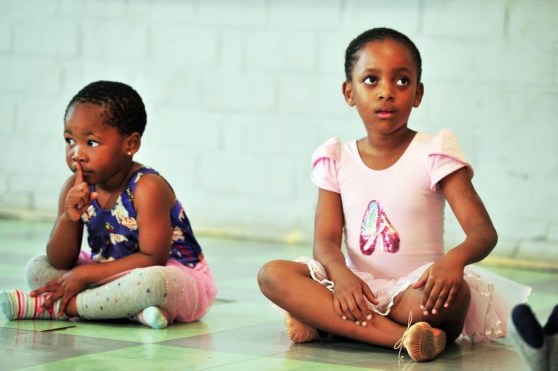 The South African International Ballet Competition launched the Training Teachers in the Townships programme at one of the classrooms in Thesele Secondary School in White City Jabavu, Soweto. This programme was initiated by former Joburg Ballet chief executive Dirk Badenhorst to train and empower teachers in townships on how to coach dancers in classical ballet using the Cuban method. The idea is that the teachers will go on to start their own ballet school in a township…..
 The Universal Health Coverage (UHC) system envisaged by South Africa’s National Health Insurance (NHI) White Paper won’t work. Amongst other things: it’s too ambitious; too hostile to the private sector; too reliant on complex bureaucratic structures inherently ripe for inefficiency and abuse; and it totally ignores the many pitfalls that face single payer financing mechanisms. But, writes Andrew Barlow, a researcher at the Helen Suzman Foundation,there’s also much to be said for some of the ideas within it. Barlow writes: “One potentially promising idea is the re-engineering of the Primary Health Care (PHC) platform. PHC begins, it says, ‘in the communities and is the first level of contact with the health system by individuals, the family and community’. It is the ‘heart-beat of NHI. The PHC services include health promotion, disease prevention, curative (acute and chronic clinical) services, rehabilitation and palliative services.’ …
 Community service in the medical field is meeting its objectives‚ with about half of South Africa’s 1,200 doctors who graduate annually working in rural and underserved areas for their compulsory year of community service.
 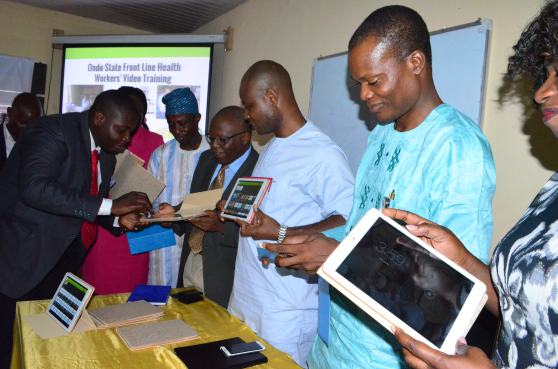 Medical Aid Films, in partnership with InStrat Global Health Solutions, Digital Campus and mPowering Frontline Health Workers, are working with Ondo State Primary Health Care Development Board, to launch a new tablet-based maternal and child health training curriculum for nurses, midwives, and community health workers in Ondo State, Nigeria.

 AfroPHC