
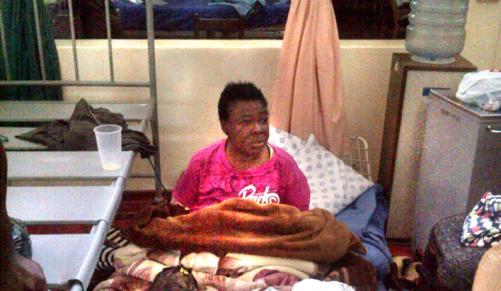
 Johannesburg – Fifty-year-old Nomsa Dhlongolo passed away at Chris Hani Baragwanath Academic Hospital during the early hours of Thursday morning. And her sister Lorraine Mashao is adamant that the nurses helping her could have done better….more
Author Archives: Shabir Moosa
#WoncaAfrica is out! Edition of 11 July 2016
Read here
#WoncaAfrica is out! Edition of 04 July 2016

Rural grannies walk for health
In a remote rural village, community leaders are educating the elderly about how to stay healthy. More than 80 grannies from Makuya village, near Niani in Limpopo participated in a recent fun walk which was organised by the local community leaders to educate the elderly about how to fight diabetes and high blood pressure. During the walk, the senior citizens were not only encouraged to exercise but to eat healthily in order for them to stay fit and live long….more
Pooling of resources for NHI could lower cost of universal access.
 On Tuesday, Minister of Health Dr Aaron Motsoaledi addressed the media along with members of the Board of As the debate on National Health Insurance (NHI) funding continues, the minister of health has come out in response to the criticism over the high cost associated with rolling out universal health care in South Africa….more
How Terminology Mapping Drives Semantic Interoperability
The increasing use of electronic health records (EHRs) opens opportunities for data sharing and collaborative care that simply didn’t exist when patient information was confined to paper charts.
Emerging healthcare business models such as accountable care organizations (ACOs) and patient-centered medical homes (PCMHs) rely on the exchange of data among primary care physicians, specialists, hospitals and other providers. Health information exchanges (HIEs), whether localized or regional in scope, naturally depend on the ability to move clinical data among the participating parties. Population health management, a component of the nation’s healthcare reform initiative, calls for a robust data analysis infrastructure that can pull in anonymized patient data from myriad healthcare systems.
Ironically, the electronic systems that liberate data from paper records often end up restricting communications. Different healthcare providers tend to use different EHR systems, selecting from the dozens of products available in the market. Systems tend to represent data differently, which leads to interoperability issues. A recent report published in the Journal of the American Medical Informatics Association noted “615 observations of errors and data expression various” across the 21 EHR technologies examined.
A Semantic Foundation for Achieving HIE Interoperability
Abstract
This paper describes the challenges that are being tackled and those that remain to be addressed if we are to enable electronic health record information to be shared seamlessly and meaningfully. This goal is known as semantic interoperability, and is needed if computational services are to be able to interpret safely clinical data that has been integrated from diverse sources. Based on sustainable architectural approaches, the paper describes the clinical case for consistently expressed clinical meaning within electronic health records, in particular where computers rather than humans need to be able to process EHR data safely. It outlines the main kinds of information and knowledge artefact that are used to represent meaning within EHRs, and considers for each its role and limitations. The problems that arise with trying to use terminology consistently with EHR reference models is explored, together with the implications for designing EHR archetypes. Examples are given of situations where a diversity of options exists for how to represent compound (multi-part) clinical expressions. Recommendations are made for the kinds of change that are needed both in record structures and in terminology systems to minimise this diversity and thereby aid semantic interoperability….. more.
Approaching semantic interoperability in Health Level Seven
Robert H Dolin 1 and Liora Alschuler2
‘Semantic Interoperability’ is a driving objective behind many of Health Level Seven’s standards. The objective in this paper is to take a step back, and consider what semantic interoperability means, assess whether or not it has been achieved, and, if not, determine what concrete next steps can be taken to get closer. A framework for measuring semantic interoperability is proposed, using a technique called the ‘Single Logical Information Model’ framework, which relies on an operational definition of semantic interoperability and an understanding that interoperability improves incrementally. Whether semantic interoperability tomorrow will enable one computer to talk to another, much as one person can talk to another person, is a matter for speculation. It is assumed, however, that what gets measured gets improved, and in that spirit this framework is offered as a means to improvement. ….more
Semantic Interoperability: The Future of HealthCare Data
Good healthcare depends so much upon having high-quality information about a patient. The problem is that that data lives across multiple providers and institutions, and that the industry has yet to fully conquer the challenge of exchanging and integrating this information, thanks to the use of multiple vocabularies, formats, and systems by all the players in the chain.
Last year, at a workshop held at the Semantic Technology & Business Conference in San Francisco, a big step was taken towards tackling this problem. It came in the form of The Yosemite Manifesto, a position statement that debuted at that conference’s panel on RDF as a Universal Healthcare Exchange Language. The Manifesto recommended using the World Wide Web Consortium’s (W3C) RDF (Resource Description Framework) standard model for data interchange as a universal healthcare exchange language, describing RDF – one of the core technologies of the Semantic Web – as the best available candidate for the job. …more
How Ontologies Can Improve Semantic Interoperability in Health Care
Stefan Schulz* and Catalina Martínez-Costa Institute for Medical Informatics, Statistics and Documentation, Medical University of Graz, Austria {stefan.schulz,catalina.martinez}@medunigraz.at
Abstract. The main rationale of biomedical terminologies and formalized clinical information models is to provide semantic standards to improve the exchange of meaningful clinical information. Whereas terminologies should express context-independent meanings of domain terms, information models are built to represent the situational and epistemic contexts in which domain terms are used. In practice, semantic interoperability is encumbered by a plurality of different encodings of the same piece of clinical information. The same meaning can be represented by single codes in different terminologies, pre- and postcoordinated expressions in the same terminology, as well as by different combinations of (partly overlapping) terminologies and information models. Formal ontologies can support the automatically recognition and processing of such heterogeneous but isosemantic expressions. In the SemanticHealthNet Network of Excellence a semantic framework is being built which addresses the goal of semantic interoperability by proposing a generalized methodology of transforming existing resources into “semantically enhanced” ones. The semantic enhancements consist in annotations as OWL axioms which commit to an upper-level ontology that provides categories, relations, and constraints for both domain entities and informational entities. Prospects and the challenges of this approach – particularly human and computational limitations – are discussed.
Keywords: Formal Ontology, Medical Terminologies, Health Care Standards
What is semantic interoperability?
Semantic interoperability is the ability of computer systems to exchange data with unambiguous, shared meaning. Semantic interoperability is a requirement to enable machine computable logic, inferencing, knowledge discovery, and data federation between information systems.[1]
Semantic interoperability is therefore concerned not just with the packaging of data (syntax), but the simultaneous transmission of the meaning with the data (semantics). This is accomplished by adding data about the data (metadata), linking each data element to a controlled, shared vocabulary. The meaning of the data is transmitted with the data itself, in one self-describing “information package” that is independent of any information system. It is this shared vocabulary, and its associated links to an ontology, which provides the foundation and capability of machine interpretation, inferencing, and logic.
Syntactic interoperability is a prerequisite for semantic interoperability. Syntactic interoperability refers to the packaging and transmission mechanisms for data. In healthcare, HL7 has been in use for over thirty years (which predates the internet and web technology), and uses the unix pipe (|) as a data delimiter. The current internet standard for document markup is XML, which uses “< >” as a data delimiter. The data delimiters convey no meaning to the data other than to structure the data. Without a data dictionary to translate the contents of the delimiters, the data remains meaningless. While there are many attempts at creating data dictionaries and information models to associate with these data packaging mechanisms, none have been practical to implement. This has only perpetuated the ongoing “babelization” of data and inability to exchange of data with meaning.
Since the introduction of the Semantic Web concept by Tim Berners-Lee in 1999,[2] there has been growing interest and application of the W3C (World Wide Web Consortium, WWWC) standards to provide web-scale semantic data exchange, federation, and inferencing capabilities….more on Wikipaedia
Teaching undergraduate students in rural general practice: an evaluation of a new rural campus in England
Teaching undergraduate students in rural general practice: an evaluation of a new rural campus in England
Citation: Bartlett M, Pritchard K, Lewis L, Hays RB, McKinley RK. Teaching undergraduate students in rural general practice: an evaluation of a new rural campus in England. Rural and Remote Health (Internet) 2016; 16: 3694. Available: http://www.rrh.org.au/articles/subviewnew.asp?ArticleID=3694(Accessed 26 June 2016)
Introduction: One approach to facilitating student interactions with patient pathways at Keele University School of Medicine, England, is the placement of medical students for 25% of their clinical placement time in general practices. The largest component is a 15-week ‘student attachment’ in primary care during the final year, which required the development of a new network of teaching practices in a rural district of England about 90 km (60 mi) from the main campus in North Staffordshire. The new accommodation and education hub was established in 2011–2012 to enable students to become immersed in those communities and learn about medical practice within a rural and remote context. Objectives were to evaluate the rural teaching from the perspectives of four groups: patients, general practice tutors, community hospital staff and students. Learning outcomes (as measured by objective structured clinical examinations) of students learning in rural practices in the final year were compared with those in other practices.
Methods: Data were gathered from a variety of sources. Students’ scores in cohort-wide clinical assessment were compared with those in other locations. Semi-structured interviews were conducted with general practice tutors and community hospital staff. Serial focus groups explored the perceptions of the students, and questionnaires were used to gather the views of patients.
Results: Patients reported positive experiences of students in their consultations, with 97% expressing willingness to see students. The majority of patients considered that teaching in general practice was a good thing. They also expressed altruistic ideas about facilitating learning. The tutors were enthusiastic and perceived that teaching had positive impacts on their practices despite negative effects on their workload. The community hospital staff welcomed students and expressed altruistic ideas about helping them learn. There was no significant difference between the rurally placed students’ objective structured clinical examination performance and that of their peers in other locations. Some students had difficulty with the isolation from peers and academic activities, and travel was a problem despite their accommodation close to the practices.
Conclusions: Students valued the learning opportunities offered by the rural practice placements. The general practice tutors, patients and community hospital staff found teaching to be a positive experience overall and perceived a value to the health system and broader community in students learning locally for substantial periods of time. The evaluation has identified some student concerns about transport times and costs, social isolation, and access to resources and administrative tasks, and these are being addressed.
Key words: general practice, medical education, primary health care, rural clinical placements, undergraduate, United Kingdom.
The Cumbria Rural Health Forum: initiating change and moving forward with technology
The Cumbria Rural Health Forum: initiating change and moving forward with technology
| Author(s) : Ditchburn J, Marshall A. |
Citation: Ditchburn J, Marshall A. The Cumbria Rural Health Forum: initiating change and moving forward with technology. Rural and Remote Health (Internet) 2016; 16: 3738. Available: http://www.rrh.org.au/articles/subviewnew.asp?ArticleID=3738 (Accessed 26 June 2016)
Introduction: The Cumbria Rural Health Forum was formed by a number of public, private and voluntary sector organisations to collaboratively work on rural health and social care in the county of Cumbria, England. The aim of the forum is to improve health and social care delivery for rural communities, and share practical ideas and evidence-based best practice that can be implemented in Cumbria. The forum currently consists of approximately 50 organisations interested in and responsible for delivery of health and social care in Cumbria. An exploration of digital technologies for health and care was recognised as an initial priority. This article describes a hands-on approach undertaken within the forum, including its current progress and development.
Methods: The forum used a modified Delphi technique to facilitate its work on discussing ideas and reaching consensus to formulate the Cumbria Strategy for Digital Technologies in Health and Social Care. The group communication process took place over meetings and workshops held at various locations in the county.
Results: A roadmap for the implementation of digital technologies into health and social care was developed. The roadmap recommends the following: (i) to improve the health outcomes for targeted groups, within a unit, department or care pathway; (ii) to explain, clarify, share good (and bad) practice, assess impact and value through information sharing through conferences and events, influencing and advocacy for Cumbria; and (iii) to develop a digital-health-ready workforce where health and social care professionals can be supported to use digital technologies, and enhance recruitment and retention of staff.
Conclusions: The forum experienced issues consistent with those in other Delphi studies, such as the repetition of ideas. Attendance was variable due to the unavailability of key people at times. Although the forum facilitated collective effort to address rural health issues, its power is limited to influencing and supporting implementation of change. Within the implementation phase, the forum has engaged in advising and facilitating policy change at all levels. Thus, the forum has become a voice to influence change towards the advancement of health and social care through digital technologies. The forum continues to serve as a think tank and influencer for change in rural health and social care issues in Cumbria. The forum has increased awareness of digital health and social care solutions, mapped best practice and developed a digital strategy for health and social care in Cumbria.
Key words: digital technology, e-health, England, health services, needs and demand, social care, strategy, telecare, telehealth, telemedicine.
Task-shifting and prioritization: a situational analysis examining the role and experiences of community health workers in Malawi
- Sarah Smith,
- Amber Deveridge,
- Joshua Berman,
- Joel Negin,
- Nwaka Mwambene,
- Elizabeth Chingaipe,
- Lisa M Puchalski Ritchie and
- Alexandra Martiniuk Email author
Human Resources for Health201412:24
DOI: 10.1186/1478-4491-12-24
Received: 30 October 2013 Accepted: 7 April 2014 Published: 2 May 2014
BACKGROUND: As low- and middle-income countries face continued shortages of human resources for health and the double burden of infectious and chronic diseases, there is renewed international interest in the potential for community health workers to assume a growing role in strengthening health systems. A growing list of tasks, some of them complex, is being shifted to community health workers’ job descriptions. Health Surveillance Assistants (HSAs) – as the community health worker cadre in Malawi is known – play a vital role in providing essential health services and connecting the community with the formal health care sector. The objective of this study was to understand the performed versus documented roles of the HSAs, to examine how tasks were prioritized, and to understand HSAs’ perspectives on their roles and responsibilities.
METHODS: A situational analysis of the HSA cadre and its contribution to the delivery of health services in Zomba district, Malawi was conducted. Focus groups and interviews were conducted with 70 HSAs. Observations of three HSAs performing duties and work diaries from five HSAs were collected. Lastly, six policy-maker and seven HSA supervisor interviews and a document review were used to further understand the cadre’s role and to triangulate collected data.
RESULTS: HSAs performed a variety of tasks in addition to those outlined in the job description resulting in issues of overloading, specialization and competing demands existing in the context of task-shifting and prioritization. Not all HSAs were resistant to the expansion of their role despite role confusion and HSAs feeling they lacked adequate training, remuneration and supervision. HSAs also said that increasing workload was making completing their primary duties challenging. Considerations for policy-makers include the division of roles of HSAs in prevention versus curative care; community versus centre-based activities; and the potential specialization of HSAs
CONCLUSION: This study provides insights into HSAs’ perceptions of their work, their expanding role and their willingness to change the scope of their practice. There are clear decision points for policy-makers regarding future direction in policy and planning in order to maximize the cadre’s effectiveness in addressing the country’s health priorities.
Integrating national community-based health worker programmes into health systems: a systematic review identifying lessons learned from low-and middle-income countries
WONCA E-Update 24 JUNE 2016
WONCA News – June 2016
The latest WONCA News is available via the WONCA website, packed with WONCA news, views and events.
Featured Doctor – A/Professor Pavlo Kolesnyk
One of this month’s featured doctors is A/Professor Pavlo Kolesnyk from Ukraine. Pavlo is Associate Professor of the Family Medicine Department of Postgraduate Faculty of Uzhgorod National University (Ukraine) and also practices at the municipal family medicine clinic. Find out more about family medicine practice in Ukraine by reading all about Pavlo in this month’s news.
“Polaris” in Tobago
“Professional conferences have been considered an effective way to improve knowledge, make connections and build skills. These have also served as personal investments in one’s own professional growth. A particular conference in the idyllic island of Tobago from May 14th to 19th, 2016 was unique in blending the elements needed to engage the local professional body while instilling a sense of community in a wider audience from various countries. The meeting – hosted by the Caribbean College of Family Physicians’ (CCFP’s) Tobago Chapter – served to combine the island’s annual meeting and the WONCA Polaris Forum.”
Read more about this unique blend of Caribbean College and Polaris on the WONCA website.
World Mental Health Day 2016
The World Federation for Mental Health (WFMH) has announced the theme for World Mental Health Day coming on October 10, 2016:
Dignity in Mental Health – Psychological & Mental Health First Aid for All
Mental health crises and distress are viewed differently because of ignorance, poor knowledge, stigma and discrimination. This cannot continue to be allowed to happen, especially as we know that there can be no health without mental health. Psychological and mental health first aid should available to all, and not just a few. This is the reason why WFMH has chosen psychological and mental health first as its theme for 2016. You can read more about World Mental Health Day on the WONCA website:
OneHealth Webinars – Antibiotic Resistance and Cysticercosis
One Health is a movement to forge collaborations between human and veterinary medical healthcare providers, social scientists, dentists, nurses, agriculturalists and food producers, wildlife and environmental health specialists and many other related disciplines. OneHealth has advised us of a series of webinars which might be of interest to WONCA members. Further details of all of these, including how to register, can be found at www.onehealthcommission.org
28th June (1300-1500 GMT/UTC) – OneHealth approach for elimination of Taenia solium Taeniosis / Cysticercosis
6th July (1500-1600 GMT/UTC) – The politics of antimicrobial resistance (Part 1 of 2)
13th July (1500-1600 GMT/UTC) – Antimicrobial resistance and the environment (Part 2 of 2)
Evaluation of SMS reminder messages for malaria in Nigeria
CITATION: Evaluation of SMS reminder messages for altering treatment adherence and health seeking perceptions among malaria care-seekers in Nigeria
Jenny X. Liu & Sepideh Modrek
Health Policy Plan. (2016)
doi: 10.1093/heapol/czw076
First published online: June 16, 2016
Corresponding author: jenny.liu2@ucsf.edu
ABSTRACT
In Nigeria, access to malaria diagnostics may be expanded if drug retailers were allowed to administer malaria rapid diagnostic tests (RDTs). A 2012 pilot intervention showed that short message service (SMS) reminder messages could boost treatment adherence to RDT results by 10–14% points. This study aimed to replicate the SMS intervention in a different population, and additionally test the effect of an expanded message about anticipated RDT access policy change on customers’ acceptability for drug retailers’ administration of RDTs. One day after being tested with an RDT, participants who purchased malaria treatment from drug shops were randomized to receive (1) a basic SMS reminder repeating the RDT result and appropriate treatment actions, (2) an expanded SMS reminder additionally saying that the ‘government might allow pharmacists/chemists to do RDTs’ or (3) no SMS reminders (i.e. control). Using regression analysis, we estimate intent-to-treat (ITT) and treatment effects on the treated for 686 study participants. Results corroborate previous findings that a basic SMS reminder increased treatment adherence [odds ratio (OR)?=?1.53, 95% CI 0.96–2.44] and decreased use of unnecessary anti-malarials for RDT-negative adults [OR?=?0.63, 95% CI 0.39–1.00]. The expanded SMS also increased adherence for adults [OR?=?1.42, 95% CI 0.97–2.07], but the effects for sick children differed—the basic SMS did not have any measurable impact on treatment adherence [OR?=?0.87, 95% CI 0.24–3.09] or use of unnecessary anti-malarials [OR?=?1.27, 95% CI 0.32–1.93], and the expanded SMS actually led to poorer treatment adherence [OR?=?0.26, 95% CI 0.10–0.66] and increased use of unnecessary anti-malarials [OR?=?4.67, 95% CI 1.76–12.43]. Further, the targeted but neutral message in the expanded SMS lowered acceptance for drug retailers’ administration of RDTs [OR?=?0.55, 95% CI 0.10–2.93], counter to what we hypothesized. Future SMS interventions should show consistent positive results across populations and be attuned to message length and content before initiating a larger messaging campaign.
KEY MESSAGES
– A short message service (SMS) reminder message intervention was successfully replicated among a different population of adults in Nigeria seeking treatment for malaria at drug shops, showing that a basic SMS can increase medication adherence after rapid diagnostic test (RDT) malaria testing and suggesting that the resulting effects may be generalizable among adults.
– The basic SMS reminder intervention had no impact on behaviours for caregivers of sick children, suggesting that small informational reminders may not be effective when strong priors underpinning health behaviours exist. The difference in outcomes for children and adults highlights the importance of replicating behavioural interventions in multiple population segments before being scaled and the need for testing different message content for caregivers of children.
– The targeted, but neutral message in the expanded SMS informing participants of the potential expansion of RDTs at drug vendors actually lowered customer acceptance for pharmacists to conduct RDTs. Hence, small differences in message language, even if seemingly neutral, may have unintended consequences.
—
Best wishes, Neil
Let’s build a future where people are no longer dying for lack of healthcare knowledge – Join HIFA: www.hifa2015.org
Distributing health content where there is no Internet
Hey All
I am at Wikimania this week, our yearly Wikipedia conference. Have met with a number of technology people who are doing some amazing things. A gentleman by the name of Tim Moody is with Internet in a Box. They have a product that is basically a wifi hotspot linked to a 128Gb SD card that runs off a battery pack.
They have a setup where they have loaded all of Wikipedia plus a bunch of TED talks, Khan Academy videos, etc onto the thing such that people who are nearby are able to download the content to their cell phones via wifi. Basically it is ready to be shipped.
The question is are organizations interested in:
Buying these devices for about 200 to 250 USD, maybe less if a bunch are ordered? Such a device could be placed in libraries, health clinics, or schools.
Interested in putting further content onto these devices before they are shipped?
—
James Heilman
MD, CCFP-EM, Wikipedian
The Wikipedia Open Textbook of Medicine
First aid treatment for burns
CITATION: Burns. 2016 Jun;42(4):938-43. doi: 10.1016/j.burns.2016.03.019. Epub 2016 May 5.
Knowledge, attitude, and belief regarding burn first aid among caregivers attending pediatric emergency medicine departments.
Alomar M, Rouqi FA, Eldali A.
Abstract
BACKGROUND AND OBJECTIVES: Emergency departments witness many cases of burns that can be prevented with various first-aid measures. Immediate and effective burn first aid reduces morbidity and determines the outcome. Thus, it is imperative that measures of primary burn prevention and first-aid knowledge be improved. This descriptive study determines the current level of knowledge, attitude, and belief regarding burn first aid among caregivers.
MATERIALS AND METHODS: Caregivers attending four pediatric emergency departments answered a structured questionnaire for demographic information, knowledge, and the burn first aid they provide including two case scenarios. Applying cold water for 15-20min, smothering burning clothes, and covering the pot of oil on fire with a wet cloth were considered appropriate responses. The main outcome measure was the proportion of caregivers who were aware of burn first aid and did not use inappropriate remedies. Additional questions regarding the best means of educating the public on burn first aid were included. Individual chi-squared tests and univariate logistic regressions were performed to correlate knowledge with demographic features, history of burns, and first-aid training.
RESULTS: The 408 interviewed caregivers (55% women) reflected a wide range of age, occupation, and educational level. Sixty percent (60%) of respondents had a large family, with 52% reporting a history of burns. Overall, 41% treated burns with cool or cold water, although 97% had inappropriate or no knowledge of the duration. Further, 32% treated burns with nonscientific remedies alone or in combination, including honey, egg white, toothpaste, white flour, tomato paste, yogurt, tea, sliced potato, butter, or ice. Only 15% had first-aid training. While 65% of caregivers covered a pot of oil on fire with a wet cloth, only 24% reported smothering burning clothes. Participants preferred learning more of first aid for burns via social media (41%), hospital visits (30%), and television (TV) (16%). No significant correlation was found between age, family size, language, history of burns, or training and knowledge; however, female gender and higher educational level were associated with increased awareness, although this was not statistically significant (p=0.05 and p=0.17, respectively). The logistic regression accounting for all significant variables showed that the history of burns had the greatest effect on knowledge of first aid (p<0.03).
CONCLUSION: Knowledge of burn first aid among caregivers is limited, with many resorting to non-scientific remedies. Use of social media, hospital visits, and TV for first-aid education might improve caregivers’ awareness. A nationwide educational program emphasizing first-aid application of only cold water and reduced use of inappropriate home remedies for burns is recommended.
—
Let’s build a future where people are no longer dying for lack of healthcare knowledge – Join HIFA: www.hifa2015.org
Gauteng to form single transport authority to make provincial travel easier
PUBLIC transport users living within the Gauteng city region will soon find travelling around the province a whole lot easier.
This comes as the Gauteng provincial government on Friday officially endorsed the establishment of a single transport authority that is affordable‚ accessible‚ sustainable and customer centred, for residents of the city region.
Speaking at the provincial offices‚ Gauteng premier David Makhura said this was an important step the government was taking towards ensuring that all structures and institutions that give effect to the vision of a Gauteng City Region (GCR)‚ are formalised and regularised. …more
 AfroPHC