Elections a proud moment for SA

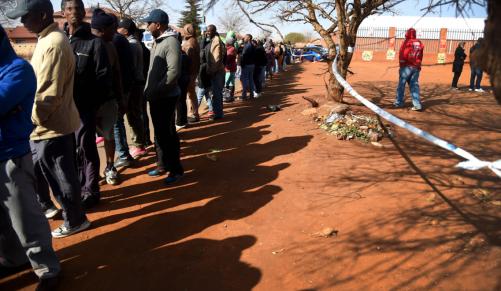
2090799436What our local government elections proved last week was that democracy in South Africa is stronger than ever, and it is something South Africans should be very proud of.
If we look around the southern African region, the tenets of democracy are not as strong as they are in South Africa, and in some instances, elections are being accompanied by significant violence and abuse of state institutions and resources…..more

Mpumalanga holds first people’s health assembly

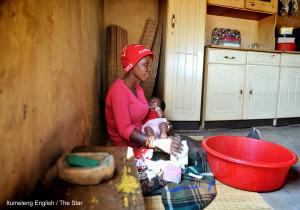
Nurse Hlophe says she waited more than six hours for an ambulance when she went into labour. Her mother delivered the baby at home.Mpumalanga recently welcomed its first provincial People’s Health Assembly as the Treatment Action Campaign (TAC) and others continue to bemoan staff shortages. Nurse Hlophe says she waited more than six hours for an ambulance when she went into labour. Her mother delivered the baby at home. Sfiso Nkala is a community organiser for the public interest law organisation Section27. According to Nkala, health service delivery in the area is being compromised by poor facility management and unfilled critical posts.Organised by TAC, the assembly brought together Ermelo community members, activists and provincial department of health representatives. Among the concerns voiced by activists was the continued staff shortages faced by some facilities…more
 

One woman’s drive to encourage home grown vegetables to save money and stay healthy

As South Africa marks Women’s Day today, one woman in Vhembe, Limpopo is making a positive difference to community by promoting the benefits of home vegetable gardens.

Small vegetable gardens, Mavis Mafune believes, are an important way to encourage the local community to eat healthy, fresh food and serve as a way to help in situations of poverty.

Mafune was diagnosed as HIV positive last year, and advised to eat more vegetables and fruit in order to stay healthy.

”Most people do not believe me when I tell them that I am living with HIV, because I look good and healthy. My secret is that I eat fresh vegetables from the small garden I have started at my home,” she said…..more

South Africa local elections: ANC set for worst result

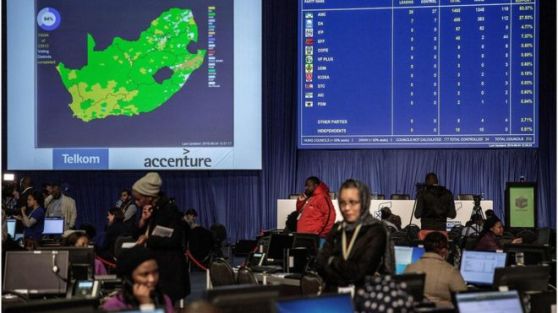
90679413_2c16bd6e-26a5-4970-9247-edb3859093f2South Africa’s governing African National Congress (ANC) looks to be facing its biggest electoral setback since the end of apartheid, after the partial results of municipal elections. With 85% of the votes in, the ANC trails its main rival, the Democratic Alliance, in the cities of Port Elizabeth and Cape Town. The two parties are in a close fight in Johannesburg and Pretoria. But the ANC is still in the lead nationally. Unemployment and corruption scandals surrounding President Jacob Zuma have tarnished the ANC’s image….more

Is AR our new reality?

In the last few years “augmented reality” (AR) has started finding its way out of the dark corners previously reserved for niche technologies used by gamers and geeks and into the mainstream, where it has the potential to become a formidable marketing tool.

AR enables a live view of a real environment enhanced by computer-generated layers of information such as sound, graphics, video or animations. It’s not only starts-ups that are interested – Google and Microsoft too are funnelling resources into developing AR solutions and fine-tuning their use. In Silicon Valley, a combined incubator and investment fund, Super Ventures, was recently launched solely to develop AR.

AR is not only coming of age, it has the potential to change how we live and work. It’s far more than a “nice to have” marketing tool. AR will soon pervade the fabric of our daily interactions and could even become the foundation for the next shift in human interaction and engagement….more

Update on Ethiopian Society of Family Medicine 31st July 2016

Faculty, graduates, and current residents

I wanted to give you a short update on the development of the Ethiopia Society of Family Medicine (or E Society of Family Physicians or Society of FM of E or Society of Family Physicians of E, we’ll work on a name).

In any case, we’ve had some discussions with the EMA and with Dr. Aklilu who developed the Emergency Med Society.

 At this point we will:

  • get bylaws from Emergency Medicine and Dermatology Societies
  • get bylaws from a US society
  • present an update at Academic Half Day on Wed August 3
  • have potential chair persons present their experience and plans on Wed Aug 17 and vote for a chair person
  • develop a small effective executive committee committed to getting this started
  • see what forms and format the Ethiopia Agency for Charities require
  • prepare for an inaugural meeting Oct. 11.
  • On Oct. 11 Dr. Michael Kidd the world assoc of Family Medicine (WONCA) president will be here to oversee the inaugural meeting
  • Oct 12 – we are planning a Family Medicine symposium

This is an important landmark in the development of Family Medicine in Ethiopia.  If you have a strong interest and commitment to developing this society please let me know.  We could use dedicated workers.

Thank you.  Andrew

Andrew Janssen, MD, FAAFP

Assistant Professor, Dept. of Family Medicine

Addis Ababa University +251 92 932 8985  andrew.janssen@aau.edu.et

Simple step to cleverer kids

Pregnant_womanIt protects the health of mother and baby, increases intelligence, and reduces behavioural problems among children.
Breastfeeding also benefits society by reducing health care costs, raising the social and earning potential of adults who were breastfed, and reducing waste from packaging and conserving the large quantities of water used to make formula milks.

Two recent reviews published in the prestigious global health journal, The Lancet, confirm breastfeeding as a once-in-a-lifetime investment we can make in health, wellbeing, human capital and the environment.

But although breastfeeding is natural to human life, that doesn’t mean it is easy. Breastfeeding is a bit like sex. Biologically we are all capable of it, but it takes a lot of love and support for two people to get it right. Women need help and support to breastfeed. ….more

Elections: Three final fact-checks of the ANC, DA and EFF’s claims

South Africans go to the polls tomorrow to elect new local governments. The country’s three main parties held rallies at the weekend in a final effort to sweep up support.

The party leaders made claims that raised eyebrows, however. Readers asked us to look into statements by the leaders of the ANC and the DA, President Jacob Zuma and Mmusi Maimane. We also evaluated a promise by EFF leader Julius Malema that made news headlines…..more

Ready for the Internet’s third wave?

The way we use and understand the Internet is changing. We’ve long surpassed the first wave and are just about done with the second. On the cusp of the third, we’re about to face a host of new opportunities and challenges.  Are you ready?

A new Internet is coming

As the Internet of Things (IOT) comes into play, platforms will change drastically. Devices will become “smart” and gadgets we haven’t even imagined yet will be integrated into our lives.

According to Steve Case, author of The Third Wave, even talking about things being connected to the Internet will become meaningless. Everything (and everyone) simply will be. Houses will be able to talk to phones. Alarms to tablets. Roads to cars. Machines will talk to machines. And almost everything will talk to you.

The good news for brands is that this talking equates to content.

It’s all about flexibility …more


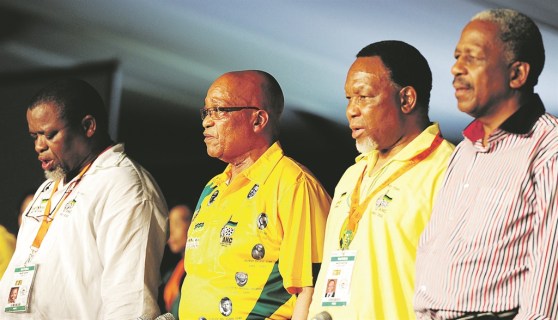
‘We’ve lost the plot’ – Motlanthe

fbd884a26e8d4db3921144cd8a4d5f2dThe country is on autopilot in the absence of real leadership. And it will get worse before it gets better, former president Kgalema Motlanthe tellsJeff Kelly Lowenstein
What have been the country’s greatest accomplishments in the past 22 years and what are the greatest challenges ahead? For starters, the system of apartheid was based on racial discrimination informed by skin colour. That’s the backdrop against which we then assess objectively changes that happened in 1994, which meant that for the first time all adults could vote, universal suffrage applied, and so on…..more

Join the Chiawelo Community Practice Group on Facebook!

Screen Shot 2016-08-01 at 11.18.39 PM.png

Amazing stuff happening here….. join us!

WHIG: Dutch platform for Family Medicine and International Health

WHIG wants to contribute to the development of FM in low income countries.

Means are:

  • Being a platform for those GPs who are active in the exchange of expertise and are willing to contribute to this.
  • Offering expertise on FM for capacity building  in FM-training sites. E.g. support FM-training in Eldoret (read the executive summary  of the Kenyan Family Medicine strategy for the Kenyan Ministry of Health). See also The ‘Peter Manschot fund’ for activities they fund.
  • Facilitate the exchange of young doctors. We help Dutch trainees in FM and GPs to increase their knowledge on global diseases (import diseases).
  • Contribute to the FM-orientation of those doctors who want to work in a low resource country.
  • Contribute to the FM-orientation of those doctors/ MO’s who have to do compulsary service in their country. See also Medicus Tropicus sept 2010 48-3
  • Contribute in research and publication on the subject.

See important mentions of Family Medicine in Africa at the website here

Protesters run riot in Kliptown over unpopular ANC council candidate

With just five days to go before the local government elections start with special votes‚ residents of Kliptown in Soweto took to the streets on Wednesday to express their unhappiness about a councillor candidate put forward by the ANC.

The ANC had announced Pamela Sibanyoni as its candidate for councillor in ward 19, Soweto, but some residents were insisting on their own candidate, said ANC Johannesburg spokesperson Jolidee Matongo.

“We are very clear: If people are standing in the path of the ANC towards victory‚ those comrades have defined themselves as the enemy of the ANC‚” he said. …more

A tragedy waiting to happen

2135819157Johannesburg – One by one they pen their accounts, which read like multiple tragedies waiting to happen. “At 34 weeks pregnant and doing a 24-hour shift, I drew blood on one of the last patients I was seeing. “Exhausted, I sustained a needle-stick injury of a high-risk HIV patient. “The stress, the ARVs and everything that went with it could have easily been avoided if I was not already seeing double after working such long hours.” Signed, anonymous.
The next reads: “I was involved in a motor vehicle accident (the only accident I have ever had) when I was post call in my community service year…..more

Not bigger router but fleet of smaller ones now the way to go

IN EVERY home, some poor soul is responsible for keeping the internet running. The job is a lot like voodoo: Netflix conked out? Unplug the router, then plug it in again. Wi-Fi dead zone in the far room? Give those antennas a wiggle.

So I’ve got big news for you home tech-support personnel: You can stop faking it now. A significant overhaul of the router, that blinking box of frustration that beams wireless internet, is making Wi-Fi much, much better at covering an entire home. It’ll just cost you much, much more.

This next-generation Wi-Fi isn’t about bigger routers — it’s about deploying a fleet of smaller ones. Routers struggle with long distances and interference, but can work great in teams. So in large or hard-to-network homes, the new idea is to put an access point upstairs, downstairs and in that troublesome side room. They link to each other wirelessly, forming a “mesh” that spreads internet around the house like butter on a hot bagel. Not long ago, a really, really good Wi-Fi router cost $200. Now these mesh systems cost $350 and up, way up. Are those prices worth it? Ask yourself this: How much would you pay not to have to worry about Wi-Fi anymore? When a home mesh system called Eero debuted last February, I liked it so much I bought a set of three for myself — for a budget-busting $500….more

WHO Report: Health Workforce in India

See this new WHO report on the health workforce in India.

http://www.who.int/hrh/resources/16058health_workforce_India.pdf?ua=1

Below are five of the key findings, highlighted in the Preface:

(i) At the national level the density of doctors of all types (allopathic, ayurvedic, unani and homeopathic) in 2001 was 80 doctors per 100,000 of the population and the density of nurses was 61 per 100,000. The comparable figures for China were 148 for doctors and 103 for nurses. In both countries the densities were higher in urban areas than rural areas, but in India the density in urban areas was 4 times the rural, whereas in China it was twice the rural density. What this showed was that in the matter of health personnel we were less well endowed than China, which is not entirely surprising considering that China had a much higher per capita GDP, but such resources as we had were more unequally distributed between urban and rural areas.

(ii) Many individuals claiming to be doctors in their occupation did not have the requisite professional qualifications. Almost one third of those calling themselves doctors were educated only up to secondary school. The lack of medical qualifications was particularly high in rural areas. Whereas 58% of the doctors in urban areas had a medical degree, only 19% of those in rural areas had such a qualification.

(iii) The lack of trained health professionals was obviously a major constraint on our ability to achieve health delivery in a short period. To reach the Chinese level of density of doctors we would need an additional 700,000 doctors but the capacity of our medical universities at the time was limited to producing only 30,000 doctors per year. It has increased since then, but hardly to the level which would allow early closing of the gap. I also pointed out that all doctors do not need to have an MBBS degree. In China, many doctors hold only three-year medical diplomas and much of our need could also be met through paramedicals. However, there was strong opposition from the medical profession to allow “unqualified persons” to practice as doctors in any public facility. There has been some change since then, with some states recognizing three-year licentiate diplomas and thus allowing these persons to serve in public clinics and hospitals.

(iv) There was enormous variation in density across states. The density of doctors in Chandigarh (a city which is a Union Territory) was ten times that in the worst state, Meghalaya. The doctor density in Punjab, one of the upper income states, was 2.6 times higher than in Bihar, which is one of the poorest states.

(v) One of the interesting findings in the study was that the percentage of female doctors who had medical degrees was much higher than male doctors. I took the liberty of drawing the Prime Minister’s attention to an interesting inference from this fact: viz. if one was somewhere in India with no personal knowledge of individuals but in need of a doctor, one would do better in a probabilistic sense by going to a woman doctor!

Let’s build a future where people are no longer dying for lack of healthcare knowledge – Join HIFA: www.hifa2015.org