Exposure Patterns Driving Ebola Transmission in West Africa: A Retrospective Observational Study

CITATION: Exposure Patterns Driving Ebola Transmission in West Africa: A Retrospective Observational Study

International Ebola Response Team , Junerlyn Agua-Agum, Archchun Ariyarajah, Bruce Aylward, Luke Bawo, Pepe Bilivogui, Isobel M. Blake, Richard J. Brennan, Amy Cawthorne, Eilish Cleary, Peter Clement, Roland Conteh, Anne Cori,  [ … ], Zabulon Yoti [ view all ]

Published: November 15, 2016http://dx.doi.org/10.1371/journal.pmed.1002170

http://journals.plos.org/plosmedicine/article?id=10.1371/journal.pmed.1002170

AUTHOR SUMMARY

Why Was This Study Done? 

Knowing how and from whom individuals acquire infection can help inform the response to limit the impact of an epidemic; this study presents updated versions of analyses initially performed to assist the international response during the 2013–2016 Ebola epidemic in West Africa. Over 19,000 individuals with confirmed or probable Ebola (“cases”) were reported in West Africa by 4 May 2015. Cases were asked whether they had exposure to potential Ebola cases (“potential source contacts”) in a funeral or non-funeral context prior to becoming ill.

What Did the Researchers Do and Find? 

We analysed data from 3,529 cases in Guinea, 5,343 in Liberia, and 10,746 in Sierra Leone; exposures were reported by 33% of cases. Non-funeral exposures were strongly peaked around the time of death of the contact. There was evidence of super-spreading, with only 20% of cases accounting for at least 73% of new infections.

What Do These Findings Mean? 

Safe funeral practices and fast hospitalisation contributed to the containment of this Ebola epidemic.

The data are highly detailed despite the challenging circumstances in the three countries; however, the analyses were limited by data quality, mostly missing data and incorrect entries. In light of viral persistence in reservoirs, it is vital to maintain active surveillance and analysis of Ebola outbreaks to avoid and contain future outbreaks.

Best wishes, Neil

Let’s build a future where people are no longer dying for lack of healthcare knowledge – Join HIFA: www.hifa.org  

Overflowing cities: The State of the World’s Toilets 2016

Tomorrow is World Toilet Day, and I wanted to share with you our new report, ‘Overflowing cities: The State of the World’s Toilets 2016’, [http://www.wateraid.org/what-we-do/our-approach/research-and-publications/view-publication?id=a84491eb-f8e1-415b-80b7-b6ea5c7ecf21 ] and to seek your support in taking action to expand access to safe sanitation for the 700 million of the world’s poorest people who currently live in urban areas without a basic toilet.

Read the report at www.wateraid.org/stateoftoilets2016

‘Overflowing cities’ is WaterAid’s second annual report on the state of the world’s toilets, and this year we focus attention on urban sanitation. Human beings are now largely an urban species: for the first time in history, more than half of the world’s population lives in towns, cities and megacities. By 2050, that’s expected to rise to two-thirds.

Many new urbanites, and particularly the poorest, are not moving into gleaming apartment blocks or regenerated post-industrial areas. They are arriving – or being born into – overcrowded, rapidly expanding slums. More often than not, these neighbourhoods have no safe, private toilets or clean water sources. Worldwide, it is estimated that almost one-fifth of all urbanites – over 700 million people – live without a decent toilet. To put that into context, the queue for people waiting for toilets in our cities and towns would stretch around the world 29 times.

In this year’s State of the World’s Toilets, we look at some of the world’s worst countries for urban sanitation, and some of the jobs that are created when the challenge is addressed head-on. There is tremendous progress happening in some cities and countries, but politics, patchy coverage, land tenure issues, inadequate systems and technical challenges stand in the way.

The UN Sustainable Development Goals recognise that providing a toilet and clean water for everyone everywhere by 2030 (Goal 6), will be fundamental to achieving many of the other goals, from gender equality, healthy lives and ending malnutrition, to quality education and a decent job for all. With only 14 years to achieve the goals, there’s no time to waste. That’s why this World Toilet Day, WaterAid is calling for:

– Everyone living in urban areas, including slums, to be reached with a toilet to ensure public health is protected

– More money, better spent from governments and donors on sanitation, clean water and hygiene for the urban poor.

– Coordination from all actors in the sanitation chain including governments, city planners, NGOs, the private sector, informal service providers and citizens

– Sanitation workers to be given the respect they deserve with stable employment, safety and decent pay. Without them healthy communities and cities are impossible.

Please join us this World Toilet Day to demand action. Share the report widely, and please get in touch with me or one of my team if you see ways we can bring about change together.

Best wishes,

Margaret Batty

Director of Global Policy and Campaigns

WaterAid

+44 (0) 207 793 4512

MargaretBatty@wateraid.org

Enhancing emergency care in low-income countries using mobile technology-based training tools

Here is an important new open-access paper from Mike English (Kenya) and colleagues. ‘The worldwide shift to mobile technology, which is occurring rapidly in both LMIC and HIC settings, offers the opportunity to explore mobile-based training apps as potential tools with which to improve access to training for health workers worldwide. As yet little evidence exists on how to do this most effectively, and what success might look like, and so we urge developers and clinicians to produce training tools and evaluate them rigorously, in partnership with learners, in order to maximise their effectiveness and improve global health.’

CITATION: Arch Dis Child 2016;101:1149-1152 doi:10.1136/archdischild-2016-310875

Global child health

Enhancing emergency care in low-income countries using mobile technology-based training tools

Hilary Edgcombe, Chris Paton, Mike English

http://adc.bmj.com/content/101/12/1149.full

ABSTRACT

In this paper, we discuss the role of mobile technology in developing training tools for health workers, with particular reference to low-income countries (LICs). The global and technological context is outlined, followed by a summary of approaches to using and evaluating mobile technology for learning in healthcare. Finally, recommendations are made for those developing and using such tools, based on current literature and the authors’ involvement in the field.

SELECTED EXTRACTS

‘As a team working to develop mobile technology-assisted training in the field of paediatric emergency care in LMICs and taking into account the situation outlined above, we suggest that the following principles may be useful both for other developers and for those considering using such tools in their professional lives.

Principle 1: adopt a development strategy appropriate for the rapidly moving world of mobile technology…

Principle 2: partnership and collaboration between high-income and low-income settings…

Principle 3: ambition to evaluate effectiveness in the medium-to-long term…

Principle 4: recognition of the limitations and qualifications of mobile technology…

Best wishes, Neil

Let’s build a future where people are no longer dying for lack of healthcare knowledge – Join HIFA: www.hifa.org  

Lancet Global Health: Breast cancer in Africa

Below are two linked articles on this subject from The Lancet Global Health (open access).

CITATION: Elima Jedy-Agba, MD, Valerie McCormack, PhD, Prof Clement Adebamowo, MD, Prof Isabel dos-Santos-Silva, PhD

Stage at diagnosis of breast cancer in sub-Saharan Africa: a systematic review and meta-analysis

Lancet Global Health, Volume 4, No. 12, e923–e935, December 2016

DOI: http://dx.doi.org/10.1016/S2214-109X(16)30259-5

SUMMARY

Background: The incidence of breast cancer in sub-Saharan Africa is relatively low, but as survival from the disease in the region is poor, mortality rates are as high as in high-income countries. Stage at diagnosis is a major contributing factor to poor survival from breast cancer. We aimed to do a systematic review and meta-analysis on stage at diagnosis of breast cancer in sub-Saharan Africa to examine trends over time, and investigate sources of variations across the region.

Methods: We searched MEDLINE, Embase, Web of Knowledge, and Africa-Wide Information to identify studies on breast cancer stage at diagnosis in sub-Saharan African women published before Jan 1, 2014, and in any language. Random-effects meta-analyses were done to investigate between-study heterogeneity in percentage of late-stage breast cancer (stage III/IV), and meta-regression analyses to identify potential sources of variation. Percentages of women with late-stage breast cancer at diagnosis in sub-Saharan Africa were compared with similar estimates for black and white women in the USA from the Surveillance, Epidemiology, and End Results database.

Findings: 83 studies were included, which consisted of 26?788 women from 17 sub-Saharan African countries. There was wide between-study heterogeneity in the percentage of late-stage disease at diagnosis (median 74·7%, range 30·3–100%, I2=93·3%, p<0·0001). The percentage of patients with late-stage disease at diagnosis did not vary by region in black women, but was lower in non-black women from southern Africa than in black women in any region (absolute difference [AD] from black women in western Africa [reference group] -18·1%, 95% CI -28·2 to -8·0), and higher for populations from mixed (urban and rural) settings rather than urban settings (13·2%, 5·7 to 20·7, in analyses restricted to black women). The percentage of patients with late-stage disease at diagnosis in black Africans decreased over time (–10·5%, -19·3 to -1·6; for 2000 or later vs 1980 or before), but it was still higher around 2010 than it was in white and black women in the USA 40 years previously.

Interpretation: Strategies for early diagnosis of breast cancer should be regarded as a major priority by cancer control programmes in sub-Saharan Africa.

CITATION: How advanced is breast cancer in Africa?

Eva Johanna Kantel, Kirstin Grosse Frie

Lancet Global Health, Volume 4, No. 12, e875–e876, December 2016

http://www.thelancet.com/journals/langlo/article/PIIS2214-109X(16)30283-2/fulltext?elsca1=etoc

Breast cancer is a growing problem in low-resource settings. According to the GLOBOCAN database, an estimated 94,378 new cases of breast cancer are diagnosed in sub-Saharan Africa annually…

Jedy-Agba and colleagues also report that the average age at diagnosis in sub-Saharan Africa (35–49 years) is lower than in high-income countries, which is due to the high proportion of young people in these countries…

A debate about whether the advanced stages are due to a unique aggressive biology of the disease or a delay in presentation is ongoing…

Trained volunteers and health-care workers have been shown to be able to do simplified screening to find advanced breast cancer at a village level. The need for patient advocates, such as survivors, and education of health-care workers to correctly help women with symptoms of breast cancer is evident. Their success will depend on the assurance of diagnosis and the availability of appropriate treatment…

Best wishes, Neil

Let’s build a future where people are no longer dying for lack of healthcare knowledge – Join HIFA: www.hifa.org  

CCP presentation at Jhb District Research Conference

Screen Shot 2016-11-17 at 6.38.56 AM.png

prof-s-moosa-16-11-17-jhb-research-conference

Turning diamonds’ defects into long-term 3-D data storage

1334916_1083921

With the amount of data storage required for our daily lives growing and growing, and currently available technology being almost saturated, we’re in desparate need of a new method of data storage.

The standard magnetic hard disk drive (HDD) – like what’s probably in your laptop computer – has reached its limit, holding a maximum of a few terabytes. Standard optical disk technologies, like compact disc (CD), digital video disc (DVD) and Blu-ray disc, are restricted by their two-dimensional nature – they just store data in one plane – and also by a physical law called the diffraction limit, based on the wavelength of light, that constrains our ability to focus light to a very small volume.

And then there’s the lifetime of the memory itself to consider. HDDs, as we’ve all experienced in our personal lives, may last only a few years before things start to behave strangely or just fail outright. DVDs and similar media are advertised as having a storage lifetime of hundreds of years. In practice this may be cut down to a few decades, assuming the disk is not rewritable. Rewritable disks degrade on each rewrite. …more

Trump’s isolationism: Threats and opportunities for Africa

Donald Trump’s ascension to the US Presidency has stunned many across the globe due to his strange views and prejudices. The Conversation Africa business and economy editor Sibonelo Radebe asked Professor Patrick Bond to unpack implications for Africa.

What does a Trump victory mean for Africa?

The most catastrophic long-term consequence is climate change. This is because Trump is a denialist who will give the green light to widespread fracking, coal and oil exploration. Africa will be the most adversely affected continent. United Nations scientists estimate that 9 out of 10 small-scale farmers are unlikely to farm by 2100 due to drying soils and global warming, plus extreme weather will also cause 180 million unnecessary African deaths by then, according to Christian Aid. Under Trump, we can safely predict that Washington will no longer seek to control United Nations climate negotiations, as did Barack Obama’s administration. The WikiLeaks Clinton emails and State Department cables revealed blatant manipulations of the Copenhagen and Durban climate summits. Instead, Trump will simply pull the US out of the 2015 Paris agreement, as did George W. Bush from the Kyoto Protocol. …more

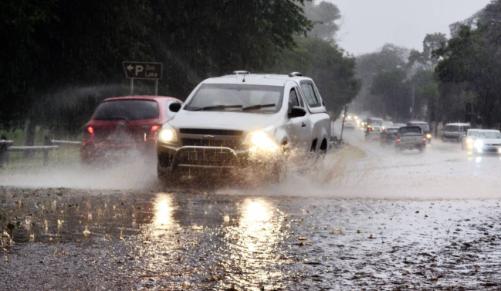
6 killed in Gauteng flood horror

2574925689Johannesburg – The floods that lashed Joburg and Ekurhuleni on Wednesday left a trail of destruction, with at least six people killed, dozens of vehicles swept away and dwellings damaged. Several people were recovering in hospital after they were injured. Flights were delayed at OR Tambo International Airport.  The flooding, and its impact, was described by police as nothing short of a disaster. On Wednesday night, Joburg metro police department spokesperson Edna Mamonyane said the situation on the roads was a disaster. …more

Donald Trump’s foreign policy on Africa is likely to be: ‘Where’s that?’

deb76143f68b4899b0fe22267e548f74Africa is likely to slide down the list of foreign policy priorities of a Donald Trump administration. This is because America’s foreign policy is determined by both domestic and foreign issues.

When it comes to domestic factors Trump is not going to be open to lobbying by the African diaspora in the US which has, historically, always played an important role in pushing African policy and keeping the continent on the domestic agenda. But this constituency hasn’t helpedTrump at all in this election so there’s no need for any payback. And I think that the kind of visibility Africa had is also going to fall in social movements and society in general in the US. ….more

BBC: Self-care could cut need for millions of GP visits

Below are extracts from a news item on the BBC website. Full text here: http://www.bbc.co.uk/news/health-37871180

‘Simple self-care measures could end the need for millions of visits to GPs every year… Back pain is one of the most common causes for a GP visit yet the majority of cases can be treated with over-the-counter treatments and self care. The same is true, says the LGA, of other minor ailments, such as coughs, colds and indigestion…

‘Dr Ian Banks, of the Self Care Forum – a body made up of representatives from organisations including the Men’s Health Forum, Public Health England and the Royal College of Nursing, said: “Most people are entirely capable of looking after themselves most of the time, self-treating when it’s safe and knowing where and when to seek help when they need it. “There will always be others however, who might need a bit more support to become empowered and confident in making the right health decision.”‘

Comment: The above relates to the National Health Service (UK). However, the same principle applies to all countries. More could be done to empower citizens, families and children with the healthcare information they need to provide basic health care. And to help them know when the patient needs to be transferred to a health facility. In the UK, there is an excellent website for patients called NHS Choices:
http://www.nhs.uk/pages/home.aspx  In low- and middle-income countries, the most promising method for delivering healthcare information to citizens is via mobile phones. The working group of the HIFA Project on Mobile Healthcare Information For All is campaigning for such information to be preloaded onto all mobile phones before sale. http://www.hifa.org/projects/mobile-hifa-mhifa

Best wishes, Neil

Let’s build a future where people are no longer dying for lack of healthcare knowledge – Join HIFA: www.hifa.org
Systematic review and metanalysis. Online Course on Coursera

There have been many discussionson the list on the importance of systematic reviview and metanalysis.

I wish to share the opportunity offered by the  ohns Hopkins University to have a free online 6 week course through Coursera.  Introduction to systematic review and metanalysis.

The online course will introduce methods to perform systematic reviews and meta-analysis of clinical trials. How to formulate an answerable research question, define inclusion and exclusion criteria, search for the evidence, extract data, assess the risk of bias in clinical trials, and perform a meta-analysis. Upon successfully completing this course, participants will be able to: – Describe the steps in conducting a systematic review – Develop an answerable question using the “Participants Interventions Comparisons Outcomes” (PICO) framework – Describe the process used to collect and extract data from reports of clinical trials – Describe methods to critically assess the risk of bias of clinical trials – Describe and interpret the results of meta-analyses

The course will start today, but I think you can still enroll.
https://www.coursera.org/learn/systematic-review

You can do it for free, or upon payment only if you wish to get a certificate.

Best wishes
Paola

Paola De Castro
Direttore, Settore Attività Editoriali
Istituto Superiore di Sanità
Viale Regina Elena, 299 – 00161 ROMA (Italy)

tel. + 39 06 49906004
e-mail   paola.decastro@iss.it

John Hopkins CCP & World Animation Day (28 October)

‘To mark World Animation Day (28 October), John Hopkins CCP pulled together a selection of animation videos that have been used over the years for social and behaviour change communication.’
https://medium.com/@johnshopkinsCCP/happy-world-animation-day-a6572bd299d#.vevzpdos7

‘Happy World Animation Day!
Animation’s Use in Social and Behavior Change Communication

‘Can animations inspire greater health and wellbeing? You bet. CCP uses animation as a tool to convey important health messages to a variety of audiences. There are several reasons why we might choose to use animated videos (over live action films) in our public health campaigns. Animated characters can be drawn somewhat generically, appealing to a broader audience. From a practical perspective, animation allows for certain creative licenses that live-action doesn’t. It’s easier to translate and its minimalist qualities keep viewers focused on the message, rather than on distracting background details…’

Let’s build a future where people are no longer dying for lack of healthcare knowledge – Join HIFA: www.hifa.org

CABI tackles global health with its first open access book – Global Health Research in an Unequal World: Ethics case studies from Africa

The CABI website links to the Directory of Open Access Books where you can find downloadable books on various subjects including over 300 on medicine and 350 on social science. The books are not all in English, there are publications in a number of other languages too, and the website itself has English and French versions. Definitely worth a look.

http://www.doabooks.org/doab?func=subject&uiLanguage=en

HIFA profile: Malcolm Brewster is a Community Nurse with the National Health Service, UK

“Almost Half Of Medical Trials Are Never Published And It’s Hurting Patients”

‘A new website has found that 8.7 million patients in the last decade have taken part in clinical trials that have never seen the light of day – and says this failure to publish stops doctors making good decisions about medicines.’

‘Nearly half of clinical trials worldwide are never published, according to a new website run by academics at University of Oxford including the data transparency campaigner Dr Ben Goldacre.

‘Scientists say the failure to publish medical data harms patients by skewing scientific understanding and preventing doctors from providing the best available treatments…’

Full text: https://www.buzzfeed.com/tomchivers/almost-half-of-medical-trials-are-never-published-and-its-hu?utm_term=.jiKJNKGlQa#.flKynpEgLk

It would be interesting to know the level of non-publication in different countries, including clinical trials carried out in high-income versus low- and middle-income countries. For example, is it easier for pharmaceutical companies to avoid publication of results that do not support their commercial interests, when the research is undertaken in LMICs?

Also, what proportion of non-clinical health research is never published?

Best wishes, Neil

Let’s build a future where people are no longer dying for lack of healthcare knowledge – Join HIFA: www.hifa.org
New AIDSFree PMTCT Technical Brief

AIDSFree is happy to announce the release of our latest technical brief on PMTCT of HIV/AIDS!

The past decade has seen tremendous progress in making services to prevent mother-to-child transmission of HIV (PMTCT) services more available in many HIV high-prevalence settings. Despite this progress, new HIV infections among pregnant women, newborns, and infants remain unacceptably high, and AIDS remains one of the leading causes of death among women of reproductive age and infants worldwide.

To eliminate MTCT, HIV programs are increasingly seeking ways to engage private actors more fully in expanding and sustaining national HIV and PMTCT responses. This technical brief presents options for engaging private sector actors in rapidly extending the availability of PMTCT services. The discussion includes successes, lessons, and challenges that can inform the efforts of governments, donors, and implementers to adapt or replicate private sector models in new settings.

Read more here: http://bit.ly/2cmT2PF

ALEX PENLER COMMUNICATIONS OFFICER | AIDSFREE
PHONE: 703.310.5232 | WWW.JSI.COM FB Twitter
TWITTER: @APenler SKYPE: alex.penler

HIFA profile: Alex Penler is Communications Officer at JSI in the USA. Professional interests: Gender, Global Health, HIV/AIDS.  alexandra_penler AT jsi.com

Upgrading Community Healthcare Providers knowledge in family planning, care and basic life saving know-how is imperative

Press release: working to contribute to the achievement of major global efforts, especially efforts towards promoting family planning, sexual and reproductive health, AIDS-free generation, Ending Preventable Child and Maternal Deaths.
We are delighted that this initiative has been published by International Trade Council on their website to spread the news for us since we’ve the challenge to design our own website. The HIFA and CHIFA Groups can also help to spread the information about this project for us. Those interested in collaborating in this project can also contact us. Please, you can see the link here: http://thetradecouncil.com/the-clinical-training-center-for-family-planning-ctcfp-in-cameroon

UHC Day 2016: Let’s Get Started!

The Health for All movement — in which health information plays a vital role — is at a crossroads. In the last year, more world leaders than ever have echoed our calls to action. At the same time, historic commitments are being tested in practice, and it’s up to all of us to band together and ensure that progress doesn’t fall short for those who need it most.

Fortunately, this movement is unstoppable for a reason: We rejected complacency the moment we committed to health for all. Ambition and action are in our DNA.

We hope the 12.12.16 Starter Kit will inspire, guide and energize you as you plan your activities for UHC Day (translations will be made available in the coming week). More resources, including a more robust digital toolkit and directory of partner activities, will follow as we get closer to 12 December. In the meantime, if you already have a sense of how you’re planning to mark the day, let us know here.
http://universalhealthcoverageday.org/activities/

Thank you again for all that you do to keep this movement going strong. We hope you find the Starter Kit helpful, and encourage you to reach out with questions or comments anytime.

Let the countdown begin!

Emily T. Bigelow
Global Health Strategies | UHC Coalition
Mobile:  +1 646 619 7631
Twitter: @UHC_Day

“Dr. Moosa: No queues, no fuss, bringing healthcare to your door” Health24

9f0c5d6b713f4f1e8d3763d5e75a4797For those living in ward 11, one of the poorer areas of Soweto, waiting in long queues for medical treatment had become increasingly problematic.
One of the first in Africa

For the inhabitants of this area, though, things have changed for the better. Nowadays, community-based health workers, trained and equipped with basic health education, go from door-to-door to do household assessments, gathering information about the family’s medical history.

Chiawelo Community Practice (CCP) is an experiment in developing community-based care in South Africa, a model that involves General Practitioner (GP) teams contracted to the National Health Insurance. It is one of the first of these projects on the African continent….more

Behind the Headlines: Your guide to the science that makes the news

Capture.PNG

http://www.nhs.uk/news/Pages/NewsIndex.aspx