
A coterie of politically connected black businesspeople has amassed extraordinary wealth, but the state remains outside the circuits of production, write Jeremy Seekings and Nicoli Nattrass. The ANC took office committed to increasing the ownership and control of business by black people. Considerable effort went into the formulation and implementation of the black economic empowerment (BEE) legislation and regulations that compelled business to co-operate in the transfer of large shares of ownership and control to a new, black corporate elite. The close, informal links between black political and economic elites contrast with the mostly strained formal and informal links between ANC leadership and government ministers and the established white economic elite…..more
Author Archives: Shabir Moosa
#WoncaAfrica 21 November 2016
‘No will to drive NHI in SA’
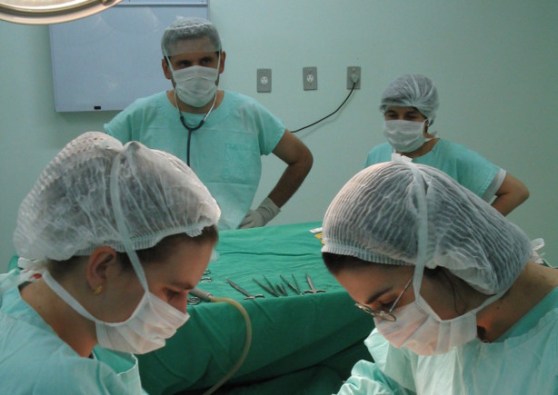 Johannesburg – Falling state revenue collections and warnings from the finance minister that South Africa has a very constrained package and tough choices have to be made might drive a rift between National Health Insurance (NHI) hard liners and those seeking other funding options to improve health services for more South Africans.
The keynote speaker of this year’s SA Medical Association conference, which opened at the Sandton Convention Centre on Friday, Olive Shisana, blamed the lack of political will for the lack of progress in implementing the proposed NHI.
“The political will is just not there. Nine years after the ANC Polokwane resolution to implement NHI, we still do not have the legislation to introduce NHI,” she said.
She was adamant that there was enough money in the fiscus to fund NHI, as the 8.5 percent of gross domestic product that South Africa currently spent in both the private and public sectors was more than the amount spent by some countries with universal health coverage. …more
Fed-up NHI doctors say they are nothing more than glorified nurses
GPs working in the National Health Insurance’s biggest pilot site say they won’t stay because of drug stock-outs, staff shortages and long queues. Fewer than one out of three general practitioners contracted by one of the National Health Insurance (NHI) scheme’s pilot sites believe that the scheme will have a “discernible impact” on giving “previously underserved communities” better access to healthcare, according to a study published in the South African Medical Journal in November. Researchers interviewed 55 of the 75 GPs who worked at one of 17 clinics in the NHI’s biggest pilot district, Tshwane, between April and June last year. Many of the doctors said they wouldn’t be staying on “for a long time” because drug stock-outs, staff shortages and the “pressure of long queues” had reduced them to nothing more than “glorified nurses”. ….more
Call for Applications: Alan Magill Fellowship 2017
Seeking Applicants for the Alan J. Magill Fellowship
$50,000 – Open Only To Low/Low-Middle Income Country ASTMH Members [Angola / Benin / Burkina Faso / Burundi / Cameroon / Cabo Verde / Central African Republic / Chad / Comoros / Congo / Côte d’Ivoire / Democratic Republic of the Congo / Djibouti / Equatorial Guinea / Eritrea / Ethiopia / Gambia / Ghana / Guinea / Guinea-Bissau / Kenya / Lesotho / Liberia / Madagascar / Malawi / Mali / Mauritania / Morocco / Mozambique / Namibia / Niger / Nigeria 2 / Papua New Guinea / Rwanda / Senegal / Sierra Leone / Somalia / South Sudan / Sudan / Swaziland / Timor-Leste / Togo / Uganda / United Republic of Tanzania / Yemen / Zambia / Zimbabwe
We are proud to launch the Alan J. Magill Fellowship, created in partnership with the Bill & Melinda Gates Foundation to honor the life, example and legacy of Alan J. Magill, MD, FASTMH, a widely recognized and respected leader in the global tropical medicine community.
In keeping with the prominent roles displayed throughout Alan Magill’s life, the Magill Fellowship:
Will provide funding of $50,000 for a period of up to two years to one recipient
Will support mentorship, career and/or leadership development projects for early- to mid-career ASTMH members in low/low-middle income countries focusing on leadership development in tropical medicine
Stipulates that the selected Magill Fellow will work closely with a mentor (ideally an ASTMH member, but not required) who will play a prominent role in developing and executing the Fellow’s two-year plan of activities
While the award will recognize achievement in tropical medicine, it is not intended to extend current research or clinical activities. Instead, it is designed to support career-broadening experiences to enhance professional development and leadership opportunities beyond those traditionally available from within the applicant’s home organization?and in so doing, equip awardees to later assume leeadership and mentoring roles in various aspects of tropical medicine.
For further details, review Call for Concept Papers here.
Deadline for submission is February 1, 2017.
HIFA profile: Lady Velarde Murrugarra is Coordinator, e-Prevencion in Latin America and Caribbean, and is currently Vice-President of the Association of Peruvian Telemedicine and Telehealth (2015-2017) and Director of Relations Internationals Association Peruvian Bio-Informatics (APIM). ladymurrugarra AT yahoo.es
BMJ: New models of working risk throwing the baby out with the bathwater
A strong case is being made in many countries that the traditional model of general practice needs to change. Critics claim that practices are too small and too isolated, that they are increasingly unable to meet their patients’ needs and expectations, and are unfit to lead the necessary redesign of health systems.1 2 As general practice in the UK in particular struggles with a demoralised workforce and inadequate resources,3 these criticisms are being taken on board. Quietly but rapidly, and in a largely ad hoc fashion, general practice is changing; small practices are closing or merging with other practices, practice networks are forming, the primary care workforce is becoming increasingly multidisciplinary, and new integrated models of care that bring together community and hospital based services are being developed.
Many of these changes may be good for patients and for the health system, but insufficient attention is being paid to the possible unintended consequences. One substantial risk should be exercising policy makers but is not doing so: that the emerging new models may not deliver the same benefits to patients and the health system as the traditional model. ….more
Clubfoot training in Africa
At the University of Oxford we have been developing clubfoot training materials for healthcare professionals in Africa, to strengthen care for children born with clubfoot. Working with CURE Clubfoot and Global Clubfoot Initiative, and over 70 clubfoot practitioners from the UK and 18 countries in Africa, we are excited to be in the final stages of producing an instructor training course, a Basic Clubfoot Treatment Provider course (using the Ponseti method), and an Advanced Non-Surgical Clubfoot Treatment Provider course.
We’ve piloted the materials in French and English, and during November 2016 we are raising funds to support further clubfoot training in Africa next year, and further translation.
We’d love to hear from colleagues interested in building up clubfoot services in Africa.
Grace Le
Africa Clubfoot Training project, NDORMS, University of Oxford
In response to a message from earlier today about Clubfoot training in Africa, I would like to make everyone aware of SAWBO’s educational clubfoot animation. Here is the link where you can view and download the video in its various languages:
http://sawbo-animations.org/video.php?video=//www.youtube.com/embed/1otnjPTsEXU
This video is free to use for any educational purposes. If you would like to work with us to translate this video into another language, please email me at benblalock@sawbo-animations.org
Thanks,
—
Ben Blalock
SAWBO™
Scientific Animations Without Borders™
Can illiterate women in conflict areas be qualitative researchers? Yes, they can!
Conducting research and collecting information to understand the complexity of maternal health issues among hardest-to-reach people in conflict affected areas is a challenge. Researchers in the field usually face competition with organizations providing services and food, while they offer to listen. The power differences between the researchers and participants is also a challenge.
To address these issue we trained illiterate marginalized women in conflict areas to be qualitative researchers. They designed research instruments, and collected and analyzed qualitative data. We just published an article that addresses how contextualized data can be collected in a short time and under conditions in which researchers working in conflict-affected zones might not have established trust with the participants. This article is an open access.
http://qhr.sagepub.com/content/early/2016/11/02/1049732316673975.full
All the best
Khalifa
Dr Khalifa Elmusharaf, MBBS, PgDip, FRSPH, PHD
Senior Lecturer in Public Health
Graduate Entry Medical School
University of Limerick, Ireland
www.ul.ie/gems/staff/dr-khalifa-elmusharaf
Researchgate Twitter Linkedin
Euthanasia South Africa – How would health professionals in Nigeria react if the judiciary ever ruled in favour of it?
We share this News from South Africa (SA) in full and wondered what would happen if it were here – would the health professionals react like their colleagues in SA? : READ ON
—
SCA hearing on the ’right to die’ starts
NOVEMBER 9TH, 2016 A FOCUS, MEDICO-LEGAL
The Supreme Court of Appeal is hearing arguments in the government and Health Professions Council of SAappeal against a High Court ruling granting a terminally ill patient the right to die. The HPCSA fears that euthanasia can be abused in SA, because of the power imbalance in doctor-patient relationships.
Assisted dying, also known as euthanasia, is illegal in South Africa. But in a ground-breaking ruling in 2015, South Africa’s High Court granted a terminally ill man, Robin Stransham-Ford, the right to die with dignity. Stransham-Ford died just hours before the High Court ruling was delivered. [… Note from HIFA mopderator: Article is protected by copyright. Read in full here:
http://www.medicalbrief.co.za/archives/sca-hearing-right-die-starts/ ]
—
Joseph Ana
Africa Center for Clin Gov Research & Patient Safety
@ HRI West Africa Group – HRI WA
Consultants in Clinical Governance Implementation
Publisher: Health and Medical Journals
8 Amaku Street Housing Estate, Calabar
Cross River State, Nigeria
Phone No. +234 (0) 8063600642
Visit Website: www.hriwestafrica.com
E-mail: hriwestafrica@gmail.com
Telemedicine in Low-Resource Settings
Telemedicine in Low-Resource Settings
Editors: Richard Wootton and Laurent Bonnardot
Frontiers Research Topics, March 2015
http://journal.frontiersin.org/researchtopic/2506/pdf 128 pp. 13.6 MB
‘Telemedicine networks to support healthcare workers in resource-limited settings (often for humanitarian purposes) have evolved over the last decade or so in a largely autonomous way. Communication between them has been informal and relatively limited in scope. This situation could be improved by developing a comprehensive approach to the collection and dissemination of information. There is little published information about the performance of these telemedicine networks (and methods for measuring it), about how best to manage them, and about how to share resources between them.’
—
Let’s build a future where people are no longer dying for lack of healthcare knowledge – Join HIFA: www.hifa.org
Meeting the Need, Fulfilling the Promise: Youth and Longacting Reversible Contraceptives
Meeting the Need, Fulfilling the Promise: Youth and Longacting Reversible Contraceptives
by Nancy Yinger
Policy Brief, Population Reference Bureau, September 2016
http://www.prb.org/pdf16/pace-policy-brief-larcs-2016.pdf 8 pp. 2.2 MB
The importance of providing reproductive health information and services to youth is gaining worldwide attention. In 2015 the Global Consensus Statement on youth and long-acting reversible contraceptives (LARCs) was launched and more than 50 influential organisations and governments have signed on. This brief discusses the advantages and challenges of providing LARCs – specifically contraceptive implants and intrauterine devices (IUDs) – to youth, and provides case studies from Ethiopia and Madagascar. It also outlines actions for policymakers and donors to make youth access to LARCs a reality.
Looking back on the Cochrane Colloquium, Seoul, South Korea
More info here:
http://us7.campaign-archive2.com/?u=1d383d09bbdd7387b83db6f3c&id=2f4bc7e66a&e=e39011a5a8
The plenary and AGM videos of the recent Cochrane Colloquium in Seoul are now available here:
https://www.youtube.com/playlist?list=PLCo8P5_ppmQhnV33Wbz_0KMSCr3BRnR18
Congratulations to Cochrane CEO, Mark Wilson, Editor-in-Chief David Tovey and all at Cochrane for what was clearly a hugely successful conference.
Our thanks also to Soumyadeep Bhaumik, HIFA Country Repreesentative, India, for giving a presentation at the event about the HIFA discussion earlier this year on Evidence-Informed Country-level Policymaking
Best wishes, Neil
Let’s build a future where people are no longer dying for lack of healthcare knowledge – Join HIFA: www.hifa.org
How can research be made more accessible in LMICs? (10) AJPP & AJOL
Dear Jan De Maeseneer,
“I think the African Journal for Primary Health Care and Family Medicine, started in 2008 with a Seed money from Belgium Development of 12000 Euro, and actually with Prof Bob Mash as Editor, provides an excellent example of what can be realised with vision, enthusiasm and skills.”
We have repeatedly heard on HIFA that local health research published in ‘local’ (national) journals is vital to inform ‘local’ policy and practice. Time and time again, we hear that practitioners and policymakers are persuaded only when they are provided with local evidence.
I find it hugely encouraging to read about the growing success of journals such as the African Journal for Primary Health Care and Family Medicine. It seems to me that an increasing number of African medical journals are flourishing, and indeed are doing so with an open-access business model. I would be interested to better understand this success and what has supported it. In the case of the African Journal for Primary Health Care and Family Medicine, it seems this has been seeded with a relatively modest amount of money (12,000 Euros). Other African journals are in twinning partnerships with journals in high-income countries in the African Journals Partnership Programme. Many (most?) African medical journals are also part of the African Journals OnLine (AJOL) programme, which was started by INASP and which is now run independently from South Africa. INASP has since replicated the AJOL approach in other regions and countries, including Bangladesh, Nepal and Sri Lanka.
I pay tribute to all these initiatives. Financially, their cost is (I think) minimal and yet they have had such a huge impact on the availability of local health research. And yet I suspect that the success of many individual journals is precarious. So what can be done to further strengthen local publishing in Africa and other regions worldwide?
Best wishes, Neil
Let’s build a future where people are no longer dying for lack of healthcare knowledge – Join HIFA: www.hifa.org
HIFA profile: Neil Pakenham-Walsh is the coordinator of the HIFA campaign (Healthcare Information For All – www.hifa.org ) and current chair of the Dgroups Foundation (www.dgroups.info). Twitter: @hifa_org FB: facebook.com/HIFAdotORG neil@hifa.org
Healthcare information on YouTube: A systematic review
Below are the citation, abstract and selected extracts of a new paper in Health Informatics Journal, highly relevant to the the HIFA working group on Health Information for Citizens, Parents and Children: http://www.hifa.org/projects/citizens-parents-and-children
Unfortunately the full text is restricted-access.
CITATION: Healthcare information on YouTube: A systematic review
Kapil Chalil Madathil, A Joy Rivera-Rodriguez, Joel S Greenstein and Anand K Gramopadhye Clemson University, USA
Health Informatics Journal 2015, Vol. 21(3) 173 –194
https://www.ncbi.nlm.nih.gov/pubmed/24670899
ABSTRACT
This article reviews the peer-reviewed literature addressing the healthcare information available on YouTube. Inclusion and exclusion criteria were determined, and the online databases PubMed and Web of Knowledge were searched using the search phrases: (1) YouTube* AND Health* and (2) YouTube* AND Healthcare*. In all, 18 articles were reviewed, with the results suggesting that (1) YouTube is increasingly being used as a platform for disseminating health information; (2) content and frame analysis were the primary techniques employed by researchers to analyze the characteristics of this information; (3) YouTube contains misleading information, primarily anecdotal, that contradicts the reference standards and the probability of a lay user finding such content is relatively high; (4) the retrieval of relevant videos is dependent on the search term used; and (5) videos from government organizations and professional associations contained trustworthy and high-quality information. YouTube is used as a medium for promoting unscientific therapies and drugs that are yet to be approved by the appropriate agencies and has the potential to change the beliefs of patients concerning controversial topics such as vaccinations. This review recognizes the need to design interventions to enable consumers to critically assimilate the information posted on YouTube with more authoritative information sources to make effective healthcare decisions.
SELECTED EXTRACTS
Studies focusing a health issue. The five studies focusing on specific healthcare concerns analyzed videos on vaccinations (n = 3), organ donation (n = 1), and obesity (n = 1). Keelan et al.14 found that 32 percent of the videos they analyzed were not supportive of immunization and that these videos received a higher mean star rating and more views than the supportive ones.
In an effort to make informed healthcare decisions, patients are increasingly turning to the Internet to better understand their medical conditions and treatments. As seen in this review, YouTube hosts videos providing information on the pathogenesis, diagnosis, treatment, and prevention of various health conditions. The majority of the videos reviewed in the articles cited were narrative experi-ences posted by individual users. This review of 18 articles provides six insights on the character-istics of health-related information available on YouTube: (1) YouTube hosts health care–related communication and health consumers are viewing this information; (2) public service announce-ments from organizations, documentaries, and TV shows, and user-generated anecdotal content in which users discuss their perspectives and their experiences were the most commonly found sources; (3) misleading information is found on YouTube, and the probability of healthcare con-sumers encountering such material during the information-seeking process is high; (4) reliable postings from government/professional organizations are available; (5) overall, there was little difference between the frequency of viewings between misleading and accurate posts; and (6) there has been little research on developing interventions to increase the ease with which users can find useful healthcare information on YouTube.
Three major safety concerns were identified when consumers use information obtained from YouTube for health care decision-making: (1) YouTube is used as a medium for promoting unsci-entific therapies that are yet to be approved by the appropriate agency,10 (2) YouTube contains information contradicting reference standards/guidelines, and (3) YouTube has the potential to change the beliefs of patients about controversial topics such as vaccinations.
As seen from this review, YouTube holds a vast amount of data pertaining to health care. Some of this information is mis-leading or incorrect. With the results of recent surveys suggesting that YouTube is ranked as the third most accessed website worldwide, the probability of disseminating such misleading informa-tion to healthcare consumers is high and can have catastrophic implications.
—
Best wishes, Neil
Let’s build a future where people are no longer dying for lack of healthcare knowledge – Join HIFA: www.hifa.org
Key Role of Drug Shops and Pharmacies for Family Planning in Urban Nigeria and Kenya
CITATION: Key Role of Drug Shops and Pharmacies for Family Planning in Urban Nigeria and Kenya
Meghan Corroon, Essete Kebede, Gean Spektor, Ilene Speizera.
Global Health: Science and Practice
http://www.ghspjournal.org/content/early/2016/11/11/GHSP-D-16-00197.1.full.pdf+html
‘Pharmacies and drug shops provide a rich opportunity for expanding family planning access to urban women, especially unmarried and younger women. In urban Nigeria and Kenya, drug shops and pharmacies were the major sources for most short-acting methods, including oral contraceptive pills, emergency contraceptives, and condoms.’
The authors note that ‘the low levels of reported family planning-related training by interviewed staff in these outlets is a significant area for possible program expansion and improvement’.
In many countries, women need a prescription to access oral contraceptives, but there is a growing movement for oral contraceptives to be made available over-the-counter. http://ocsotc.org/ The latter site says ‘Additional research suggests that requiring a prescription from a health care provider for hormonal contraception does not necessarily improve reproductive health outcomes, and that women [in the USA] are able to screen themselves for contraindications’. This is not likely generalisable to women in LMICs, where access to understandable information on absolute contra-indications is likely to be very limited.
Best wishes, Neil
Let’s build a future where people are no longer dying for lack of healthcare knowledge – Join HIFA: www.hifa.org
The use of specialty training to retain doctors in Malawi: A discrete choice experiment
The use of specialty training to retain doctors in Malawi: A discrete choice experiment
Kate L. Mandeville, Godwin Ulaya, Mylène Lagarde et al.
Social Science & Medicine, Vol. 169, November 2016, pp. 109–118
10 pp. 770 kB
‘Emigration has contributed to a shortage of doctors in many sub-Saharan African countries. Specialty training is highly valued by doctors and a potential tool for retention. Yet not all types of training may be valued equally. Doctors preferred timely training outside of Malawi in core specialties (internal medicine, general surgery, paediatrics, obstetrics & gynaecology). The results indicate that indiscriminate expansion of postgraduate training to slow emigration of doctors from sub-Saharan African countries may not be effective unless doctors’ preferences are taken into account.’
Let’s build a future where people are no longer dying for lack of healthcare knowledge – Join HIFA: www.hifa.org
WONCA E-Update Friday 18th November 2016
WONCA News – October 2016
The latest WONCA News (October 2016) is still available via the WONCA website, with lots of WONCA news, views and events.
All change at WONCA
Following on from the recent WONCA Executive and Council meetings in Brazil there have been a number of significant changes in the WONCA Executive and in Chairs of the various WONCA Working Parties and SIGs. The biggest changes are that Professor Amanda Howe has now taken over as the new WONCA President – and WONCA’s first woman President – whilst Dr Donald Li of Hong Kong was elected by Council as the new WONCA President-elect. He will assume office in October 2018 at the WONCA Council meeting in Korea.
WONCA News in coming months will feature all the new Executive and Chairs, so keep clicking on www.globalfamilydoctor.com
WONCA Rio Statement
At its recent meeting in Rio de Janeiro, WONCA Council approved the WONCA Rio Statement on the Contribution of Family Doctors to Universal Health Coverage:
The World Organization of Family Doctors (WONCA) calls for all countries to increase the number of family doctors in order to achieve high quality comprehensive primary care and universal health coverage.
Effective strategies include: improving the skills of doctors already working in the community; recognising Family Medicine as a specialty and enhancing the academic basis of the discipline; strengthening the family medicine experience of all medical students; actively recruiting more medical graduates into more postgraduate family medicine training programs; giving all family doctors and members of their teams the resources to carry out their work, recognising their contribution, and ensuring their retention in the workforce – all in order to deliver excellent integrated cost-effective people-centred care.
WONCA EMR Conference – abstract deadline extended
The next major event in the WONCA calendar will be the WONCA EMR (Eastern Mediterranean Region) conference scheduled from 2nd to 4th March 2017 at the Dusit Thani Hotel in Abu Dhabi. We have been advised that the deadline for abstracts has been extended until 1st December – more details are available through the conference website (www.woncaemr2017.com) or via the WONCA website.
WONCA Rural Health Conference – call for abstracts closes November 30
The Australian College of Rural and Remote Medicine (ACRRM) is encouraging researchers, rural medical practitioners and other health professionals to submit abstracts for the 14th WONCA World Rural Health Conference which will be held in Cairns from 29 April to 2 May 2017.
Global monitoring system for action on the social determinants of health (SDH) – web-based consultation (WHO)
Global monitoring system for action on the social determinants of health (SDH) – web-based consultation
World Health Organization
Further Information: http://www.who.int/social_determinants/monitoring-consultation/en/
Deadline: 31 December 2016
Background (consultation Paper) / Panorama (documento de consulta):
The World Health Organization (WHO) is holding a global consultation on its proposed global monitoring system for action on the social determinants of health (SDH). To support submissions on the monitoring system, this consultation paper aims:
To introduce the monitoring of action on the SDH (pp 1-4);
To present the proposed monitoring framework (pp 4-6);
To present the proposed core basket of indicators (pp 6-13); and
To present the rationale and evidence base for the measurement concepts (pp 14-18).
Link to the document: click here
http://www.who.int/social_determinants/consultation-paper-SDH-Action-Monitoring.pdf?ua=1
Member States and any other organizations or individuals are invited to comment on any aspect of the proposed framework and indicators that are presented in this consultation paper. However, WHO especially welcomes feedback on the following questions:
– Do the framework objectives cover the pledges made in the Rio Political Declaration on the Social Determinants of Health?
– Do you recommend other indicators – either as preferred indicator or place-holder indicators?
– Do you recommend other data sources for proposed indicators?
Deadline for feedback / Fecha límite para contribuciones:
Please email feedback to actionsdh@who.int by 31 December 2016
Visit the Portal/Blog of the PAHO/WHO Equity List & Knowledge network : http://equity.bvsalud.org
Visite el Sítio/Blog de la Lista de Equidad y Red de Conocimiento: : http://equity.bvsalud.org/es
For additional information and to send contributions, please contact Mrs. Eliane P. Santos, Advisor, Library and Information Networks – KBR/ PAHO, Regional Office of the World Health Organization – pereirae@paho.org
Pan American Health Organization, Regional Office of the World Health Organization for the Americas http://www.paho.org
Office of the Assistant Director. Area of Knowledge Management, Bioethics and Research (KBR)
2016 Symposium Stop Double Standards: From Prevention through Cure to ZERO TB
A conference was recently held in Liverpool (UK) to address ‘very large disparities in recommendations and services for TB prevention and drug-resistant TB care between limited and well-resourced settings’. I would be interested to hear more from HIFA members about ‘disparities in recommendations’. Presumably WHO international recommendations are universal and not contributing to these disparities? One would expect the disparities to arise not from these recommendations but from differences in the way that MoHs develop national policy (taking into account the burden of disease, available funding and so on)?
‘On October 27, 2016, in Liverpool, UK, Treatment Action Group, Advanced Access & Delivery, Harvard Medical School, Partners In Health, and the Stop TB Partnership sponsored a symposium in conjunction with the Union World Conference on Lung Health.
‘The symposium, “Stop Double Standards: From Prevention through Cure to ZERO TB,” focused on biomedical TB prevention and in treating drug-resistant TB. We know both of these areas are essential to an effective TB response, yet very large disparities in recommendations and services for TB prevention and drug-resistant TB care persist between limited and well-resourced settings. Opening and closing speakers provided overviews on the scientific, human rights, and patient perspectives on the importance of ending double standards in TB prevention and drug-resistant TB care. Two panels composed of legal, activist, implementer, and researcher experts further discussed and provided ideas for a way forward. Question and answer sessions followed each panel.’
Video recordings of the event are available here:
http://www.treatmentactiongroup.org/tb/advocacy/zero-symposium-2016
—
Let’s build a future where people are no longer dying for lack of healthcare knowledge – Join HIFA: www.hifa.org
Webinar: The Health Workforce, with Tana Wuliji, Technical Officer for Health Workforce, WHO
To view this email as a web page, go here. http://bit.ly/2f6Fg56
Global Health Programme
You are cordially invited to join the Public Webinar Organised by the Global Health Centre at the Graduate Institute: The Health Workforce: A Good Investment
Tuesday, 22 November 2016 | 12:00 – 13:00 CET
The High Level Commission on Health Employment and Economic Growth:
- Investing in the health workforce in the context of the SDGs
- Why is investing into the health workforce the right political choice?
- How does investing in the health workforce contribute to the SDGs?
- What needs to be changed to maximise future returns on investments? Who has to act?
The health sector is not only a key economic sector and job generator, but economic growth and development also depend on a healthy population. The High-Level Commission on Health Employment and Economic Growth recently published its first report outlining the importance of a global investment in the health workforce, and the social and economic benefits this will have in areas beyond just health. Gains can be made across several SDGs, but upholding rights, good governance, political commitments and inter-sectorial and multi-stakeholder cooperation are required.
The Global Health Centre invites you to join a webinar discussion with Dr Tana Wuliji to explore the implications of the Commission’s recommendations on our economies and to foster an understanding of the urgency to act.
Tana Wuliji, Technical Officer for Health Workforce, World Health Organization
Tana Wuliji is a health workforce specialist, researcher and policy advisor at the World Health Organization (WHO). She has led workforce studies and advised on health workforce planning and strategy implementation in 15 countries in Africa, Asia and the Middle East. Her current work supports the Joint Secretariat with the ILO and OECD for the High-Level Commission on Health Employment and Economic Growth. In 2015 she acted as the WHO focal point on health workforce for Ebola-affected countries. Tana directed the Health Workforce Development unit in a USAID program to improve the quality of care and strengthen health systems in 32 low and middle- income countries between 2010 and 2014. In 2005-2009, she established a new portfolio on workforce and education at the International Pharmaceutical Federation (FIP). She received her PhD from the University of London and a BPharm from the University of Otago.
Please join us for this discussion with Tana and ask your questions! In order to receive the login details, please register here, free of charge. The webinar is supported by the Swiss Federal Department of Foreign Affairs. For more information, please visit the event website or contact globalhealth@graduateinstitute.ch
GRADUATE INSTITUTE OF INTERNATIONAL AND DEVELOPMENT STUDIES
PO BOX 136 – 1211 GENEVA 21 – SWITZERLAND – Tel. +41 22 908 57 00 – http://graduateinstitute.ch
 AfroPHC