An interview with Professor Maria-Pilar Astier Pena, Chair of the Wonca Working Party on Quality and Patient Safety

Professor Maria-Pilar Astier-Pena of Spain, talks on addressing Quality and Patient Safety in Primary Care.

An interview with Prof. Chris Dowrick, Chair of the Wonca Working Party on Mental Health

Developing and testing of a screening tool to predict people without IgE-mediated allergy: a quantitative analysis of the predictive value of a screening tool

Victoria S Hammersley, Jessica Harris, Aziz Sheikh, Emma Davidson and Samantha Walker

Exposure of undergraduates to authentic GP teaching and subsequent entry to GP training: a quantitative study of UK medical schools

Hugh Alberti, Hannah L Randles, Alex Harding and Robert K McKinley

Abstract

Background It has been suggested that the quantity of exposure to general practice teaching at medical school is associated with future choice of a career as a GP.

Aim To examine the relationship between general practice exposure at medical school and the percentage of each school’s graduates appointed to a general practice training programme after foundation training (postgraduate years 1 and 2).

Design and setting A quantitative study of 29 UK medical schools.

Method The UK Foundation Programme Office (UKFPO) destination surveys of 2014 and 2015 were used to determine the percentage of graduates of each UK medical school who were appointed to a GP training programme after foundation year 2. The Spearman rank correlation was used to examine the correlation between these data and the number of sessions spent in placements in general practice at each medical school.

Results A statistically significant association was demonstrated between the quantity of authentic general practice teaching at each medical school and the percentage of its graduates who entered GP training after foundation programme year 2 in both 2014 (correlation coefficient [r] 0.41, P = 0.027) and 2015 (r 0.3, P = 0.044). Authentic general practice teaching here is described as teaching in a practice with patient contact, in contrast to non-clinical sessions such as group tutorials in the medical school.

Discussion The authors have demonstrated, for the first time in the UK, an association between the quantity of clinical GP teaching at medical school and entry to general practice training. This study suggests that an increased use of, and investment in, undergraduate general practice placements would help to ensure that the UK meets its target of 50% of medical graduates entering general practice.

Prof Steve Reid of UCT shares on his visit to Chiawelo Community Practice in March 2017

Annual Stakeholder Workshop for Chiawelo Community Practice 10th May 2017

Dear Stakeholder

Chiawelo Community Practice (CCP) is part of the Ward-based PHC Outreach Team (or WBOT) at Chiawelo Community Health Centre (CHC) and a part of National Health Insurance (NHI) and Primary Health Care (PHC) Re-engineering).

Community Health Workers (CHWs) have been visiting residents in their home to register families and do household assessments. A doctor-clinical associate-nurse team at CCP are currently providing registered families in Wards 11, 12, 15, 16 & 19 with ALL health care services daily, by appointment and with a good attitude. CHWs are also involved in many health promotion initiatives. A key element is engaging stakeholders. We are having a stakeholder workshop to engage YOU in building NHI in these wards.

ANNUAL STAKEHOLDER WORKSHOP

  • Chiawelo Community Health Centre
  • Corner Chris Hani & Rihlampfu Rds, Soweto
  • 9am-1pm Wednesday 10th May 2016

We will briefly provide reports of progress overall. We will then break up into ward groups to develop health priorities and possible solutions. After feedback to the whole meeting, we will develop overall priorities to take the community forward for 2017.

Contact your Ward Health Promotion Coordinator: W10 (Bonnie – (079) 8773223), W11S (Gundo – (073) 1202447), W12 (Janet – (073) 4832046), W13 (Busi – 072) 2632772), W14 (Lebohang – (076) 0895045), W15 (Bongelani – (076) 4892399), W16 (Daniel – (079) 4605711), W19 (Sithembiso – (073) 9264935), W33 (Linda – (062) 0157058). Otherwise RSVP with Thuli (011 9840128).

We are linked to Wits University. We also want to you to become involved in Chiawelo Community Practice as a platform of service, training and research for Wits University.

Yours truly,  Prof. Shabir Moosa, Family Physician (Specialist in PHC)

Chiawelo CP Letter 17-05-10 Annual Stakeholder Workshop

See Annual Report for details: CCP Annual Report 17-01-22

Wonca Talks: Roger Strasser on “Addressing rural needs: A case study of an innovative education strategy from Canada”

Wonca Talks: Michael Kidd on “Family Medicine, the Sustainable Development Goals and the Health of the People of Africa”

PATIENT EDUCATION: What is Osteoporosis and What Causes It?

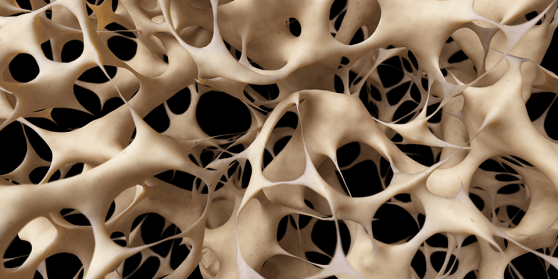
bonecellsOsteoporosis is a bone disease that occurs when the body loses too much bone, makes too little bone, or both. As a result, bones become weak and may break from a fall or, in serious cases, from sneezing or minor bumps.

Osteoporosis means “porous bone.” Viewed under a microscope, healthy bone looks like a honeycomb. When osteoporosis occurs, the holes and spaces in the honeycomb are much larger than in healthy bone. Osteoporotic bones have lost density or mass and contain abnormal tissue structure. As bones become less dense, they weaken and are more likely to break. If you’re 50 or older and have broken a bone, ask your doctor or healthcare provider about a bone density test…..more

Gauteng Health assets offered to settle mounting negligence claims

Gauteng Health has had to offer some of its assets to the sheriff for attachment in a bid to settle mounting legal claims for negligence at provincial and regional hospitals, reports Business Day.

Last year alone, the health department’s legal fees amounted to R569m and medico-legal claims have been piling up since 2009. As a result, legal fees have taken up the bulk of the department’s budget even into the new financial year.

The department’s budget increased from R37.6bn in 2016 to R40.2bn in 2017.

Spokesperson Khutso Rabothata is quoted in the report as saying that the department’s legal team had been working on crafting a plan to find a satisfactory way forward, possibly involving the sheriff. “The sheriff might attach items because there are some cases that still need to be paid off,” Rabothata said…..more

The Community Guide

The Guide to Community Preventive Services (The Community Guide) is a collection of evidence-based findings of the Community Preventive Services Task Force (Task Force). It is a resource to help you select interventions to improve health and prevent disease in your state, community, community organization, business, healthcare organization, or school.

Community Guide reviews are designed to answer three questions:

  1. What has worked for others and how well?
  2. What might this intervention approach cost, and what am I likely to achieve through my investment?
  3. What are the evidence gaps?

The Task Force issues findings based on systematic reviews of effectiveness and economic evidence that are conducted with a methodology developed by the Community Guide Branch.

The Task Force reviews intervention approaches across a wide range of health topics. The interventions are applicable to groups, communities, or other populations and include strategies such as healthcare system changes, public laws, workplace and school programs and policies, and community-based programs.

All of the intervention approaches are intended to improve health directly; prevent or reduce risky behaviors, disease, injuries, complications, or detrimental environmental or social factors; or promote healthy behaviors and environments.

The Community Preventive Services Task Force was established by the U.S. Department of Health and Human Services (DHHS) in 1996 to develop guidance on which community-based health promotion and disease prevention intervention approaches work and which do not work, based on available scientific evidence. The Centers for Disease Control and Prevention (CDC) is the DHHS agency that provides the Task Force with technical and administrative support.

Diagnostic and treatment interventions are not part of The Community Guide, nor are the clinical preventive services provided by a healthcare professional to an individual patient. Reviews of clinical preventive services can be found in The Guide to Clinical Preventive Services…… More

Community Tool Box

logo_complete

Learn A Skill: We offer a wide range of free information and tools to support you in your work.

TABLE OF CONTENTS: Browse 46 Chapters through which you can obtain more than 300 different sections providing practical, step-by-step guidance in community-building skills.

TOOLKITS: Access succinct guidance on 16 core competencies for community work, including how to conduct a community assessment, develop a strategic plan, write a grant, or evaluate your efforts…..more

Five simple tests to predict heart disease risk

Five simple medical tests together provide a broader and more accurate assessment of heart-disease risk than currently used methods, cardiologists at University of Texas Southwestern Medical Centre have found.

Abstract

Background: Current strategies for cardiovascular disease (CVD) risk assessment among adults without known CVD are limited by suboptimal performance and a narrow focus on only atherosclerotic CVD (ASCVD). We hypothesized that a strategy combining promising biomarkers across multiple different testing modalities would improve global and atherosclerotic CVD risk assessment among individuals without known CVD.

Methods: We included participants from the Multi-Ethnic Study of Atherosclerosis (MESA, n=6621) and Dallas Heart Study (DHS, n=2202) who were free from CVD and underwent measurement of left ventricular hypertrophy by electrocardiogram (ECG-LVH), coronary artery calcium (CAC), N-terminal pro B-type natriuretic peptide (NT-proBNP), high-sensitivity cardiac troponin T (hs-cTnT) and high-sensitivity C-reactive protein (hs-CRP). Associations of test results with the global composite CVD outcome (CVD death, myocardial infarction [MI], stroke, coronary or peripheral revascularization, incident heart failure or atrial fibrillation) and ASCVD (fatal or nonfatal MI or stroke) were assessed over > 10 years of follow-up. Multivariable analyses for the primary global CVD endpoint adjusted for traditional risk factors plus statin use and creatinine (base model).

Results: Each test result was independently associated with global composite CVD events in MESA after adjustment for the components of the base model and the other test results (p< 0.05 for each). When the five tests were added to the base model, the c-statistic improved from 0.74 to 0.79 (p=0.001), significant integrated discrimination improvement (0.07, 95% CI 0.06-0.08, p<0.001) and net reclassification improvement (0.47, 95% CI 0.38-0.56, p=0.003) were observed, and the model was well calibrated (χ2=12.2, p=0.20). Using a simple integer score counting the number of abnormal tests, compared with those with a score of 0, global CVD risk was increased among participants with a score of 1 (adjusted HR 1.9, 95% CI 1.4-2.6), 2 (HR 3.2, 95% CI 2.3-4.4), 3 (HR 4.7, 95% CI 3.4, 6.5) and ≥4 (HR 7.5, 95% CI 5.2-10.6). Findings replicated in DHS and were similar for the ASCVD outcome.

Conclusions: Among adults without known CVD, a novel multimodality testing strategy using ECG-LVH, CAC, NT-proBNP, hs-cTnT and hs-CRP significantly improved global CVD and ASCVD risk assessment.

Authors
James A de Lemos, Colby R Ayers, Benjamin D Levine, Christopher R deFilippi, Thomas J Wang, W Gregory Hundley, Jarett D Berry, Stephen L Seliger, Darren K McGuire, Pamela Ouyang, Mark H Drazner, Matthew J Budoff, Philip Greenland, Christie M Ballantyne, Amit Khera

More

PATIENT EDUCATION: What Are Gallstones?

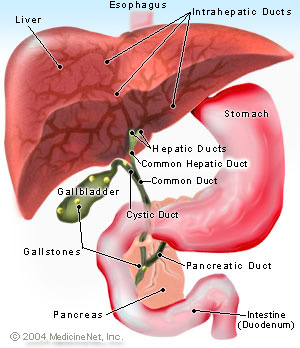
gallstonesGallstones (commonly misspelled gall stones or gall stone) are solid particles that form from bile cholesterol and bilirubin in the gallbladder.

  • The gallbladder is a small saclike organ in the upper right part of the abdomen. It is located under the liver, just below the front rib cage on the right side.
  • The gallbladder is part of the biliary system, which includes the liver and the pancreas.
  • The biliary system, among other functions, transports bile and digestive enzymes.

Bile is a fluid made by the liver to help in the digestion of fats.

  • It contains several different substances, including cholesterol and bilirubin, a waste product of normal breakdown of blood cells in the liver.
  • Bile is stored in the gallbladder until needed.
  • When we eat a high-fat, high-cholesterol meal, the gallbladder contracts and injects bile into the small intestine via a small tube called the common bile duct. The bile then assists in the digestive process.

Using a human resource management approach to support community health workers: experiences from five African countries

Abstract

Background

Like any other health worker, community health workers (CHWs) need to be supported to ensure that they are able to contribute effectively to health programmes. Management challenges, similar to those of managing any other health worker, relate to improving attraction, retention and performance.

Methods

Exploratory case studies of CHW programmes in the Democratic Republic of Congo, Ghana, Senegal, Uganda and Zimbabwe were conducted to provide an understanding of the practices for supporting and managing CHWs from a multi-actor perspective. Document reviews (n = 43), in-depth interviews with programme managers, supervisors and community members involved in managing CHWs (n = 31) and focus group discussions with CHWs (n = 13) were conducted across the five countries. Data were transcribed, translated and analysed using the framework approach.

Results

CHWs had many expectations of their role in healthcare, including serving the community, enhancing skills, receiving financial benefits and their role as a CHW fitting in with their other responsibilities. Many human resource management (HRM) practices are employed, but how well they are implemented, the degree to which they meet the expectations of the CHWs and their effects on human resource (HR) outcomes vary across contexts. Front-line supervisors, such as health centre nurses and senior CHWs, play a major role in the management of CHWs and are central to the implementation of HRM practices. On the other hand, community members and programme managers have little involvement with managing the CHWs.

Conclusions

This study highlighted that CHW expectations are not always met through HRM practices. This paper calls for a coordinated HRM approach to support CHWs, whereby HRM practices are designed to not only address expectations but also ensure that the CHW programme meets its goals. There is a need to work with all three groups of management actors (front-line supervisors, programme managers and community members) to ensure the use of an effective HRM approach. A larger multi-country study is needed to test an HRM approach that integrates context-appropriate strategies and coordinates relevant management actors. Ensuring that CHWs are adequately supported is vital if CHWs are to fulfil the critical role that they can play in improving the health of their communities.

Keywords

Close-to-community Community health workers Human resource management DRC Ghana Senegal Uganda Zimbabwe

Metrics for Assessing Improvements in Primary Health Care

Metrics focus attention on what is important. Balanced metrics of primary health care inform purpose and aspiration as well as performance. Purpose in primary health care is about improving the health of people and populations in their community contexts. It is informed by metrics that include long-term, meaning- and relationship-focused perspectives. Aspirational uses of metrics inspire evolving insights and iterative improvement, using a collaborative, developmental perspective. Performance metrics assess the complex interactions among primary care tenets of accessibility, a whole-person focus, integration and coordination of care, and ongoing relationships with individuals, families, and communities; primary health care principles of inclusion and equity, a focus on people’s needs, multilevel integration of health, collaborative policy dialogue, and stakeholder participation; basic and goal-directed health care, prioritization, development, and multilevel health outcomes. Environments that support reflection, development, and collaborative action are necessary for metrics to advance health and minimize unintended consequences…..more