Care Redesign Survey: What Data Can Really Do for Health Care

Over the past few years, physicians and provider leaders have been frustrated with the limitations of health care data. Much like the anticipation over EMRs in the early days, providers expected big data to solve all of health care’s problems. When it didn’t, disillusion set in.

In our newest NEJM Catalyst Insights Report on Care Redesign, we took a read on the effectiveness of health care data, both today and in five years. We found that the landscape is shifting from one of despair over the unfulfilled promises of big data to a more realistic vision of what sophisticated analytics can do to transform health care delivery…..more

most-useful-sources-of-health-care-data-today-and-in-5-years

No one yet realises what the quantum internet will enable us to do – Prof. Ronald Hanson

ronald20hanson_cropThe quantum internet, which connects particles linked together by the principle of quantum entanglement, is like the early days of the classical internet – no one can yet imagine what uses it could have, according to Professor Ronald Hanson, from Delft University of Technology, the Netherlands, whose team was the first to prove that the phenomenon behind it was real.

You are famous for proving that quantum entanglement is real, when in 2015 you linked two particles that were 1.3 kilometres apart. But the main objective of your work has always been to connect entangled particles into a quantum internet. What could such a network enable us to do?

‘One of the things that we could do is to be able to generate a key to encode messages with. (Using the quantum internet) the security of that key would now be based on this property of entanglement, and this is basically the properties of the laws of physics. ‘You will get a means of communication whose security is guaranteed by physical laws instead of (by) assumptions that no one is able to hack your code…..more

An interview with Victor Ng, Chair of the Wonca Special Interest Group on Emergency Medicine

Rooibos research gets funding boost

The SA Rooibos Council (SARC) will invest a further R3m this year to commission additional research into rooibos’ health-enhancing properties.

Already known for its myriad of health benefits, most of the research done on rooibos has been limited to laboratory work and animal studies. The next tranche of investment will enable researchers to build an even more solid foundation for human trials, and in some instances, to move forward with clinical studies.

Ernest du Toit, spokesperson of the SA Rooibos Council says since research on the Aspalathus Linearis plant was first conducted, science has proven its therapeutic ability to help prevent cancer, protect the liver and heart against disease, boost the immune system, reduce hypertension, relieve allergies and thwart the effects of aging….more

Funding stymies placement of medical interns

Limited funding for medical intern posts has left nearly 100 medical graduates without jobs and the situation could worsen when about 1,000 graduates return from studying in Cuba.

The public health system suffers from a shortage of medical staff and a study by research group Econex shows that SA has fewer doctors per 100,000 people compared with other middle-income countries.

South African Medical Association vice-chairman Dr Mark Sonderup said there were graduates who had applied to be placed in 2016 who had still not been placed by April. He said while the posts were available, there were no funds made available to fund the posts….more

Clinical management of children with fever

CITATION: Clinical management of children with fever: a cross-sectional study of quality of care in rural Zambia
Karsten Lunze, Godfrey Biemba, J Joseph Lawrence, William B MacLeod, Kojo Yeboah-Antwi, Kebby Musokotwane, Toyin Ajayi, Simon Mutembo, Chilunga Puta, Duncan Earle, Rick Steketee & Davidson H Hamer.
Bulletin of the World Health Organization 2017;95:333-342. doi: http://dx.doi.org/10.2471/BLT.16.170092
http://www.who.int/bulletin/volumes/95/5/16-170092/en/

Correspondence to Karsten Lunze (email: karsten.lunze@post.harvard.edu).

ABSTRACT

Objective: To evaluate current practices and standards of evaluation and treatment of childhood febrile illness in Southern Province, Zambia.

Methods: From November to December 2013, we conducted a cross-sectional survey of facilities and health workers and we observed the health workers’ interactions with febrile children and their caregivers…

Findings: This study included 24 health facilities, 53 health workers and 161 children presenting with fever. Facilities were insufficiently staffed, stocked and equipped to adequately manage childhood fever. Children most commonly presented with upper respiratory tract infections (46%; 69), diarrhoea (31%; 27) and malaria (10%; 16). Health workers insufficiently evaluated children for danger signs, and less than half (47%; 9/19) of children with pneumonia received appropriate antibiotic treatment. Only 57% (92/161) were tested for malaria using either rapid diagnostic tests or microscopy.

Conclusion: Various health system challenges resulted in a substantial proportion of children receiving insufficient management and treatment of febrile illness. Interventions are needed including strengthening the availability of commodities and improving diagnosis and treatment of febrile illness.

Comment (Neil PW): As always, poor quality care is due to failure to address the basic SEISMIC needs of frontline health workers:
• Skills
• Equipment
• Information
• Structural support
• Medicines
• Incentives
• Communication facilities.
A SEISMIC shift is needed to address the needs of front-line healthcare providers in low-income countries. For too long their needs have been ignored.
http://www.hifa.org/about-hifa/hifa-universal-health-coverage-and-human-rights

Join HIFA: www.hifa.org/joinhifa
Join CHIFA: http://www.hifa.org/join/join-chifa-child-health-and-rights
Join HIFA-Zambia: http://www.hifa.org/join/join-hifa-zambia

Best wishes, Neil

Let’s build a future where people are no longer dying for lack of healthcare information – Join HIFA: www.hifa.org

Health justice partnerships: initial insights into the delivery of an integrated health and legal service for youth in regional Victoria

Health Justice Partnerships (HJPs) provide an innovative service model offering an integrated health and legal service for a community. HJPs are particularly well suited to meet the needs of young people and those in regional locations experiencing complex legal issues. This paper presents interim findings from research examining the impact on young people, and the implications on practice for staff in the partner organisations, of an HJP in a large regional area in Victoria, Australia…..more

Launch of the first-ever World Report on Health Policy and Systems Research

Screen Shot 2017-04-26 at 11.35.42 PM.pngDear Colleagues,

The first-ever, World Report on Health Policy and Systems Research, was launched on 25 April 2017, at a special meeting, organized to commemorate the 20th  anniversary of the inception of the Alliance for Health Policy and Systems Research. The meeting was co-hosted by the Norwegian Agency for Development Cooperation (Norad) and the Swedish International Development Cooperation Agency (Sida) and was co-sponsored by the World Health Organization (WHO) and the World Bank.

The report describes the evolution of the field and provides figures on the number of publications produced, funding trends and institutional capacity in LMICs to conduct HPSR. It provides insight into how the multidisciplinary and systems approach used in HPSR can help countries advance the Sustainable Development Goal (SDG) agenda.

In the Sustainable Development Goal (SDG) era, where tackling inequity is centre stage, the report provides practical and insightful recommendations on how to reorient health research so that it may respond more effectively to public health challenges on a national and global level.

To find out more and access the full report, please click here
http://www.who.int/alliance-hpsr/news/2017/worldreport-hpsr/en/

Best wishes, Neil

Let’s build a future where people are no longer dying for lack of healthcare information – Join HIFA: www.hifa.org

PATIENT EDUCATION: Ingrown Toenail

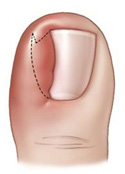
a00154f01If you trim your toenails too short, particularly on the sides of your big toes, you may set the stage for an ingrown toenail. Like many people, when you trim your toenails, you may taper the corners so that the nail curves with the shape of your toe. But this technique may encourage your toenail to grow into the skin of your toe. The sides of the nail curl down and dig into your skin. An ingrown toenail may also happen if you wear shoes that are too tight or too short….more

Professor Amanda Howe, President Wonca World talks on the role of general practitioners / family physicians on the management of mental health

Professor Amanda Howe, President Wonca World talks in a plenary keynote on choosing to be rural at Euripa Conference, Marseille

Cities are Where the Future is Being Built

780x439

The global productivity slowdown and stagnating progress in poverty reduction – alongside risks from climate change and rapid aging in parts of the world – are making the path toward poverty reduction and shared prosperity less deterministic. Countries need new sources of growth to anchor development in a changing global landscape.

Cities and sub-national economic regions can offer just such a potent solution. Why? As rising uncertainties make it impossible to predict the specific sectoral opportunities for development, investments chosen need to be generic, supporting many specific activities. Metropolitan regions provide just such generic capital – virtually whatever niches prove to be viable, they will take place in cities and urban regions, and their success will require that they work efficiently, creating jobs as well as delivering infrastructure and services. In fact, metropolitan regions will provide both the lived environment and the work environment for most people globally by 2030.

Join thought leaders, national and city policymakers, and civil society leaders in a live discussion to highlight the role of cities and metropolitan regions in being vanguards for inclusive and sustainable economic growth – they are where the future is being built….more

PATIENT EDUCATION: Dandruff: Why It Happens and How To Beat It

152844-dandruffThe exact cause of dandruff, also known as scurf or Pityriasis simplex capillitii, is unknown. However, most experts agree that dandruff is not caused by poor hygiene. Dandruff is a condition of the scalp that causes flakes of skin to appear and is often accompanied by itching. In some cases, it can be embarrassing and not easy to treat. In this article, we look at the possible causes of dandruff and potential treatment options…..more
Health department frustrates medical graduates waiting for internships

Doctors who have just graduated are bitter about the department of health’s failure to allocate them jobs and internships.  They need to complete an internship and do community service before they can practice independently. A number of doctors have not been placed because of a shortage of postsand funding for vacant posts. There also seems to be a problem with application processes.

In the first of a series on frustrated doctors, The Daily Vox spoke to Joanne Cunniffe-Miller (27) who graduated last year but, still hasn’t found an internship placement despite applying several times. She remains unemployed in Durban, Kwazulu-Natal, a province where only 2 126 of the 3 191 posts available for medical practitioners have been filled…..more

Wonca Talks: Prof Antoinette Perera of Sri Lanka talks on “The Process of Consultation”

Wonca Talks: Prof Allyn Walsh, of McMasters in Canada, talks of “From Good to Great: how to become a great clinical teacher”