Timeline: How Apple is piecing together its secret healthcare plan

apple-timeline-712

Rumors are at a fever pitch that Apple has big plans for healthcare, including putting a medical record on the iPhone, possibly acquiring its way into the EHR market.   From its leap into healthcare in 2014 with its HealthKit application programming interface in September 2014 to the June 19 revelation of Apple’s work with the tiny start-up Health Gorilla, Apple has made a series of moves in healthcare that clearly indicate the company has plans for the space that will somehow manifest on its mega-popular iPhone and iPad products.   Here’s a look at how Apple got to where it is today in healthcare….more

SOLAR POWERS INDIA’S CLEAN ENERGY REVOLUTION

With 1.3 billion people, India is the world’s third largest consumer of electricity. Over 450 million ceiling fans are in use and 40 million sold each year, but 240 million people still have no legal electricity connection. Demand for electricity is growing at the same rate as in France or Germany as millions of people in rural or impoverished areas seek access to power in their homes and workplaces.

What if India planned to meet that need with conventional energy sources like coal?   It isn’t. In fact, the country is focused on just the opposite. With a sweeping commitment to solar power, innovative solutions, and energy efficiency initiatives to supply its people with 24×7 electricity by 2030, India is emerging as a front-runner in the global fight against climate change.

That’s good news because if the world expects to reach its Paris Climate Agreement objective of containing global warming to under a 2-degrees Celsius increase, it is imperative for India – the third largest emitter of carbon dioxide — to be a global leader in renewable energy…..more

Educating the Next Generation of Physicians with the Curriculum of the Future

aaeaaqaaaaaaaax7aaaajdjinjvkndi0lwm4otgtngrkzi04mje2ltiyzgu5ytbkywmzyqThe practice of medicine has changed dramatically over the past 50 years. In addition to the incredible breakthroughs and advancements in medical knowledge, there has been a revolutionary change in the delivery of healthcare. Specialties such as hospitalists, medical informatics, and palliative care didn’t even exist just a few decades ago and now are integral to modern healthcare. There is also a growing demand for physicians to have administrative and leadership skills. For example, there has been a growth in physicians serving as hospital CEOs since a 2011 report suggested better outcomes (in terms of ranked quality) with a physician CEO. Expectations of knowledge and skills of physicians graduating from medical schools have expanded in parallel to these changes.

Over the past 20 years, the concept of “core competencies” has emerged in medical education that has helped categorize other areas of physician knowledge and skills. The core competencies include areas such as systems-based practice (e.g. population health, health policy), practice-based learning and improvement, communication, and professionalism. While medical school curricula have covered these areas in the past, more training in these areas has expanded dramatically…..more

Trade unions: ‘The NHI is not moving fast enough’

Private sector’s role and slow roll out likely to top ANC policy conference delegates’ list of concerns It’s the billion-rand question: what role will the private sector play in the National Health Insurance (NHI)? Delegates at the ANC policy conference this week are likely to seek answers to this and what’s behind what they say is a slow move towards universal healthcare. This week, the health department released its NHI white paper. The document outlines how government will become the single buyer of health services for all South Africans from both public and private medical providers through a mandatory NHI scheme. The paper also heralds the introduction of high levels of government regulation, set to lower healthcare prices and slash — but not necessarily eliminate — medical aids. Ahead of the white paper’s release, trade union federation Cosatu’s social development policy co-ordinator Lebogang Mulaisi warned the organisation and its members would be watching to see if government kept its promise to end South Africa’s multipayer system of healthcare under the universal healthcare, or the NHI……more

NPA should be on the Gupta e-mail case, says Thuli

Former public protector Thuli Madonsela says there is enough evidence in the hundreds of thousands of leaked Gupta e-mails for the NPA to start laying down the law.

In an interview with the Sunday Times on Friday, Madonsela said she believed the NPA should be investigating the Gupta business dealings recently exposed by the media.

“I would say this gives us prima facie evidence that there is grand corruption by the Gupta family working with the president’s son,” she said, adding that some of the evidence suggests the information being used comes from President Jacob Zuma.

The Sunday Times previously reported that at a late-night meeting in 2009 at the president’s official residence in Pretoria, Zuma told then deputy director-general of mineral resources Jacinto Rocha to assist Duduzane, “my only son involved in money”. ….more

Social media peer pressure used to help adolescents live healthier lives

Game Pokemon Go Friends Phone Internet PokemonBy identifying the most influential kids in small social media circles, researchers can create positive peer pressure that persuades young people to live healthier lives. Generation Z, or those born after 1995, are digital natives who grew up in a world of constant connectivity. They often see their online and offline lives as one and the same, and may spend as much time, or more, interacting with friends on social media as they do face-to-face. Important habits are also being formed within these groups, ones around eating, drinking and physical activity. This raises the question: what if we could harness the power of this peer pressure to influence adolescents to lead healthier lives? That’s the goal of researchers in the EU-funded SNIHCY project at Radboud University in Nijmegen, the Netherlands. They have developed the Wearable Lab – a bracelet that can track the activities and social networking of adolescent in small groups – and combine it with a mobile phone app, which includes a game and personalised avatar…..more

Printed solar cells thinner than your hair could power your phone

euronanoforumExtremely thin printable solar panels could power your phone and are amongst a range of new ways nanotechnology is opening the door to a clean energy and waste-free future. Nanotechnology, a science that focuses on understanding materials on an atomic scale, is helping researchers and businesses introduce new technologies that could transform our economy into a greener, less wasteful one. ‘Nanotechnology as a field has an enormous role to play in moving our planet to sustainable and intelligent living,’ said Professor Martin Curley from Maynooth University in Ireland, speaking on 21 June at the EuroNanoForum conference, in Malta, organised by the Maltese Presidency of the Council of the European Union and co-funded by the EU. He explained to an audience of businesspeople and researchers that nanotechnology holds the potential to spark ‘an explosion of innovation’…..more

Medical scheme members likely to lose their tax credits under NHI

Medical scheme members are likely to lose their tax credits to help pay for the first set of benefits to be rolled out under National Health Insurance (NHI), Health Minister Aaron Motsolaedi said on Thursday.

Briefing reporters on the government’s latest policy position on NHI, which will be published as a revised White Paper in the government gazette tomorrow, Motsolaedi said the first package of benefits would target women, children and the elderly: “The central philosophy is that we are going to start pooling funds for people who are not on medical aid, starting from the bottom.”….more

ANC policy papers point to a party in a panic about losing power

The documents released ahead of the upcoming policy conference of the governing ANC expose a panicking party that sees enemies everywhere. While previous policy conferences addressed real policy issues, all energies are now focused on retaining state power as the leadership faces damning claims of capture by a kleptocratic elite.

The discussion documents show a party that professes a desire for self-correction and renewal. But, it seems to have neither the guts, nor the necessary internal balance of forces to do so.

At the same time the documents point to deepening paranoia and an increasingly authoritarian tendency. In combination, they seem to emanate from a parallel universe where the party’s interests have become elevated above those of the South African society at large…..more

ANC leaders and members warned of consequences of leaks at policy conference

SA Cabinet approves latest iteration of NHI White Paper

The SA Cabinet has approved the Department of Health’s latest iteration of the White Paper on National Health Insurance (NHI), paving the way for it to be published as a policy document in the government gazette.

Business Day reports that the timing is significant, as it comes less than two weeks before the ANC policy conference in early July.

NHI is an ambitious set of health financing reforms that aims to provide healthcare to everyone that is free at the point of care, the report says. “The White Paper takes the country closer to ensuring all South Africans have access to healthcare, irrespective of their socioeconomic status. This is consistent with the National Development Plan’s (NDP’s) objective that seeks to ensure everyone has access to healthcare, regardless of their income,” the Cabinet said.

The report says some of the key issues that will be scrutinised in the new policy are the details of package of benefits provided under NHI, how they will be paid for, and where the private sector will fit in…..more

National licence allows all South Africans access to Cochrane databases

When the World Health Organisation develops guidelines on the use of health care interventions, it turns to the Cochrane Library. This is a collection of databases containing high quality systemic reviews and other evidence to inform decisions about health care.

The problem is that access to these important databases costs money. In South Africa, universities and the South African Medical Research Council could access the Cochrane Library through institutional subscriptions with the library’s publishers.

But most of the country’s health care workers aren’t affiliated to universities. So the library has been inaccessible where it’s most needed – in clinical settings. Technical teams within the government and those responsible for creating policies were also left out……more

Parents say baby died due to (Chiawelo) clinic’s negligence

A Soweto couple has accused Chiawelo Clinic nurses of causing the death of their newly born baby after the mother gave birth in a toilet.

Agatha Ngubane (36) and Israel Mudau (37) are looking for looking for answers from the Gauteng Department of Health following the death of little Orifha Siphesihle Mudau. Ngubane she said she had gone into labour on February 9 and when she arrived at the clinic nurses at the reception told her to wait. “I arrived at the clinic at 6.30am and I was only attended to by 7.30am. “After waiting for more than an hour, a nurse came to me and asked me to lay down on the bed. She started examining me by assessing my blood pressure and listening for a heartbeat,” said Ngubane. “We both could not hear any heartbeat.” The nurse left the room, she said. While she was gone, Ngubane said she had gone to the toilet a number of times. …more

Small job losses if sugar content cut – Treasury

img_9230-683x1024

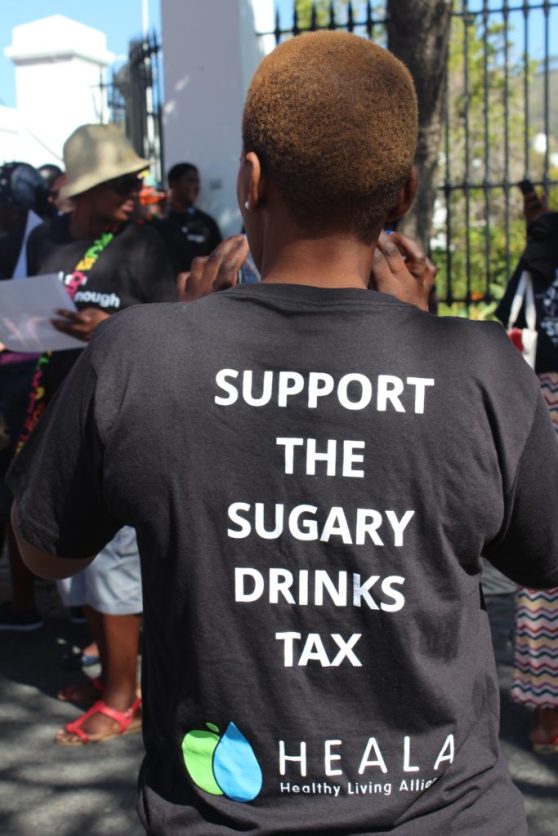
If the beverage industry reduces the sugar content of 37% of its products, the proposed sugary drinks tax could result in around 1,475 job losses.  Treasury official Warren Harris reported this to parliament yesterday while giving Treasury’s response to the many submissions made on the tax. The beverage industry has warned of tens of thousands of job losses should the tax be introduced. Treasury has proposed a 2,1 cent tax per gram of sugar on all sweetened drinks, but the first 4g per 100ml will be exempted as an incentive for producers to reformulate their drinks with less sugar. It plans for the tax – which it calls a health promotion levy – to come into effect as soon as the Rates Bill becomes law, Treasury Chief Director Mpho Legote said….more

Early Detection and Referral of Children with Malnutrition

Mid-Upper Arm Circumference (MUAC)

Mid-Upper Arm Circumference (MUAC) is the circumference of the left upper arm, measured at the mid-point between the tip of the shoulder and the tip of the elbow (olecranon process and the acromium).

MUAC is used for the assessment of nutritional status. It is a good predictor of mortality and in many studies, MUAC predicted death in children better than any other anthropometric indicator. This advantage of MUAC was greatest when the period of follow-up was short.

The MUAC measurement requires little equipment and is easy to perform even on the most debilitated individuals. Although it is important to give workers training in how to take the measurement, the correct technique can be readily taught to minimally trained health workers and community-based volunteers. It is thus suited to screening admissions to feeding programs during emergencies.

MUAC is recommended for use with children between six and fifty-nine months of age and for assessing acute energy deficiency in adults during famine.

The major determinants of MUAC, arm muscle and sub-cutaneous fat, are both important determinants of survival in starvation. MUAC is less affected than weight and height based indices (e.g. WHZ, WHM, BMI) by the localised accumulation of fluid (i.e. bipedal or nutritional oedema, periorbital oedema, and ascites) common in famine and is a more sensitive index of tissue atrophy than low body weight. It is also relatively independent of height and body-shape…..more

Study: Bachelor of Clinical Medical Practice (BCMP)

This exciting 3 year degree will provide you with the necessary knowledge, attitudes and skills to work in a district hospital as a Clinical Associate, under the supervision of a doctor.  The qualified Clinical Associates are registered with the Health Professions Council of South Africa with a defined scope of practice. Apply at Wits.

WONCA E-Update Friday 9th JUNE 2017

WONCA E-Update
Friday 9th June 2017

WONCA News – June 2017
The latest WONCA News (June 2017) is accessible via the WONCA website, with lots of WONCA news, views and events. Activities held to celebrate World Family Doctor Day (19th May) feature prominently this month.

From the President
This month Professor Amanda Howe looks back at her time in Australia, at the WONCA Rural Health conference in Cairns. As well as a really excellent conference, highlights for her included visiting colleagues in two different clinics – one on Horn Island off the North East coast of Australia, and an Aboriginal Community and Health Clinic at Yarrabah near Cairns. Both emphasised the need to prioritise community engagement as a way of redressing the impacts of social disadvantage and improving public health: and showed her (again) the importance of family doctors who can work in a setting where they are both part of the community and may be surgeon, obstetrician and emergency care providers – as well as the community’s family doctor.

World Family Doctor Day (FDD)
Many of WONCA’s Member Organizations celebrated World Family Doctor Day on 19th May, and we were inundated with reports and photos of various events held throughout the world. We’ll be featuring some in more detail in the coming weeks, but WONCA News has all the photos and the reports on line athttp://www.globalfamilydoctor.com/News/WorldFamilyDoctorDay2017celebratedworldwide.aspx .

Education for Primary Care
Professor Val Wass, Chair of WONCA’s Working Party on Education, has advised us of an announcement from “Education for Primary Care”. As it becomes increasingly apparent that learning in the context of family medicine and the community can impact positively on career choice for primary care, they are pleased to offer free access for a limited period of time to an article from Elizabeth Newbronner and her colleagues in the North of England offering further evidence of how this can be achieved
Creating better doctors: exploring the value of learning medicine in primary care
Elizabeth Newbronner, Rachel Borthwick, Gabrielle Finn, Michael Scales & David Pearson
Education for Primary Care Published Online: 24 Jan 2017

New Chair for the Spice Route Movement
The Spice Route Movement – the young doctor movement for South Asia – has a new Chair. Dr Santosh Kumar Dhungana from Nepal has recently taken over from Dr Bhavna Matta of India, and he is one of this month’s featured doctors in WONCA News. He is currently working in Bayalpata Hospital, Achham, Nepal, where he is the medical director. This hospital is located in a very remote area of far west Nepal, where the government health care structure is almost non-existent.


The hidden truth of patient engagement

When it comes to patient engagement design, how do we know where to begin? Stacey Chang compares the task to zebras in the African savanna, whose stripes have a distinct utility. When in a herd, the overlap of stripes creates a confusing pattern, making it difficult for predators to distinguish between one zebra and another. When that herd moves, the pattern becomes even more confusing, and establishing a singular starting point for a predator becomes practically impossible…..more